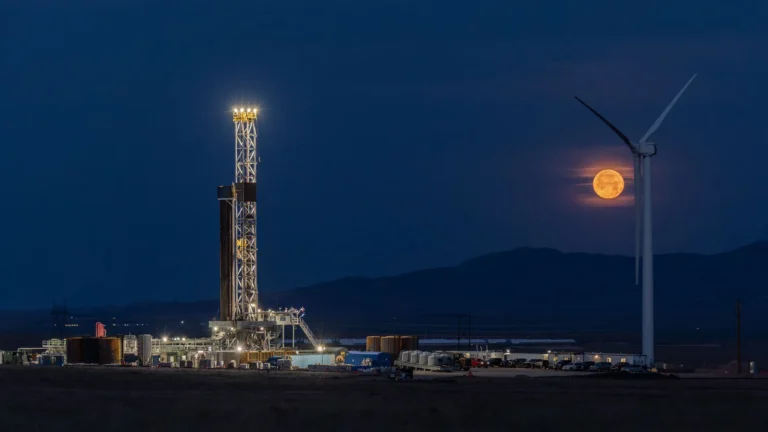




The rapid proliferation of artificial intelligence technologies has ignited an unprecedented demand for computational power, driving a global scramble to construct vast networks of data centers. These digital factories, essential for training and deploying AI models, represent the physical backbone of the AI revolution. However, what began as an optimistic surge of investment and expansion is now confronting a sobering reality: a significant portion of announced data center projects may never materialize, caught in a vortex of local resistance, regulatory hurdles, and an intensifying energy crisis. This disconnect between ambitious projections and ground-level realities is creating considerable uncertainty for the tech industry and the wider economy, prompting experts to call for greater scrutiny and more realistic planning.
The AI Imperative and the Infrastructure Gold Rush
The current era is defined by an insatiable hunger for data processing. From advanced machine learning algorithms to generative AI applications, the computational demands are skyrocketing. This has led to a data center "gold rush," with tech giants and specialized infrastructure firms pouring billions into new facilities. Industry analysts have projected investments reaching into the hundreds of billions of dollars globally over the next few years, with some estimates suggesting a cumulative investment exceeding a trillion dollars by the end of the decade. The allure of powering the next generation of AI has spurred a flurry of announcements, often involving multi-gigawatt campuses designed to house thousands of servers. These announcements are frequently accompanied by promises of job creation and economic growth for host communities, fueling an initial wave of enthusiasm. The scale of these proposed developments is unprecedented, with individual data centers often consuming as much power as a small city, and requiring massive tracts of land, sophisticated cooling systems, and robust connectivity.
This drive for expansion is not merely speculative; it is rooted in the tangible needs of a rapidly evolving technological landscape. Cloud computing, IoT, and now AI are fundamentally reshaping how businesses operate and how individuals interact with technology. Each interaction, every query to an AI assistant, every training run for a new model, translates into power consumption and heat generation within a data center. The race is on to build capacity ahead of demand, a strategic imperative for companies vying for leadership in the AI space. However, the sheer volume and speed of these announcements have begun to outpace the practical realities of development and deployment, leading to a critical re-evaluation of what is truly achievable.
Mounting Obstacles: A Multi-faceted Challenge
The journey from a data center announcement to its operational status is fraught with a complex array of challenges. These obstacles are not merely logistical; they touch upon environmental concerns, community relations, and the fundamental limitations of existing infrastructure. The initial optimism surrounding rapid expansion is giving way to a more cautious approach as developers grapple with these multifaceted hurdles.
-
Local Opposition and Permitting Delays:
Perhaps one of the most immediate and visceral challenges comes from local communities. The "Not In My Backyard" (NIMBY) phenomenon has gained significant traction as residents push back against proposed data center sites. Concerns are varied but often center on environmental impact, quality of life, and the allocation of critical resources. Communities express worries about excessive noise from cooling systems, the visual blight of large, windowless buildings, and increased traffic. More profoundly, there are significant anxieties regarding water usage for cooling, particularly in regions already facing water scarcity. Data centers can consume millions of gallons of water annually, a contentious issue in drought-prone areas or those with stressed municipal water supplies.Permitting processes, once relatively straightforward, have become increasingly arduous. Local zoning boards, planning commissions, and environmental agencies are scrutinizing proposals with unprecedented rigor. This increased oversight often leads to prolonged review periods, multiple revisions, and even outright rejections. For instance, reports indicate that some projects face delays stretching for years, significantly impacting development timelines and increasing costs. Community groups, often well-organized and vocal, are leveraging environmental impact assessments and public hearings to challenge or modify projects, forcing developers to engage in extensive public relations efforts and sometimes to reconsider locations entirely. The pushback is a direct response to the perceived imbalance between the economic benefits promised by developers and the tangible disruptions experienced by residents.
-
The Energy Crisis: Powering the Future:
The most formidable obstacle to the data center boom, however, is the escalating energy crisis. AI is profoundly energy-intensive. Training a single large language model can consume as much electricity as hundreds of homes over several months. As more sophisticated models emerge and become integrated into daily life, the aggregate demand for power becomes staggering. Utility companies and grid operators across major markets, from the United States to Europe and Asia, are reporting unprecedented strain on their existing infrastructure.The U.S. electric grid, much of which was built decades ago, is struggling to adapt to this sudden surge in demand, coupled with the ongoing transition to renewable energy sources. The process of connecting a new gigawatt-scale data center to the grid involves massive infrastructure upgrades, including new substations, transmission lines, and generation capacity. These projects are capital-intensive, require extensive permitting, and can take many years to complete. For example, in regions like Texas, where a significant number of data center projects have been announced, the sheer scale of anticipated power demand has led to calls for audits and even moratoriums on new connections. Texas Governor Greg Abbott, for instance, has highlighted the need to assess the grid’s capacity before allowing further unchecked expansion, underscoring a growing concern among state leaders about energy reliability and cost for residential and commercial consumers.
Utility executives, in public statements and private discussions, emphasize that simply adding more generation capacity is not a quick fix. The challenges extend to transmission bottlenecks, aging infrastructure, and the complexities of integrating intermittent renewable energy sources into a stable grid. The lead time for building new power plants or upgrading major transmission lines can be five to ten years, a timeline that is often incompatible with the rapid development cycles expected by tech companies. This mismatch creates a critical bottleneck, turning available power into the ultimate limiting factor for data center growth.
-
Supply Chain and Construction Bottlenecks:
Beyond land and power, the physical construction of data centers faces its own set of hurdles. The global supply chain, still recovering from pandemic-era disruptions, is straining under the demand for specialized components. High-voltage switchgear, massive transformers, cooling units, and server racks are all in high demand, leading to extended lead times and escalating costs. The shortage of skilled labor, particularly electricians, engineers, and construction workers proficient in complex infrastructure projects, further exacerbates delays. Rising interest rates and inflation also contribute to higher construction costs, forcing developers to revise budgets and potentially shelve less profitable projects. The confluence of these factors means that even projects with secured land and power may struggle to meet aggressive build-out schedules, pushing completion dates further into the future.
The Speculative Bubble: Distinguishing Reality from Rhetoric
Given these pervasive challenges, a critical question emerges: how many of the announced data center projects will actually transition from blueprints to operational facilities? Experts like Brent Nelson, Senior Managing Director of Markets and Strategy at Ascend Analytics, highlighted on TechCrunch’s Equity podcast, that a significant portion of these announcements might be more aspirational than actionable. Nelson’s insights, shared with hosts Rebecca Bellan and Tim De Chant, underscore the importance of distinguishing between projects with solid foundations and those that are essentially speculative.
Many project announcements, while generating headlines, often lack firm commitments regarding land acquisition, secured power purchase agreements, or comprehensive permitting. Some developers may announce projects to attract investors, secure future clients, or simply to stake a claim in a competitive market, without having fully de-risked the development process. The capital markets, eager to fund the AI revolution, have often provided initial financing without always scrutinizing the granular details of project feasibility. This creates a kind of speculative bubble, where the volume of announced capacity far exceeds the realistic potential for immediate construction and deployment.
Identifying truly viable projects requires a deep dive into several key indicators:
- Secured Land and Permitting: Projects with clear title to suitable land and substantial progress on local and environmental permits are far more likely to proceed.
- Power Purchase Agreements (PPAs): A concrete PPA with a utility, outlining specific megawatts and connection timelines, is a strong signal of viability. This often involves years of negotiation and significant financial commitments.
- Financial Backing: Projects with robust, committed funding from established investors or corporate balance sheets, rather than relying solely on future fundraising, are more secure.
- Developer Track Record: Experienced data center developers with a history of successful large-scale projects are generally better positioned to navigate the complexities.
Without these foundational elements, many projects remain on paper, serving primarily as strategic declarations rather than imminent builds. The conversation among industry stakeholders, as highlighted by the Equity podcast, is increasingly shifting from the excitement of announcement to the hard work of due diligence and realistic project assessment.
Implications for the AI Industry and Beyond
The potential failure of numerous announced data center projects carries significant implications across various sectors. For the AI industry, the primary concern is a potential bottleneck in innovation and deployment. If computational capacity doesn’t keep pace with the rapid advancements in AI models, the ability to train larger, more complex systems could be hampered, slowing down research and the commercialization of new AI applications. Companies relying on future capacity might face delays, increased costs for existing compute, or be forced to reconsider their growth trajectories. This could lead to a consolidation within the AI sector, favoring companies with established infrastructure or the financial muscle to overcome development hurdles.
Beyond technology, the energy sector faces immense pressure. The grid modernization required to support AI’s demands will necessitate unprecedented investment in generation, transmission, and distribution infrastructure. This could lead to higher electricity prices for all consumers, as utilities pass on the costs of these upgrades. Moreover, the environmental implications are profound. While many tech companies have pledged to power their data centers with 100% renewable energy, the sheer scale of demand means that a substantial portion will still rely on fossil fuels, at least in the short to medium term. The increased carbon footprint of data centers could undermine broader climate goals if not managed effectively through accelerated renewable energy deployment and energy efficiency innovations.
Local economies, initially enticed by promises of jobs and tax revenue, might experience disillusionment if projects stall or are cancelled. The economic benefits of data centers are often concentrated in specialized, high-skill roles during operation, while construction jobs are temporary. When projects fail to launch, communities are left with the social and environmental concerns without the promised economic uplift. This dynamic underscores the need for transparent communication and realistic expectations from developers and local governments alike.
Mitigation Strategies and Future Outlook
Addressing the current challenges requires a multi-pronged approach involving technological innovation, strategic planning, and collaborative governance.
Technological advancements are crucial. Developers are exploring more energy-efficient cooling solutions, such as liquid immersion cooling, which can significantly reduce water and power consumption. More efficient AI chips and software optimization can also reduce the computational load per task. The development of modular data centers, which can be deployed more quickly and scaled incrementally, offers flexibility in environments with uncertain power availability.
From a planning perspective, greater emphasis on distributed computing and edge AI could help alleviate pressure on centralized, hyperscale data centers. This involves processing data closer to its source, reducing the need for massive data transfer and potentially distributing power demand more evenly across the grid. Utilities and grid operators must accelerate investments in grid modernization, including smart grid technologies, energy storage solutions, and enhanced transmission capacity, with proactive support from government policies and funding.
Regulatory frameworks also need to evolve. Governments can streamline permitting processes for essential infrastructure while ensuring robust environmental and community safeguards. Incentives for developing data centers in areas with abundant renewable energy resources or robust grid capacity could guide development towards more sustainable locations. Conversely, stricter auditing and transparency requirements for announced projects could help filter out speculative ventures, ensuring that only genuinely viable proposals receive public and financial support.
Collaboration between tech companies, utilities, local governments, and community stakeholders is paramount. Open dialogues can help address concerns proactively, foster mutual understanding, and lead to more sustainable and mutually beneficial development outcomes. As Brent Nelson and the Equity podcast hosts underscore, the ability to discern realistic projects from speculative ones is no longer a niche concern but a critical imperative for the continued growth of the AI industry and the stability of global energy systems. The trajectory of the data center boom, and by extension, the AI revolution, will largely depend on how effectively these complex challenges are navigated in the coming years.