


The automotive industry is preparing for a significant shift in the luxury SUV landscape as Jaguar Land Rover (JLR) readies the second-generation Range Rover Velar for its global debut. Recent intelligence and spy photography from high-altitude and track testing sessions indicate that the upcoming Velar, which will be powered exclusively by electric drivetrains, represents a departure from the traditional SUV silhouette that has defined the Land Rover brand for decades. Expected to be unveiled in the final months of 2024, the Mk2 Velar is a cornerstone of JLR’s "Reimagine" strategy, serving as a vanguard for the company’s new Electric Modular Architecture (EMA).
This new iteration of the Velar is not merely an incremental update but a radical reimagining of what a "road-focused" Range Rover can be. While the current internal combustion engine (ICE) Velar is already positioned as the sleekest member of the lineup, the electric successor appears to push the boundaries of aerodynamic efficiency, adopting a profile that blurs the lines between a high-riding crossover and a luxury fastback saloon. This strategic design shift is intended to maximize battery range and performance, placing the Velar in direct competition with emerging aerodynamic electric vehicles such as the Porsche Macan Electric, the Polestar 4, and the Volvo ES90.
The EMA Platform and the Shift to Electric-First Engineering
The transition of the Velar to a fully electric powertrain is facilitated by JLR’s EMA platform. Unlike the Flexible Modular Longitudinal Architecture (MLA) used for the flagship Range Rover and Range Rover Sport—which can accommodate ICE, plug-in hybrid (PHEV), and battery electric (BEV) setups—the EMA is designed specifically for "electric-first" applications. This platform will underpin a new generation of mid-sized luxury vehicles, providing a flat-floor architecture that allows for greater interior volume despite the sleeker exterior dimensions.
The EMA platform is expected to feature an 800-volt system, enabling ultra-fast charging capabilities that are essential for the premium segment. While JLR has not yet released specific battery capacities, industry analysts suggest the platform will support ranges in excess of 300 miles (480 km), utilizing high-density battery cells sourced from JLR’s parent company, Tata Motors, via its Agratas battery division. The integration of the battery pack into the chassis structure also promises to lower the center of gravity, enhancing the on-road dynamics that have become a hallmark of the Velar nameplate.
Design Analysis: A Departure from Conventional SUV Norms
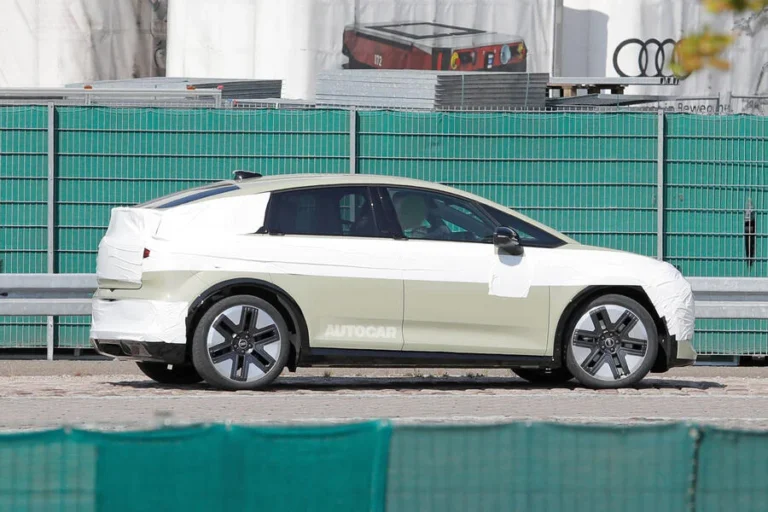
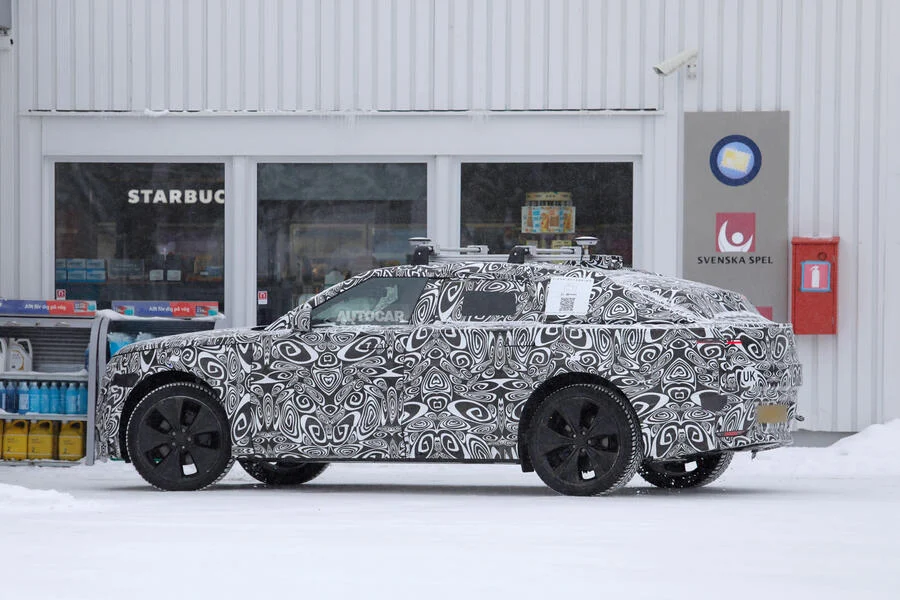
Visual data from the latest prototypes reveals a vehicle that is significantly lower and more elongated than its predecessor. The most striking feature of the new Velar EV is its rakish, fastback-style roofline. This slope continues toward a prominent boot lip that extends horizontally beyond the rear window, a design choice traditionally associated with grand tourers rather than off-roaders.
One of the most discussed features of the prototypes is the potential absence of a traditional rear window. Following the design philosophy seen in the Jaguar Type 00 and the Polestar 4, JLR appears to be testing a configuration where the rear glass is replaced by a solid panel or a heavily obscured aerodynamic surface. In this setup, rearward visibility would be provided by a high-definition digital camera system feeding a screen in the rearview mirror. This innovation serves two purposes: it significantly reduces aerodynamic drag and allows the roof structure to be moved further back, increasing rear passenger headroom—a common pain point in coupe-style SUVs.
The front fascia maintains a familial link to the Range Rover brand but with a modernized execution. The traditional grille is replaced by a smooth, contoured panel that mimics the iconic honeycomb pattern, housing the sensors and radar systems required for advanced driver-assistance systems (ADAS). The vehicle’s "waistline" remains high, but the glasshouse is noticeably narrower, emphasizing a planted, muscular stance.
Manufacturing and the Halewood Transformation
The production of the Range Rover Velar EV is slated for 2027 at JLR’s Halewood plant in Merseyside, United Kingdom. This facility is currently undergoing a massive transformation as part of JLR’s £15 billion investment into its industrial footprint. The Halewood site is being converted into an all-electric production hub, a move that secures the future of thousands of jobs in the UK automotive sector.
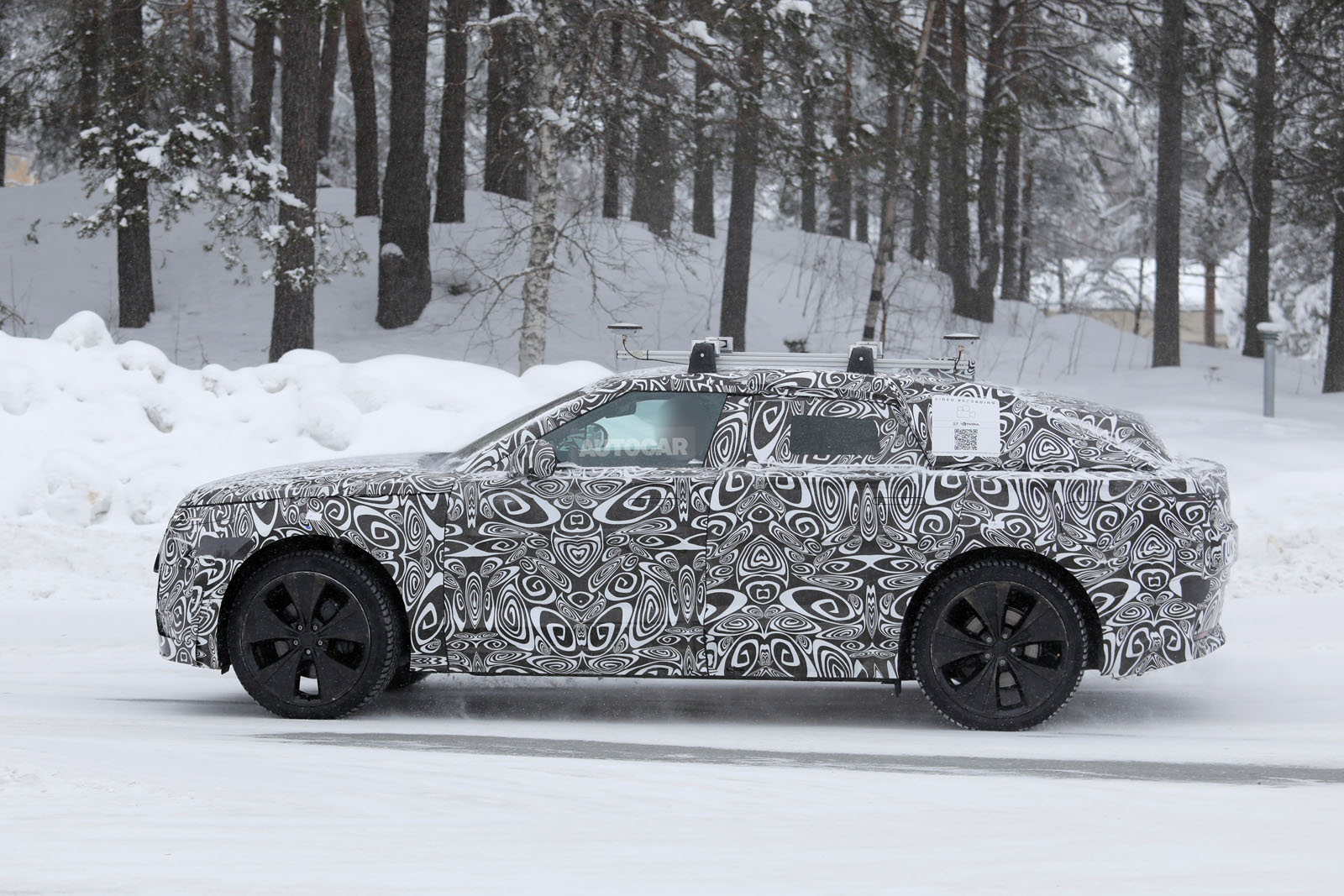
The Velar EV will not be the only occupant of the Halewood lines. It is expected to be joined by a "baby" Defender—likely to be named the Defender Sport—and the next-generation Range Rover Evoque. By clustering these EMA-based models at a single facility, JLR aims to achieve significant economies of scale and manufacturing efficiency. This "House of Brands" strategy allows the company to differentiate its products—Range Rover for luxury, Defender for durability, and Discovery for versatility—while sharing the underlying technological foundations.
Chronology of Development and Market Entry
The path to the Velar EV has been marked by a deliberate, if slightly delayed, timeline. JLR’s "Reimagine" strategy, first announced by CEO Adrian Mardell’s predecessor and refined under current leadership, initially aimed for a faster rollout of electric models. However, the company recently adjusted its pace to ensure that the software and charging infrastructure could meet the expectations of luxury buyers.
- 2021: JLR announces the "Reimagine" strategy, confirming the transition of Land Rover and Jaguar to electric power.
- 2023: First sightings of EMA-based test mules appear, though heavily disguised as modified Jaguar I-Pace bodies.
- Early 2024: Velar-specific prototypes begin testing in extreme cold and on the Nürburgring, revealing the final fastback silhouette.
- Late 2024: Anticipated global unveiling of the production-intent design and technical specifications.
- 2025-2026: Final validation testing and pre-production trials at the Halewood facility.
- 2027: Official start of production and first customer deliveries.
This timeline places the Velar EV in the market during a period when many global regions, particularly Europe and parts of North America, will be implementing stricter emissions regulations, making a zero-emissions luxury offering critical for JLR’s market share.
Strategic Implications and Competitive Landscape
The launch of the Velar EV is a high-stakes move for JLR. For the past four years, the company has focused heavily on its high-margin flagship models—the full-size Range Rover and the Range Rover Sport—while its smaller models have seen a "product drought." The Velar EV, along with the Defender Sport, represents the renewal of JLR’s mid-sized portfolio, which historically accounts for a large volume of the brand’s global sales.
The competitive landscape for the Velar EV is formidable. The Porsche Macan Electric has already set a high benchmark for performance and charging speed in the luxury EV SUV segment. Meanwhile, Audi’s Q6 e-tron and Mercedes-Benz’s upcoming electric GLC successor are targeting the same demographic. JLR’s strategy to differentiate the Velar through avant-garde design and a "saloon-like" driving experience is a calculated risk. By moving away from the boxy, upright aesthetic of the Defender or the Discovery, JLR is betting that Range Rover customers value "stealth luxury" and aerodynamic sophistication over traditional ruggedness.
From a financial perspective, the success of the EMA platform is vital for JLR’s long-term health. The company recently reported strong quarterly profits, driven by the success of its flagship models, but it needs the volume and lower CO2 footprint of the EMA vehicles to balance its fleet emissions and tap into the growing corporate and fleet sectors in Europe, where EVs are increasingly mandated.
Conclusion: A New Era for the Range Rover Nameplate
The upcoming Range Rover Velar EV is more than just a new car; it is a signal of intent from one of the world’s most storied luxury manufacturers. By embracing a radical fastback design and a dedicated electric architecture, JLR is attempting to redefine the "road-focused" SUV for the electric age.
While the 2027 production date remains several years away, the imminent unveiling of the Velar will provide the first clear look at JLR’s future design language. If the prototypes are any indication, the next Velar will be a polarizing, technologically advanced, and highly aerodynamic machine that seeks to lead the premium EV market not through brute force, but through elegance and efficiency. As the layers of camouflage continue to fall away, the industry will be watching closely to see if this radical pivot can maintain the Range Rover’s status as the ultimate symbol of automotive luxury.