


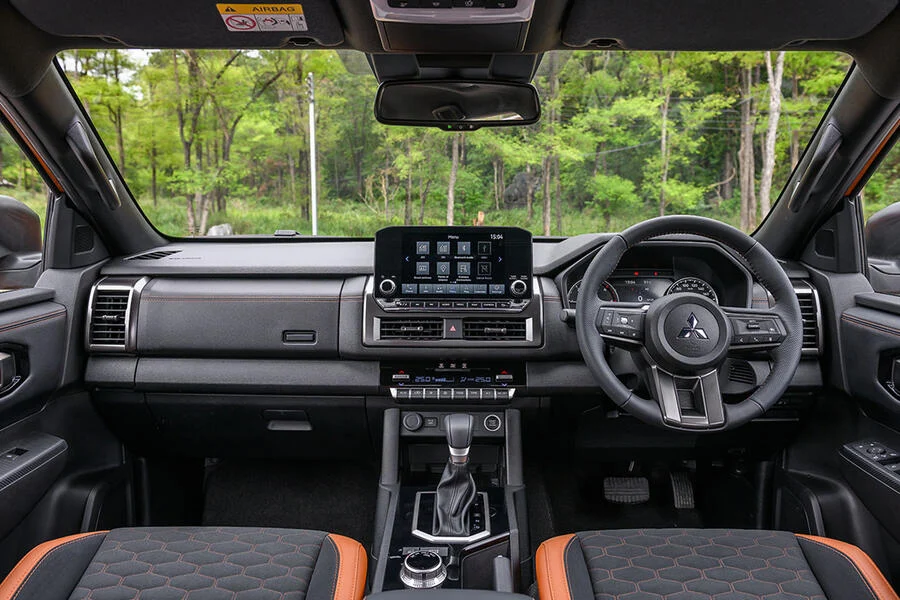
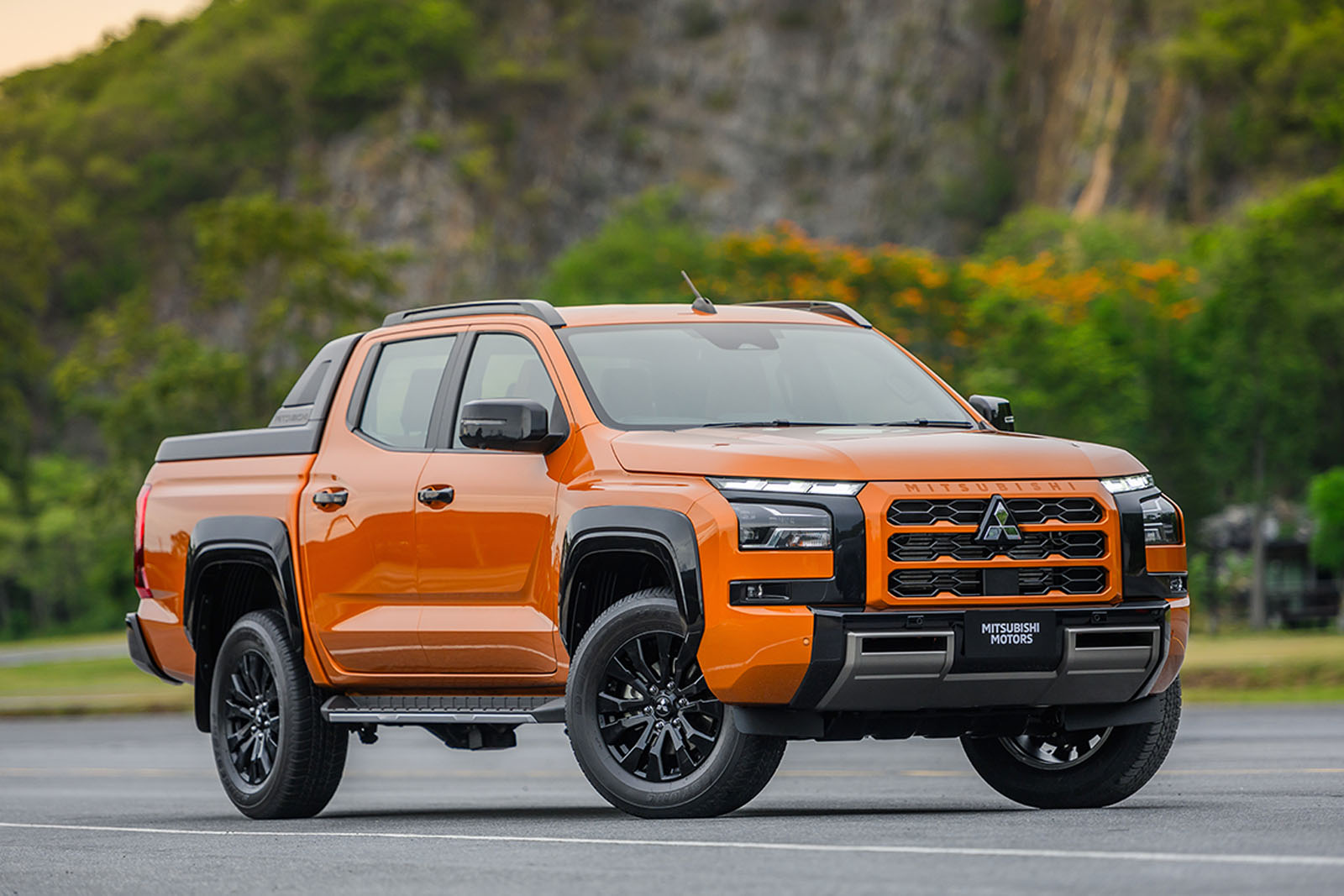
Mitsubishi Motors has officially confirmed its return to the United Kingdom automotive market, scheduled for May, marking a significant strategic pivot for the Japanese manufacturer following its departure three years ago. The spearhead of this return is the sixth-generation L200 pick-up truck, a model that has historically served as a cornerstone of the brand’s British operations. With a starting price of £36,295 excluding VAT, the L200 arrives with a clear mission to reclaim its share of the highly competitive light commercial vehicle (LCV) sector. This pricing strategy places the L200 in a deliberate mid-market position, undercutting the Toyota Hilux, which starts at approximately £40,436 ex-VAT, while sitting above the entry-level Ford Ranger, priced from £30,800 ex-VAT.
The re-entry of Mitsubishi into the UK is not merely a product launch but a comprehensive brand revival. Alongside the standard double-cab L200, the company will introduce a specialized Commercial variant priced at £37,495 excluding VAT. This version is designed specifically for business operators who require a secure, enclosed cargo space within the cabin, achieved by removing the rear seats to create a discrete storage area separate from the external load bed. This dual-track approach highlights Mitsubishi’s intent to cater to both lifestyle buyers and hardcore industrial users, a demographic that remained loyal to the brand even during its absence.
Technical Specifications and Performance Capabilities
The UK-bound L200 will be powered by a sophisticated 2.4-litre four-cylinder twin-turbocharged diesel engine. While full localized specifications for the British market are finalized, data from international markets indicate that this powertrain delivers 201bhp and 347lb ft of torque. To ensure maximum utility and ease of use, all UK models will come equipped with a six-speed automatic transmission and a robust four-wheel-drive system as standard.
Engineering improvements in this sixth generation focus on a newly developed ladder-frame chassis that offers increased rigidity and durability. The L200 maintains its reputation for heavy-duty performance, boasting a towing capacity of 3.5 tonnes and a payload capacity of one tonne. These figures are critical for the UK market, where pick-ups are frequently used for both agricultural work and towing large trailers or caravans.
Mitsubishi will offer two primary trim levels: Titan and Barbarian. The entry-level Titan focuses on utility and value, while the range-topping Barbarian, priced from £39,995 excluding VAT, introduces the "Super Select 4WD-II" system. This advanced drivetrain allows drivers to engage permanent all-wheel drive on paved surfaces—a rarity in the pick-up segment—and includes multiple terrain modes to optimize traction across mud, snow, sand, and rock.
A Brief History: From Exit to Re-Entry
Mitsubishi’s return follows a period of significant turbulence. In July 2020, as part of a global "Small but Beautiful" restructuring plan, Mitsubishi Motors Corporation announced it would freeze the introduction of new models to the European market to cut costs and improve profitability. By 2021, the brand had effectively wound down its new car sales in the UK, transitioning its existing network into a service-only operation under the stewardship of its long-term distributor, The Colt Car Company.
The decision to exit was driven by the immense costs of meeting increasingly stringent European emissions standards and the need to focus resources on the ASEAN (Association of Southeast Asian Nations) region, where the brand enjoys its highest market share. However, the landscape shifted when the Renault-Nissan-Mitsubishi Alliance revised its "leader-follower" strategy. This allowed Mitsubishi to leverage Alliance platforms—primarily from Renault—to re-enter European markets with lower development costs.
In the UK, the brand’s return is being facilitated through a new distribution partnership. The shift from a factory-backed or independent distributor model to a more streamlined operation has paved the way for the L200 and the upcoming Outlander PHEV to find a home in British showrooms once again.
The Strategic Importance of the Outlander PHEV
The L200 will not remain the sole occupant of Mitsubishi’s UK showrooms for long. The company has confirmed that the latest iteration of the Outlander Plug-in Hybrid Electric Vehicle (PHEV) will join the lineup shortly after the L200’s debut. This is a crucial move, as the original Outlander PHEV was the catalyst for the UK’s plug-in hybrid revolution, consistently ranking as the best-selling PHEV in the country for several years prior to 2021.
The new Outlander PHEV is expected to feature a significantly larger battery and a more powerful electric motor setup than its predecessor, offering an electric-only range that could exceed 50 miles. This positioning is vital for attracting corporate fleet buyers who benefit from lower Benefit-in-Kind (BiK) tax rates. The return of the Outlander provides Mitsubishi with a high-volume passenger vehicle to complement the L200’s commercial success, creating a balanced portfolio for the brand’s second act in the UK.
Navigating the Zero-Emission Vehicle (ZEV) Mandate
One of the most significant challenges facing Mitsubishi upon its return is the UK government’s Zero-Emission Vehicle (ZEV) mandate. Introduced in 2024, the mandate requires a specific percentage of every major manufacturer’s new car sales to be zero-emission (battery electric). For 2025, this target is set at 28%, rising to 80% by 2030 and 100% by 2035.
Because the L200 is a diesel-powered commercial vehicle and the Outlander is a plug-in hybrid, Mitsubishi currently lacks a dedicated Battery Electric Vehicle (BEV) to meet these quotas. Frank Krol, Mitsubishi’s European head, acknowledged in 2022 that the brand would require "more than one" electric car to sustain a viable presence in the UK.
Industry analysts suggest that Mitsubishi will likely import a rebadged version of the Renault Scenic E-Tech, potentially marketed under the Eclipse Cross nameplate or a similar moniker. By utilizing the Alliance’s CMF-EV platform, Mitsubishi can quickly introduce a competitive electric crossover without the prohibitive costs of ground-up development. This "badge engineering" strategy has already been deployed in mainland Europe with the Mitsubishi ASX (a rebadged Renault Captur) and the Mitsubishi Colt (a rebadged Renault Clio), though it remains to be seen which of these models will eventually make their way to British shores.
Market Analysis and Competitive Landscape
The UK pick-up market has changed significantly since Mitsubishi’s departure. Several competitors have exited the segment, including the Nissan Navara, Mercedes-Benz X-Class, and Fiat Fullback (which was itself based on the previous L200). This has left a vacuum that the Ford Ranger and Toyota Hilux have largely filled, along with the Isuzu D-Max and the Volkswagen Amarok.
Mitsubishi’s return is timed to capitalize on this narrowed field. The L200 has always enjoyed a reputation for mechanical reliability and "no-nonsense" engineering, qualities that resonate deeply with the UK’s farming and construction communities. Furthermore, the L200’s smaller footprint compared to the increasingly large Ford Ranger makes it a more practical choice for the UK’s narrow rural lanes and urban parking environments.
The pricing of the L200 Barbarian at just under £40,000 ex-VAT is particularly strategic. It offers a premium interior and advanced safety tech—including lane-keep assist, blind-spot monitoring, and autonomous emergency braking—at a price point that remains accessible for small business owners.
Economic and Infrastructure Implications
The return of Mitsubishi is expected to provide a boost to the UK’s automotive retail sector. Many former Mitsubishi dealers have spent the last three years operating as independent garages or multi-franchise sites. The re-introduction of new vehicle stock provides these businesses with a renewed revenue stream through sales, financing, and official warranty servicing.
Furthermore, the focus on the L200 and Outlander PHEV aligns with the UK’s infrastructure transition. While the country continues to expand its EV charging network, there remains a substantial demand for diesel workhorses in remote areas where charging infrastructure is sparse. Simultaneously, the Outlander PHEV serves as a "bridge" technology for buyers not yet ready to commit to a full BEV, providing a versatile option for those with mixed driving cycles.
Chronology of Mitsubishi’s UK Evolution
- 2014: Mitsubishi launches the Outlander PHEV in the UK, becoming a market leader in electrified vehicles.
- July 2020: Mitsubishi Motors Corporation announces the "Small but Beautiful" plan, freezing new model launches in Europe.
- Autumn 2021: The final new Mitsubishi vehicles are sold in the UK as the brand transitions to an aftersales-only model.
- 2022: Renault-Nissan-Mitsubishi Alliance clarifies its "leader-follower" strategy, opening the door for Mitsubishi’s European return using Renault-based models.
- July 2023: The sixth-generation L200 (known as the Triton globally) is unveiled in Thailand, showcasing a new chassis and engine.
- Early 2024: Confirmation of the UK return is finalized, with International Motors Ltd (IML) or similar entities discussing distribution rights.
- May 2024: Official sales of the L200 commence in the UK.
Future Outlook
The success of Mitsubishi’s return will depend heavily on its ability to balance its heritage of rugged, internal combustion engine (ICE) vehicles with the legislative necessity of electrification. The L200 provides the immediate volume and brand recognition needed to restart the engines, but the long-term viability of the brand in the UK will be determined by the reception of the Outlander PHEV and the subsequent rollout of its electric vehicle strategy.
As the UK automotive market continues to navigate high interest rates and the transition to net-zero, Mitsubishi’s return offers consumers more choice in a segment that has seen several key players depart. If the brand can leverage its Alliance partnerships effectively while maintaining the distinct identity of its "triple-diamond" badge, it may well find that its absence has only made the British market fonder of its durable and dependable offerings.