


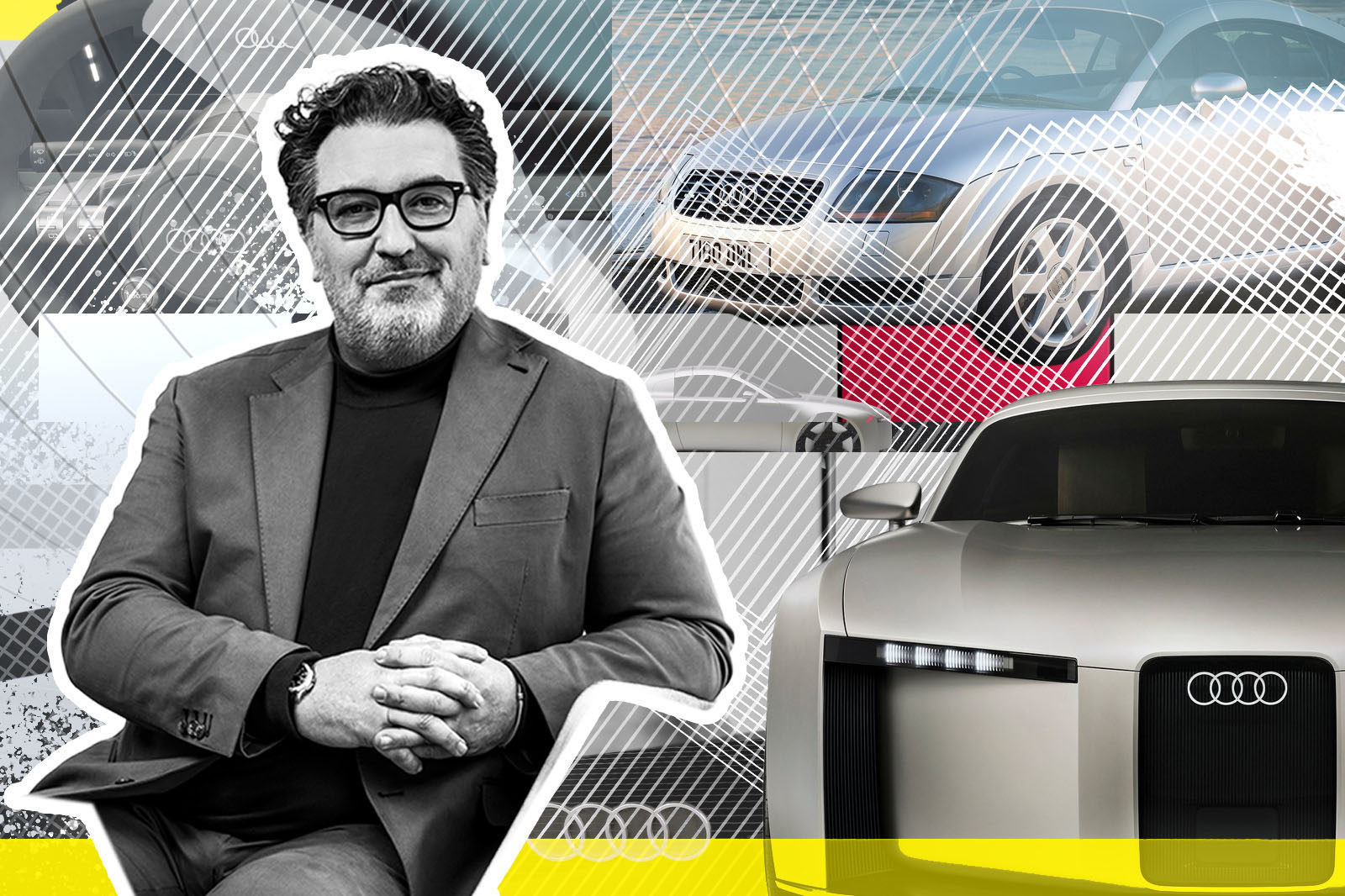
Massimo Frascella, the design veteran who rose to global prominence by spearheading the rebirth of the Land Rover Defender, has officially transitioned to the helm of Audi’s design department with a singular mission: to strip away the superfluous and return the Ingolstadt brand to its roots of "pure simplicity." Frascella’s appointment comes at a critical juncture for Audi as the manufacturer navigates a complex transition to a fully electric lineup while facing intense competition from both traditional European rivals and emerging high-tech Chinese marques. Central to his vision is a return to the design philosophy that first captivated him as a student in 1998—the era of the original Audi TT—a car that broke the mold of automotive styling and established Audi as a leader in avant-garde industrial design.
A Career Defined by Reductive Excellence
Frascella’s professional trajectory reads like a curated tour of the automotive industry’s most influential studios. A graduate of the Istituto d’Arte Applicata e Design (IAAD) in Turin, he began his career at the legendary Bertone studio, an environment that emphasized the sculptural qualities of automotive form. Following a tenure at Ford, where he contributed to the Lincoln and Mercury brands in the United States, Frascella moved to Kia’s California studio. During his six-year stint there, he was instrumental in the exterior design of several high-volume models, including the Sorento, Sportage, and the iconoclastic Kia Soul.
However, it was his 13-year tenure at Jaguar Land Rover (JLR) that solidified his reputation as a master of "reductive design." Rising to become the head of design for both Jaguar and Land Rover, Frascella was the primary architect behind the new Defender—a project fraught with the risk of alienating a hardcore enthusiast base. By distilling the rugged utility of the original Defender into a modern, minimalist silhouette, Frascella proved that heritage could be honored without being mimicked. This success made him the natural choice for Audi, a brand that has spent the last decade grappling with an increasingly complex and aggressive design language that some critics argued had lost the "Bauhaus" clarity of its predecessors.
The 1998 Epiphany: The TT and the Golden Era of Audi Design
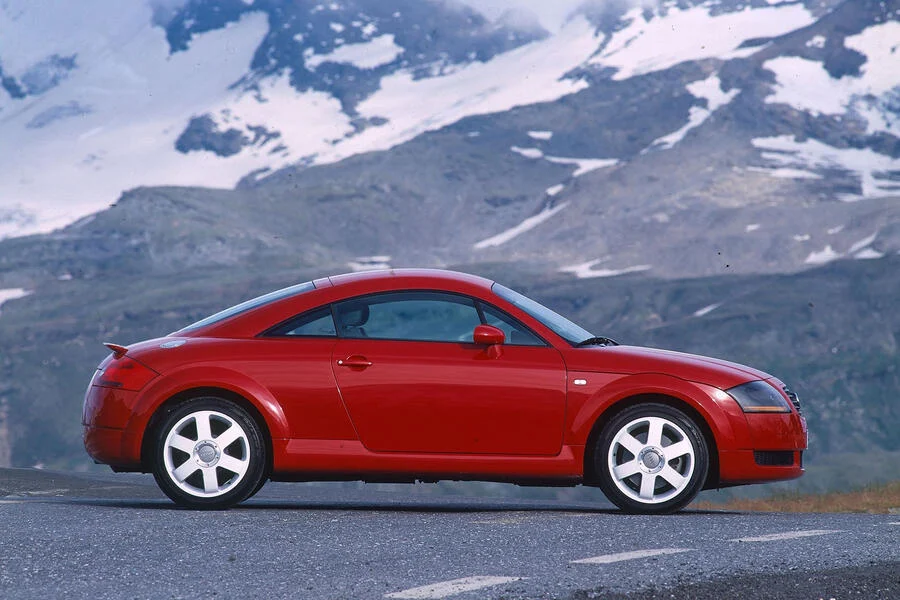
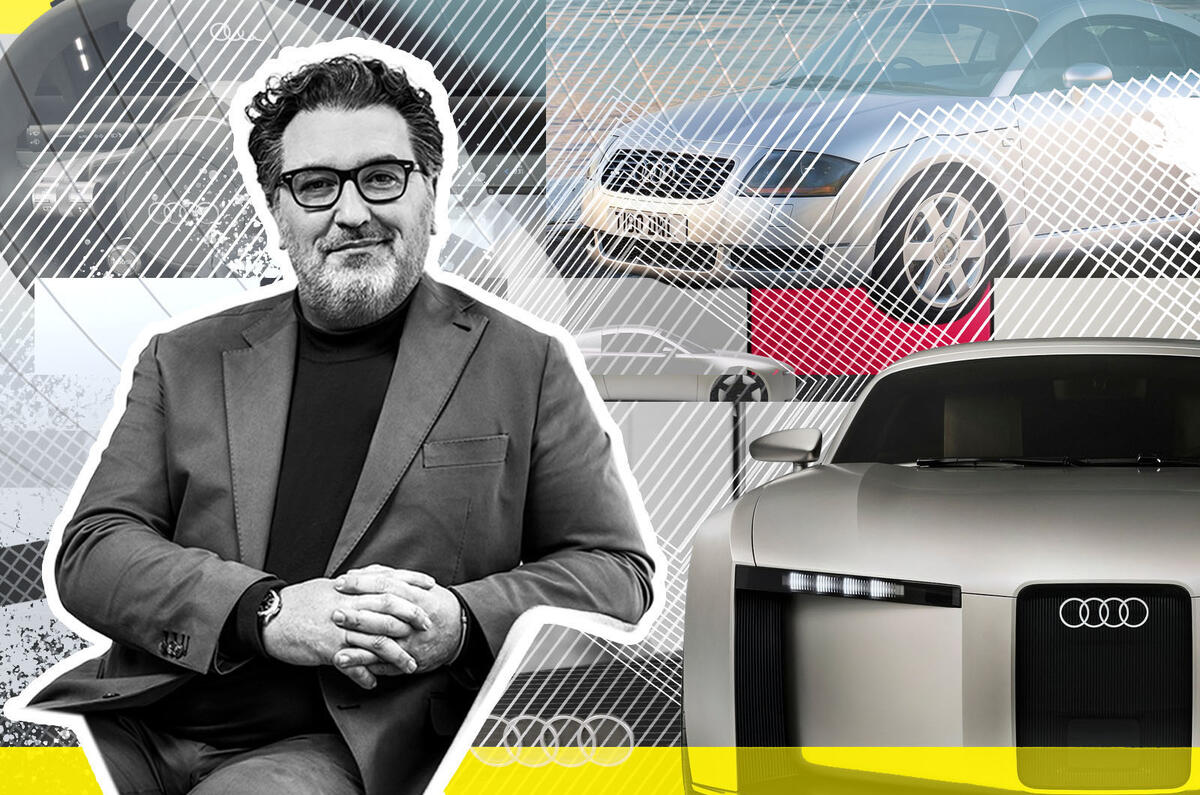
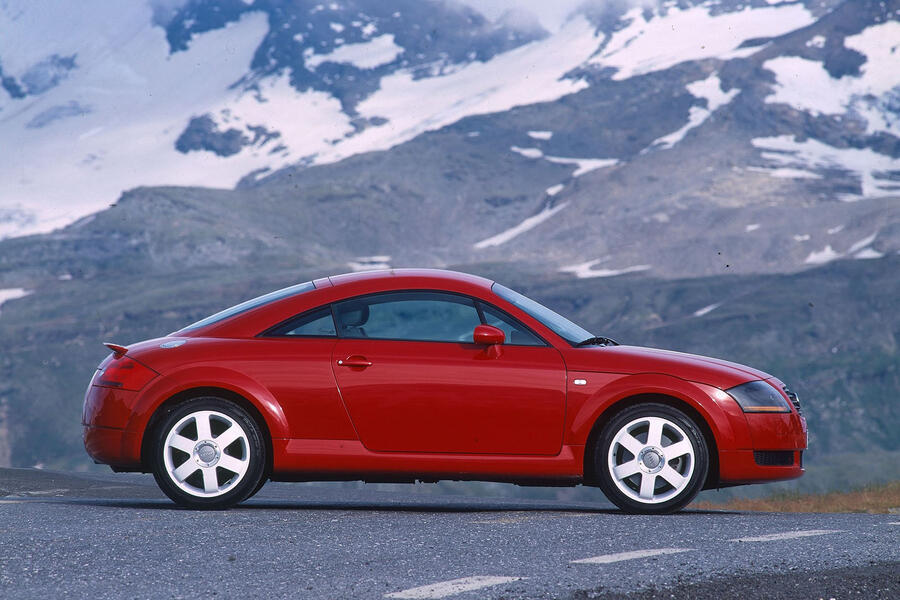
To understand Frascella’s roadmap for Audi’s future, one must look back to 1998. The launch of the first-generation Audi TT, designed under the leadership of Peter Schreyer and J Mays, was a seismic event in the industry. It rejected the prevailing trend of organic, jellybean-like shapes in favor of geometric precision, interlocking circles, and a complete absence of unnecessary ornamentation.
"What really resonated was the highest level of restraint," Frascella explains. He recalls visiting a Turin dealership specifically to study the TT in the metal, noting that the car felt as though it were "made of nothing"—a testament to its purity of form. This era, which also produced the C5-generation Audi A6 and the aluminum-bodied A2, represented a "purple patch" for the brand. These vehicles stood out not through aggression or "visual noise," but through a calm, architectural confidence.

Frascella’s mandate is to recapture that "breath of sharp, cool air." He argues that in an increasingly loud and over-designed automotive landscape, Audi’s competitive advantage lies in becoming a "sanctuary of composure."
Concept C: A Manifesto for the Electric Age
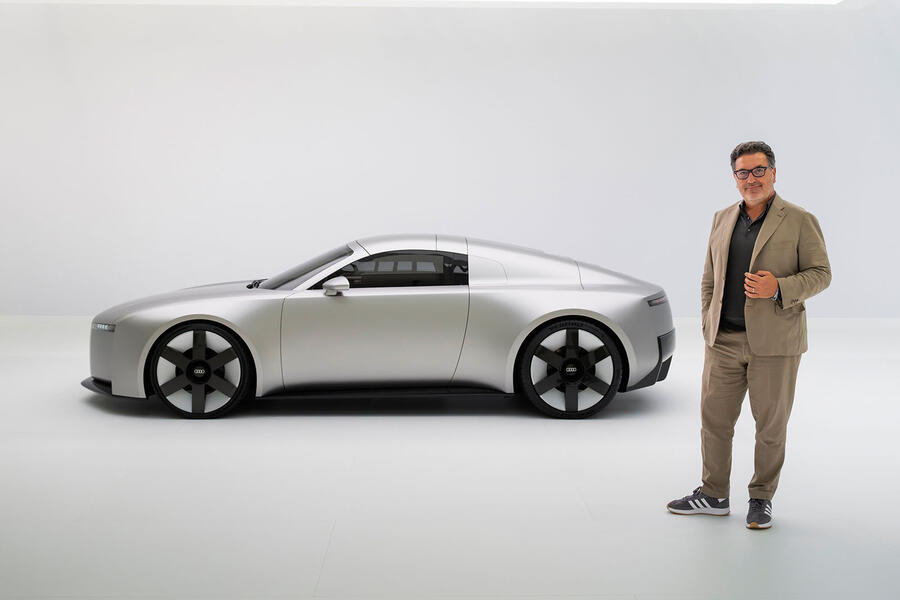
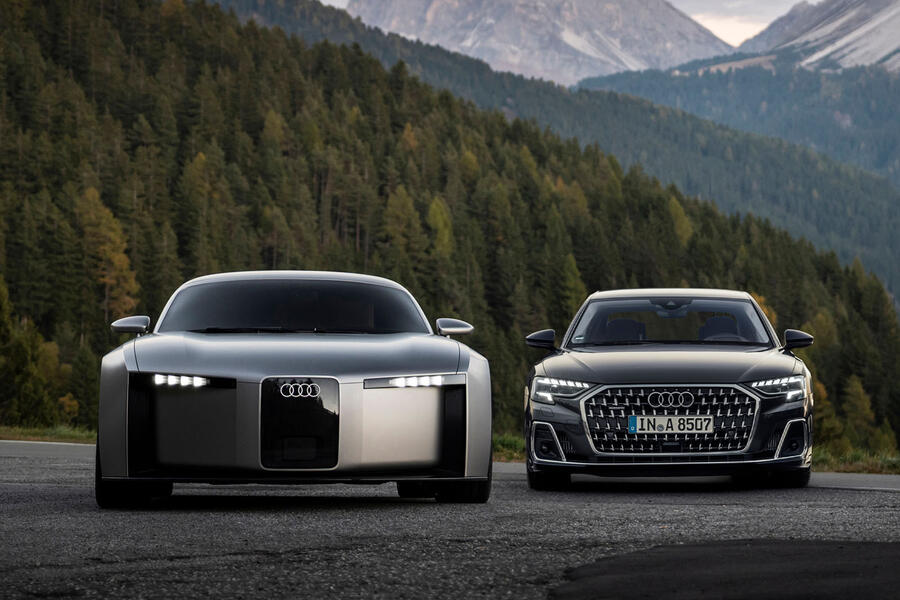
The first tangible evidence of this new direction is the Concept C, a low-slung, monolithic sports coupé that serves as a spiritual successor to the TT. While social media has quickly labeled it a "TT revival," Frascella views it as a broader mission statement for the entire brand.
Technically, the Concept C introduces several key features that will define the next generation of Audi production cars:
- The Vertical Grille: Moving away from the hexagonal "Singleframe" grille that has dominated Audi fascias for twenty years, the Concept C adopts a vertically oriented intake. This is a direct nod to the Type C Grand Prix racers of the 1930s, signaling a shift from modern aggression to historic technicality.
- Titanium Color Palette: The concept debuts a specific titanium paint finish, designed to echo the "Silver Arrows" heritage of the Auto Union era. This is expected to become a signature color for Audi’s top-tier performance models.
- Reductive Surfacing: The bodywork eschews complex creases and "chamfers" in favor of soft, muscular volumes. Frascella describes this as using "one line, two lines at the most" to define the entire character of the vehicle.
The Interior Revolution: The Rise of the "Digital Butler"
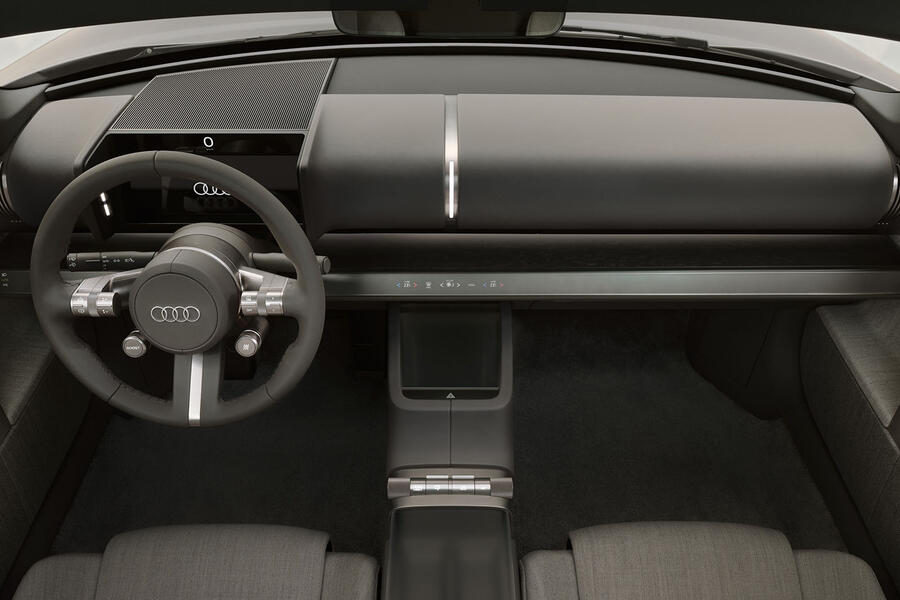
Perhaps the most radical departure under Frascella’s leadership is found inside the cabin. For years, the automotive industry has been locked in an "arms race" of screen real estate, with some manufacturers replacing the entire dashboard with glass panels. Frascella is moving in the opposite direction.
In the Concept C, the primary infotainment screen is a discreet unit that can fold away when not in use. This reflects a philosophy where technology is "in service" to the driver rather than being the focal point of the interior. Frascella uses the term "digital butler" to describe this approach: the technology should be invisible until it is needed.
"Often, technology is used as a display of just technology for the sake of it," Frascella notes. By reducing digital clutter, Audi aims to create a more "rational" and "intelligent" environment. This shift is a direct response to growing customer feedback regarding "screen fatigue" and the safety concerns associated with overly complex touch interfaces. Future Audi cockpits will likely see a return to high-quality physical materials and architectural surfacing, with digital elements integrated more seamlessly into the fabric of the interior.
Design Integration in Formula 1
Frascella’s influence extends beyond road cars and into the pinnacle of motorsport. Audi’s entry into Formula 1 in 2026 coincides with the designer’s arrival, providing a high-profile platform to showcase his aesthetic principles. The 2026 F1 livery, developed under his supervision, is a blend of heritage and modern technical necessity.
The design features "Lava Red," a vibrant evolution of Audi’s traditional racing color, contrasted with exposed carbon fiber and the signature titanium finish. The project required a delicate negotiation between the design team and engineers; while engineers preferred a completely black car to save weight (by avoiding paint), Frascella insisted on enough color to ensure the car remained "recognizably an Audi" from any camera angle. This collaboration highlights Frascella’s belief that design and engineering must be "interlocked" rather than working in silos.
Broader Impact and Market Implications
The "Frascella Era" at Audi represents more than just a change in style; it is a strategic repositioning. As the Volkswagen Group as a whole seeks to streamline its operations and differentiate its brands more clearly, Audi must solidify its position as the "sophisticated" and "technical" choice within the premium segment.
Analysis of Strategic Shift:
- Brand Equity: By leaning into its 1990s heritage, Audi is leveraging a period when it was perceived as the most innovative brand in terms of design and material science (e.g., the Space Frame technology).
- Global Competition: In the Chinese market, where EV buyers prioritize "digital luxury," Frascella’s minimalist approach is a gamble. However, it may provide a unique selling proposition (USP) against the highly decorative and screen-heavy interiors of local competitors.
- Sustainability: Reductive design often aligns with sustainability goals. Fewer parts, simpler surfaces, and a move away from decorative plastics can lead to more efficient manufacturing and better recyclability.
Chronology of Audi’s Design Evolution Under Frascella
- February 2024: Massimo Frascella officially joins Audi as Head of Design, succeeding Marc Lichte.
- Late 2025: Unveiling of the 2026 Formula 1 livery, the first public project overseen by Frascella.
- Early 2026: Debut of Concept C, outlining the "four pillars" of the new design strategy: Clarity, Technicality, Intelligence, and Emotion.
- Late 2027: Expected launch of the first production model fully realized under the new design language (likely a mid-sized electric sedan or crossover).
Conclusion: Designing for the Next Generation
Massimo Frascella is aware that he is playing a "long game." His rejection of "retro" design—which he describes as a "dangerous game" that offers only short-term rewards—indicates a commitment to creating a timeless aesthetic that will remain relevant well into the 2030s.
By applying the principles of the original TT to a modern, diverse lineup that includes massive SUVs and high-performance EVs, Frascella is attempting to weave a thread of "inherent universality" through the brand. If successful, he will not only have revived the spirit of Audi’s most iconic sports car but will have redefined what "premium" means in an age of digital excess: a return to the beauty of "almost nothing."