


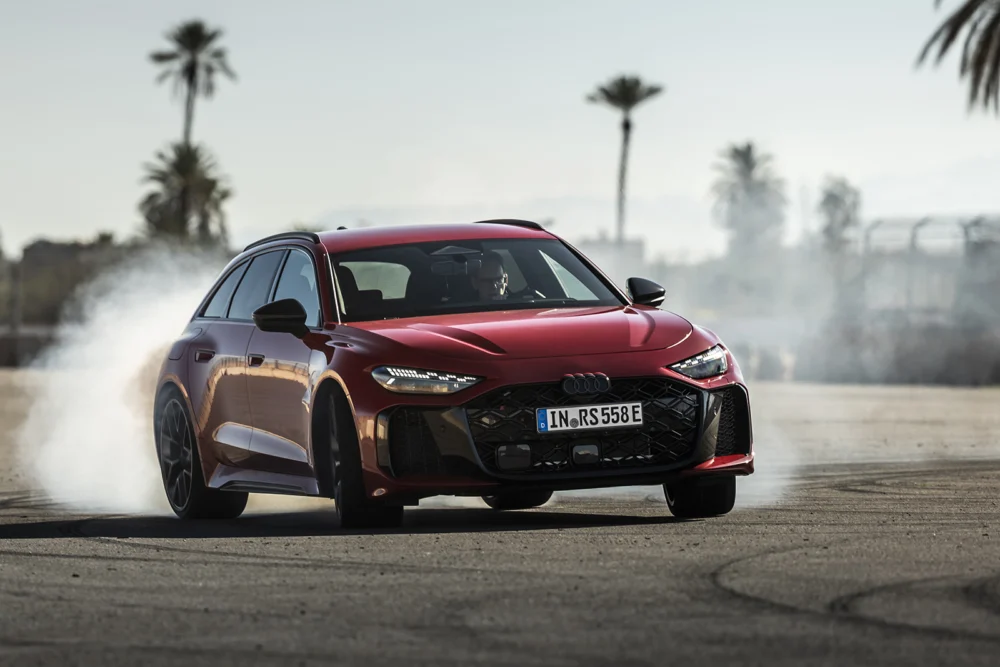
The automotive landscape is currently witnessing a transformative era where the integration of high-performance electrification meets traditional internal combustion engineering. At the forefront of this evolution is the development of the latest Audi RS5, a vehicle that represents a significant departure from its predecessors in both nomenclature and mechanical philosophy. As Audi transitions its naming convention—utilizing even numbers for battery-electric vehicles (BEVs) and odd numbers for internal combustion engines (ICE)—the new RS5 emerges as the high-performance flagship of the Premium Platform Combustion (PPC) architecture. This transition brings with it a host of technical challenges, most notably the management of a substantial 2.4-tonne curb weight, a figure that places the vehicle in a new category of performance dynamics.
The Evolution of the RS5: A New Architectural Era
The shift from the B9 generation to the upcoming B10 platform marks one of the most drastic changes in the history of the Audi Sport division. The decision to move the RS5 into a weight bracket of 2,400 kilograms is primarily driven by the inclusion of advanced plug-in hybrid (PHEV) hardware. To maintain the "RS" pedigree, Audi engineers have had to rethink the fundamental physics of how the car interacts with the road. Unlike many of its competitors, which have turned to active rear-wheel steering to mask the wheelbase and mass of heavy performance sedans, Audi has opted for a different path.
The engineering team, led by chassis experts including Stephan Bamberger, determined that active rear-steer was unnecessary for the RS5. This decision was based on the vehicle’s optimized weight distribution, which sits at a near-perfect 49:51 front-to-rear ratio. By achieving a rear-biased balance, the car inherently possesses a more neutral handling characteristic than the nose-heavy Audi models of the past. The absence of rear-steer is not merely a weight-saving measure but a commitment to a more predictable and linear steering response, which the engineering team believes provides a more authentic connection between the driver and the asphalt.
Managing Mass Through Intelligent Torque Vectoring
In lieu of rear-steer, Audi has leaned heavily into electronic torque management. The RS5 utilizes a sophisticated rear-axle motor system designed to manipulate the vehicle’s yaw rate through active intervention. During aggressive cornering, the system is programmed to slow the inside rear wheel, effectively pulling the car into the apex. Simultaneously, it applies positive torque to the outside rear wheel, overspeeding it to create a pivot effect.
This technology serves a dual purpose. For the enthusiast driver, it allows for the initiation and maintenance of controlled oversteer slides, a feat that is traditionally difficult for a heavy, all-wheel-drive vehicle. However, for the majority of driving scenarios, the system’s most significant impact is felt well within the limits of grip. On corner entry, the torque vectoring mimics the agility of a much lighter car, neutralizing the understeer that often plagues vehicles exceeding the two-tonne mark. This "active" handling profile ensures that the RS5 remains sharp and responsive during daily commutes and spirited mountain drives alike.
Suspension Engineering: Coil Springs and Passive Stability
One of the more surprising technical revelations regarding the new RS5 is the move away from air suspension in favor of a traditional coil-spring setup. While air suspension is often favored in high-end grand tourers for its ability to mask weight and provide a "wafting" ride quality, Audi Sport engineers prioritized structural rigidity and consistent damping.
The RS5 features adaptive twin-valve dampers offering four distinct stages of adjustment. This allows the vehicle to transition from a compliant road car to a stiff, track-focused machine at the touch of a button. Complementing these dampers are passive anti-roll bars described by Bamberger as "the biggest you can find on the market." The use of massive passive bars rather than complex active roll stabilization was a deliberate choice to keep the car as flat as possible in both roll (side-to-side) and pitch (front-to-back). By minimizing body movement, the suspension allows the drivetrain and tires to operate at their maximum efficiency, ensuring that the 2.4-tonne mass does not overwhelm the chassis during rapid direction changes.
Development Chronology: From Concept to Refinement
The development cycle of the RS5 has been an exercise in rigorous calibration. According to internal reports from Audi’s testing facility at the Nürburgring, early iterations of the chassis were described as lacking cohesion. Stephan Bamberger famously likened the early development prototypes to a student running with a loosely strapped satchel bumping around on their back. This analogy highlighted the initial struggle to harmonize the heavy battery and hybrid components with the chassis’s athletic aspirations.
Over a multi-year timeline, the focus shifted to "tightening the straps" of that metaphorical satchel. This involved hundreds of hours of software tuning for the dampers and the torque-vectoring rear differential. The goal was to ensure that the mass of the car felt like a singular, integrated unit rather than a collection of heavy parts fighting against each other. The final calibration represents a significant milestone in Audi’s ability to tune the PPC platform for high-performance applications.
The Science of the Contact Patch: Wheel and Tire Strategy
To translate its immense power to the road, the RS5 relies on a highly specific wheel and tire configuration. While 20-inch wheels are standard, Audi anticipates that the majority of buyers will opt for the 21-inch variants. The tire of choice is a 285/30 profile, available as a standard Bridgestone or a high-performance Pirelli P Zero R, the latter being exclusive to the 21-inch wheels.
A critical detail in the RS5’s handling prowess is the staggered wheel width. Although the tires are the same size front and rear, the wheels themselves differ: 10J on the front and 10.5J on the rear. This slight increase in rear width is designed to stretch the tire sidewall further, increasing its lateral stiffness. This provides the driver with greater control and a more stable platform when the rear motor applies high levels of torque during corner exit. It is a subtle engineering detail that speaks to the "no-stone-unturned" approach Audi has taken to mitigate the vehicle’s weight.
Steering Precision and the 13:1 Ratio
The steering system has undergone a total recalibration compared to the standard A5. The RS5 features a steering ratio of 13:1, a significant quickening from the 15:1 ratio found in the base models. This results in just over two turns from lock to lock, providing a direct and communicative feel.
Engineers have also implemented a variable rate within the rack itself. The steering is slightly slower and more stable at the center point—preventing the car from feeling "twitchy" during high-speed highway cruising—but becomes progressively faster as the driver adds steering angle. This allows for effortless maneuvering in tight urban environments and sharp responses on technical circuits, further masking the physical dimensions of the car.
Competitive Landscape and Industry Impact
The move toward heavy, high-output hybrids is not unique to Audi. The RS5 enters a market where its primary rivals, the Mercedes-AMG C63 S E Performance and the BMW M3, are also grappling with the realities of electrification and emissions regulations. While Mercedes-AMG opted for a four-cylinder hybrid setup, Audi’s decision to retain a V6 engine (as inferred by the PPC architecture’s capabilities) paired with a robust electric motor places it in a strategic middle ground.
Industry analysts suggest that the RS5’s technical package is a direct response to the "weight penalty" of modern performance. By focusing on weight distribution (49:51) and mechanical grip rather than digital crutches like rear-steer, Audi is positioning the RS5 as the "driver’s choice" in the hybrid era. The success of this approach will likely influence the development of future RS models, including the eventual replacement for the RS7.
Broader Implications for Audi Sport
The technical details of the RS5 reveal a broader strategy for Audi Sport GmbH. As the brand moves toward a fully electric future by 2033, the RS5 serves as a bridge, proving that the emotional and dynamic characteristics of an RS car can be maintained despite the added weight of batteries. The focus on "flat" handling, massive anti-roll bars, and sophisticated torque vectoring demonstrates a mastery of chassis electronics that will be vital as Audi’s performance cars become increasingly electrified.
The RS5 is more than just a new model; it is a laboratory for the future of the brand. If Audi can successfully convince enthusiasts that a 2.4-tonne hybrid can be as engaging as a lightweight ICE predecessor, they will have cleared the most significant hurdle in the path to electrification. The combination of the "satchel-tightening" development philosophy and the refusal to compromise on mechanical fundamentals suggests that the RS5 is prepared to uphold its legacy, regardless of the challenges posed by the scales.