


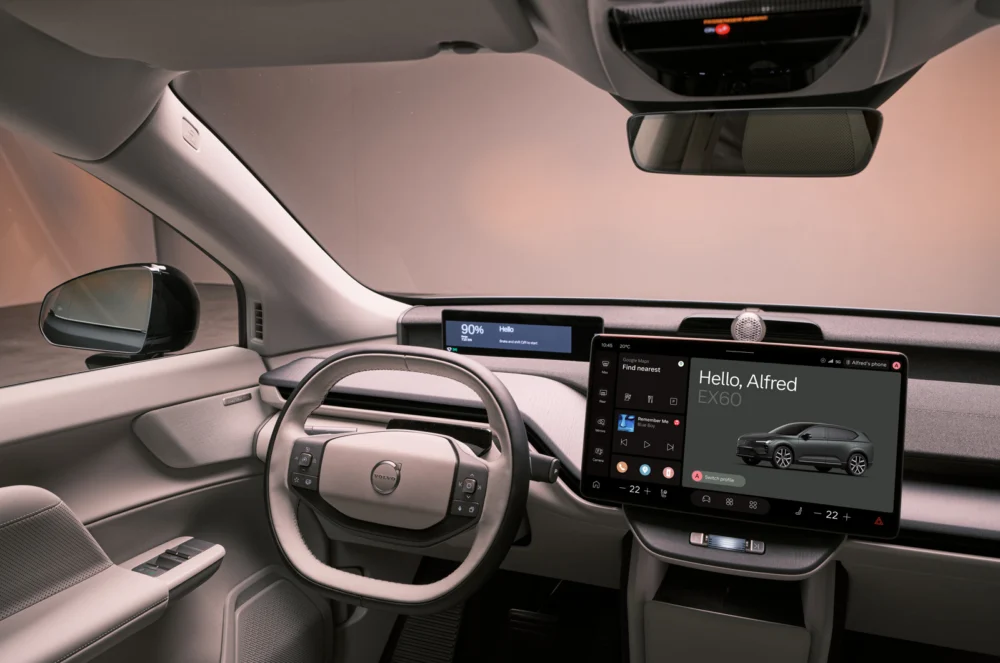
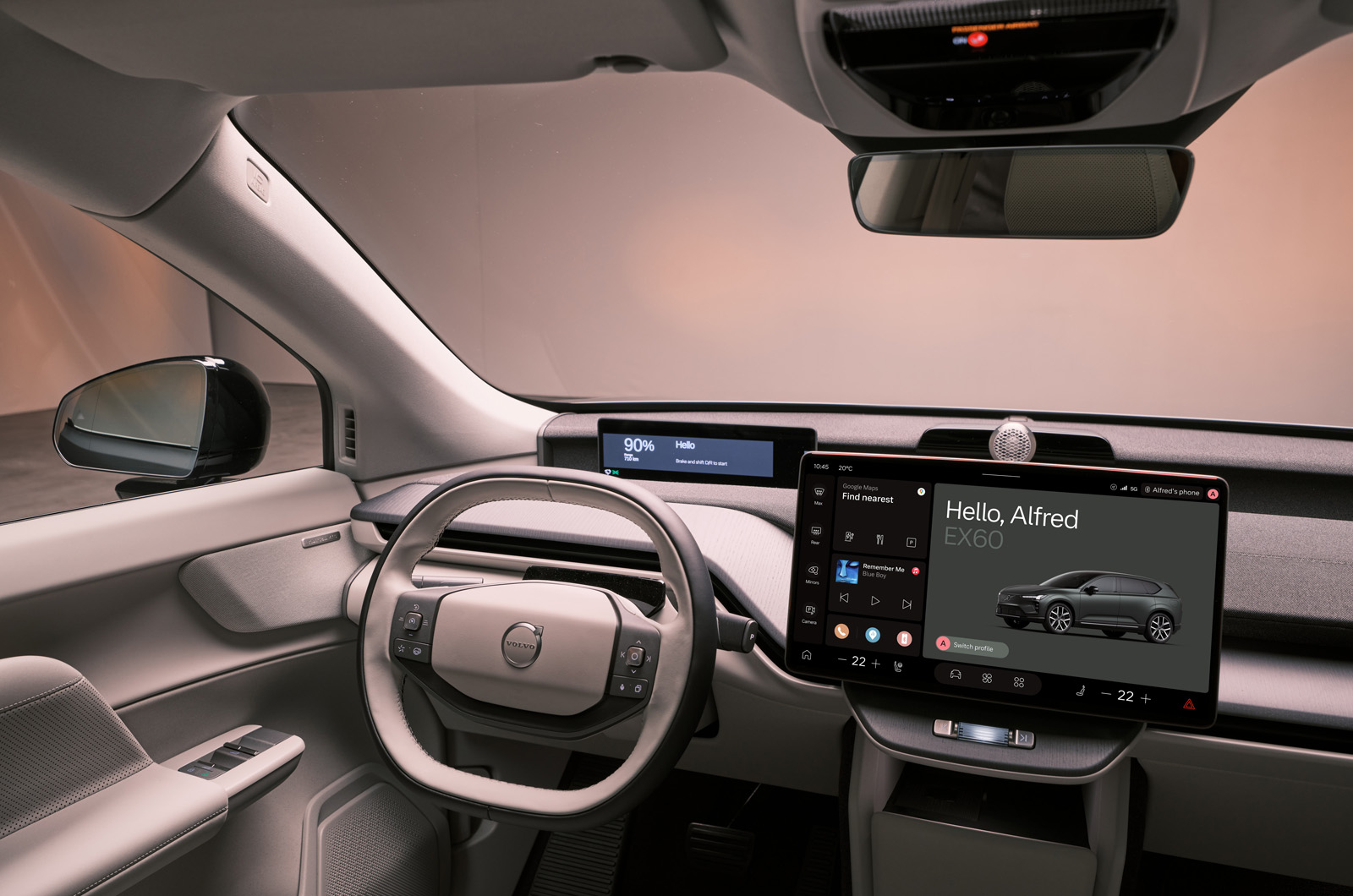
Volvo Cars has officially initiated what is being described as one of the most extensive over-the-air (OTA) software deployments in automotive history, targeting approximately 2.5 million vehicles across the globe. This strategic move aims to retrofit older models with the brand’s latest infotainment interface, effectively narrowing the technological gap between legacy hardware and the company’s flagship electric vehicles. Every Volvo model equipped with the Android Automotive operating system—a platform first introduced in 2020—is slated to receive the new Volvo Car UX. This interface was originally designed for the company’s newest generation of vehicles, including the EX30 compact SUV, the EX90 flagship, and the recently announced EX60. By delivering this update remotely, Volvo is attempting to fulfill the promise of the "software-defined vehicle," ensuring that a car purchased four years ago can maintain functional and aesthetic parity with a model rolling off the assembly line today.
The Strategic Shift Toward Software-Defined Longevity
The automotive industry is currently undergoing a fundamental transformation, moving away from a traditional model where a vehicle’s features were fixed at the point of sale. In the modern era, connectivity and remote update capabilities have become the primary benchmarks for luxury and utility. Volvo’s latest initiative is a high-stakes demonstration of this philosophy. Anders Bell, Volvo’s Chief Technology Officer, has highlighted the scale of this project, noting that while other manufacturers like Tesla have long utilized OTA updates to refresh their fleets, Volvo’s global footprint and diverse regional requirements make this specific rollout particularly complex and significant.
The core objective of the update is to harmonize the user experience across the entire lineup. Historically, owners of older vehicles would have to wait for a mid-cycle "facelift" or an entirely new generation of hardware to access improved software features. By decoupling software improvements from hardware cycles, Volvo is aiming to increase the residual value of its vehicles and foster greater brand loyalty. The ability to "refresh" a car’s interior experience through a wireless download is a powerful tool in an era where consumer electronics, such as smartphones and tablets, have conditioned users to expect frequent, meaningful software improvements.
Technical Scope and Model Compatibility
The update is specifically designed for vehicles running the Google-based Android Automotive OS. This journey began in 2020 with the launch of the XC40 Recharge, which has since been rebranded as the EX40. Since that debut, Volvo has integrated the Google-based system into the majority of its portfolio, including the C40 (now EC40), the XC60, S60, V60, XC90, S90, and V90.
While the goal is to provide a uniform experience, Volvo engineers have had to account for varying hardware specifications across the 2.5 million affected units. Vehicles produced in 2020 and 2021 utilize older silicon processing chips and, in many cases, different screen dimensions compared to the expansive, high-resolution displays found in the EX90. Bell acknowledged these constraints, stating that while the updated models will feature the same fundamental infotainment logic and aesthetic as the EX90, slight variations will exist to ensure performance stability on older hardware. The "Volvo Car UX" focuses on reducing the number of taps required to access common functions, featuring a revised home screen that prioritizes navigation, media, and phone controls, while keeping climate settings permanently accessible.
Chronology of Volvo’s Digital Transformation
To understand the magnitude of this update, it is necessary to examine Volvo’s digital evolution over the last decade:
- 2014–2015: Volvo introduces the Sensus Infotainment system with the second-generation XC90. It was one of the first systems to feature a portrait-oriented touchscreen, signaling Volvo’s intent to lead in cabin technology.
- 2017: Volvo announces a strategic partnership with Google to develop the next generation of infotainment based on Android.
- 2020: The XC40 Recharge launches as the first Volvo to feature the Android Automotive OS, offering integrated Google Maps, Google Assistant, and the Google Play Store.
- 2021–2023: The Android-based system is rolled out across the entire Volvo lineup, replacing Sensus. However, the UI remained relatively static during this period.
- 2023: The EX30 and EX90 are unveiled, showcasing a brand-new, more intuitive UX designed to handle the complexities of electric vehicle management and advanced driver assistance systems (ADAS).
- Current Phase: The global OTA rollout commences, bringing the 2023-standard UX to vehicles produced as far back as 2020.
- Future (Spring 2025): Volvo plans to integrate Google Gemini, a more advanced AI-driven voice assistant, into the updated system architecture.
Enhancing the User Experience: Key Features of the New UX
The new Volvo Car UX is more than just a visual refresh; it represents a significant overhaul of the human-machine interface (HMI). Based on feedback from thousands of drivers, Volvo has optimized the layout to minimize driver distraction.
- Contextual Bar: The system now features a "contextual bar" at the bottom of the screen. This bar changes based on the vehicle’s current state. For example, if the car is parked, buttons for the 360-degree camera or trunk release might appear. If the car is in motion, navigation or media controls take precedence.
- One-Tap Access: The update aims to put the most frequently used apps—such as Spotify, Google Maps, and phone controls—just one tap away from the home screen. This reduces the time the driver’s eyes are off the road.
- Improved EV Integration: For electric models like the EX40 and EC40, the update provides more intuitive charging information, including real-time availability of charging stations and optimized route planning that accounts for battery pre-conditioning.
- Visual Cohesion: The typography, icons, and color palettes are updated to match the minimalist, "Scandinavian" aesthetic found in the new EX series, providing a modern feel to older cabins.
Official Responses and Market Reactions
The response from the automotive tech community has been largely positive, viewing this as a necessary step for traditional manufacturers to remain competitive against tech-heavy startups. Anders Bell’s assertion that this is "one of the biggest" updates reflects Volvo’s confidence in its backend infrastructure. By deploying this update globally, Volvo is testing its ability to manage massive data transfers across varying network qualities in different countries.
Industry analysts suggest that this move is also a preemptive strike against "software obsolescence." As vehicles become more like computers on wheels, the fear that a car’s tech will feel dated within a few years is a significant concern for buyers. Volvo’s commitment to retrofitting older models suggests a shift in the business model—moving toward a relationship where the manufacturer provides continuous value throughout the vehicle’s lifecycle.
Internal sources at Volvo indicate that the development team focused heavily on "silicon optimization." Ensuring that the new, feature-rich UX runs smoothly on the Atom or early-generation Tegra processors found in 2020 models was a primary engineering challenge. The successful deployment of this update would signal that Volvo has mastered the art of "legacy support," a feat that has traditionally been the domain of smartphone manufacturers like Apple and Samsung rather than car companies.
Broader Impact and Industry Implications
The implications of this 2.5-million-car update extend beyond Volvo’s customer base. It sets a new benchmark for the "Premium" segment. When a consumer chooses between a used Volvo and a competitor’s vehicle, the knowledge that the Volvo will receive the latest software features free of charge becomes a compelling selling point.

Furthermore, the upcoming integration of Google Gemini highlights the future of the in-car experience. As Bell noted, once the UX is updated to the latest standard, swapping the current Google Assistant for the AI-powered Gemini becomes a "pretty easy update." This suggests that Volvo is building a modular software foundation that can easily adopt future AI breakthroughs. This could lead to cars that understand natural language more effectively, predict driver needs based on habits, and provide more sophisticated concierge services.
However, the move is not without risks. Massive OTA updates carry the potential for "bricking" modules if the download is interrupted or if there are unforeseen bugs in specific hardware configurations. Volvo has mitigated this by staggered regional rollouts, allowing them to monitor the update’s performance in smaller batches before the full global release.
Conclusion: The Future of the Connected Volvo
As Volvo moves toward becoming a fully electric car maker by 2030, the role of software will only grow. This current OTA rollout is a clear signal that Volvo does not view its older internal combustion and hybrid models as obsolete, but rather as part of a unified, connected fleet. By standardizing the interface across 2.5 million vehicles, Volvo is creating a massive, cohesive ecosystem that allows for faster deployment of future services, safety improvements, and entertainment options.
The transition from a hardware-focused company to a software-centric one is a difficult journey, but by successfully delivering a modern UX to a 2020 XC40, Volvo is proving that the "age" of a car may soon be defined more by its software version than its manufacture date. As the update continues to reach drivers from Gothenburg to Guangzhou, the automotive world will be watching to see if this sets a permanent new standard for how manufacturers maintain their relationships with vehicles long after they leave the showroom floor.