


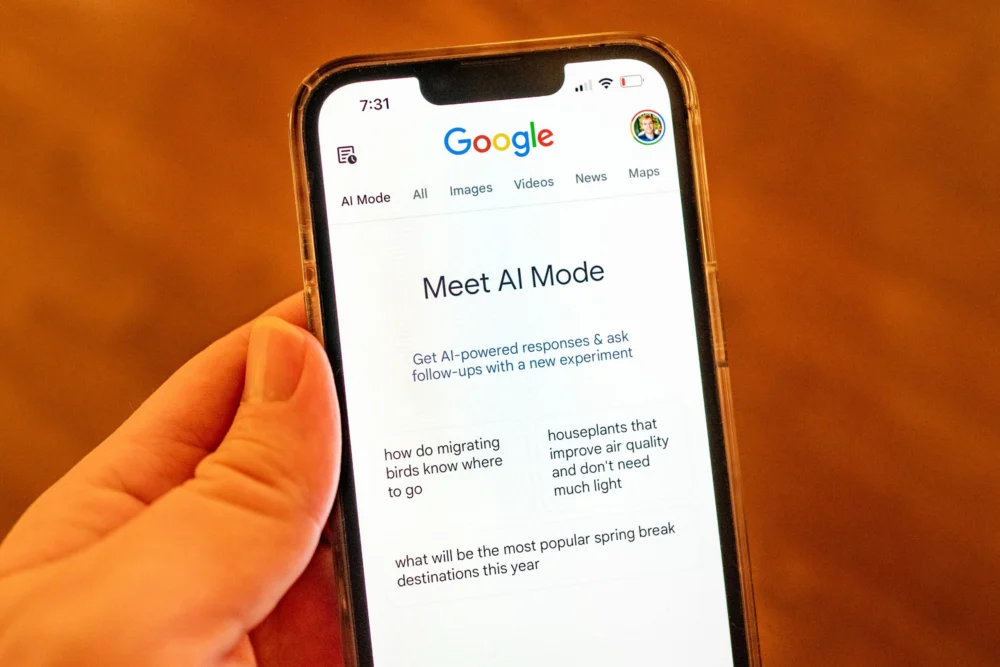
Google has significantly expanded access to its "Canvas in AI Mode" feature, making it available to all users in the United States in English. This strategic rollout, announced on March 4, 2026, marks a pivotal moment in the company’s ambition to deeply integrate generative artificial intelligence into its ubiquitous search platform. Initially launched as an experimental feature within Google Labs last year, Canvas in AI Mode is now poised to transform how millions of users interact with Google Search, offering advanced capabilities for project organization, in-depth research, and creative content generation directly within the search interface.
The core functionality of Canvas in AI Mode is designed to empower users with a versatile workspace for complex tasks. It allows individuals to outline and plan projects, conduct comprehensive research, draft various documents, and even create custom tools directly within Google Search. This expansion builds upon its initial promise, where it was suggested for applications such as compiling study guides from uploaded notes and sources, or converting research reports into diverse formats like webpages, quizzes, or audio overviews. This latter functionality, in particular, showcases an interesting overlap with Google’s dedicated research tool, NotebookLM, suggesting a convergence of AI-powered productivity tools across Google’s ecosystem.
The Evolution of Canvas: From Labs to Mainstream Adoption
The journey of Canvas from an experimental concept to a broadly accessible feature underscores Google’s iterative approach to AI development and deployment. Its initial unveiling within Google Labs in July 2025 allowed a select group of users to test and provide feedback on its capabilities. This "Labs" phase is a critical component of Google’s innovation cycle, enabling the company to refine features based on real-world usage before a wider release. During this period, Canvas was also made available within Gemini, Google’s advanced conversational AI platform. Subscribers to Google AI Pro and Google AI Ultra tiers have enjoyed access to the latest Gemini 3 model, which boasts a substantially larger 1 million-token context window, facilitating more complex and extensive projects within Canvas. This tiered rollout strategy allowed Google to test the feature’s scalability and robustness with a more engaged, early-adopter audience before pushing it to the broader public.
The current expansion to all U.S. users through Google’s AI search feature, "AI Mode," represents a deliberate move to democratize access to these powerful AI tools. By embedding Canvas directly within Google Search, the company leverages its unparalleled reach—serving billions of users globally—to accelerate the adoption of its generative AI offerings. This strategy stands in stark contrast to features that might require users to actively seek out and subscribe to new platforms, effectively bringing advanced AI capabilities to where users already are. This wide exposure is expected to not only increase user engagement with AI Mode but also to solidify Google’s position in the rapidly evolving AI landscape.
Deep Dive into Canvas Functionality and Use Cases
Canvas in AI Mode offers a rich suite of functionalities that extend beyond simple information retrieval. Users can initiate a Canvas session by selecting the new "Canvas" option from the tool menu (+) within AI Mode. Upon describing their desired outcome, Canvas dynamically generates a side panel, acting as a collaborative workspace. This panel allows users to seamlessly pull together information from across the web and Google’s vast Knowledge Graph, creating a centralized hub for their projects.
For researchers and students, Canvas can be a game-changer. Imagine a student needing to understand a complex historical event. They could prompt Canvas to "create a study guide on the causes and effects of World War I, including key figures and dates, drawing from reputable historical sources." Canvas would then aggregate relevant information, present it in an organized format, and allow the student to refine, expand, or quiz themselves on the material. Furthermore, the ability to transform a research report into a web page or an audio overview offers unprecedented flexibility in presenting information, catering to diverse learning and consumption preferences.

For developers and creators, Canvas provides an intuitive environment for rapid prototyping and ideation. Users can describe an app or game idea in natural language, and Canvas can generate the underlying code, effectively transforming a concept into a functional, shareable prototype. This capability significantly lowers the barrier to entry for non-technical users looking to experiment with software development. The ability to test functionality directly, toggle to view the code, and refine the app’s behavior by chatting with Gemini further enhances this collaborative development process. This could revolutionize educational coding, citizen development, and rapid innovation cycles for small businesses or individual projects.
Writers and content creators can also leverage Canvas for refining creative writing drafts, generating outlines, brainstorming ideas, or receiving constructive feedback on projects. For instance, a writer struggling with plot development could feed their current draft into Canvas and ask for alternative story arcs or character motivations. This interactive feedback loop, powered by Gemini, can significantly boost productivity and creative output.
Google’s Broader AI Strategy and Competitive Landscape
The expansion of Canvas in AI Mode is not an isolated event but a critical component of Google’s overarching "AI-first" strategy, first articulated by CEO Sundar Pichai in 2017. This vision has seen Google aggressively invest in AI research and development, culminating in foundational models like LaMDA, PaLM, and most recently, Gemini. The integration of Canvas into AI Mode within Google Search represents a tangible manifestation of this strategy, aiming to embed AI assistance into the very fabric of daily digital interactions.
Google’s move also intensifies the competition in the rapidly evolving generative AI market. Key rivals like OpenAI, with its ChatGPT platform, and Anthropic, with Claude, are also pushing the boundaries of AI-powered productivity tools.
OpenAI’s ChatGPT offers its own "Canvas" feature, which tends to be triggered automatically based on the user’s query, providing a more passive, context-driven assistance. This approach aims for seamless integration, where the AI proactively offers to help organize or elaborate on complex requests. In contrast, Google’s Canvas and Anthropic’s Claude often require a more direct user initiation, allowing users to explicitly choose when and how they want to engage with the advanced workspace. While the underlying capabilities—assisting with writing, project planning, and turning ideas into structured outputs—are similar across these platforms, the user interaction model and integration points differ significantly.
Google’s primary advantage in this AI race is the sheer scale and ubiquity of its search engine. With over 90% market share in global search, Google has an unparalleled distribution channel to introduce its AI innovations to billions of users. This broad exposure means that even users who haven’t actively sought out AI tools like Gemini or ChatGPT will now encounter Canvas directly within their familiar search environment. This "ambient AI" approach could accelerate mainstream adoption of generative AI in ways competitors might struggle to replicate without similar ecosystem integration.
Implications for Users, Businesses, and the Future of Search
The widespread availability of Canvas in AI Mode carries significant implications across various sectors:

For Individual Users: The feature promises a new era of personal productivity, transforming Google Search from a mere information retrieval tool into a powerful creation and organization hub. Users can expect to tackle complex tasks more efficiently, whether it’s planning a trip, learning a new skill, or managing personal projects. The barrier to entry for creative and technical tasks may also decrease, empowering more individuals to experiment with coding, content creation, and strategic planning.
For Businesses and Professionals: Small businesses, freelancers, and large enterprises can leverage Canvas for a multitude of professional applications. Marketing teams could use it to draft campaign strategies, sales professionals to prepare client presentations, and educators to develop lesson plans. The ability to quickly generate code for custom tools or prototypes could also accelerate innovation cycles within organizations, fostering a more agile and AI-powered workflow. Industry analysts project that the global market for generative AI software, which includes tools like Canvas, could reach hundreds of billions of dollars by the end of the decade, driven largely by productivity enhancements across industries.
For the Future of Search: This expansion solidifies Google’s vision for the future of search, moving beyond simple links to directly answering complex queries, organizing information, and assisting in creation. AI Mode, with Canvas at its heart, blurs the lines between search, productivity suites, and creative tools. This evolution is likely to redefine user expectations for search engines, pushing competitors to integrate similar advanced AI capabilities. It also raises questions about information curation, the distinction between AI-generated and human-authored content, and the ongoing challenge of ensuring factual accuracy and mitigating biases in AI outputs. Google’s commitment to responsible AI development will be crucial as these tools become more pervasive.
Potential Challenges and Future Outlook
While the expansion of Canvas in AI Mode is a major step forward, Google will face several challenges. Ensuring the accuracy and reliability of AI-generated content remains paramount. As users rely more heavily on Canvas for critical tasks, the robustness of Gemini’s underlying models and their ability to handle nuanced requests without hallucinating or propagating misinformation will be under constant scrutiny. Data privacy and security will also be key considerations, especially as users input sensitive project details or personal notes into the Canvas environment. Google will need to clearly communicate its data handling policies and uphold stringent security protocols.
Furthermore, user adoption, while boosted by Google Search’s reach, will depend on the intuitiveness and perceived value of Canvas. The learning curve for new, powerful tools can sometimes deter users, and Google will need to continuously refine the user experience to make Canvas accessible and indispensable.
Looking ahead, the integration of Canvas into AI Mode is likely just the beginning. We can anticipate further enhancements, including deeper integration with other Google services (e.g., Google Workspace, Google Cloud), more specialized templates for various professions, and potentially multimodal capabilities that allow for richer interactions with images, video, and other forms of media. As AI models continue to evolve in sophistication and capability, Canvas in AI Mode is poised to become an increasingly central component of Google’s strategy to keep its users at the forefront of digital productivity and innovation. The current rollout signifies Google’s firm belief that the future of information access and creation is inherently tied to intelligent, generative AI assistance.