

NASA’s Advanced Air Vehicles Program (AAVP) stands at the forefront of aeronautical innovation, diligently researching, evaluating, and developing groundbreaking technologies and capabilities that promise to redefine air travel. Spanning the entire spectrum of flight, from revolutionary vertical lift to blistering hypersonic speeds, AAVP’s mission is fundamentally centered on enabling the next generation of aircraft to be not only faster and more fuel-efficient but also significantly quieter and safer. This comprehensive approach is designed to secure U.S. leadership in the global aerospace arena, delivering substantial benefits to the nation’s economy and enhancing the quality of life for its citizens by fostering a robust pipeline of advanced technologies that bolster American competitiveness.
A Legacy of Innovation: NASA’s Enduring Role in Aeronautical Advancement
The pursuit of flight innovation is deeply embedded in NASA’s heritage, tracing back to its predecessor, the National Advisory Committee for Aeronautics (NACA), established in 1915. For over a century, this lineage of research has been instrumental in every major advancement in aviation, from the fundamental principles of aerodynamics to the development of commercial jetliners and space-faring vehicles. NACA’s early work laid the scientific bedrock for understanding lift, drag, and propulsion, directly influencing aircraft design for decades. With the advent of the space age and the formation of NASA in 1958, aeronautical research continued to evolve, adapting to new challenges such as supersonic flight, fuel crises, and growing environmental concerns.
In the post-World War II era, NACA, and later NASA, played a pivotal role in transitioning military aviation technologies to the commercial sector, accelerating the development of efficient jet transport aircraft. Projects like the X-planes pushed the boundaries of speed and altitude, providing invaluable data that informed the design of both military and civilian aircraft. The energy crises of the 1970s spurred intensive research into fuel efficiency, leading to significant improvements in engine design and aerodynamics that are still felt today. Similarly, early efforts into advanced materials, such as composites, sought to reduce aircraft weight and improve performance. These historical precedents form the intellectual and technological foundation upon which AAVP now builds, leveraging decades of accumulated knowledge and expertise to tackle the complex challenges of 21st-century aviation. The program’s commitment to "high-risk, high-payoff concepts" is a direct continuation of NASA’s long-standing tradition of exploring the unknown to unlock transformative capabilities.
Targeting the Next Generation: Subsonic Transport and Beyond
A significant focus for AAVP lies in accelerating the development of key technologies for subsonic transport aircraft, particularly those destined for the U.S. industry’s next-generation single-aisle transport aircraft. This segment represents the workhorse of commercial aviation, accounting for the vast majority of commercial flights globally. The goal is to ensure these critical technologies are mature and ready for transition into industry by the late 2020s, a timeframe that aligns with the anticipated replacement cycles for current generation aircraft. This strategic timing is crucial for maintaining the competitiveness of U.S. aerospace manufacturers in a highly contested global market.
Several specific AAVP projects are instrumental in achieving these ambitious goals:
-
Hi-Rate Composite Aircraft Manufacturing (HiCAM): This project is designed to overcome significant barriers to the widespread adoption of advanced composite materials in aircraft structures. While composites offer substantial benefits in terms of weight reduction, strength, and fatigue life compared to traditional aluminum alloys, their manufacturing processes have historically been slow and costly. HiCAM focuses on developing and validating automated, high-rate manufacturing techniques that can produce complex composite structures more efficiently and affordably. The ability to rapidly produce composite airframes could significantly reduce manufacturing costs and accelerate production timelines, translating directly into lighter, more fuel-efficient aircraft for airlines and lower operating costs. For instance, a typical single-aisle aircraft could see a 10-15% reduction in structural weight, leading to a direct reduction in fuel burn and associated emissions.
-
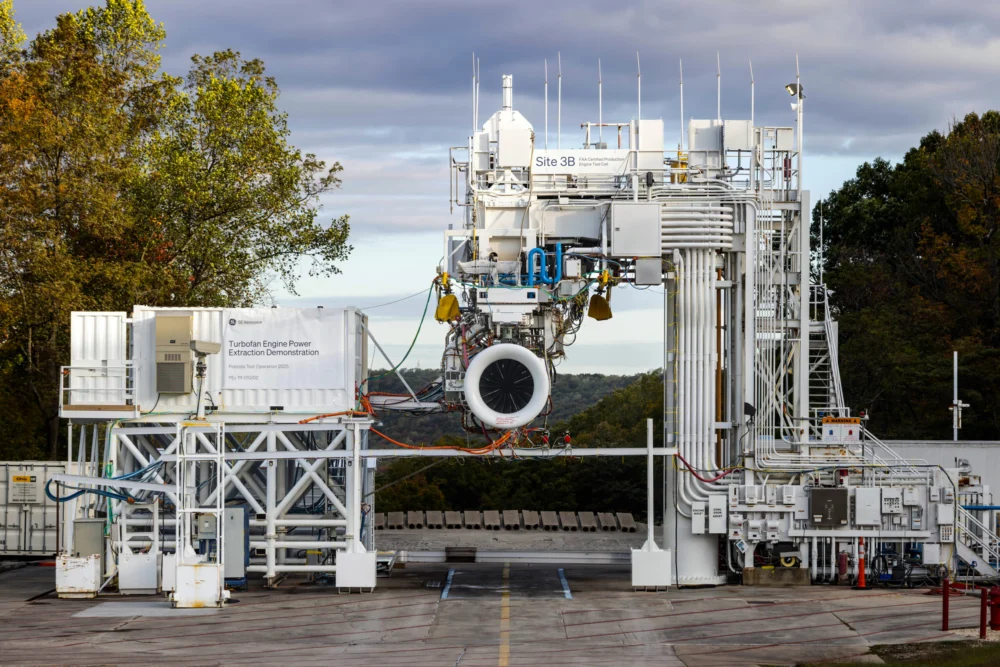
Hybrid Thermally Efficient Core (HyTEC): This initiative targets fundamental improvements in aircraft engine performance. The core of a jet engine—comprising the compressor, combustor, and turbine—is where the primary energy conversion occurs. HyTEC aims to develop advanced materials, cooling schemes, and aerodynamic designs that allow engine cores to operate at much higher temperatures and pressures, leading to significant increases in thermal efficiency. Higher thermal efficiency directly translates to reduced fuel consumption and lower emissions of greenhouse gases and other pollutants. Furthermore, improved core designs can also contribute to quieter engine operation, addressing a critical environmental concern for communities near airports. These advancements are vital for meeting increasingly stringent environmental regulations and achieving ambitious industry goals for carbon emission reductions, such as those outlined by the International Civil Aviation Organization (ICAO).
-
Advanced Air Transport Technology (AATT): AATT serves as a broader umbrella for integrating various technologies aimed at enhancing the overall performance, safety, and environmental footprint of future air transport systems. This includes research into advanced aerodynamics, intelligent flight systems, and novel aircraft configurations. The program emphasizes system-level integration, ensuring that individual technological advancements work synergistically to deliver maximum benefit. For example, research might involve integrating active flow control systems with advanced wing designs to optimize aerodynamic efficiency across different flight regimes, leading to further fuel savings.
-
Advanced Composites (ACP): While HiCAM focuses on manufacturing processes, ACP delves deeper into the fundamental material science of composites, exploring new material formulations, damage tolerance, repair techniques, and life-cycle performance. This foundational research ensures that the composites used in future aircraft are not only lightweight but also incredibly durable, safe, and cost-effective to maintain over their operational lifespan. This includes investigating next-generation composite matrices and fibers that can withstand extreme temperatures, pressures, and fatigue loads, crucial for long-duration commercial operations.
Alongside these advancements for conventional subsonic aircraft, AAVP also dedicates resources to exploring high-risk, high-payoff concepts. These are the truly revolutionary ideas that, if successful, could fundamentally transform air travel in the decades to come, moving beyond incremental improvements to create entirely new paradigms of flight.
Pushing the Boundaries: High-Speed and Vertical Flight
Beyond the immediate needs of subsonic commercial aviation, AAVP is actively engaged in pioneering research across the entire flight spectrum, including the re-emergence of high-speed flight and the nascent field of revolutionary vertical lift.
-
High Speed Flight (HSF): The quest for faster-than-sound air travel, which largely ceased for commercial purposes after the Concorde’s retirement, is being revitalized by AAVP.
-
Commercial Supersonic Technology (CST): This project is perhaps best embodied by NASA’s X-59 Quiet Supersonic Technology (QueSST) aircraft. The primary barrier to widespread commercial supersonic flight over land has been the disruptive sonic boom. The X-59 is designed to demonstrate technology that can reduce the sonic boom to a mere "thump," or even eliminate it entirely, through innovative aerodynamic shaping. If successful, this could pave the way for regulatory changes that permit supersonic flight over populated areas, drastically reducing transcontinental and transoceanic travel times. The implications for business travel, emergency response, and global connectivity are profound. While the market for such aircraft would likely be niche initially, the ability to travel from New York to London in under three hours could command a significant premium, stimulating a new segment of the aerospace market.
-
Hypersonic Technology (HT): Operating at speeds five times the speed of sound (Mach 5) or greater, hypersonic flight represents the ultimate frontier in atmospheric travel. AAVP’s Hypersonic Technology project is exploring fundamental challenges such as extreme thermal management, advanced propulsion systems (like scramjets), high-temperature materials, and aerodynamic stability at these incredible speeds. The strategic implications of hypersonic flight are immense, ranging from rapid global strike capabilities for defense to potential future applications in ultra-fast global transport or even access to space. Developing reliable and controllable hypersonic vehicles requires overcoming complex physics and engineering hurdles, and NASA’s research is critical for laying the groundwork for both national security and potential commercial breakthroughs in the distant future.
-
-
Revolutionary Vertical Lift Technology (RVLT): This project addresses the growing demand for new forms of mobility, particularly in urban and regional environments. RVLT focuses on developing technologies for Advanced Air Mobility (AAM) and Urban Air Mobility (UAM), which envision a future where electric vertical takeoff and landing (eVTOL) aircraft, advanced rotorcraft, and other novel platforms provide on-demand air transportation services.
- Research areas include distributed electric propulsion (where multiple small electric motors provide lift and thrust), advanced battery and fuel cell technologies, quieter rotor designs, autonomous flight systems, and integrated air traffic management for high-density airspaces. The goal is to enable safe, efficient, and quiet air travel for short to medium distances, potentially alleviating ground traffic congestion, facilitating cargo delivery, and providing new options for regional connectivity. The market for UAM is projected to be in the tens of billions of dollars within the next decade, and AAVP’s foundational research is vital for ensuring the safety, reliability, and public acceptance of these emerging aviation paradigms. This includes developing crucial certification standards and operational concepts in collaboration with regulatory bodies like the Federal Aviation Administration (FAA).
The Engine of Progress: Collaboration and Technology Transition
A cornerstone of AAVP’s strategy is its robust engagement with partners from industry, academia, and other government agencies. This collaborative model is not merely a preference but a necessity for tackling the immense complexity and capital intensity of aerospace innovation. By fostering a broad perspective on technology solutions, pursuing mutually beneficial collaborations, and leveraging opportunities for effective technology transition, AAVP maximizes its impact.
NASA’s unique role in this ecosystem is to conduct fundamental, high-risk research that industry, due to commercial pressures, often cannot undertake. NASA acts as a de-risking agent, proving out nascent technologies to a sufficient maturity level (Technology Readiness Levels, or TRLs) before industry makes substantial investments in product development. This partnership ensures that cutting-edge scientific discoveries are translated into practical, marketable applications.
"The challenges facing aviation today—from climate change to increasing demand for faster, more efficient travel—require a united front," a hypothetical AAVP program manager might state. "NASA’s role is to provide the foundational science and engineering that de-risks technologies, making them viable for our industry partners to integrate into the next generation of aircraft. Our collaborations with universities bring in fresh perspectives and train the next generation of aerospace engineers, while partnerships with other government agencies ensure our research aligns with national priorities for safety, security, and sustainability." This collaborative spirit is essential for moving innovations from the laboratory to the production line, ensuring U.S. industry remains at the forefront of global aerospace.
Economic and Environmental Imperatives: Why AAVP Matters
The work of AAVP carries profound implications for both the U.S. economy and global environmental sustainability.
-
Economic Impact: The U.S. aerospace industry is a critical pillar of the nation’s economy, contributing hundreds of billions of dollars to the Gross Domestic Product (GDP) annually and directly employing millions of highly skilled workers. It consistently ranks as one of the top export sectors. The global commercial aircraft market alone is projected to require tens of thousands of new aircraft over the next two decades, representing a market value in the trillions of dollars. By priming the technology pipeline with advanced, competitive solutions, AAVP directly supports U.S. manufacturers in securing their share of this lucrative market, creating and sustaining high-value jobs, and fostering economic growth. Technologies that deliver superior fuel efficiency, reduced noise, and enhanced safety provide a significant competitive advantage for U.S. aerospace products on the world stage.
-
Environmental Sustainability: Aviation currently accounts for approximately 2-3% of global anthropogenic CO2 emissions, a figure that is projected to grow with increasing air travel demand. Addressing aviation’s environmental footprint is a global imperative. AAVP’s focus on fuel efficiency through projects like HyTEC and advanced aerodynamics directly contributes to reducing greenhouse gas emissions. Furthermore, research into alternative propulsion systems, such as hybrid-electric and all-electric aircraft, and the development of technologies compatible with Sustainable Aviation Fuels (SAFs), are crucial for achieving ambitious industry-wide goals, including the aviation sector’s commitment to net-zero carbon emissions by 2050. Noise reduction technologies, a priority for AAVP, also significantly improve the quality of life for communities situated near airports, mitigating a long-standing environmental concern.
-
Safety: While air travel is remarkably safe, AAVP’s continuous research into advanced materials, intelligent flight systems, and improved air traffic management contributes to further enhancing safety standards. By developing robust and resilient aircraft systems, and by providing a deeper understanding of flight dynamics and operational challenges, NASA helps ensure that the future of air travel remains secure and reliable for passengers worldwide.
Looking Ahead: The Vision for Future Air Travel
The long-term vision propelled by NASA’s Advanced Air Vehicles Program is nothing short of transformative. Imagine a future where air travel is dramatically quieter, making airports more harmonious neighbors for surrounding communities. Picture intercontinental flights that drastically cut travel times, making global business and personal connections more accessible and efficient. Envision bustling urban centers seamlessly integrated with Advanced Air Mobility networks, offering on-demand, emission-free air taxi services that bypass ground traffic and revolutionize daily commutes.
This future isn’t just about speed or convenience; it’s about sustainability. AAVP’s efforts are laying the groundwork for an aviation ecosystem that significantly reduces its environmental footprint, relying on cleaner propulsion, more efficient designs, and optimized operations. It’s about ensuring that the freedom and economic benefits of flight are preserved for future generations, while simultaneously addressing the planet’s pressing climate challenges.
Achieving this vision, however, will require sustained investment, continued international collaboration, and adaptive regulatory frameworks. AAVP’s blend of fundamental research and practical application addresses not only the immediate needs of the aerospace industry but also proactively explores the frontiers of possibility, ensuring that the U.S. remains a global leader in shaping the next century of flight. The technologies currently being nurtured within AAVP today will define the aircraft, the routes, and the very experience of air travel for decades to come, offering a safer, cleaner, and more connected world.