


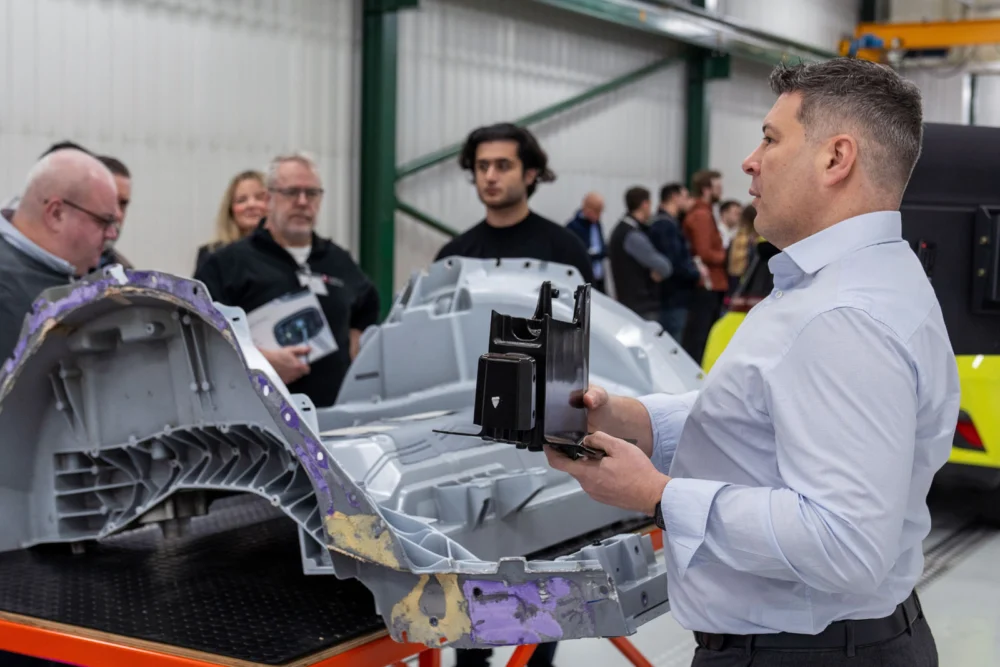
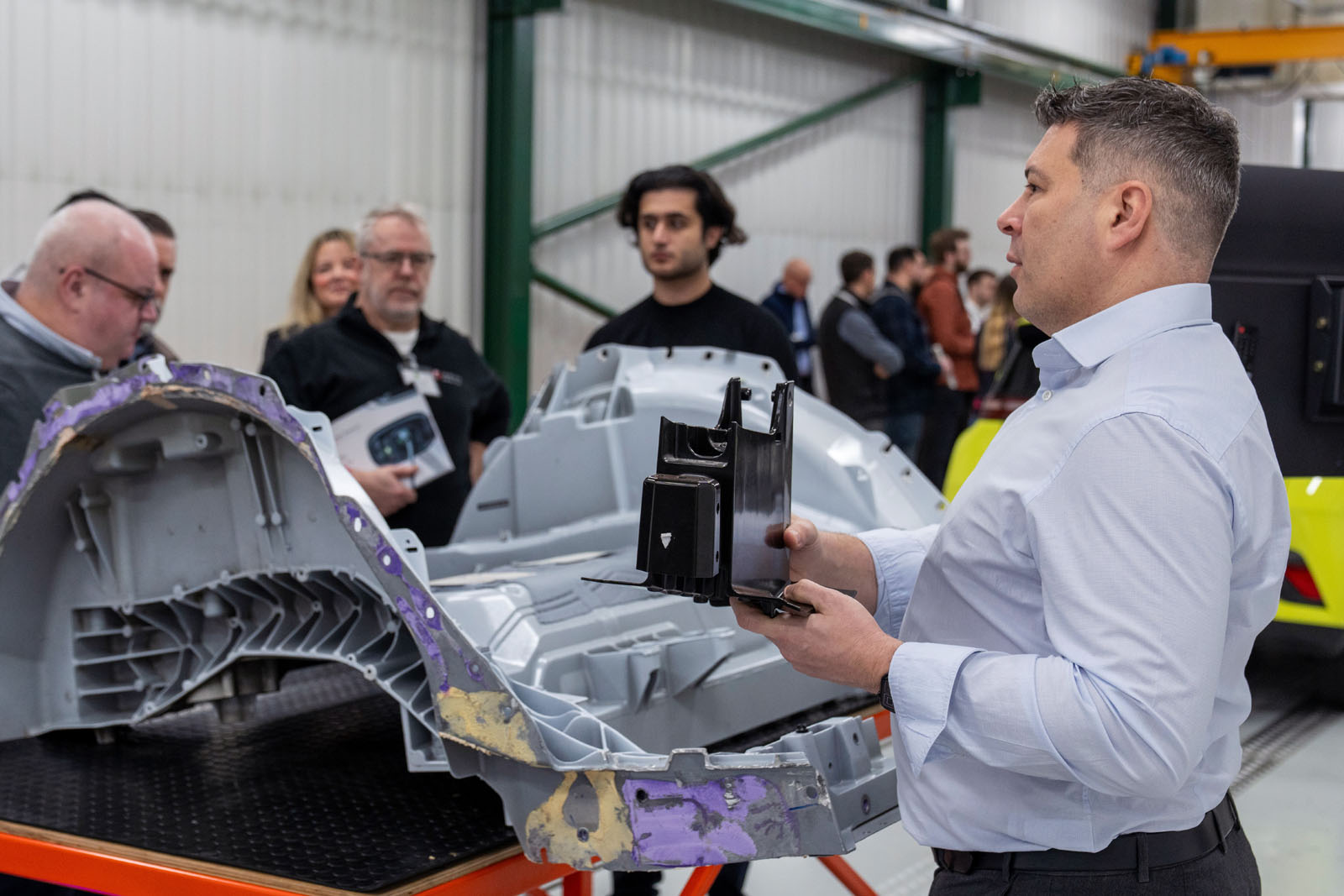
As the automotive industry undergoes its most significant transformation in a century, a quiet but high-stakes conflict is unfolding within the laboratories of Thatcham Research in Berkshire. At the heart of this struggle is the fundamental question of whether the next generation of electric vehicles (EVs) can be repaired affordably, or if their complex designs will lead to a surge in insurance premiums and premature scrappage. Darren Bright, the principle engineer for automotive repair at Thatcham Research, stands in a workshop surrounded by the skeletal remains of modern engineering. He points to a naked charge-point socket, stripped of its protective housing and flanked by high-voltage cabling. To the untrained eye, it is a standard piece of hardware; to the UK insurance industry, it represents a potential financial catastrophe.
The discrepancy between two seemingly identical components—one designed with repairability in mind and the other integrated into a complex, inseparable loom—illustrates the "nightmarish" reality facing technicians today. Thatcham Research, the motor insurance industry’s research center, is currently spearheading a global effort to influence car manufacturers at the design stage. Their goal is simple but ambitious: to ensure that the transition to zero-emission motoring does not collapse under the weight of unsustainable repair costs.
The Engineering Crisis: Design vs. Durability
The core of the issue lies in the shift from mechanical complexity to electronic and structural integration. In traditional internal combustion engine (ICE) vehicles, components were largely modular. If a headlight was damaged, it could be replaced. If a radiator was punctured, it was a discrete fix. However, in the pursuit of weight reduction, aerodynamic efficiency, and manufacturing speed, many EV manufacturers have moved toward integrated architectures.
Darren Bright highlights the charge-point socket as a primary example. In some models, the socket is a standalone unit that can be unbolted and replaced for a few hundred pounds. In rival designs, the socket is hard-wired into a high-voltage wiring loom that runs the length of the vehicle. If the socket is damaged—perhaps by a minor collision while charging or even a botched attempt at plugging in—the entire loom must be replaced. This transforms a minor repair into a multi-thousand-pound job requiring the removal of the battery pack and interior trim, often exceeding the economic threshold for repair and leading to a "total loss" write-off.
This design philosophy extends to the vehicle’s chassis. The rise of "megacasting" or "gigacasting"—where large sections of the car’s frame are cast as a single piece of aluminum—offers massive benefits for production efficiency. However, it presents a significant hurdle for the repair industry. While a traditional steel frame could be straightened or have sections welded in, a cracked aluminum casting often necessitates the replacement of the entire structural section, a task that few body shops are equipped to handle.
A Chronology of Rising Concerns
The alarm bells regarding EV repairability began ringing shortly after the first wave of mass-market electric cars hit the roads in the early 2010s.
- 2011–2015: Early adopters of the Nissan Leaf and Tesla Model S reported high repair costs, but these were largely attributed to the scarcity of parts and the "newness" of the technology.
- 2018–2020: As EV sales accelerated, insurance companies began to notice a trend: EVs were being written off at a much higher rate than ICE vehicles following minor accidents. The culprit was often the battery pack, which sits in a vulnerable position under the floor.
- 2021–2022: Thatcham Research and other international bodies began formalizing "repairability ratings." During this period, the UK government’s push for a 2030 (later 2035) ban on new petrol and diesel cars put pressure on insurers to find a sustainable model for EV coverage.
- 2023–Present: The "Battle for Repairability" has reached a fever pitch. Insurers are now actively engaging with manufacturers during the prototype phase, warning that cars which are "impossible to fix" will be placed into high insurance groups, effectively making them unmarketable to the general public.
Supporting Data: The Economic Gap
The financial implications of the current EV design trends are stark. Data from the Association of British Insurers (ABI) and Thatcham Research suggests that repair costs for EVs are, on average, 25% to 30% higher than for their petrol or diesel counterparts. Several factors contribute to this "EV premium":
- Labor Costs: Repairing an EV requires specialized technicians certified to work with high-voltage systems. In the UK, the shortage of qualified "Level 4" EV technicians has driven up labor rates.
- Safety Protocols: Before a technician can even begin work on a damaged EV, the vehicle must be "powered down" and placed in a quarantine area to monitor for thermal runaway (battery fires). This adds significant time and storage costs to every claim.
- The Battery Factor: The battery pack can account for up to 50% of the vehicle’s total value. Currently, there is a lack of standardized diagnostic data that allows insurers to see "inside" a battery after a crash. Without proof that the internal cells are undamaged, many insurers opt for a total replacement or a write-off for safety reasons.
- Parts Monopoly: Unlike the ICE market, which has a robust ecosystem of "aftermarket" (third-party) parts, the EV market is still heavily reliant on original equipment manufacturers (OEMs). This lack of competition keeps part prices high.
Industry Responses and Official Statements
The tension between insurers and manufacturers has prompted a variety of responses. Thatcham Research acts as the mediator in this relationship, representing the interests of major UK insurers like Aviva, Direct Line, and Admiral.
"We are not anti-EV; we are pro-sustainability," says a spokesperson for Thatcham. "If a car is written off because of a minor dent that happens to be near a battery sensor, that is not a green outcome. It is a waste of resources and a burden on the consumer."
Some manufacturers have been proactive. BMW, for instance, has designed its latest generation of batteries to be modular, allowing individual modules to be replaced without discarding the entire pack. Similarly, Ford has made efforts to ensure that the structural components of the Mustang Mach-E are accessible for repair.
However, other manufacturers remain focused on the "production-first" model. Tesla has faced criticism for its closed-loop repair system and the use of structural battery packs, where the battery cells are glued into the car’s frame. While this makes the car lighter and stronger, it makes the battery virtually impossible to service or replace.
The UK government has also weighed in, with the Department for Transport acknowledging that "ensuring the long-term affordability of electric vehicle ownership is critical to achieving net-zero targets." There is growing talk of "Right to Repair" legislation being expanded to specifically cover EV battery diagnostics and modularity.
Broader Impact and Implications for the Consumer
The ultimate victim of this "nightmarish" repair landscape is the consumer. In 2023, several UK insurers temporarily stopped offering quotes for certain EV models, or significantly increased premiums, citing the unpredictability of repair costs. For the average driver, a 30% increase in insurance can offset the savings gained from switching away from petrol.
Furthermore, the environmental impact of this trend is counterproductive. The carbon footprint of manufacturing a new EV is significantly higher than that of an ICE vehicle; the environmental "break-even" point is only reached after several years of driving. If these vehicles are being scrapped after three years due to minor, unrepairable damage, the net environmental benefit of the EV transition is drastically reduced.
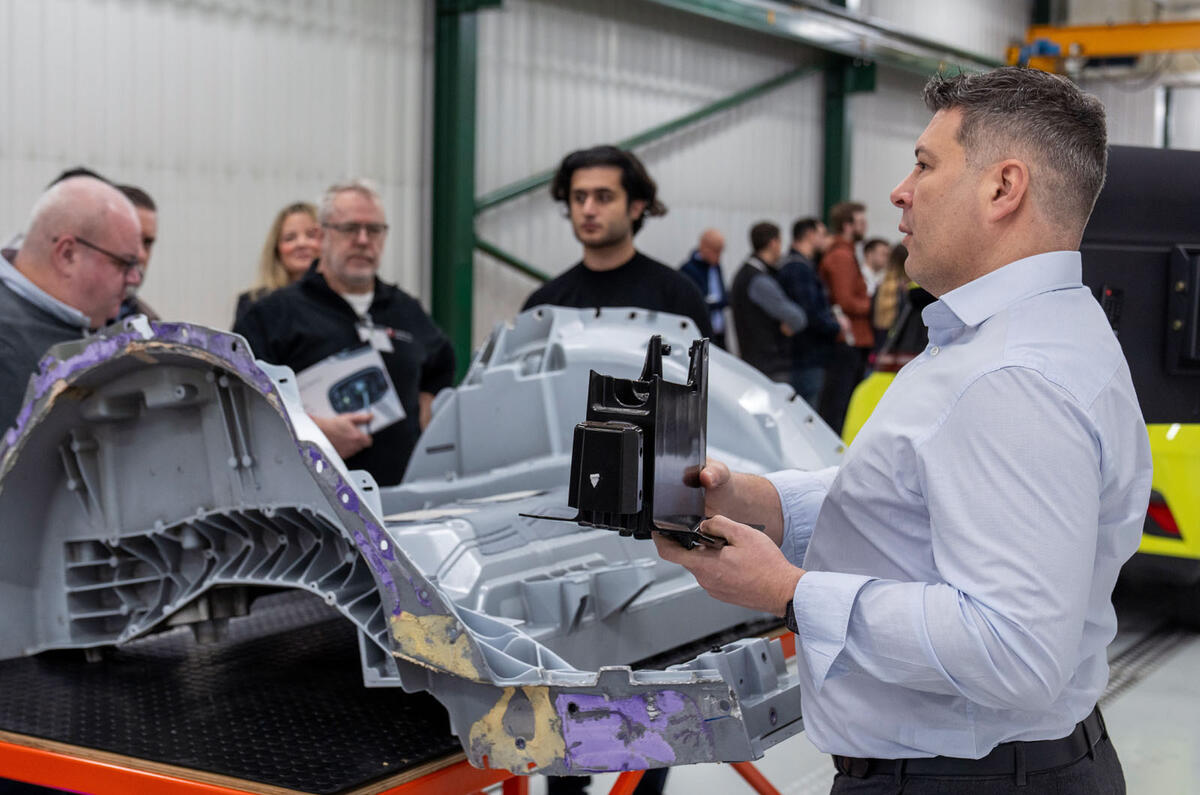
The work being done by Darren Bright and his team at Thatcham Research is therefore about more than just insurance math. It is about the "Circular Economy." By forcing manufacturers to consider the "second life" and "repair life" of a vehicle, they are attempting to move the industry away from a disposable car culture.
The Path Forward: Modular Design and Open Data
To win the battle to cut EV repair bills, Thatcham Research is advocating for three key changes:
First, Modular Battery Architecture. Manufacturers must move away from "potted" or glued-in cells. Batteries should be designed so that individual modules can be tested and replaced by independent garages.
Second, Open Access to Battery Management Systems (BMS). Insurers need a "health check" tool that can provide a definitive "green light" on a battery’s integrity after a collision. Currently, many manufacturers guard this data as proprietary, leaving insurers to guess the level of risk.
Third, Standardized Repair Procedures. Thatcham is working to create a universal set of repair standards for EVs, reducing the need for specialized, manufacturer-only tools and software.
The outcome of this UK-led initiative will likely set the standard for the global automotive market. As Darren Bright stands over his display of sockets and looms, the message is clear: the future of the electric car depends not just on how it drives, but on how easily it can be put back together when things go wrong. Without a shift toward repairability, the electric revolution may find itself stalled by the very complexity that was meant to drive it forward.