

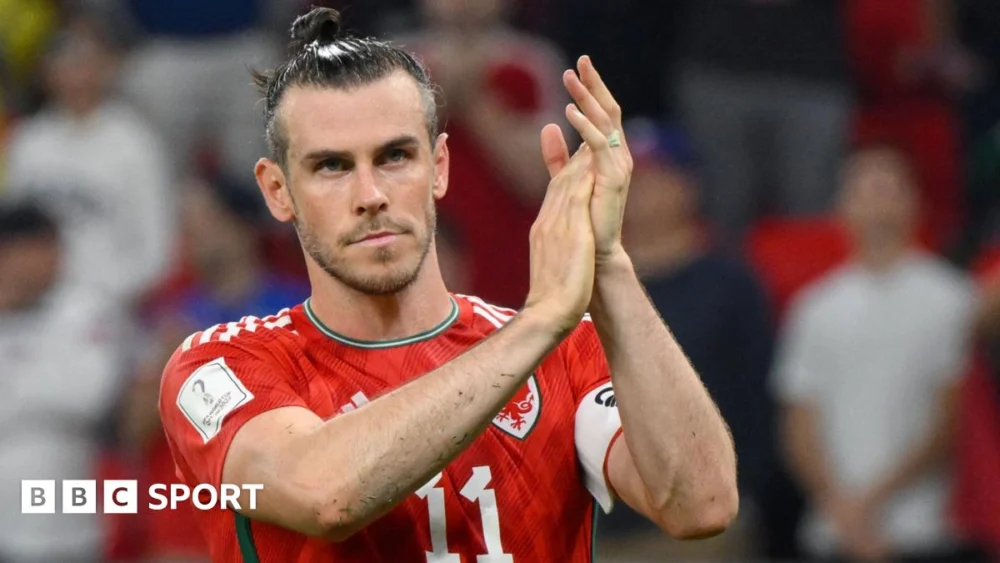
Gareth Bale, the Welsh footballing icon celebrated for his electrifying pace and trophy-laden career, has lifted the lid on a persistent back injury that plagued him throughout his professional journey, ultimately contributing to his decision to retire from the game at the relatively young age of 33. The revelation, made during an appearance on the "Stick to Football" podcast, offers a poignant new perspective on the physical toll his extraordinary career took, particularly his record-breaking tenure at Real Madrid.
Bale, who amassed five Champions League titles and numerous individual accolades during his illustrious time in Spain, disclosed that he sustained a torn disc in his back at the tender age of 18 while playing for Tottenham Hotspur. This injury, he explained, became a constant companion, directly impacting his performance and leading to a cascade of other physical issues, most notably recurring calf problems.
"I tore my disc in my back when I was 18 at Tottenham," Bale stated candidly on the podcast. "I played my whole career with that. I had a lot of calf injuries which was due to my back. I never came out and said this when I was playing because some people would say ‘he’s making excuses’. It was manageable but over time it caught up with me."
The Shadow of Injury: A Career Under Duress
The disclosure sheds new light on the Welshman’s enduring physical battles, which often led to scrutiny and speculation from fans and media alike. Bale’s decision to keep the full extent of his injury private was a deliberate strategy to avoid being perceived as someone who shirked responsibility or manufactured excuses for his absences from the pitch. This commitment to maintaining a stoic public image, even in the face of chronic pain, underscores the immense mental fortitude required to compete at the highest level.
The injury not only impacted his ability to train and play consistently but also influenced his day-to-day life. Bale recounted a startling detail: he was sometimes forced to perform basic daily activities, such as brushing his teeth, while standing on his heels to alleviate pressure on his back and prevent further calf strain. This anecdote vividly illustrates the constant, pervasive nature of his discomfort and the extreme measures he took to manage it.
"I never knew when it would come," Bale elaborated, referring to the unpredictable nature of his injuries. "And obviously people were like, ‘oh, he doesn’t look after himself’ [but] I would literally make sure my calves and soleus were bulletproof. But again, if it misfires and it goes, there’s nothing I could do about it. I’d have an injection in my back to calm it all down."
A Record-Breaking Transfer and Lingering Doubts
Bale’s transfer from Tottenham to Real Madrid in 2013 shattered the world transfer record at the time, a staggering £85.3 million (approximately €100 million). The Spanish giants were reportedly aware of his pre-existing back condition, a detail that adds another layer of complexity to the monumental deal. Despite this, the club invested heavily in a player whose career would be significantly shaped by this hidden ailment.
During his nine-year spell in the Spanish capital, Bale was instrumental in Real Madrid’s era of unprecedented European success. He played a pivotal role in four of their five Champions League triumphs, scoring crucial goals in multiple finals, including the unforgettable overhead kick against Liverpool in 2018. His dazzling displays, particularly in big games, cemented his legacy as one of the club’s most impactful overseas players. However, the constant threat of his back injury meant that his time at the Santiago Bernabéu was also punctuated by periods on the sidelines, fueling external perceptions of inconsistency.
The Calf Conundrum and the Back’s Silent Influence
The connection between Bale’s back injury and his numerous calf problems is a key revelation. It suggests that the torn disc in his lumbar spine created biomechanical imbalances that placed excessive stress on his lower legs. When the spine is compromised, it can lead to compensatory movements and muscle recruitment patterns that overload other areas of the body. In Bale’s case, this chronic strain likely manifested as persistent issues with his calf muscles and the soleus, a deep calf muscle crucial for ankle stability and plantarflexion.
His meticulous efforts to "make sure my calves and soleus were bulletproof" highlight a proactive, albeit ultimately insufficient, approach to managing the cascading effects of his primary injury. He understood the vulnerability of these muscles and dedicated significant time and energy to strengthening and conditioning them, knowing that any lapse could lead to a setback. The "injections in his back" further indicate a constant battle to manage inflammation and pain, a testament to the ongoing nature of his struggle.
A National Hero’s Farewell at the World Cup
Bale’s career with the Welsh national team is a story of unparalleled dedication and triumph. He retired as his country’s most-capped player, with 111 appearances, and their all-time leading scorer, with 41 goals. His debut at just 16 years old marked the beginning of an extraordinary international career that saw him inspire Wales to heights previously unimaginable.
His leadership was particularly evident during Wales’ historic run to the semi-finals of Euro 2016, a tournament where he scored in every group game. He was again a driving force in their qualification for Euro 2020, where they reached the last 16. The ultimate prize, however, was securing a place in the 2022 FIFA World Cup in Qatar, Wales’ first appearance in the global showpiece for 64 years. Bale scored the decisive goal in the play-off match against Ukraine, a moment of immense national pride and a fitting capstone to his international achievements.
"I always got to a point where I guess a lot of people do in their career, do you keep going for what reason? What else do I want to achieve?" Bale reflected on his retirement decision. "I felt like I achieved everything I wanted to. The last thing I did was qualify for a World Cup, which was the one thing that was last on my list. I felt it was the right time. It was a few years prior that I was probably ready but it just caught up with me."
The Multifaceted Decision to Retire
While the chronic back injury was a significant factor, Bale also alluded to other considerations that influenced his retirement. He mentioned a "family illness" as a contributing element, suggesting a desire to be closer to his loved ones and to support them during a difficult period. This personal dimension adds another layer of complexity to his decision, highlighting that major life choices are rarely driven by a single cause.
Furthermore, Bale revealed that he had been contemplating his post-retirement plans for several years. This indicates a well-thought-out transition, rather than an abrupt departure. His interest in club ownership, for instance, is a concrete example of his forward-thinking approach. He was part of a consortium that expressed interest in acquiring his hometown club, Cardiff City, last summer. Although that particular bid did not materialize, Bale reaffirmed his ambition to be involved in club ownership in the future, seeing it as a more appealing path than management.
"I always said when I retired, I wanted one, two, three years just to decompress, enjoy the kids and then try and find a few paths I want to do," he explained. "Something like that interests me more than… going into management. I feel like I’ve done that as a player and you’ve got to put even more hours in as a coach and a manager."
Broader Implications and Legacy
Gareth Bale’s revelation about his career-long back injury offers a compelling narrative of resilience and sacrifice. It reframes our understanding of his performances and challenges the notion that some athletes are simply "injury-prone" without considering the underlying causes. His story serves as a reminder of the immense physical and mental pressures faced by elite athletes, many of whom endure pain and discomfort in pursuit of their dreams, often in silence.
The fact that Real Madrid was aware of his condition during his record-breaking transfer also raises questions about the due diligence process in high-stakes football deals. While Bale’s contributions to the club’s success are undeniable, the long-term physical cost for the player is now brought into sharper focus.
As Bale transitions into his post-playing career, his interest in club ownership signals a continued passion for the sport, albeit from a different vantage point. His stated preference for ownership over management suggests a desire for a less time-intensive, but still impactful, role within football. This aligns with his current priorities of spending time with his family and exploring new avenues.
Gareth Bale’s legacy is secured as one of Britain’s most decorated and talented footballers. His career, marked by moments of sheer brilliance and sustained success, is now also understood through the lens of a quiet, persistent battle against a debilitating injury. His candour in sharing this experience offers a valuable insight into the realities of professional sport and the extraordinary dedication required to reach its pinnacle. The five Champions League medals, the iconic goals, and the national pride he inspired will forever be etched in football history, now with the added dimension of his personal resilience.