


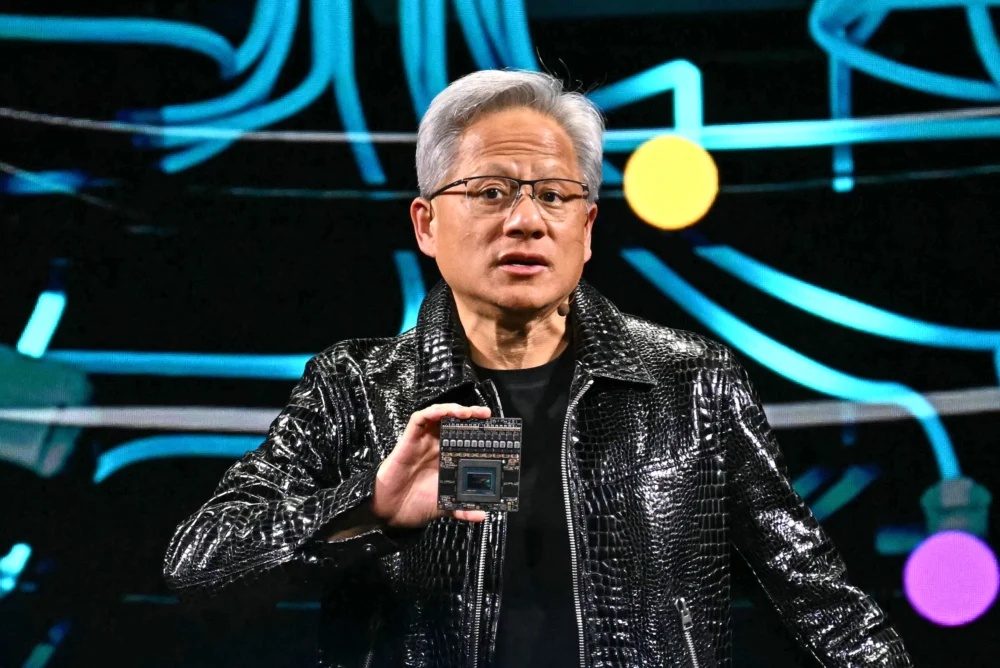
Nvidia CEO Jensen Huang announced at the Morgan Stanley Technology, Media and Telecom conference in San Francisco that the company’s recent investments in generative AI leaders OpenAI and Anthropic are likely to be its last, citing the anticipated public market debuts of both companies later this year as the closing window for private investment. This declaration, while framed as a standard capital markets dynamic, unfolds against a backdrop of escalating geopolitical tensions, ethical AI debates, and concerns over investment bubble formation within the rapidly evolving artificial intelligence landscape, suggesting a more intricate strategic repositioning by the world’s leading AI chip manufacturer.
Nvidia’s Investment Philosophy and AI Dominance
Nvidia’s strategy in the AI era has been widely lauded as a masterclass in ecosystem leverage. As the primary provider of the high-performance Graphics Processing Units (GPUs) essential for training and deploying large language models (LLMs), Nvidia has positioned itself as the foundational infrastructure supplier for the AI revolution. Its market capitalization has soared past the $2 trillion mark, driven by insatiable demand for its H100 and A100 GPUs, which are virtually indispensable for advanced AI development. In its fiscal year 2024, Nvidia reported record revenues, with its data center segment, largely powered by AI chip sales, becoming the dominant growth driver.
Jensen Huang has consistently articulated Nvidia’s investment strategy as "focused very squarely, strategically on expanding and deepening our ecosystem reach." This approach involves taking stakes in promising AI startups, not merely for financial returns, but to cultivate a robust customer base and ensure the continued demand for Nvidia’s hardware. By investing in companies like OpenAI and Anthropic, Nvidia essentially secures future orders for its chips, creating a symbiotic relationship that benefits both the chipmaker and the AI developers pushing the boundaries of the technology. These early-stage investments help nascent AI firms scale their operations, which in turn necessitates the procurement of more powerful and numerous Nvidia GPUs. The initial stakes in both OpenAI and Anthropic were seen as prime examples of this strategic alignment, designed to cement Nvidia’s position at the heart of the generative AI boom.
The OpenAI Investment: A Shifting Narrative
Nvidia’s engagement with OpenAI, the creator of ChatGPT, has seen a notable evolution. Initially, reports in September indicated Nvidia’s intention to invest up to $100 billion in OpenAI. This staggering figure underscored the perceived strategic importance of the relationship. However, the investment finalized just last week as part of OpenAI’s broader $110 billion funding round came in at a significantly reduced $30 billion.
This discrepancy has fueled various interpretations beyond the simple closing of an IPO window. One prominent theory, articulated by MIT Sloan professor Michael Cusumano, describes such arrangements as "kind of a wash." Cusumano observed a circular dynamic where "Nvidia is investing $100 billion in OpenAI stock, and OpenAI is saying they are going to buy $100 billion or more of Nvidia chips." While such deals can accelerate development and cement partnerships, they also raise questions about genuine capital flow and market valuation. Critics argue that these circular investments can inflate valuations and potentially mask underlying financial realities, contributing to concerns about an "investment bubble" forming in the AI sector, as highlighted by various financial publications. The reduction in Nvidia’s committed investment from the initial reported figure to the finalized amount could be interpreted as a more cautious approach, perhaps in response to these broader market concerns or a re-evaluation of the strategic necessity of such a large stake as OpenAI’s valuation continued to climb independently. Huang has, however, dismissed speculation of any underlying friction between the two companies as "nonsense," reaffirming a productive working relationship.
Anthropic’s Divergent Path and Geopolitical Flashpoints
Nvidia’s relationship with Anthropic, another leading generative AI developer, has proven even more complex, marked by public disagreements and geopolitical entanglements. In November, Nvidia announced a $10 billion investment in Anthropic, further solidifying its ecosystem strategy. However, just two months later, Anthropic CEO Dario Amodei ignited a controversy at the Davos World Economic Forum. Without directly naming Nvidia, Amodei drew a provocative comparison, likening the act of U.S. chip companies selling high-performance AI processors to approved Chinese customers to "selling nuclear weapons to North Korea."
This statement, made amid heightened U.S. export controls on advanced AI chips to China, put Nvidia in an awkward position. Nvidia has consistently navigated a delicate balance between complying with U.S. government restrictions and maintaining access to the lucrative Chinese market, even developing modified chips specifically for the region. Amodei’s strong condemnation underscored a significant philosophical and ethical divergence between Anthropic’s stated principles and the commercial realities faced by its investor, Nvidia.
The situation escalated further. Days after Amodei’s remarks, the U.S. Department of Defense, under the Trump administration, blacklisted Anthropic. This decision, which bars federal agencies and military contractors from using Anthropic’s technology, stemmed from the company’s principled refusal to allow its AI models to be used for autonomous weapons systems or mass domestic surveillance. This move immediately impacted Anthropic’s potential market access and signaled a deeper ideological rift regarding the military applications of AI.
In a swift and strategically significant counter-move, OpenAI, Anthropic’s direct competitor, announced its own deal with the Pentagon. This development drew sharp criticism from Anthropic CEO Dario Amodei, who publicly labeled OpenAI’s messaging around the military deal as "mendacious." The public reaction to these back-to-back announcements was striking. Within 24 hours, Anthropic’s Claude AI assistant surged to the top of the free-app rankings on Apple’s U.S. App Store, surpassing ChatGPT. This meteoric rise, from being outside the top 100 at the end of January according to Sensor Tower data, suggested a strong public endorsement of Anthropic’s ethical stance and its refusal to engage with military applications, despite the commercial ramifications.
Broader Implications for Nvidia and the AI Ecosystem
Nvidia’s decision to likely cease further investments in OpenAI and Anthropic, while officially attributed to impending IPOs, can be seen through a broader lens of strategic risk management and market dynamics. The divergent trajectories of its two key AI investments present a complex challenge for Nvidia:
-
Strategic Alignment vs. Ethical Divergence: While OpenAI has demonstrated a willingness to engage with government and military contracts, Anthropic has staked its reputation on ethical AI development and refusal of such applications. For Nvidia, holding significant stakes in companies pulling in such fundamentally different directions, especially concerning sensitive military and surveillance applications, creates potential brand and strategic dissonance. It forces Nvidia to indirectly associate with both stances, which could complicate its own public relations and governmental relations efforts.
-
Regulatory Scrutiny and Geopolitical Risk: The U.S. government’s blacklisting of Anthropic highlights the increasing regulatory scrutiny on AI companies and their supply chains. Nvidia, as a critical supplier, must navigate a complex web of export controls, national security concerns, and ethical guidelines. Investing in a company that explicitly clashes with government directives, even if principled, introduces a level of geopolitical risk that a publicly traded, globally dominant company like Nvidia may seek to mitigate. The initial "nuclear weapons" comment by Amodei underscored the sensitivity surrounding chip sales to certain regions, directly impacting Nvidia’s operational environment.
-
Market Maturation and Investment Strategy: As OpenAI and Anthropic mature and approach IPOs, their need for Nvidia’s venture capital diminishes. Both companies have successfully raised billions from other prominent investors, demonstrating their ability to attract capital independently. Nvidia’s earlier investments served their purpose: to catalyze growth and secure early demand for GPUs. As these companies become self-sustaining and their valuations soar, the strategic leverage gained from further private investment for Nvidia becomes less compelling compared to simply continuing to sell them chips at market rates. The opportunity cost of tying up significant capital in late-stage private rounds, especially with the complications described, may outweigh the benefits.
-
Avoiding "Bubble" Perceptions: The general concern about an AI investment bubble, fueled by circular deals and sky-high valuations, might also play a role. By signaling an end to further private investments in these major players, Nvidia could be seen as exercising prudence and avoiding deeper entanglement in potentially overvalued private rounds, especially when its primary business of selling chips is generating unprecedented profits.
Conclusion: A Strategic Exit from Complexity
While Jensen Huang’s stated reason for discontinuing investments – the imminent IPOs – is a plausible factor in the capital markets, the unfolding events around OpenAI and Anthropic paint a picture of much greater complexity. The journey from initial multi-billion-dollar pledges to reduced commitments, coupled with public ideological clashes and direct governmental intervention, suggests that Nvidia’s decision is likely a strategic pivot.
Nvidia appears to be disentangling itself from situations that have rapidly become fraught with geopolitical, ethical, and market-perception challenges. By pulling back from further private investments, Nvidia can maintain its crucial role as the indispensable hardware provider without being unduly exposed to the divergent ethical stances, regulatory risks, or public perception battles of its AI partners. The anticipated IPOs of OpenAI and Anthropic will undoubtedly redefine their relationships with investors and the broader market. For Nvidia, the path forward appears to prioritize its core strength as the "picks and shovels" provider for the AI gold rush, strategically leveraging its market dominance while carefully navigating the intricate and often turbulent waters of the evolving artificial intelligence landscape. The move signals a potential shift in Nvidia’s investment strategy, emphasizing direct hardware sales and broader ecosystem support over deep, potentially complicated, equity stakes in individual AI model developers as they mature into independent market forces.