

The geopolitical landscape of the Middle East, increasingly volatile due to escalating tensions involving Iran, is sending significant ripples through Beijing, compelling China to re-evaluate its intricate web of economic ambitions, energy security, and strategic partnerships. While not yet experiencing the direct shockwaves of a full-blown regional conflict, China’s leadership is meticulously calculating the long-term implications, not only for its substantial investments across the Middle East but also for its broader aspirations on the global stage. This mounting instability arrives at a critical juncture for the world’s second-largest economy, already grappling with formidable domestic challenges.
Economic Headwinds and Geopolitical Storms
China’s domestic economy faces considerable headwinds. A recent assembly of Communist Party delegates in Beijing convened to chart a course for an economy battling persistent low consumption, a protracted property crisis, and ballooning local government debt. In a significant shift, the Chinese government has, for the first time since 1991, tempered its economic growth expectations, even as its high-tech and renewable energy sectors exhibit rapid development. This internal economic pressure compounds the external vulnerabilities exposed by a volatile Middle East.
For over a year, China has navigated a complex trade war with the United States, seeking to recalibrate its export-driven growth model amidst protectionist pressures. Now, the prospect of prolonged upheaval in the Middle East presents a dual threat: disruption to major shipping routes vital for global trade and a potential squeeze on its significant energy supplies. China’s reliance on Middle Eastern oil is substantial, with the region accounting for a considerable portion of its crude imports. While Beijing reportedly holds sufficient oil reserves for several months, and could potentially lean on Russia for additional supplies in the short term, a sustained blockage of critical chokepoints like the Strait of Hormuz would inflict severe and lasting economic damage.
Philip Shetler-Jones, an expert from the Royal United Services Institute, underscores this broader vulnerability: "A prolonged period of turmoil and insecurity in the Middle East will disrupt other regions of importance for China." He points to African economies, which have historically benefited from consistent capital flows from Gulf nations. Should this investment tide recede, it risks triggering wider instability, thereby undermining the sustainability of China’s extensive and long-term interests embedded within its Belt and Road Initiative (BRI) and beyond. The interconnected nature of global markets means that China’s investments and trade networks, extending far beyond the immediate conflict zone, are susceptible to the cascading effects of a protracted regional war, adding a fresh layer of unpredictability that alarms Beijing.
A Complex Relationship with Iran: Transactional, Not Transformational
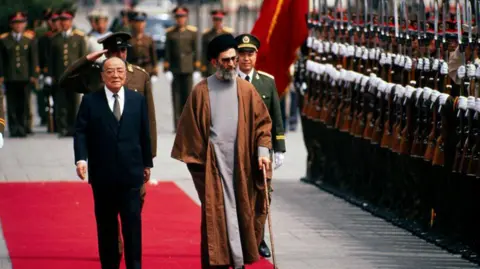
In Western analyses, Iran has often been loosely characterized as a Chinese "ally." Historically, their relationship has certainly been cordial, marked by high-level exchanges such as Supreme Leader Ali Khamenei’s visit to Beijing in 1989. This partnership deepened significantly in 2016 when President Xi Jinping visited Tehran, culminating in the signing of a landmark 25-year strategic cooperation agreement in 2021. Under this accord, China pledged to invest an estimated $400 billion (£300 billion) in Iran over a quarter-century, primarily in its energy and infrastructure sectors, in exchange for a consistent supply of Iranian oil.
However, the reality of this alliance is more nuanced and transactional than ideologically driven. Analysts suggest that only a fraction of the promised Chinese investment has actually materialized in Iran. Despite this, the flow of oil has largely continued, with China importing an estimated 1.38 million barrels of crude per day from Iran in 2023, constituting roughly 12% of its total crude oil imports. This trade has often been obscured, with reports from the Center on Global Energy Policy at Columbia University alleging that many Iranian barrels are re-labelled as Malaysian crude to circumvent international sanctions. Furthermore, substantial quantities of Iranian oil are believed to be held in floating storage across Asia and in bonded storage within Chinese ports like Dalian and Zhoushan, where the National Iranian Oil Company leases tanks.
Beyond energy, allegations of military cooperation have also surfaced. While China officially denies selling anti-ship cruise missiles to Tehran, US intelligence has accused Beijing of providing support to Iran’s ballistic missile program through training engineers and supplying critical components.
Despite these connections, the notion of an "axis of upheaval" lumping China and Iran with North Korea and Russia, while appealing to some tabloid narratives, misrepresents the fundamental nature of their relationship. While all four nations may share a desire to challenge the US-led world order, their individual motivations and strategic alignments remain largely self-interested. Professor Kerry Brown of Kings College London aptly describes the China-Iran dynamic: "There’s no real ideological or cultural reason why China would get on with Iran… China’s almost ‘divide and rule’ strategy was sometimes well-served by Iran being a constant irritant to the US. So I think there are largely negative reasons for China wanting a relationship with Iran, rather than positive reasons." He concludes that such a basis renders the relationship "really fragile… it worked – up to a point. But it wasn’t a very deep relationship."
Crucially, China’s concept of "alliances" differs fundamentally from Western models. Beijing does not engage in mutual defence treaties and is unlikely to rush to the aid of a partner embroiled in conflict. Its paramount objective is to avoid direct entanglement in any Middle Eastern war, prioritizing stability and the protection of its economic interests.
Beijing’s Geopolitical Dilemma: A Superpower in Waiting?
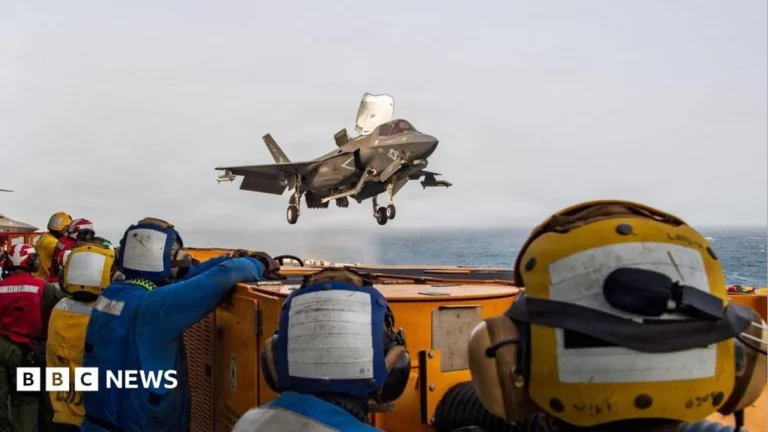
The escalating Middle East crisis, particularly Washington’s assertive actions in the region (and previously in Venezuela), has starkly illuminated the practical limits of China’s partnerships and its ability to protect those within its orbit. On these occasions, Beijing has largely remained an observer, seemingly incapable of directly intervening to shield its partners from external pressure or military action.
China’s official response to the escalating tensions has been predictably cautious and measured. Beijing issued a muted condemnation, urging de-escalation and an immediate ceasefire. Chinese Foreign Minister Wang Yi stated that it was "unacceptable for the US and Israel to launch attacks against Iran… still less to blatantly assassinate a leader of a sovereign country and instigate regime change." This rhetoric, while critical of Washington’s actions, stops short of concrete measures or robust support for Iran.
Philip Shetler-Jones highlights the disparity in power projection: "China is trying to position itself as a ‘responsible counter-balance’ to the US… but in terms of military balance, the US is demonstrating what being a superpower really means, which is the ability to force outcomes in theatres across the globe." Despite its immense economic might, Beijing, he argues, is not "a superpower on the same level" when it comes to military reach and the capacity to project force globally to protect its allies or enforce its preferred outcomes. "It is not equipped to protect its friends against this kind of action, even if it wanted to."
To counter this perceived limitation, President Xi Jinping is expected to continue projecting an image of China as a stable, predictable, and responsible global leader, a deliberate contrast to the often-unpredictable foreign policy shifts emanating from Washington. Professor Steve Tsang, director of the SOAS China Institute, notes, "China’s argument will be that Donald Trump has once again demonstrated beyond any doubt the extent of western hypocrisy and western talk of the liberal international order." This narrative aims to highlight the perceived inconsistencies and unilateralism of Western powers, particularly the United States, thereby bolstering China’s own appeal as an alternative model for global governance and stability, especially among nations in the Global South.
Global South Impact and Diplomatic Manoeuvres
The economic ramifications of the Middle East conflict are expected to disproportionately impact the Global South. Disruptions to energy supplies, increased shipping costs, and impediments to air travel will have far greater economic consequences in developing nations than in the West. Professor Tsang warns, "Some countries are going to have food shortage in a few months… and those are Global South countries." This creates a potential opportunity for China to position itself as a sympathetic and constructive actor, offering aid or mediation, and reinforcing its narrative of global responsibility. Beijing is already engaging in diplomatic efforts, with Foreign Minister Wang Yi reportedly holding discussions with his counterparts in Oman and France, and China announcing its intention to dispatch a special envoy to the Middle East. This proactive diplomacy aims to underscore China’s commitment to multilateralism and peaceful resolution, distinguishing its approach from what it portrays as Western interventionism.
The Looming US Factor and a Presidential Visit
A critical element in China’s current calculus is the upcoming visit of the mercurial US president, Donald Trump, for a highly anticipated meeting later this month. Beijing’s careful framing of its criticisms of US and Israeli actions in Iran, notably avoiding direct personal attacks on Trump, suggests an effort to keep open channels for this crucial engagement. Reports indicate that officials from both sides are preparing for the trip, signaling its continued importance despite regional tensions.
China views this visit as an opportunity to "look for cues," as Shetler-Jones suggests, regarding how a future US administration, potentially led by Trump, might respond to other geopolitical flashpoints, particularly Taiwan, the self-governed island that Beijing claims as its own. There is a calculated hope in some Chinese circles that if the Middle East conflict proves unpopular domestically in the US, it might contribute to a growing trend of "restraint" in US foreign and security policy. Such a shift, if implemented by a future administration, could potentially "give China a freer hand to pursue its interests in its own region and the wider world."
However, this strategic calculation is not without its internal contradictions. While some within China’s People’s Liberation Army have used social media to paint Washington as warmongers, thereby serving Beijing’s narrative, the broader implications of having "an unpredictable and a dysfunctional actor" on the global stage are a source of considerable unease for Beijing. Professor Brown encapsulates this dilemma: "I don’t think China wants a world that’s dominated by the US, but they don’t really want a world where the US is such an unstable actor." The unpredictability of US foreign policy, particularly under a leader like Donald Trump, introduces a significant variable that complicates China’s long-term strategic planning and its efforts to foster a more stable, multipolar world order in which it plays a leading role. The current Middle East crisis, therefore, serves as a stark reminder to China of both its vulnerabilities and the persistent challenges in reshaping global dynamics to its advantage.