



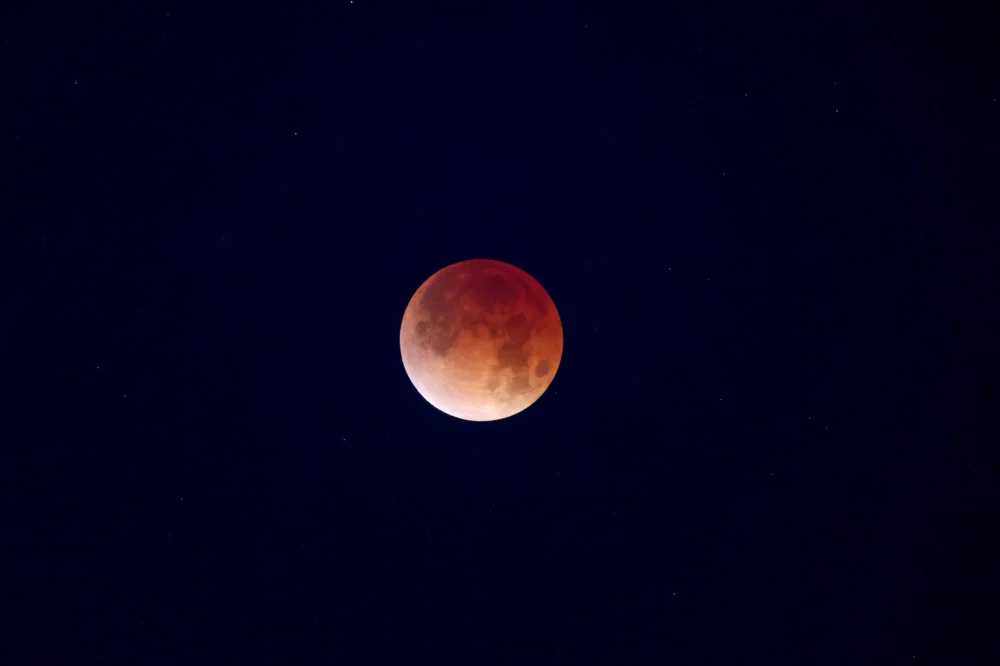
The night sky above New Orleans, Louisiana, transformed into a canvas of celestial wonder on March 3, 2026, as a total lunar eclipse cast the Moon in a dramatic, reddish hue. This highly anticipated "blood moon" phenomenon drew the gaze of countless observers, from casual stargazers to dedicated astronomers, offering a spectacular demonstration of orbital mechanics and atmospheric physics. The event, which saw Earth align perfectly between the Moon and the Sun, created an unforgettable visual spectacle particularly pronounced over the Gulf Coast city, home to NASA’s Michoud Assembly Facility, further underscoring the region’s connection to space exploration.
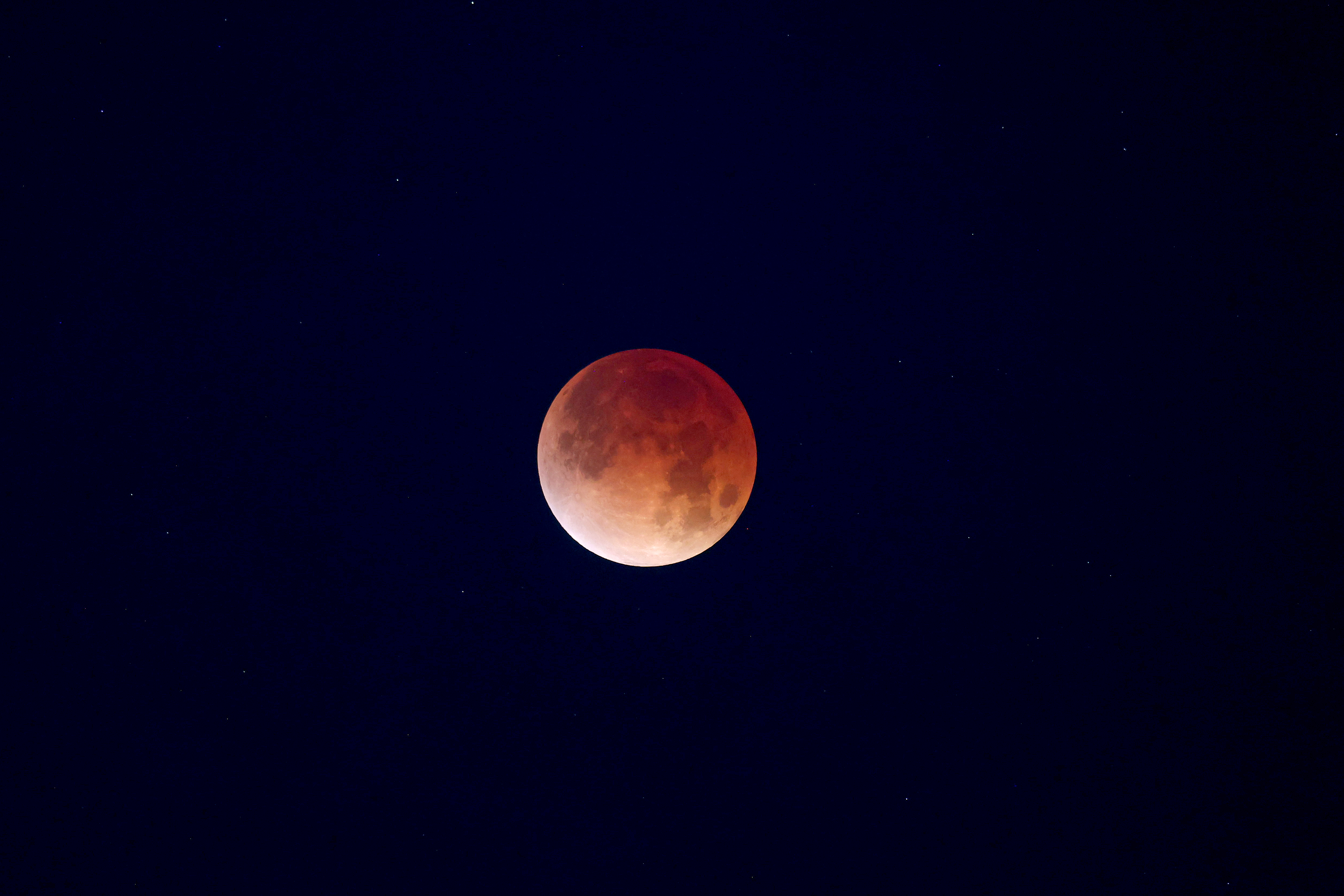
The vivid red coloration, often inspiring awe and sometimes ancient superstitions, is a purely natural optical effect. As Earth positioned itself to block direct sunlight from reaching the Moon, the only light that illuminated our lunar neighbor was filtered through the edges of Earth’s atmosphere. This atmospheric curtain acts as a giant lens, scattering away the shorter-wavelength blue light molecules, much like during sunrises and sunsets. What remains is the longer-wavelength red and orange light, which is then refracted onto the lunar surface, painting it in shades of crimson and copper. The intensity of this red glow can vary significantly depending on the amount of dust, clouds, and even volcanic aerosols present in Earth’s atmosphere at the time of the eclipse.
The Mechanics of a Blood Moon: Rayleigh Scattering in Action
The scientific explanation for the "blood moon" centers on a phenomenon known as Rayleigh scattering. This principle describes how electromagnetic radiation (light) is scattered by particles of a much smaller wavelength. In Earth’s atmosphere, nitrogen and oxygen molecules are particularly efficient at scattering blue and violet light, which have shorter wavelengths. This is precisely why our sky appears blue during the day; the blue light is scattered in all directions, making the entire sky glow with its hue.
During a total lunar eclipse, the Sun’s light must pass through a substantial portion of Earth’s atmosphere before reaching the Moon. As this light traverses our planet’s atmospheric layers, the blue components are scattered away, leaving predominantly red and orange wavelengths to continue their journey. These longer wavelengths bend or refract around Earth’s curved surface, eventually illuminating the Moon. The effect is analogous to how a prism disperses white light into a spectrum of colors, or more commonly, the vibrant red and orange colors seen at dawn and dusk. The specific shade of red can range from a bright coppery orange to a deep, dark brick red, often described using the Danjon Scale, which classifies the brightness and color of lunar eclipses from L=0 (very dark, almost invisible) to L=4 (very bright, coppery-red or orange). Factors such as major volcanic eruptions preceding an eclipse can inject significant amounts of aerosols into the stratosphere, leading to much darker or more muted red tones, as these particles absorb more light.
A Celestial Spectacle Over New Orleans
New Orleans provided a particularly atmospheric backdrop for the March 3, 2026, total lunar eclipse. The city’s unique cultural landscape, combined with its clear night skies on this occasion, made for exceptional viewing. Local astronomical societies, university departments, and community organizations had prepared for weeks, organizing public viewing parties in parks, observatories, and open spaces across the metropolitan area. Telescopes were set up, and experts were on hand to explain the science to enthusiastic crowds, many of whom gathered along the Mississippi Riverfront or in City Park to witness the event unfold above iconic landmarks.
"The collective gasp of the crowd as the Moon fully entered Earth’s umbra and turned that unmistakable shade of red was truly magical," commented Dr. Eleanor Vance, an astronomy professor at a local university, who hosted a viewing event. "It’s moments like these that bridge the gap between scientific understanding and raw human wonder, reminding us all of our place in the cosmos. For many, it was their first time witnessing a ‘blood moon’ in person, and the reaction was overwhelmingly positive."
The presence of NASA’s Michoud Assembly Facility in New Orleans, a crucial site for the fabrication of large space structures, including the Space Launch System (SLS) core stage for the Artemis missions, added another layer of significance to the local experience. While the facility itself is not directly involved in astronomical observation, its existence serves as a constant reminder of humanity’s ambitious endeavors beyond Earth, making the celestial event resonate even more deeply within the community.
Global Visibility and Chronology of the Eclipse
The total lunar eclipse of March 3, 2026, was visible across a vast swathe of the globe, including North and South America, the western parts of Europe and Africa, and parts of the Arctic. Observers in these regions had the opportunity to witness the entire progression of the eclipse, from its subtle beginnings to the dramatic totality.
The eclipse unfolded over several hours, commencing with the penumbral phase, where the Moon entered Earth’s fainter outer shadow (penumbra). This stage is often imperceptible to the naked eye, as the Moon’s brightness only slightly diminishes. The discernible action began as the Moon moved into Earth’s darker, central shadow (umbra), initiating the partial eclipse phase.
- Penumbral Eclipse Begins: Approximately 03:00 UTC (March 3)
- Partial Eclipse Begins: Approximately 04:07 UTC
- Total Eclipse Begins: Approximately 05:14 UTC
- Maximum Eclipse: Approximately 05:58 UTC
- Total Eclipse Ends: Approximately 06:42 UTC
- Partial Eclipse Ends: Approximately 07:49 UTC
- Penumbral Eclipse Ends: Approximately 08:56 UTC
For observers in New Orleans, which operates on Central Standard Time (CST), the partial eclipse began around 10:07 PM CST on March 2, leading into totality around 11:14 PM CST, reaching maximum eclipse just before midnight, and concluding totality shortly after midnight on March 3. The timing was particularly convenient for evening viewing across the Americas. The duration of totality, during which the Moon was fully immersed in Earth’s umbra and displayed its "blood moon" coloration, lasted approximately 88 minutes, offering ample time for observation and photography. The relatively long duration of totality provided a prolonged opportunity for scientific data collection and public enjoyment.
The Rarity and Significance of Total Lunar Eclipses
While lunar eclipses are not exceedingly rare, occurring typically two to four times a year, total lunar eclipses are less frequent than their partial or penumbral counterparts. On average, a specific location on Earth might experience a total lunar eclipse every 2.5 years, though the exact timing and visibility vary widely. The term "blood moon" has gained popular traction in recent years, often linked to historical and sometimes apocalyptic prophecies in various cultures and religions. However, for astronomers and scientists, each total lunar eclipse represents a valuable opportunity.
Scientifically, these events allow researchers to study subtle changes in Earth’s atmosphere by analyzing the light refracted onto the Moon. Variations in the Moon’s color and brightness during totality can provide insights into global atmospheric conditions, including aerosol content and cloud cover, offering a unique "backlight" perspective on our own planet. Furthermore, eclipses are crucial for public engagement, inspiring interest in astronomy, space science, and STEM fields among people of all ages.
Historically, lunar eclipses have been observed and recorded by civilizations across millennia. Ancient cultures often interpreted these events as omens, divine interventions, or the result of mythical beasts devouring the Moon. From the Babylonian astronomers meticulously charting celestial movements to the Maya, who developed sophisticated calendars incorporating eclipse cycles, the "blood moon" has consistently captured human imagination. These historical records provide a rich tapestry of human interaction with the cosmos, demonstrating an enduring fascination that continues into the modern era.
NASA’s Ongoing Role and Astronomical Research
NASA, through its various centers and missions, plays a pivotal role in understanding and communicating celestial phenomena like lunar eclipses. While the Michoud Assembly Facility in New Orleans focuses on manufacturing, other NASA centers, such as the Goddard Space Flight Center and the Jet Propulsion Laboratory, are deeply involved in lunar science and education. They monitor and predict eclipses, conduct research on lunar geology and atmospheric effects, and provide extensive educational resources to the public.
"Lunar eclipses are powerful reminders of the dynamic interplay within our solar system," stated Dr. Sarah Jenkins, a planetary scientist affiliated with NASA’s lunar science program. "They offer a window into the mechanics of orbits and the properties of Earth’s atmosphere. For NASA, these events, while naturally occurring, complement our broader objectives, including the Artemis program’s goal to return humans to the Moon. Every observation, every moment of public engagement, strengthens the foundation for future exploration."
The Artemis program, aimed at establishing a long-term human presence on the Moon, relies on a deep understanding of the lunar environment, including its interactions with Earth and the Sun. Public events like the March 2026 eclipse serve to galvanize support and foster a new generation of scientists and engineers who will contribute to these ambitious endeavors. NASA’s educational outreach during such events often includes live streams, expert commentaries, and interactive materials, ensuring that the scientific understanding of eclipses reaches a global audience.
Future Lunar Eclipses and Broader Implications
The March 2026 total lunar eclipse, with its stunning "blood moon" display over New Orleans, serves as a poignant reminder of the accessible wonders of the universe. For many, it was an inspiration to look up more often and to learn about the intricate dance of celestial bodies. Upcoming lunar eclipses, both partial and total, are already on the astronomical calendar, promising more opportunities for public engagement and scientific study. Astronomers are particularly looking forward to other notable eclipses in the coming years, including the next total lunar eclipse visible from parts of North America.
Beyond the immediate visual spectacle, such events have broader implications. They contribute to a global appreciation for science, fostering curiosity and critical thinking. They underscore the importance of citizen science, as amateur astronomers contribute valuable observational data, and they unite communities under a shared sky. The collective experience of witnessing a "blood moon" transcends geographical and cultural boundaries, offering a universal moment of reflection on our place in the vast cosmos.
In an increasingly complex world, the simple act of observing a lunar eclipse offers a profound connection to the natural order of the universe. The March 3, 2026, event over New Orleans was not just a beautiful sight; it was a testament to the enduring power of celestial phenomena to inspire, educate, and bring people together in shared awe of the cosmos. As humanity continues its journey of exploration and discovery, the Moon, in all its phases and colors, remains a constant beacon of wonder, perpetually reminding us of the grandeur that lies just beyond our atmosphere.