


Media accreditation is now open for an upcoming and pivotal resupply mission to the International Space Station (ISS), a collaborative endeavor set to deliver vital science investigations, essential supplies, and critical equipment to the orbiting laboratory. The mission, designated NASA’s Northrop Grumman Commercial Resupply Services 24 (NASA’s Northrop Grumman CRS-24), will see a Northrop Grumman Cygnus XL spacecraft launch aboard a SpaceX Falcon 9 rocket in April, underscoring the robust and evolving partnership between NASA and its commercial providers. This launch represents the 24th time Northrop Grumman has built a spacecraft under contract with NASA specifically for delivering cargo to the International Space Station, a testament to the enduring success of the Commercial Resupply Services program.
Mission Profile: A Lifeline to Orbit
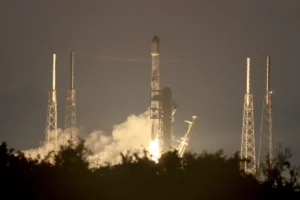
Liftoff for the CRS-24 mission is currently targeted for no earlier than Wednesday, April 8, originating from Space Launch Complex 40 (SLC-40) at Cape Canaveral Space Force Station in Florida. This launch site, historically significant in space exploration, serves as a frequent departure point for missions destined for low Earth orbit. The choice of a SpaceX Falcon 9 rocket to carry the Cygnus spacecraft highlights the adaptability and inter-operability within NASA’s commercial launch services, enabling mission flexibility and resilience. While Northrop Grumman designs and builds the Cygnus vehicle, the use of a third-party launch provider like SpaceX has become a standard practice in the era of commercial spaceflight, optimizing resource allocation and mission scheduling.
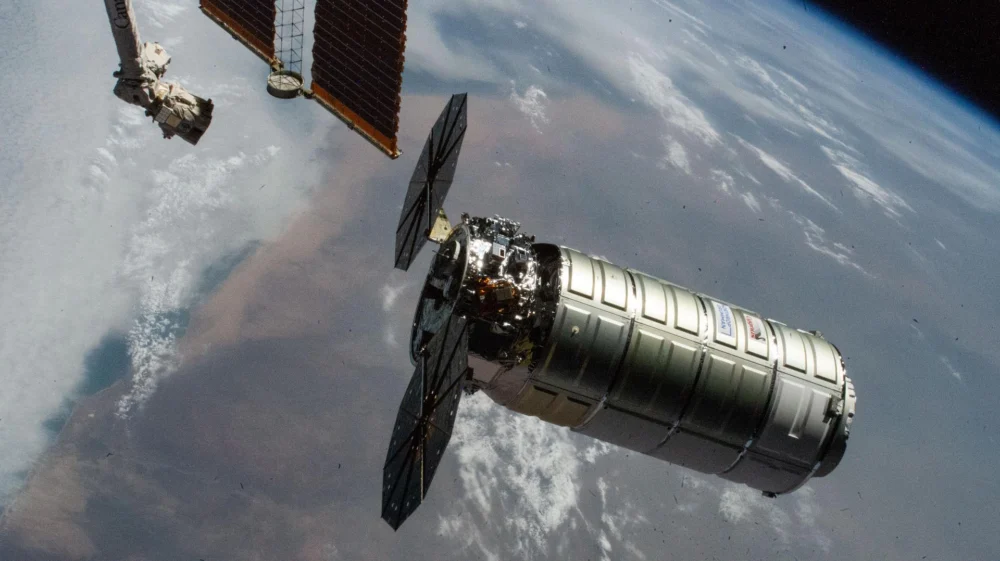
The Cygnus spacecraft itself is a robust, uncrewed cargo vehicle designed for single-use deliveries to the ISS. The "XL" designation refers to its enhanced capacity, capable of carrying a larger volume and mass of cargo compared to earlier versions. Each Cygnus vehicle is named after an astronaut or individual who has made significant contributions to human spaceflight. Following a successful launch and orbital insertion, the Cygnus will embark on an autonomous rendezvous with the International Space Station. This intricate dance in orbit, guided by precise navigation and control systems, culminates in the spacecraft approaching the ISS.
Upon arrival, the astronauts aboard the space station will assume control, utilizing the sophisticated Canadarm2 robotic arm to capture the free-flying Cygnus. The Canadarm2, a 57.7-foot-long robotic arm developed by the Canadian Space Agency, is a crucial component of the ISS, used for berthing visiting spacecraft, moving equipment, and assisting spacewalkers. Once captured, the arm will meticulously maneuver and install the Cygnus to the Unity module’s Earth-facing port. The Unity module, one of the foundational components of the ISS, serves as a node connecting other modules, providing an essential gateway for arriving cargo. The Cygnus is anticipated to remain berthed at the space station until October, allowing ample time for the crew to unload its precious cargo and then fill it with refuse and unneeded equipment for a destructive re-entry into Earth’s atmosphere, effectively serving as an orbital trash disposal system.
Pioneering Science Aboard the Cygnus
Beyond delivering essential food, water, and equipment for the resident crew, the CRS-24 mission carries a diverse array of cutting-edge scientific investigations, each designed to leverage the unique microgravity environment of the International Space Station. These experiments span various disciplines, promising breakthroughs in fields from quantum physics to human health.
One of the most anticipated payloads is a new module to advance quantum science. This facility aims to explore fundamental principles of quantum mechanics in space, an environment free from terrestrial gravitational interference. The implications of such research are profound, potentially leading to significant improvements in computing technology, paving the way for more powerful quantum computers capable of solving complex problems currently beyond reach. Furthermore, quantum sensors developed through this research could aid in the elusive search for dark matter, a mysterious substance believed to constitute a significant portion of the universe but which has never been directly observed. By studying quantum phenomena in microgravity, scientists hope to gain new insights into the fundamental fabric of reality.
Another critical payload targets hardware to produce a greater number of therapeutic stem cells. Stem cell research holds immense promise for treating a wide range of diseases, including blood disorders and various forms of cancer. Microgravity has been observed to offer unique advantages for culturing stem cells, potentially allowing for the growth of larger quantities of higher-quality cells than is possible on Earth. This hardware aims to optimize these conditions, enabling the production of therapeutic stem cells on a scale that could accelerate medical research and lead to more effective treatments for patients suffering from debilitating conditions. The ability to grow more robust and pure stem cell populations in space could revolutionize regenerative medicine.
The mission will also transport model organisms to study the gut microbiome. The human gut microbiome, a complex ecosystem of microorganisms residing in the digestive tract, plays a critical role in human health, influencing everything from digestion and immunity to mood and disease susceptibility. Understanding how the gut microbiome adapts and changes in the unique environment of space is crucial for ensuring the long-term health of astronauts on extended missions to the Moon and Mars. By studying model organisms, scientists can observe these changes in a controlled manner, providing insights that could lead to improved dietary strategies, probiotics, or other interventions to maintain astronaut health, with direct applications for improving gut health on Earth.
Finally, Cygnus will carry a receiver that could enhance space weather models. Space weather, driven by solar activity such as flares and coronal mass ejections, poses a significant threat to critical space infrastructure, including communication satellites, navigation systems like GPS, and radar. These events can disrupt signals, damage electronics, and even cause power grid failures on Earth. The new receiver aims to collect data from orbit that will improve the accuracy and predictive capabilities of space weather models. Enhanced models are essential for providing timely warnings, allowing operators to take protective measures for invaluable assets in space and on Earth, safeguarding modern society’s reliance on space-based technology.
Each resupply mission to the station delivers scientific investigations across a broad spectrum, including biology and biotechnology, Earth and space science, physical sciences, and technology development and demonstrations. This continuous flow of scientific cargo from U.S. companies ensures a national capability to deliver cutting-edge research to the space station, significantly increasing NASA’s ability to conduct new investigations aboard humanity’s unique laboratory in space.
The Commercial Resupply Services Program: A Paradigm Shift
The NASA Commercial Resupply Services (CRS) program, under which this mission operates, represents a monumental shift in how the agency approaches logistics for its low Earth orbit (LEO) operations. Initiated in the mid-2000s, the CRS program was designed to stimulate the development of commercial space transportation capabilities within the United States, thereby reducing NASA’s reliance on government-run systems and international partners for cargo delivery to the ISS. Prior to CRS, NASA relied heavily on its Space Shuttle fleet, which was retired in 2011, and the European Automated Transfer Vehicle (ATV) and Japanese H-II Transfer Vehicle (HTV) for resupply.
The program was structured as a series of fixed-price contracts awarded to private companies, incentivizing them to design, build, and operate their own cargo spacecraft and launch vehicles. Northrop Grumman (formerly Orbital Sciences, then Orbital ATK before acquisition) and SpaceX were the initial awardees of the CRS-1 contracts, demonstrating the viability of this new model. Northrop Grumman’s Cygnus and SpaceX’s Dragon capsules have since become the workhorses of ISS resupply, collectively completing dozens of missions and delivering hundreds of tons of cargo. This approach has not only proven cost-effective but has also fostered a vibrant commercial space industry, creating jobs and driving technological innovation. The success of CRS-1 led to subsequent rounds, CRS-2, which brought in Sierra Nevada Corporation’s Dream Chaser as a future cargo vehicle, further diversifying the commercial capabilities. The CRS-24 mission is a direct continuation of this successful strategy, demonstrating the long-term commitment to commercial partnerships.
The International Space Station: A Quarter Century of Discovery
For more than 25 years, humans have continuously lived and worked aboard the International Space Station, marking an unprecedented era of international cooperation and scientific advancement. The ISS, a truly global endeavor involving five space agencies—NASA (United States), Roscosmos (Russia), JAXA (Japan), ESA (Europe), and CSA (Canada)—has become a beacon of scientific discovery, providing a unique microgravity platform where research breakthroughs not possible on Earth are routinely achieved.
The station’s primary purpose is to serve as a research laboratory, conducting experiments in fundamental science, applied technology, and human adaptation to space. From growing crystals and combustion research to studying the effects of radiation on living organisms and developing new materials, the ISS facilitates a vast spectrum of scientific inquiry. These investigations not only expand humanity’s scientific knowledge but also yield tangible benefits for life on Earth, including advancements in medicine, agriculture, environmental monitoring, and materials science.
Beyond its role as a research hub, the ISS is an indispensable testbed for NASA to understand and overcome the myriad challenges of long-duration spaceflight. Living and working in microgravity for extended periods takes a toll on the human body, affecting bone density, muscle mass, vision, and the cardiovascular system. Research conducted on the ISS provides critical data on these physiological changes, allowing scientists to develop countermeasures, improved diets, and exercise regimens essential for protecting the health of astronauts on future deep-space missions to the Moon and Mars. It also serves as a proving ground for new technologies and operational procedures vital for sustained human presence beyond Earth orbit.
Forging the Future: The LEO Economy and Deep Space Ambitions
The CRS-24 mission and the ongoing operations of the International Space Station are integral to NASA’s broader vision for space exploration. As commercial companies concentrate on providing human space transportation services and destinations, fostering a robust low Earth orbit (LEO) economy, NASA is strategically focusing its resources on ambitious deep space missions. This transition represents a deliberate shift in strategy, where NASA acts as a customer for LEO services rather than the sole provider, allowing private industry to innovate and compete.
The development of a strong LEO economy is seen as crucial for the long-term sustainability of human spaceflight. Commercial space stations, such as those being developed by private entities, are expected to eventually take over the role of the ISS, providing platforms for research, manufacturing, and even space tourism. This commercial ecosystem will ensure continued access to LEO for a variety of users, freeing up NASA to concentrate its unique capabilities and resources on more distant horizons.
This strategic pivot directly supports the Artemis program, NASA’s ambitious initiative to return humans to the Moon. The Artemis program aims to land the first woman and the next man on the lunar surface, establish a sustainable human presence there, and utilize the Moon as a proving ground for the ultimate goal: the first crewed missions to Mars. The technologies developed and the lessons learned from decades of ISS operations, combined with the capabilities of commercial partners in LEO, form the foundational bedrock upon which the Artemis program is built. The consistent resupply missions, like CRS-24, are not just about maintaining the current station; they are about sustaining the infrastructure and knowledge base that makes future deep-space exploration possible.
Official Perspectives
NASA officials consistently emphasize the critical importance of these commercial resupply missions. "Consistent and reliable resupply is the lifeblood of the International Space Station," stated a NASA spokesperson, underscoring the necessity of continuous cargo deliveries for both crew sustenance and scientific productivity. "Our commercial partners like Northrop Grumman and SpaceX are not just contractors; they are integral to our mission, enabling groundbreaking research that benefits humanity and paving the way for future exploration." Representatives from Northrop Grumman have also frequently expressed their pride in supporting NASA’s mission, highlighting their commitment to delivering critical payloads and ensuring the operational success of the ISS. The seamless integration of commercial capabilities with NASA’s long-term objectives is frequently cited as a model for future public-private partnerships in space.
Media Accreditation and Further Information
Credentialing to cover prelaunch and launch activities for the NASA’s Northrop Grumman CRS-24 mission is open exclusively to U.S. media. Prospective attendees must adhere to strict deadlines and application procedures. The application deadline for U.S. citizens is 11:59 p.m. EDT, Wednesday, March 18. All accreditation requests must be submitted online through the official NASA media portal at: https://media.ksc.nasa.gov.
Credentialed media will receive a confirmation email following approval, and all applicants are encouraged to review NASA’s comprehensive media accreditation policy, available online, for detailed guidelines. For specific questions regarding accreditation or to request special logistical support for coverage, media representatives are advised to email [email protected]. For any other inquiries, the NASA Kennedy Space Center newsroom can be contacted directly at 321-867-2468.
The CRS-24 mission stands as another critical chapter in the ongoing saga of human space exploration, bridging the gap between sustained operations in low Earth orbit and humanity’s ambitious journey to the Moon and beyond. For more detailed information about International Space Station research and operations, please visit: https://www.nasa.gov/station.
–end–
NASA Media Contacts:
Josh Finch / Jimi Russell
Headquarters, Washington
202-358-1100
[email protected] / [email protected]
Steven Siceloff
Kennedy Space Center, Fla.
321-876-2468
[email protected]
Sandra Jones / Leah Cheshier
Johnson Space Center, Houston
281-483-5111
[email protected] / [email protected]