

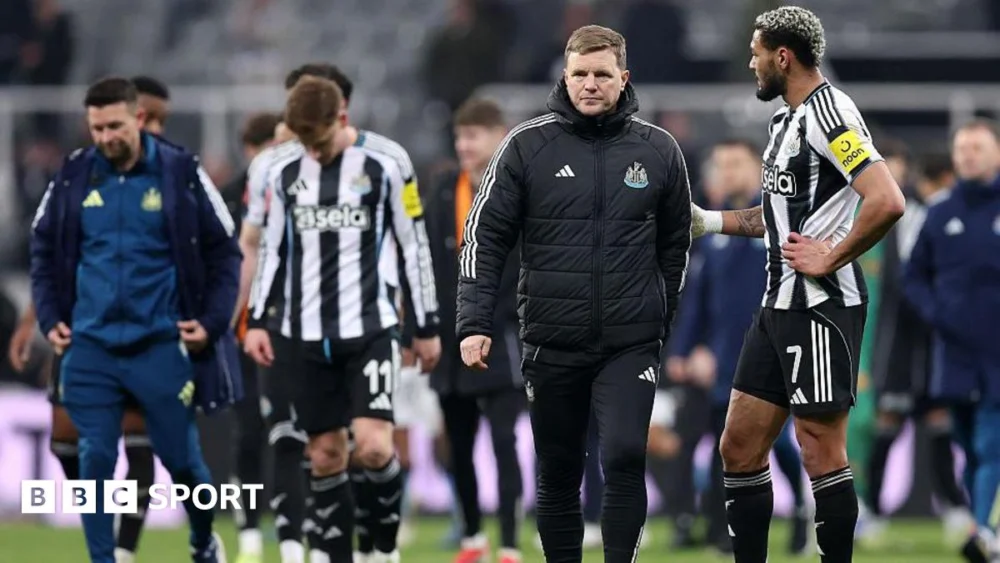
The FA Cup fifth-round encounter at St. James’ Park was meant to be a potential turning point for Newcastle United, a chance to reignite hopes of silverware and a return to Wembley. Instead, the 3-0 defeat at the hands of a much-changed Manchester City side served as a stark and sobering reminder of the significant gulf that still exists between Eddie Howe’s team and the perennial champions. This result not only extinguishes Newcastle’s immediate cup ambitions but also underscores the considerable work required to ascend to the elite level of English football.
The narrative of the match began with a surge of optimism from the home crowd. Newcastle, buoyed by a vociferous St. James’ Park faithful, started with an intensity that suggested they recognized the FA Cup as their most viable pathway to a trophy this season. Their Premier League campaign, currently hovering in mid-table obscurity at 12th place, offers little immediate prospect of European qualification. Consequently, the FA Cup held immense significance, not just for silverware but as a potential backdoor into continental competition.
Early Encounters and the Spark of Hope
From the outset, Newcastle United displayed a commendable energy and clear intent. This proactive approach began to unnerve the visitors, even a Manchester City outfit that had undergone extensive rotation. Uncharacteristic errors from City goalkeeper James Trafford and defender Matheus Nunes, who were forced to concede possession out of play under pressure, signaled Newcastle’s effective high press. The tangible reward for their early endeavors arrived in the 37th minute. Harvey Barnes, a player who has previously demonstrated his ability to trouble Pep Guardiola’s side, unleashed a fine curling effort that found the back of the net. This goal echoed a familiar script; Barnes had, after all, scored twice in a memorable 2-1 victory over Manchester City at the same venue back in November. The initial 15-20 minutes of the first half, according to Guardiola himself, were indeed periods where his team "could not control."
However, the early promise began to fray as the first half progressed. Just as Newcastle seemed poised to build on their advantage, a shift in momentum occurred. The Magpies, perhaps feeling the residual effects of a demanding midweek victory against Manchester United where they played with ten men for a significant duration, began to retreat. The press that had initially troubled City became less effective, and Newcastle found themselves increasingly pinned back.
Manchester City’s Response and Newcastle’s Struggle to Contain
The period after Newcastle’s opening goal marked a critical juncture. As the home side gradually conceded territory, Manchester City, despite their numerous alterations, began to exert their characteristic control. Possession increasingly flowed towards the Newcastle half, and their technical prowess allowed them to repeatedly break through the midfield lines. Eddie Howe acknowledged this shift, stating, "The way they play and how good they are technically, they took a stranglehold of the ball." He further elaborated on his team’s difficulties in possession, noting, "When we got it back, we gave it away too easily, maybe looking too vertical and not horizontal enough at times." This inability to retain the ball and make intelligent, measured passes proved costly, draining the team’s energy and contributing to prolonged periods without offensive threat. Howe’s assessment concluded with a stark observation about City’s sustained dominance: "As soon as you make a technical mistake, you’re not seeing the ball for long periods and then your energy just drains away. That’s why they have been the best team for so long."
The equaliser for Manchester City arrived in the 53rd minute through Savinho. This goal was symptomatic of a recurring defensive frailty for Newcastle. A well-delivered cross found an unmarked City attacker at the far post, a scenario that would unfortunately repeat itself. Just seven minutes later, Omar Marmoush doubled City’s lead, again exploiting defensive lapses. Marmoush, who has proven to be a consistent thorn in Newcastle’s side, showcased his predatory instincts by adding a third goal later in the match, effectively sealing the tie.
Defensive Frailties and Statistical Realities
The defensive vulnerabilities exposed in this FA Cup tie are not isolated incidents. Newcastle United’s home record this season has been a cause for concern. The concession of 38 goals in 26 home games across all competitions represents their highest tally at St. James’ Park since the 1978-79 season. This defensive leakage, when contrasted with the ambition of becoming a "top club in the world," as articulated by CEO David Hopkinson, presents a significant disconnect. The team’s current standing in the Premier League, coupled with their early exits from both domestic cup competitions at the hands of Manchester City, amplifies this challenge.
The strength in depth of Manchester City was a palpable factor, even with a starting XI that saw ten changes from their previous fixture. Notable absentees from the matchday squad or starting lineup included Erling Haaland, who was rested, and key midfielders like Rodri and Bernardo Silva. The bench also featured an array of talent that remained largely unused, such as Phil Foden and Ruben Dias. Despite this significant rotation, City’s organizational structure and the quality of their remaining players proved too much for Newcastle to overcome.
Historical Context and Managerial Reactions
This defeat marks a significant historical footnote in the rivalry between the two clubs. Manchester City has now become the first team in history to defeat Newcastle United four times within a single season. This statistic underscores the consistent superiority displayed by Pep Guardiola’s side.
Eddie Howe, while acknowledging the disappointment, remained pragmatic in his post-match assessment. He described the second half as a "tough learning lesson" for his team, conceding, "We just didn’t have the strength to make a dent in them." His analysis pointed towards a lack of sustained intensity and an inability to compete physically and technically for the full duration of the match against a top-tier opponent.
Kieran Trippier, speaking to TNT Sports, offered a candid reflection on the performance. "There’s no excuses today," the defender stated. "We got beat by the better team." This admission from a senior player highlights the acceptance within the squad of City’s superiority on the day.
The Broader Implications and the Road Ahead
The FA Cup exit, alongside the Carabao Cup elimination earlier in the season, leaves Newcastle United with no domestic cup silverware to pursue. The focus now irrevocably shifts to the Premier League and, more pressingly, the UEFA Champions League. The upcoming Round of 16 tie against Barcelona at St. James’ Park on Tuesday is being framed by Howe as potentially the "biggest game" in the club’s history.
"We need to approach it that way and we need the supporters to think that way," Howe urged, emphasizing the monumental task ahead. "We need to try and find some energy from somewhere that will elevate our performance to a level that we’ve not seen before this season because I think that’s the only way we get through." The magnitude of this European fixture, against a club of Barcelona’s pedigree, will test Newcastle’s resilience and their ability to perform on the grandest stage.
The contrast between the club’s ambitious long-term vision, espoused by its ownership and leadership, and the immediate on-field realities is stark. While the ambition to compete for the world’s top club status by 2030 is laudable, the performances against elite teams like Manchester City expose the significant chasm that remains. Bridging this gap will require sustained investment, astute recruitment, and a consistent ability to compete at the highest level, not just in flashes of brilliance but over entire ninety minutes against the very best.
The lingering question for Newcastle United is whether they can harness the lessons learned from these encounters with Manchester City and translate them into the sustained performances required to challenge for major honours. The immediate challenge, however, lies in regrouping and finding the necessary energy and quality to face Barcelona, a fixture that could define their season and offer a glimpse into their potential future trajectory. The path to emulating the sustained success of teams like Manchester City is long and arduous, and this FA Cup exit serves as a clear, albeit painful, indication of the distance yet to be covered. The absence of Manchester City from their fixture list for the remainder of the season offers a small respite, but the underlying performance deficit remains a critical area for development.