

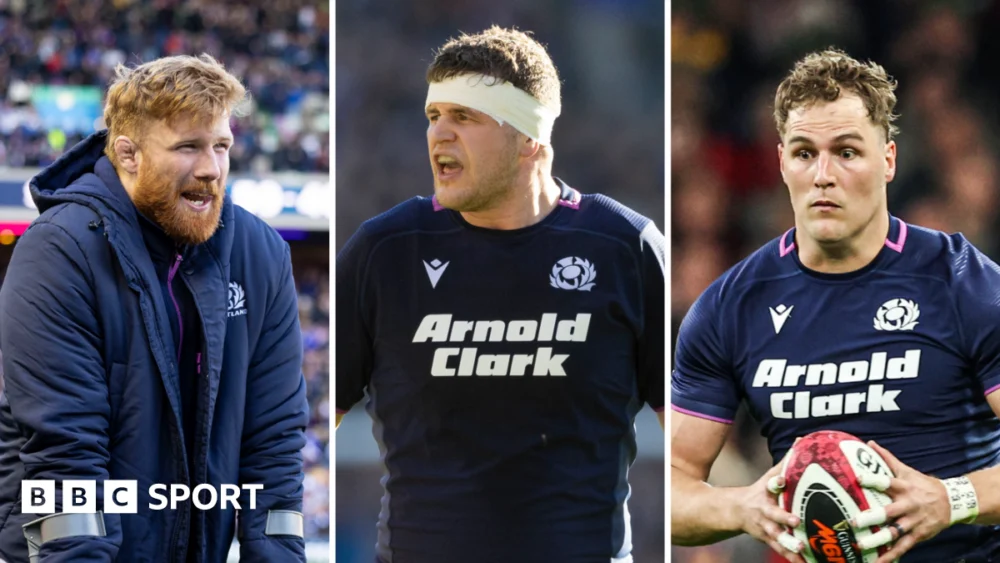
The Scotland national rugby union team has announced its squad for the upcoming significant fixture against Ireland, a match poised to have considerable implications for both teams’ campaigns and the broader Six Nations Championship landscape. The selection, unveiled following intense training sessions and strategic deliberations, showcases a blend of established leadership, seasoned campaigners, and promising emerging talent, all geared towards confronting one of the tournament’s most formidable opponents. The squad announcement marks a pivotal moment in Scotland’s preparation, signalling the final stages of their tactical refinement and player readiness for a contest that demands peak performance.
Forwards: A Foundation of Power and Versatility
The forward pack, the engine room of any rugby team, presents a robust and experienced contingent. The front row sees a familiar set of faces alongside some notable additions, highlighting the depth and competition within the squad. Ewan Ashman, Dave Cherry, and Gregor Hiddleston provide options at hooker, each bringing their unique strengths to the crucial set-piece battles. George Turner, a consistent performer, offers further experience, while Alec Hepburn and Pierre Schoeman are set to anchor the loosehead prop position, known for their relentless work rate in the scrum and open play. On the tighthead side, Zander Fagerson, a cornerstone of the Scottish pack for years, is joined by D’Arcy Rae and Murphy Walker, ensuring formidable competition and coverage.
The second row is bolstered by the presence of Alex Craig, Grant Gilchrist, and Jonny Gray. Gilchrist, a veteran of numerous campaigns, brings invaluable leadership and defensive solidity. Jonny Gray, a world-class lock, offers unparalleled lineout prowess and tackling ability. Alex Samuel and Max Williamson represent the younger generation, eager to make their mark and prove their mettle at the highest level.
In the back row, the selection demonstrates a clear emphasis on mobility, ball-carrying ability, and defensive commitment. Josh Bayliss, Magnus Bradbury, and Rory Darge are all dynamic players capable of making significant impacts around the park. Jack Dempsey, a powerful ball-carrier, adds a different dimension to the breakdown, while Freddy Douglas and Euan Ferrie, representing the future of Scottish rugby, are included to gain valuable experience and push for starting berths. Matt Fagerson, a key player in recent seasons, provides crucial versatility and ball-winning ability, rounding out a back row that promises to be both physically imposing and tactically astute. The collective experience across these forwards, particularly in high-pressure international fixtures, provides a solid foundation upon which Scotland will aim to build their game plan.
Backs: Creativity, Pace, and Playmaking Prowess
The Scottish backline, often characterized by its flair and attacking ambition, features a compelling mix of established stars and exciting prospects. At scrum-half, George Horne, Gus Warr, and Ben White are all vying for the pivotal number nine jersey. Horne’s electric pace and try-scoring ability make him a constant threat, while Warr and White offer different tactical approaches and kicking options, crucial for controlling territory and tempo.
The fly-half position is dominated by the presence of Finn Russell, widely regarded as one of the most inventive and influential playmakers in world rugby. His ability to unlock defenses with his unpredictable passing, intelligent kicking game, and audacious running lines makes him Scotland’s primary attacking catalyst. Supporting him, Fergus Burke and Tom Jordan provide further options, each with their own distinct skillsets, ready to step in and execute the game plan.
The centres offer a potent combination of defensive grit and attacking penetration. Huw Jones, known for his try-scoring prowess and ability to break the gainline, partners with Stafford McDowall and Sione Tuipulotu. Tuipulotu’s inclusion as captain underscores his leadership qualities and importance to the team’s structure and morale. His physical presence and ability to command the midfield are vital assets. Rory Hutchinson, a versatile back capable of playing across the midfield and at wing, adds valuable depth and experience.
The wing and full-back positions are equally exciting, featuring a wealth of pace and try-scoring potential. Darcy Graham, a diminutive yet explosive finisher, is a proven threat on the wing, capable of scoring tries from seemingly impossible situations. Blair Kinghorn, a powerful runner and capable goal-kicker, offers versatility, able to cover both wing and full-back. Arron Reed and Kyle Rowe are younger talents eager to seize their opportunities and demonstrate their attacking capabilities. Ollie Smith and Kyle Steyn, both powerful athletes with an eye for the try line, complete the backline selections, ensuring Scotland possesses a potent and dynamic array of attacking options. The interplay between these backs, particularly Russell’s influence, will be critical in breaking down a resolute Irish defense.
Context of the Encounter: A Six Nations Showdown
This Scotland squad announcement comes at a critical juncture in the 2024 Six Nations Championship. Ireland, the reigning Grand Slam champions and the current number one ranked team in the world, present an exceptionally challenging prospect. Their recent form, marked by consistent victories and a seemingly unshakeable confidence, makes them a formidable opponent on any stage. Scotland, under the guidance of head coach Gregor Townsend, have been steadily building momentum in the championship. Their performances have often been characterized by flashes of brilliance and a willingness to play an expansive, attacking style of rugby.
The history between these two nations in the Six Nations is rich and often fiercely contested. Matches between Scotland and Ireland are typically tight affairs, decided by fine margins and moments of individual brilliance or crucial defensive plays. Ireland have, in recent years, held a statistical edge, but Scotland have demonstrated their ability to challenge and defeat top-tier opposition, as evidenced by their victories against England and France in previous campaigns. This fixture, therefore, is not just another game; it is a significant test of Scotland’s ambitions and their capacity to compete at the very highest echelon of international rugby. The tactical battle between Townsend and his Irish counterpart will be as compelling as the physical one on the field.
Supporting Data and Tactical Considerations
Recent statistical trends offer a glimpse into the potential dynamics of this match. Ireland’s dominance in possession and their exceptional defensive organization have been hallmarks of their success. They consistently rank highly in tackle completion rates, turnovers conceded, and line breaks made. Their set-piece, particularly their scrum and lineout, is incredibly efficient, allowing them to exert sustained pressure. Scotland, on the other hand, have often thrived on counter-attacks and turnovers, leveraging the pace and finishing ability of their backline. Their breakdown work, spearheaded by players like Matt Fagerson and Rory Darge, will be crucial in disrupting Ireland’s rhythm and creating opportunities.
The kicking game will undoubtedly play a significant role. Finn Russell’s ability to manipulate territory with his tactical kicking and his penchant for chip-and-chase plays could be a key weapon for Scotland. Conversely, Ireland’s structured kicking game, designed to pin opponents deep and force errors, will need to be expertly managed by Scotland’s back three. The physical battle at the breakdown, a hallmark of Six Nations rugby, will be paramount. Both teams possess potent carriers and skilled jackalers, and the ability to win quick, clean ball will dictate the flow of the game. Scotland’s success will likely hinge on their ability to execute their game plan with precision, minimize errors, and capitalize on any opportunities that arise against a disciplined Irish defense.
Timeline and Preparation
The squad announcement is the culmination of an intensive period of preparation. Following their previous Six Nations fixtures, the players have been involved in training camps, focusing on tactical alignment, physical conditioning, and team cohesion. This period is vital for refining set-piece strategies, rehearsing attacking structures, and working on defensive patterns. Players not selected will continue to train with the wider squad, ensuring they are ready to step in should injuries occur. The focus will now shift to fine-tuning specific game plans tailored to the strengths and weaknesses of the Irish team. The week leading up to the match will involve intense tactical sessions, video analysis, and mental preparation, ensuring every player is fully aware of their role and responsibilities.
Official Responses and Player Perspectives (Inferred)
While direct quotes from the squad members are not yet available, it can be inferred that the selection has generated a mix of excitement and a keen sense of responsibility. For those included, it represents an opportunity to contribute to a significant national effort. For the uncapped players or those returning from injury, it is a chance to prove their worth on a grand stage. Head Coach Gregor Townsend is likely to have emphasized the importance of discipline, execution, and belief throughout the squad. The captain, Sione Tuipulotu, will be tasked with leading by example, fostering a collective spirit, and ensuring the team adheres to their game plan under immense pressure. The focus for the entire coaching staff and playing group will be on a unified approach, with every player understanding their individual role within the broader team strategy.
Broader Impact and Implications
The outcome of this match will have far-reaching implications for the Six Nations Championship. A victory for Scotland would not only represent a significant scalp against a world-class opponent but would also bolster their position in the championship table, keeping their own aspirations alive. It would serve as a powerful statement of their progress and their ability to challenge for major honours. Conversely, a defeat, while not necessarily derailing their campaign entirely, would make their path to the title significantly more challenging. For Ireland, a win would further solidify their status as the dominant force in European rugby and inch them closer to retaining their championship title. Beyond the immediate championship implications, this fixture serves as a crucial barometer for Scotland’s development under Townsend, testing their mettle against the best and providing invaluable experience for their emerging talents. The performance will be scrutinized not only for the result but also for the tactical execution, the individual contributions, and the overall team spirit displayed. The resilience and adaptability shown by Scotland in this high-stakes encounter will offer insights into their long-term trajectory in the international rugby landscape.