


The Current State of the Supercar Market
The modern supercar is no longer defined solely by its ability to exceed 200 mph; rather, it is judged on its capacity to provide a multi-dimensional driving experience. While raw performance data—such as sub-3.0-second 0-62 mph times—remains a prerequisite, the industry has shifted its focus toward "usable engagement." This involves refining chassis dynamics, steering feedback, and interior ergonomics to ensure that these vehicles are as rewarding at legal road speeds as they are on a closed circuit.
Leading this evolution are legacy manufacturers such as Ferrari, Lamborghini, and McLaren, alongside specialized divisions like Porsche’s GT department and the rejuvenated Aston Martin. These brands are currently tackling the "weight penalty" associated with hybrid batteries by employing advanced carbon-fiber architectures and innovative packaging solutions. The result is a class of vehicles that, despite increased complexity, offer higher power-to-weight ratios than their predecessors.
The Hybrid Pioneers: McLaren Artura and Ferrari 296 GTB
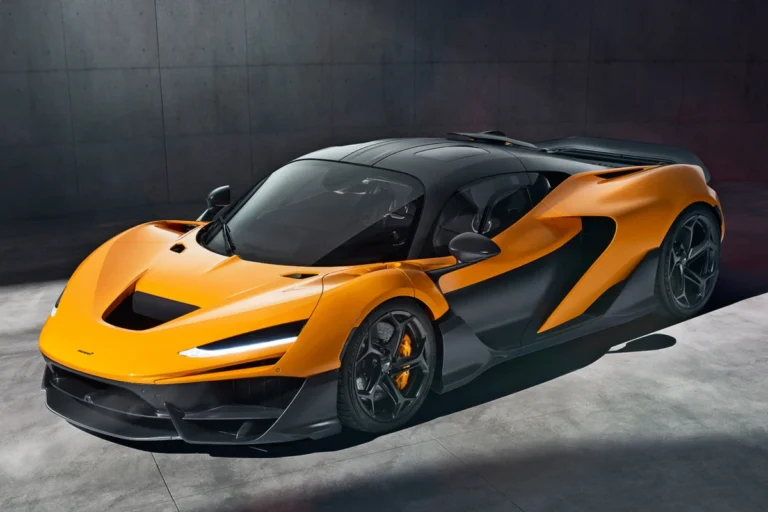
The transition to electrification is perhaps most evident in the mid-engine segment. The McLaren Artura represents a pivotal moment for the Woking-based manufacturer, utilizing the McLaren Carbon Lightweight Architecture (MCLA) specifically designed for HPH (High-Performance Hybrid) powertrains. Powered by a 3.0-liter twin-turbocharged V6 paired with an axial flux electric motor, the Artura produces a combined 690 bhp. Its significance lies in its daily usability; the car offers a dedicated electric-only mode for urban environments while maintaining the hydraulic steering feel that has become a McLaren hallmark.
In direct competition, the Ferrari 296 GTB has redefined expectations for the V6 engine. Dubbed the "piccolo V12" (little V12) by Ferrari engineers due to its high-frequency exhaust note, the 120-degree wide-angle V6 works in tandem with a rear-mounted electric motor to deliver a staggering 819 bhp. Ferrari’s integration of the Transition Manager Actuator (TMA) allows for seamless handovers between the combustion engine and the electric motor, ensuring that the driver remains insulated from the complexities of the hybrid system.

The Persistence of the Naturally Aspirated Engine: Porsche 911 GT3
While many manufacturers have turned to forced induction and electrification, Porsche’s GT department continues to champion the naturally aspirated flat-six. The latest 911 GT3 (992.2 generation) serves as a benchmark for mechanical purity. Its 4.0-liter engine, which revs to 9,000 rpm, produces 503 bhp—a figure that may seem modest compared to hybrid rivals but is compensated for by a kerb weight of approximately 1,435 kg.
The GT3’s appeal is rooted in its chassis sophistication, featuring a double-wishbone front suspension derived from the 911 RSR race car. This setup provides a level of steering precision and front-end grip that remains largely unmatched in the segment. By offering both a seven-speed PDK and a six-speed manual transmission, Porsche continues to cater to the "analogue" enthusiast, a demographic that remains influential despite the industry’s digital shift.
The New V12 Era: Lamborghini Revuelto and Ferrari 12Cilindri
The V12 engine, once thought to be on the verge of extinction due to emissions regulations, has seen a resurgence through different engineering paths. Lamborghini has opted for hybridization with the Revuelto, the successor to the Aventador. By pairing a new 6.5-liter V12 with three electric motors, Lamborghini has achieved a total output of 1,001 bhp. The Revuelto utilizes its front electric motors for torque vectoring, significantly improving the agility of what is a relatively heavy (1,800 kg) vehicle.
Conversely, Ferrari has doubled down on pure combustion with the 12Cilindri. This front-mid-engined supercar pays homage to the grand tourers of the 1950s and 60s while utilizing the 819 bhp V12 from the 812 Competizione. The 12Cilindri features independent four-wheel steering and a "shorter" wheelbase feel through electronic intervention, proving that the traditional V12 layout can still offer contemporary levels of agility.
Chronology of Development: 2017 to 2024
The evolution of the current supercar crop can be traced through several key technological milestones over the last seven years:

- 2017: The launch of the McLaren 720S sets a new standard for aerodynamic efficiency and hydraulic suspension (Proactive Chassis Control II).
- 2021: Ferrari introduces the 296 GTB, proving that a hybrid V6 can outperform previous V8 models in both engagement and raw speed.
- 2022: McLaren releases the Artura, debuting the MCLA chassis and marking the end of the pure ICE era for their series-production cars.
- 2023: Lamborghini unveils the Revuelto, integrating a "monofuselage" carbon-fiber structure and a tri-motor hybrid system.
- 2024: The arrival of the Lamborghini Temerario (replacing the Huracán) and the Aston Martin Vanquish signals a complete overhaul of the "entry-level" and "flagship" categories across the major European brands.
Technical Analysis and Supporting Data
Performance metrics across this class have reached a plateau where traction, rather than power, is the limiting factor. Supporting data indicates that the shift to all-wheel drive (often via "e-axles") has been necessary to manage the massive torque outputs of hybrid systems.
| Model | Engine Type | Total Output | 0-62 mph | Top Speed |
|---|---|---|---|---|
| Lamborghini Revuelto | 6.5L V12 PHEV | 1,001 bhp | 2.5 sec | 217 mph |
| Ferrari 296 GTB | 3.0L V6 PHEV | 819 bhp | 2.9 sec | 205 mph |
| McLaren 750S | 4.0L V8 Twin-Turbo | 740 bhp | 2.8 sec | 206 mph |
| Aston Martin Vanquish | 5.2L V12 Twin-Turbo | 824 bhp | 3.3 sec | 214 mph |
| Chevrolet Corvette Z06 | 5.5L V8 N/A | 670 bhp | 2.9 sec | 189 mph |
Analysis of these figures suggests that while the Revuelto holds the power advantage, the McLaren 750S—an evolution of the 720S—remains one of the quickest accelerating "pure" combustion cars due to its low mass (1,277 kg dry weight). This highlights the ongoing tension in supercar design: the pursuit of hybrid power versus the traditional virtues of lightweight engineering.
Official Responses and Industry Sentiment
Spokespersons from the leading manufacturers have consistently emphasized that the move toward hybridization is not merely a regulatory necessity but a performance opportunity. During the launch of the Revuelto, Lamborghini’s Chief Technical Officer, Rouven Mohr, stated that the goal was to "increase the emotional connection" through technology, using electric motors to "fill" the torque gaps inherent in high-revving engines.
Similarly, Ferrari’s leadership has indicated that the 296 GTB was designed to be their most "fun to drive" car, rather than just their fastest. This sentiment is echoed across the industry, with Aston Martin’s executive team noting that the new Vanquish was engineered to provide a "visceral" experience that distinguishes it from the increasingly clinical performance of some rivals.
The American Perspective: Chevrolet Corvette Z06
The inclusion of the Chevrolet Corvette Z06 in the top tier of global supercars marks a significant shift in market dynamics. By moving to a mid-engine layout with the C8 generation and developing the LT6 flat-plane-crank V8, Chevrolet has produced a vehicle that competes directly with European exotics at a fraction of the cost. The Z06’s 5.5-liter engine is the most powerful naturally aspirated V8 ever put into a production car, generating 670 bhp. Its success in European testing demonstrates that the "supercar" label is no longer exclusive to the traditional Italian and British marques.

Broader Impact and Future Implications
The current ranking of supercars reveals a sector in a state of high-velocity adaptation. The broader impact of these vehicles extends to the future of the automotive industry as a whole. The thermal management systems developed for the Ferrari 296 GTB’s batteries and the regenerative braking systems in the Lamborghini Revuelto are providing the blueprint for the next generation of high-performance electric vehicles (EVs).
Furthermore, the continued demand for high-priced, limited-run models—such as the Ferrari 12Cilindri or the Porsche 911 GT3—suggests that the market for internal combustion remains robust among collectors and enthusiasts. This has led to manufacturers exploring carbon-neutral e-fuels as a potential way to sustain high-performance ICE vehicles beyond the 2035 zero-emission mandates in the UK and EU.
In conclusion, the "best" supercar is no longer a singular entity but a choice between different philosophies. Whether it is the daily-usable hybrid technology of the McLaren Artura, the track-focused purity of the Porsche 911 GT3, or the overwhelming power of the Lamborghini Revuelto, the class of 2024 represents the most technologically diverse and capable era in automotive history. As manufacturers continue to balance the demands of the digital age with the visceral requirements of the enthusiast, the supercar remains the ultimate expression of what is possible on four wheels.