

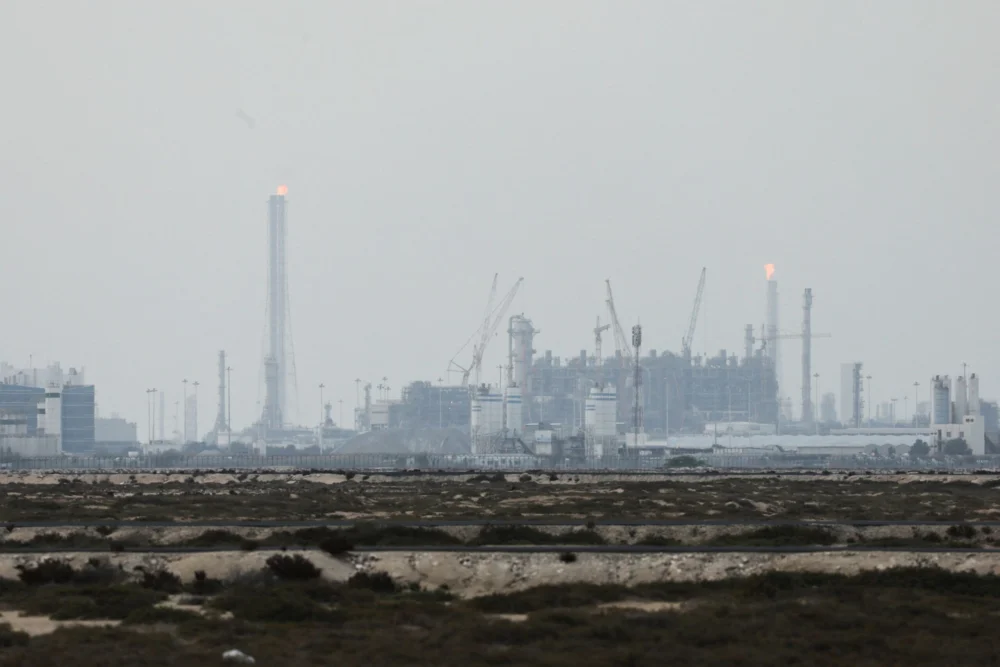
Global energy markets are experiencing profound volatility, with the liquefied natural gas (LNG) sector facing particularly acute challenges following the near standstill of traffic in the strategically vital Strait of Hormuz and a critical halt in Qatar’s LNG production. While crude oil prices registered a sharp increase on Monday, the longer-term ramifications for the global LNG market are anticipated to be far more severe and complex, primarily due to the inherent difficulties in transporting LNG compared to crude oil and the highly concentrated nature of its production infrastructure. This confluence of geopolitical tension and logistical vulnerability has sent shockwaves through international gas prices, prompting urgent reassessments of energy security worldwide.
The Geopolitical Flashpoint: Strait of Hormuz and Qatar’s Pivotal Role
The Strait of Hormuz, a narrow waterway connecting the Persian Gulf to the open ocean, serves as a critical choke point for approximately one-fifth of the world’s total LNG trade. A significant majority of these LNG flows originate from Qatar, a Persian Gulf nation that has solidified its position as one of the world’s leading exporters of the super-chilled fuel. The Strait’s strategic importance cannot be overstated; any disruption to its transit lanes immediately jeopardizes a substantial portion of global energy supply, impacting economies and industries reliant on stable and affordable energy resources. The current near-standstill in traffic through this maritime artery has, therefore, ignited alarm bells across international markets, setting the stage for an unfolding energy crisis.
Qatar’s role in the global LNG landscape is particularly prominent, supplying vast quantities of gas to key markets in Asia and Europe. The nation’s state-owned energy company, QatarEnergy, operates some of the largest LNG production facilities globally, making it a linchpin in the intricate web of international energy trade. Its primary production hub, the sprawling industrial complex at Ras Laffan, is a marvel of modern engineering, capable of liquefying billions of cubic feet of natural gas daily for export. This singular concentration of production capacity, while economically efficient, also presents a unique vulnerability in times of geopolitical instability, a reality now starkly evident.
Chronology of Escalation and Supply Disruption
The current crisis escalated dramatically following an Iranian drone attack on Qatar on March 2, 2026. In immediate response to this unprecedented security threat, QatarEnergy announced a complete halt to its LNG output, citing safety concerns and the need to assess the integrity of its operational infrastructure. This decision, though necessary for the safety of personnel and assets, instantly removed a significant volume of LNG from the global supply chain, triggering a rapid and severe market reaction.
The impact was felt almost instantaneously across major gas trading hubs. European natural gas prices surged by an alarming 63% last week, marking the largest percentage gain since March 2022, a period characterized by extreme market volatility following Russia’s full-scale invasion of Ukraine. In Asia, where the majority of Qatari LNG is typically directed, prices climbed even higher, reaching $23.40 per million British thermal units (MMBtu) by Monday morning. This significant price differential between European and Asian markets has led to an unusual and disruptive phenomenon: several LNG vessels originally destined for European ports have reportedly executed U-turns, redirecting their valuable cargo towards the more lucrative Asian markets in a desperate bid to capitalize on the widening price spread and meet urgent demand.
Adding another layer of complexity to the unfolding crisis, QatarEnergy confirmed on March 9, 2026, its decision to delay an anticipated expansion of its gas facilities until 2027. This expansion was expected to significantly boost global LNG supply in the coming years, and its postponement signals a longer-term impact on market dynamics, potentially exacerbating future supply tightness even if the immediate crisis is resolved.
Market Tremors: Price Surges and Regional Disparities
The dramatic surge in natural gas prices underscores the fragility of the global energy supply chain, particularly for LNG. Unlike crude oil, which benefits from an extensive network of pipelines and storage facilities allowing for some rerouting and inventory management, LNG requires specialized liquefaction plants, dedicated regasification terminals, and a fleet of highly expensive, custom-built tankers for long-distance transport. There are no direct pipeline alternatives for gas to bypass the Strait of Hormuz or to compensate for a massive production outage from a single hub like Ras Laffan. This logistical inflexibility means that when a major producer like Qatar, responsible for approximately 20% of global LNG trade through the Strait, ceases operations, the market has limited immediate recourse.
The ripple effect has been global. In Europe, the 63% price jump serves as a stark reminder of the continent’s persistent energy vulnerabilities, despite efforts to diversify away from Russian pipeline gas. While European storage levels were relatively healthy heading into the spring, a prolonged outage of Qatari LNG could severely complicate efforts to refill these inventories ahead of the next winter heating season, potentially leading to renewed energy security concerns and higher consumer costs.
Asian nations, particularly major importers like Japan, South Korea, China, and India, are disproportionately affected given their heavy reliance on Qatari LNG. The benchmark Japan-Korea Marker (JKM) price for LNG reflects this heightened anxiety, with buyers actively seeking alternative cargoes from other global suppliers, including the United States, Australia, and potentially even re-exported volumes from Europe. The scramble for available supply is intensifying, driving prices upwards and increasing the competitive pressure on global LNG fleets. The diversion of European-bound cargoes to Asia highlights the immense financial incentives at play and the global interconnectedness of LNG markets, where price signals dictate the movement of vital energy resources.
The Ras Laffan Conundrum: A Vulnerable Hub
At the heart of the crisis lies the industrial complex at Ras Laffan in Qatar, a facility described by experts as uniquely vulnerable. Alex Munton, director of global gas and LNG research at Rapidan Energy, emphasizes that while many states in the Middle East produce oil, gas production is concentrated at this single, gigantic complex in Qatar. This makes the LNG market far more susceptible to disruption compared to the more diversified global crude oil infrastructure.
The challenges associated with restarting operations at Ras Laffan are formidable. Unlike oil production, which can often be ramped up relatively quickly once security conditions permit, LNG production is an intricate industrial process involving the cooling of natural gas to -162 degrees Celsius (-260 degrees Fahrenheit) for liquefaction. This highly technical process cannot be simply switched on and off. Munton notes that it will take significantly longer to restart than oil production, requiring weeks rather than days to bring the entire plant back online to full capacity. Adding to the complexity, the entire Ras Laffan plant has never before been taken offline, meaning there is no precedent for the operational challenges involved in a full-scale recommissioning.
The decision to resume exports from the region will hinge on absolute certainty regarding the safety of transit through the Strait. Insurance is a critical factor; an LNG tanker alone can cost upwards of $250 million, and insurers will demand robust assurances of security before covering such valuable assets. Furthermore, the inherent complexities of LNG operations mean that production cannot be dynamically adjusted based on perceived daily escalations or de-escalations of conflict. A stable and predictable security environment is paramount for the sustained and safe operation of these facilities. Munton expresses concern that the full extent of the outage’s duration and its cascading effects on global supply and markets may not yet be fully appreciated by all stakeholders, given that the conflict is still in its early stages.
Global Reactions and Energy Security Concerns
The ongoing crisis has prompted widespread concern and calls for de-escalation from international bodies and governments. While specific official statements regarding the Iranian drone attack and subsequent Qatari production halt are cautiously worded, the implicit message from major energy importing nations and international organizations underscores the gravity of the situation.
The European Union, still grappling with the aftershocks of the 2022 energy crisis, is expected to be closely monitoring developments, potentially activating contingency plans and seeking assurances from alternative suppliers. Countries like Japan and South Korea, heavily reliant on LNG for their energy mix, are likely to be engaging in intense diplomatic efforts to secure diversified supplies and mitigate the economic impact of soaring prices.
Energy watchdogs such as the International Energy Agency (IEA) and organizations like OPEC are expected to issue statements emphasizing the need for market stability, urging all parties to exercise restraint, and calling for a swift resolution to the geopolitical tensions. The shipping and insurance industries are already factoring in increased risks, potentially leading to higher premiums and stricter terms for vessels transiting the Strait of Hormuz, further adding to the cost of energy transport.
The Broader Implications: A Shift in Global Energy Dynamics
The immediate disruption from Qatar’s production halt and the Strait’s closure casts a long shadow over global energy security. In the short term, the market may see further price volatility, continued cargo diversions, and a scramble for any available LNG volumes. The United States, currently the world’s largest LNG exporter, is operating at near maximum capacity, leaving little room to significantly bridge the supply gap created by Qatar’s outage. This limited additional global output means that "demand destruction" might become the ultimate balancing mechanism for the market. This could involve industrial users cutting consumption, or, more controversially, a temporary shift back to more readily available, albeit carbon-intensive, fuels such as coal, especially where it remains relatively inexpensive compared to skyrocketing gas prices.
Looking ahead, the long-term ramifications could be even more profound. Alex Munton of Rapidan Energy warns of the potential for further escalation, including additional attacks on Qatar’s vital LNG infrastructure. He starkly describes the Ras Laffan complex as a "sitting duck," asserting that "if Iran wanted to do major damage to Qatar’s LNG capacity, it could… There is no way of defending completely against an Iranian attack if Iran was hell bent on damaging the plant." This assessment highlights a critical vulnerability in global energy infrastructure: unlike oil production, which is distributed across numerous fields and facilities in multiple countries, LNG production, particularly from Qatar, is concentrated at a single, massive complex. A severe, sustained attack on this single node could have catastrophic and lasting consequences for global gas supply, making the current crisis a potential precursor to even greater instability.
The decision by QatarEnergy to delay its expansion projects until 2027 further compounds the long-term outlook. These expansions, including the ambitious North Field East and North Field South projects, were anticipated to add significant new LNG capacity to the global market, crucial for meeting rising demand and providing greater supply flexibility. Their postponement means that the expected influx of new supply will be delayed, potentially contributing to a tighter global LNG market for years to come and underpinning higher prices in the medium term. This delay will force major importing nations to re-evaluate their long-term energy procurement strategies and potentially accelerate investments in alternative energy sources and domestic resilience measures.
Looking Ahead: Uncertainty and Resilience
The current crisis serves as a powerful reminder of the interconnectedness and inherent vulnerabilities of the global energy system, particularly in an era marked by heightened geopolitical tensions. The closure of the Strait of Hormuz and the halt of Qatari LNG production underscore the urgent need for greater diversification of energy sources, more robust supply chains, and enhanced regional energy security dialogues.
As the world grapples with this unfolding scenario, the focus remains on de-escalation, rapid restoration of safe transit through the Strait, and the complex process of restarting Qatar’s critical LNG operations. However, the events of early March 2026 have undeniably altered the trajectory of global LNG markets, demanding a fundamental rethinking of energy security strategies to build resilience against future disruptions of this scale and nature. The coming weeks and months will be crucial in determining the full extent of the crisis’s impact and the lasting lessons for the future of global energy.