


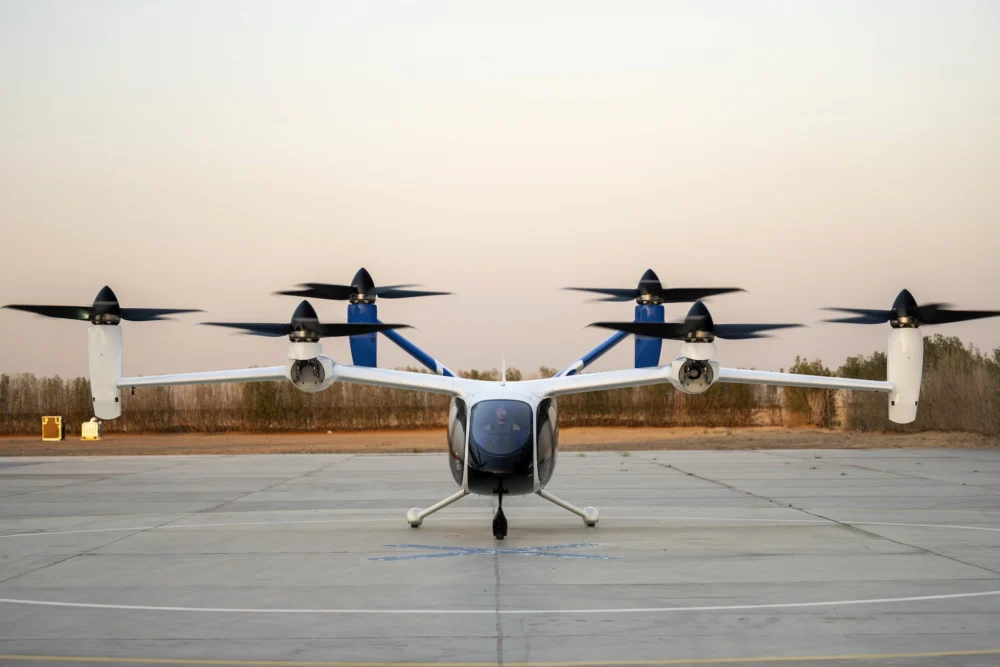
The Federal Aviation Administration (FAA) has ushered in a new chapter for aviation, approving eight groundbreaking pilot programs set to commence widespread testing of electric aircraft as early as this summer. This pivotal move involves a consortium of leading Advanced Air Mobility (AAM) companies, including Archer Aviation, Beta Technologies, Joby Aviation, and Wisk, marking a significant acceleration in the journey towards commercial electric vertical takeoff and landing (eVTOL) operations. The comprehensive three-year initiative, spanning 26 states, is meticulously designed to solidify the United States’ leadership in the burgeoning next-generation aircraft sector, which promises to revolutionize personal travel, regional transportation, cargo logistics, and emergency medical services.
The Dawn of Advanced Air Mobility: A National Imperative
The approval of these pilot programs underscores a strategic national push to transform the future of transportation. For years, the concept of urban air taxis and regional electric flights has captivated innovators, promising a future free from traffic congestion, reduced carbon emissions, and enhanced accessibility. Advanced Air Mobility (AAM) encompasses a wide range of aviation operations, from passenger-carrying eVTOLs to unmanned cargo drones, all powered by electricity and designed for short-to-medium distance travel. These aircraft, characterized by their ability to take off and land vertically, offer a compelling vision for efficient, quiet, and environmentally friendly air travel.
The global race to develop and deploy AAM technologies is intense, with significant investment pouring into startups and established aerospace giants alike. Recognizing the immense economic and strategic potential, the U.S. government has prioritized fostering an environment conducive to rapid innovation and deployment. Department of Transportation Secretary Sean Duffy, in remarks made on Monday, emphasized this imperative, stating that the program is crafted to "ensure U.S. companies lead the way in next-gen aircraft." This leadership is not merely about technological prowess but also about establishing the regulatory frameworks, infrastructure, and public trust necessary for a new mode of transportation to thrive safely and efficiently.
Accelerating Development Through Innovative Regulatory Pathways
Historically, bringing a new aircraft to commercial operation is an arduous, multi-year, and capital-intensive process. The FAA’s rigorous certification standards, designed to ensure the highest levels of safety, often necessitate extensive testing, design iterations, and validation, demanding hundreds of millions, if not billions, of dollars from developers. This traditional timeline has been a significant bottleneck for the rapidly evolving eVTOL industry.
The Advanced Air Mobility and Electric Vertical Takeoff and Landing Integration Pilot Program (AAM-eVTOL IPP), first announced last year through an executive order by President Donald Trump, directly addresses this challenge. Its core innovation lies in permitting companies to test their eVTOL aircraft in operational scenarios even before receiving full regulatory certification. This accelerated timeline is a game-changer, allowing manufacturers and operators to gather invaluable real-world data on performance, air traffic integration, ground operations, and passenger experience, which can then feed directly into the certification process.
FAA Deputy Administrator Chris Rocheleau highlighted the significance of this approach: “These partnerships will help us better understand how to safely and efficiently integrate these aircraft into the National Airspace System. The program will provide valuable operational experience that will inform the standards needed to enable safe Advanced Air Mobility operations.” The agency received a robust response, with 30 proposals submitted, underscoring the industry’s eagerness for such a program. This collaborative data collection is crucial for developing robust, data-driven safety standards and operational procedures for a completely new class of aircraft.

Industry Enthusiasm and Market Impact
The announcement sent ripples of excitement through the eVTOL sector, immediately bolstering investor confidence and the share prices of publicly traded companies involved. Beta Technologies, for instance, saw its stock price surge by nearly 12% on Monday. Archer Aviation and Joby Aviation, also prominent players in the urban air mobility space, experienced similar positive movements, reflecting the market’s optimistic outlook on the program’s potential to de-risk and accelerate commercialization.
Kyle Clark, founder and CEO of Beta Technologies, articulated the immediate benefit, stating that selection for the program would enable the company to commence aircraft operations a full year earlier than previously anticipated. This acceleration is critical in a highly competitive market where speed to market and first-mover advantage can be decisive.
Archer Aviation, a developer of the four-passenger piloted eVTOL "Midnight," drew a parallel between this program and the initial testing phases of robotaxis, emphasizing its role in "building trust and establishing a playbook for safely scaling electric air taxis." The company also explicitly stated its intention to leverage the program to prepare for air taxi operations in Los Angeles, aligning with the highly anticipated 2028 Olympic Games. Such a high-profile demonstration would provide an unprecedented global platform for showcasing the viability and potential of eVTOL technology.
Collaborative Frameworks for Diverse Applications
A cornerstone of the AAM-eVTOL IPP is the requirement for participating companies to forge partnerships with state, local, tribal, or territorial governments. This collaborative model is essential for addressing the multifaceted challenges of integrating novel air transportation systems into existing urban and regional environments. These partnerships are critical for planning infrastructure, managing local air traffic, addressing community concerns, and ensuring seamless integration with ground transportation networks.
The eight approved projects demonstrate a broad spectrum of applications and geographic reach:
-
Urban Air Mobility in the Northeast: The Port Authority of New York and New Jersey has partnered with Archer, Beta, Electra, and Joby to test a dozen operational concepts. A notable focus will be on operations originating from a Manhattan heliport, exploring the viability of eVTOLs for high-density urban environments and connecting key metropolitan hubs. This project will address critical questions around noise abatement, vertiport design, and air traffic management in one of the world’s busiest airspaces.
-
Regional Connectivity in Texas: The Texas Department of Transportation is collaborating with Archer, Beta, Joby, and Wisk to establish regional flight networks. The initial phase will connect major economic centers like Dallas, Austin, and San Antonio, with plans to expand eventually to Houston. This program aims to build robust networks of air taxis, extending regional reach and offering faster, more efficient travel options across the vast state.

-
Widespread Geographic and Operational Testing: A project led by the Utah Department of Transportation will undertake an ambitious effort to test next-generation aircraft and operational concepts across diverse topographies, including the Pacific Northwest, the Rocky Mountains, and the Plains of Oklahoma. This broad geographic scope will provide invaluable data on aircraft performance under varied atmospheric conditions and in different operational environments.
-
Revitalizing Regional Flights Nationwide: The Pennsylvania Department of Transportation is spearheading a project that involves 13 states, aiming to revitalize regional air travel across a significant portion of the country. This initiative seeks to leverage eVTOL technology to reconnect smaller communities and regional centers, potentially creating new economic opportunities and reducing reliance on traditional, often less convenient, regional airline services.
-
Specialized Cargo and Personnel Transport: Beta Technologies and Elroy Air, among others, will focus on cargo and personnel transportation flights. Their operations will extend into the challenging environments of the Gulf of America, serving energy industry locations in Louisiana, Texas, and Mississippi. This highlights the potential of eVTOLs for critical logistics, particularly in areas with difficult terrain or limited ground access.
-
Focus on Autonomous Operations: The city of Albuquerque is collaborating with Reliable Robotics to test autonomous operations. This project is crucial for advancing the long-term vision of fully autonomous eVTOLs, addressing the complex technical and regulatory hurdles associated with unpiloted commercial flights. It will focus on demonstrating safety, reliability, and integration with existing air traffic control systems.
-
Additional State-Led Initiatives: The departments of transportation in Florida, Louisiana, and North Carolina are also leading distinct projects, each tailored to the specific needs and geographical characteristics of their respective regions, further diversifying the data and operational experience gained from the program.
Broader Implications and the Path Forward
The AAM-eVTOL IPP represents more than just a regulatory adjustment; it’s a foundational step towards integrating a revolutionary technology into the fabric of American life. The implications are far-reaching:
- Infrastructure Development: The pilot programs will drive the development of essential ground infrastructure, including vertiports (takeoff and landing pads), charging stations, and maintenance facilities. Local governments will gain experience in zoning, land use planning, and public engagement for these new facilities.
- Air Traffic Management: Integrating hundreds, potentially thousands, of new aircraft into the National Airspace System demands sophisticated air traffic management solutions. These programs will provide crucial data for developing advanced automation tools, communication protocols, and operational procedures to ensure safety and efficiency.
- Economic Growth and Job Creation: The acceleration of the eVTOL industry promises to create a new sector of high-tech manufacturing jobs, operational roles, and service industries, contributing significantly to economic growth. Market forecasts suggest a multi-trillion-dollar industry over the coming decades.
- Environmental Benefits: Electric propulsion offers a cleaner alternative to conventional aviation, reducing greenhouse gas emissions and local air pollution. The quieter operation of eVTOLs also addresses a major concern for urban integration.
- Societal Impact: Beyond convenience, eVTOLs could enhance emergency response capabilities, improve access to remote areas, and offer new forms of public transportation, potentially improving quality of life in both urban and rural settings.
- Global Competitiveness: By fostering domestic innovation and accelerating deployment, the U.S. aims to maintain its competitive edge in the global aerospace market, ensuring that American companies are at the forefront of this transformative technology.
While the approval of these pilot programs marks a significant milestone, considerable challenges remain. Public acceptance, noise concerns, cybersecurity, and the sheer scale of infrastructure required are all areas that will demand continuous attention and innovation. However, by embracing this proactive and collaborative regulatory approach, the FAA and its partners are laying the groundwork for a future where electric flight is not just a concept, but a tangible reality, poised to redefine how we travel, deliver goods, and respond to emergencies. The widespread testing commencing this summer is a critical stride towards realizing the vision of Advanced Air Mobility.