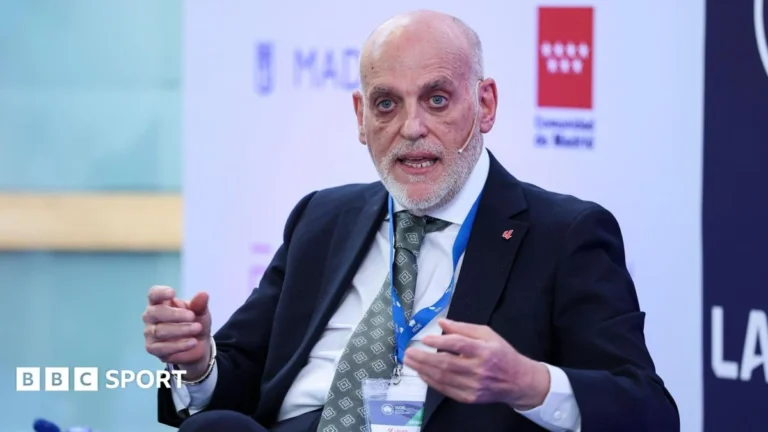



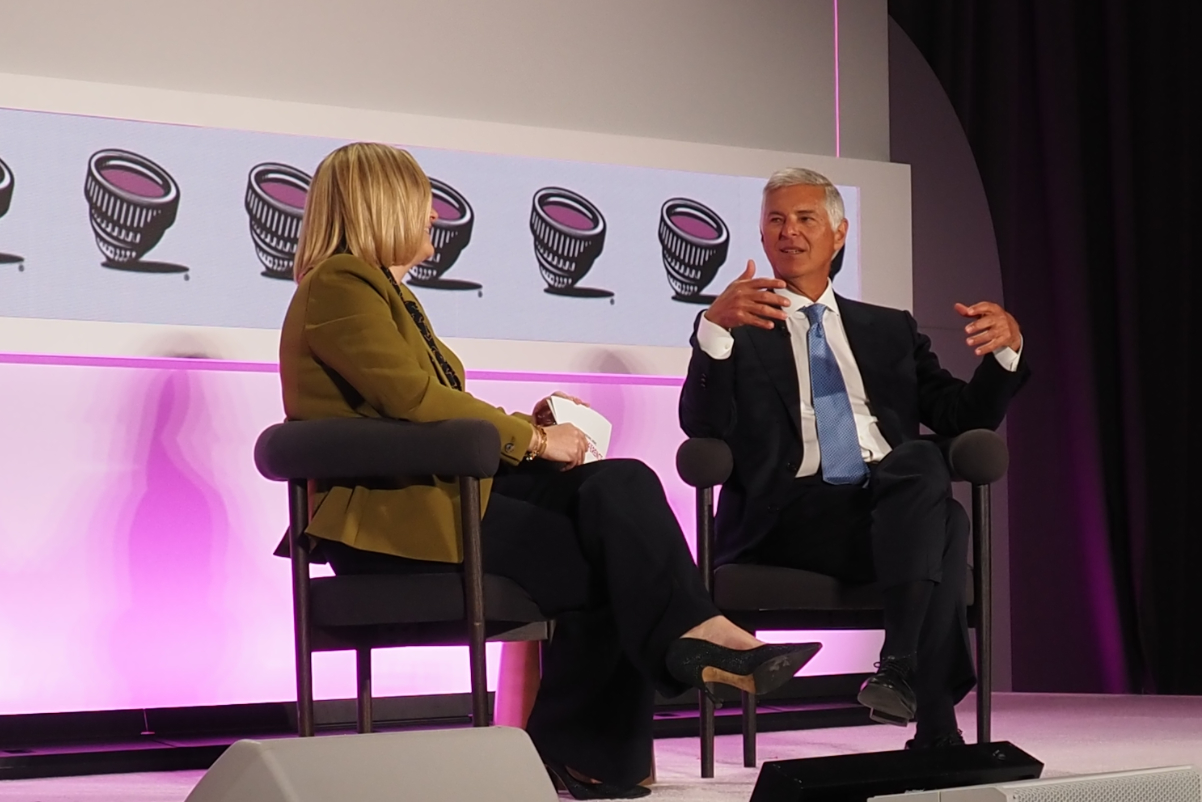
Speaking at the Punchbowl Conference in Washington, D.C., on Tuesday, Hilton President and CEO Chris Nassetta provided a sobering assessment of the dual challenges currently facing the global hospitality industry: immediate geopolitical volatility in the Middle East and a systemic, decades-long decline in the United States’ share of the international travel market. Nassetta, who leads one of the world’s largest hotel companies with a portfolio spanning over 7,500 properties, characterized the recent escalations in the Middle East as a source of significant "noise" and disruption. However, he urged policymakers and industry leaders to look beyond these short-term shocks to address a more existential threat to the American economy: the halving of the U.S. share of global inbound tourism over the last 30 years.
The executive’s comments come at a precarious time for the travel sector. While domestic travel in many regions has returned to or exceeded pre-pandemic levels, the intricate web of international tourism remains sensitive to regional conflicts and structural inefficiencies in visa processing and border entry. Nassetta’s remarks serve as both a status report on Hilton’s operations and a critique of U.S. national strategy regarding the "export" of American tourism services to the rest of the world.
Immediate Geopolitical Disruption in the Middle East
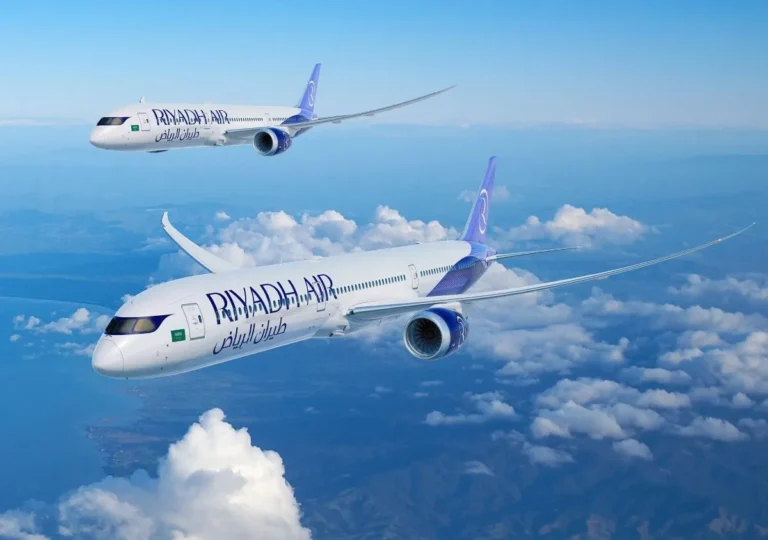
The conflict involving Iran and its regional proxies has introduced a new layer of uncertainty into a market that had previously been a bright spot for Hilton’s international growth. Nassetta noted that the "Middle East business has been very, very disrupted" over the past two weeks, following a period of heightened military tensions and direct exchanges between regional powers. For a global brand like Hilton, which has a massive pipeline of new hotels in Saudi Arabia, the United Arab Emirates, and Qatar, instability in the Levant and the Persian Gulf creates immediate operational friction.
"Obviously, in the last week or two, the Middle East business has been very, very disrupted, as you would guess," Nassetta told the audience in Washington. "We’ll see how long that goes." The disruption typically manifests in several ways for the hospitality sector: a sharp decline in short-term bookings, the cancellation of high-profile corporate conferences, and increased insurance and security costs. Furthermore, the "noise" Nassetta referenced often leads to a "halo effect" of caution, where travelers avoid not just the immediate conflict zone but the entire region, impacting hubs like Dubai or Riyadh that may be geographically distant from the fighting but are perceived as being within a volatile sphere.
Despite these headwinds, Nassetta’s tone remained pragmatic. He suggested that while the Middle East situation is an acute crisis, it is part of a recurring cycle of geopolitical risk that global corporations must navigate. The more pressing concern for the long-term health of the industry, according to the CEO, lies in the data regarding the United States’ own competitiveness as a destination.
The Thirty Year Collapse of U.S. Inbound Tourism
The centerpiece of Nassetta’s address was a stark statistical comparison regarding the U.S. share of the global travel market. He pointed out that 30 years ago, the United States accounted for approximately 10% of all global inbound travel. Today, that figure has plummeted to roughly 5%. This 50% reduction in market share represents billions of dollars in lost revenue, tax receipts, and employment opportunities.
"If you said to me Hilton lost half its global market share, I’d have been fired a long time ago," Nassetta remarked, using his own corporate accountability as a metaphor for what he perceives as a failure in national economic policy.
The decline is not a result of a shrinking global travel market; on the contrary, international travel has expanded exponentially since the 1990s as the global middle class has grown, particularly in Asia and Latin America. Instead, the U.S. has been outpaced by competitors who have been more aggressive in marketing their destinations and more efficient in facilitating entry. Countries like France, Spain, and increasingly Saudi Arabia and Turkey, have invested heavily in tourism infrastructure and streamlined visa processes, capturing the growth that the U.S. has failed to secure.
Chronology of a Declining Market Share
The erosion of the U.S. tourism advantage can be traced through several key eras over the last three decades:
- The 1990s Peak: Following the end of the Cold War, the U.S. was the preeminent global destination. The 10% market share was driven by a strong cultural "soft power" and a relatively straightforward entry process for international visitors.
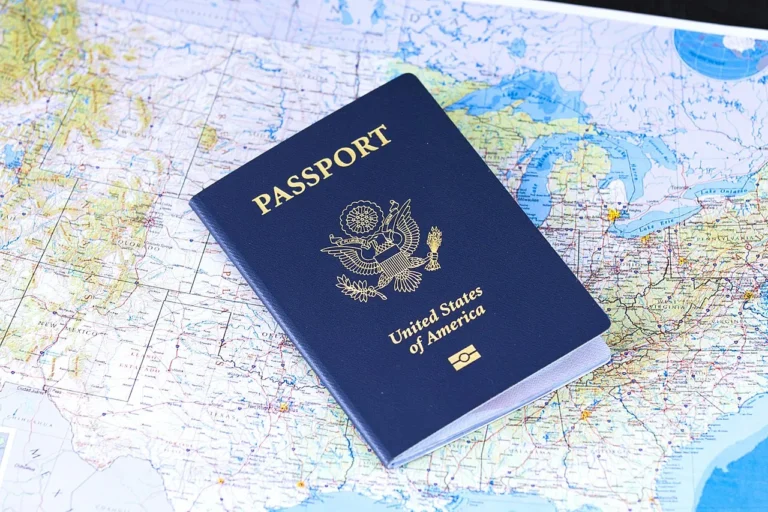
- The Post-9/11 Shift: The attacks of September 11, 2001, led to a necessary but drastic overhaul of border security. While these measures increased safety, they also introduced significant friction into the visa application process. The "Lost Decade" of the 2000s saw a stagnation in visitor numbers while the rest of the world began to modernize their travel sectors.
- The Rise of Global Competition (2010–2019): During this period, the emergence of low-cost carriers in Europe and Asia, combined with massive state-led investments in tourism by countries like China and the UAE, shifted the center of gravity. While the U.S. created "Brand USA" in 2010 to market the country, it struggled to keep pace with the sheer volume of global competition.
- The Pandemic and Recovery Lag (2020–Present): The COVID-19 pandemic halted global travel. As the world reopened, the U.S. was slower to drop testing requirements and struggled with a massive backlog in visa processing. Currently, wait times for first-time visa interviews in key markets like India, Brazil, and Mexico can still exceed several hundred days, effectively deterring millions of potential visitors.
Supporting Data: The Economic Cost of Inefficiency
The data supporting Nassetta’s concerns is reflected in reports from the U.S. Travel Association and the National Travel and Tourism Office (NTTO). According to industry analysis, international travelers are the most lucrative segment of the market; they stay longer and spend significantly more per trip than domestic travelers.
In 2019, international arrivals to the U.S. spent approximately $239 billion. If the U.S. had maintained its 10% market share from the 1990s, that figure would theoretically be double, representing a massive missed opportunity for the American service economy. Furthermore, the U.S. Travel Association recently noted that the U.S. ranks 17th out of 18 top travel markets in terms of government prioritization and ease of entry, underscoring Nassetta’s point about a lack of competitive focus at the federal level.
Wait times for visitor visas (B1/B2) remain a primary bottleneck. In some major metropolitan areas in South Asia, the wait time for an interview still sits at over 400 days. For a traveler planning a vacation or a business trip, such delays make the U.S. a non-viable option compared to the Schengen Area or emerging luxury destinations in the Middle East.
Industry Reactions and Policy Implications
Nassetta’s comments have resonated across the travel and hospitality sector. Geoff Freeman, President and CEO of the U.S. Travel Association, has echoed these sentiments, frequently calling on the federal government to treat tourism as a major export. Unlike physical goods, tourism is an "invisible export" where the consumer travels to the product. When a visitor from abroad stays at a Hilton in New York or visits a national park, they are injecting foreign capital directly into the U.S. economy.
Industry analysts suggest that the "noise" of the Middle East conflict, while damaging to Hilton’s regional RevPAR (Revenue Per Available Room), is a secondary issue compared to the structural decline in the U.S. Nassetta’s strategy for Hilton has been to diversify—expanding aggressively into "midscale" and "premium economy" segments with brands like Spark and Tru—to capture domestic growth. However, the high-margin luxury and full-service hotels in major U.S. gateways like Los Angeles, Miami, and Chicago rely heavily on the international inbound traffic that Nassetta says is being lost.
From a policy perspective, the implications are clear: the industry is calling for a "whole-of-government" approach to tourism. This would include:
- Reducing visa interview wait times to a global standard of 30 days or less.
- Expanding the Visa Waiver Program to more stable partner nations.
- Increasing funding for Brand USA to compete with the multi-billion dollar marketing budgets of rival nations.
- Modernizing Customs and Border Protection (CBP) technology to reduce "friction" at ports of entry.
Fact-Based Analysis: Can the U.S. Regain Its Share?
The question remains whether the U.S. can claw back the 5% of global market share it has lost over the last 30 years. Nassetta’s comments imply that while the "shocks" of the Middle East are temporary, the structural decline is a choice. The global travel market is projected to continue its upward trajectory as billions more people in developing nations reach the income threshold for international travel.
For Hilton, the stakes are high. As a U.S.-based multinational, Hilton benefits from a strong American "brand." If the U.S. becomes less accessible or less attractive as a destination, the primary engine of the company’s domestic portfolio—international inbound spend—will continue to stall. Conversely, if the U.S. can address its entry hurdles, it remains one of the most desired destinations in the world due to its geographic diversity, cultural influence, and business opportunities.
Nassetta’s dual focus on "noise" in the Middle East and "signal" in the U.S. market share reflects the complex balancing act required of modern CEOs. While the headlines are dominated by the threat of regional war, the underlying economic data suggests that the slow, quiet erosion of competitiveness at home may be the far more significant long-term challenge. As Nassetta noted, in the private sector, such a loss of share would result in immediate leadership changes. His address serves as a public demand for similar accountability and urgency in national economic and travel policy.