

Australia has confirmed the granting of humanitarian visas to seven members of an Iranian sports delegation, including five initial players identified as part of the Iranian women’s soccer team, following their refusal to sing the national anthem at a recent international tournament. This decision, fast-tracking them to permanent residency, comes amidst heightened concerns for the athletes’ safety should they return to Iran, where such acts of defiance are often met with severe repercussions. The dramatic events unfolded over several days, culminating in a tense scene at Sydney Airport as Australian authorities ensured that all remaining members of the delegation were afforded a private opportunity to seek asylum.
A Humanitarian Haven: Asylum for Iranian Athletes
The saga began with a powerful act of protest on the global stage. During their initial match against South Korea in the Asian Cup, a significant portion of the Iranian football group, specifically members of the women’s soccer team, notably refrained from singing their national anthem. This silent dissent was widely interpreted as a symbolic stand against the current Iranian regime, resonating deeply with the ongoing "Woman, Life, Freedom" movement and broader human rights protests that have swept Iran since late 2022. The refusal immediately drew international attention and sparked fears for the athletes’ well-being upon their return to a country known for its harsh suppression of political expression.
Recognizing the gravity of the situation, Australian authorities swiftly initiated a process to offer protection. Immigration Minister Tony Burke confirmed that five individuals, identified as Fatemeh Pasandideh, Zahra Ghanbari, Zahra Sarbali, Atefeh Ramazanzadeh, and Mona Hamoudi, were the first to be granted humanitarian visas. These women, described by Minister Burke as "athletes who want to be safe" rather than "political activists," were discreetly separated from the main squad at their Gold Coast hotel and moved to a secure police facility in Brisbane. Their cases were expedited, granting them immediate asylum and a pathway to permanent residency in Australia, allowing them to live, work, and study freely in the country.
The offer of asylum was not limited to these initial five. As the remaining Iranian delegation prepared for their departure, the Australian government extended the same humanitarian offer to "most" other members. This led to a meticulously orchestrated operation at Sydney Airport, designed to ensure each individual could make a choice free from intimidation or coercion by accompanying Iranian minders. Ultimately, two additional members of the broader Iranian football group also accepted the offer to stay, bringing the total number of asylum seekers to seven.
The Silent Protest: A Stand Against the Regime
The refusal to sing the national anthem by Iranian athletes, particularly in international competitions, carries immense political weight. In Iran, the national anthem is often seen as a symbol of the Islamic Republic, and a refusal to sing it is a direct act of defiance against the state. This form of protest gained significant traction during the widespread anti-government demonstrations sparked by the death of Mahsa Amini in September 2022 while in police custody. Athletes, artists, and public figures within Iran and abroad have since used their platforms to express solidarity with protesters and condemn the regime’s human rights record.
The initial silence from the Iranian team members was a powerful echo of these internal struggles. However, in subsequent matches, the team was observed singing the anthem. This reversal fueled speculation among critics and human rights observers that the athletes had been subjected to intense pressure from Iranian government officials or "minders" accompanying the delegation. Such minders are a common feature of Iranian sports teams traveling internationally, tasked with monitoring behavior and ensuring adherence to state ideology. Their presence underscores the severe control the Iranian government exerts over its citizens, even on foreign soil.
The potential repercussions for athletes who defy the regime are well-documented. Iranian state media, often a mouthpiece for conservative elements, quickly reacted to the initial anthem refusal. One conservative commentator reportedly branded the players as "wartime traitors" and called for harsh punishment, signaling the official displeasure and the severe consequences that could await them. Historically, Iranian athletes who have spoken out or defected have faced bans from sports, imprisonment, or even threats against their families back home. These dangers provide crucial context for the Australian government’s urgent and protective response.
A Tense Departure: Ensuring Freedom of Choice
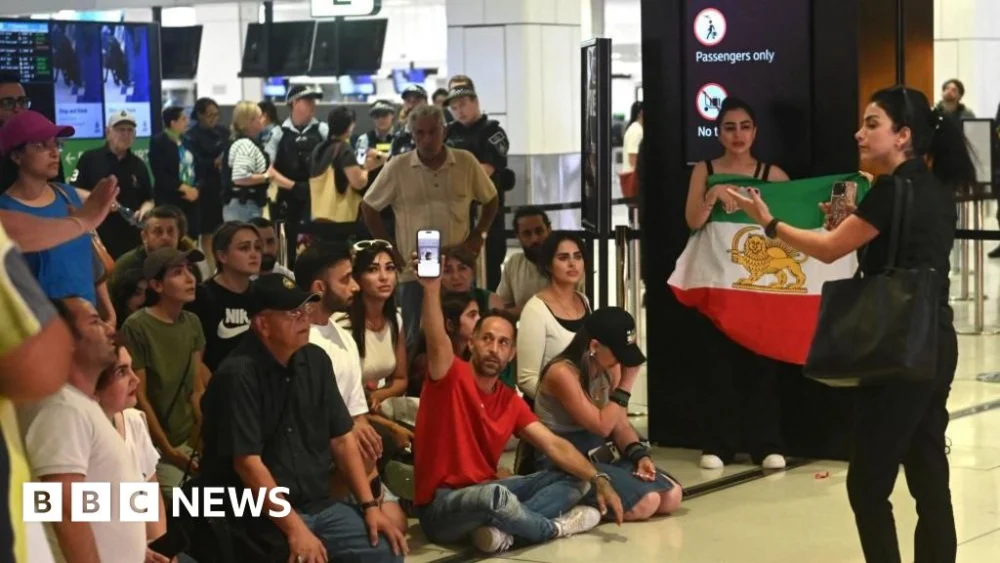
The climax of the asylum saga unfolded at Sydney Airport on Tuesday night, local time, just two days after the Iranian team’s elimination from the Asian Cup. Anticipating potential interference from Iranian officials, Australian authorities implemented extraordinary measures to safeguard the athletes’ freedom of choice. Immigration Minister Tony Burke described a "very significant" police presence at the airport, designed to create a secure environment where players could speak openly and privately with Australian officials.
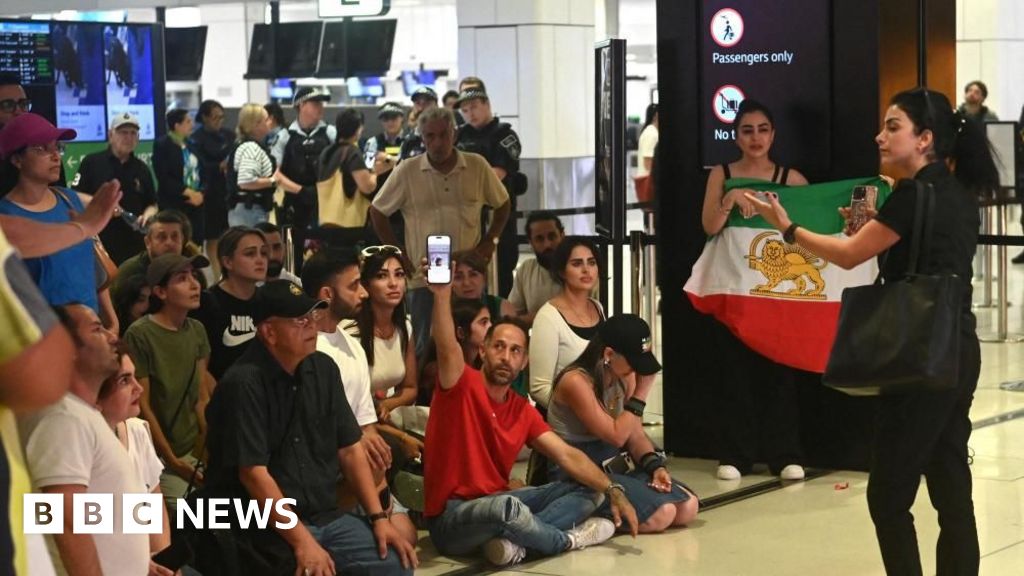
Upon arrival from the Gold Coast, where the tournament was being held, the team bus was met by members of the Australian-Iranian community. These activists, some displaying the Lion and Sun flag – a symbol of Iranian opposition that served as the official state flag before the 1979 Islamic revolution – gathered to offer support and protest against the team’s forced return to Iran. They reported that some team members had subtly signaled for help, reinforcing the urgency of the situation.
Inside the airport, Border Force officials made "multiple representations to the team," including private, one-on-one meetings conducted through translators. Each individual was given the opportunity to call family members, allowing them to consult with loved ones before making a momentous decision about their future. Minister Burke emphasized that no pressure was exerted on anyone to accept asylum. "That individual made their own decision," Burke stated, referring to one person who boarded the flight "quite late" after conversations with family, highlighting the personal nature of these choices.
Crucially, Minister Burke also noted that "a small number of the travelling group were not invited to stay." This statement was widely understood to refer to the Iranian government minders who had accompanied the delegation, underscoring Australia’s intent to remove any potential agents of coercion. "There are some leaving Australia who I am glad are not in Australia," Burke remarked, a pointed comment reflecting the Australian government’s stance on those who might seek to suppress individual freedoms.
Australia’s Swift Humanitarian Response
Australia’s decision to grant humanitarian visas demonstrates a robust commitment to international human rights obligations and a readiness to act decisively in politically sensitive situations. The country’s humanitarian visa programme is designed to provide permanent protection to refugees and individuals facing humanitarian need, offering recipients the right to live, work, and study in Australia. The "fast-tracking" of these visas is particularly noteworthy, given that such processes can often take months or even years. This expedited action signals the perceived immediate danger faced by the athletes.
Australian Prime Minister Anthony Albanese publicly endorsed the government’s actions, stating, "Australians have been moved by the plight of these brave women. They’re safe here, and they should feel at home here." His comments reinforced the humanitarian nature of the decision and projected a welcoming stance towards those seeking refuge from persecution. The government’s actions also reflect a broader pattern of Australia acting as a haven for individuals fleeing oppressive regimes, aligning with its long-standing role in international refugee protection.
The comprehensive approach, from securing the individuals at their hotel to establishing a protected environment at the airport for decision-making, highlights a coordinated effort across various government agencies. This meticulous planning was essential in navigating a delicate situation involving international relations and the immediate safety of vulnerable individuals. The transparency with which the Australian government communicated its actions also served to reassure the public and the international community of its ethical conduct.
International Reactions and Diplomatic Nuances
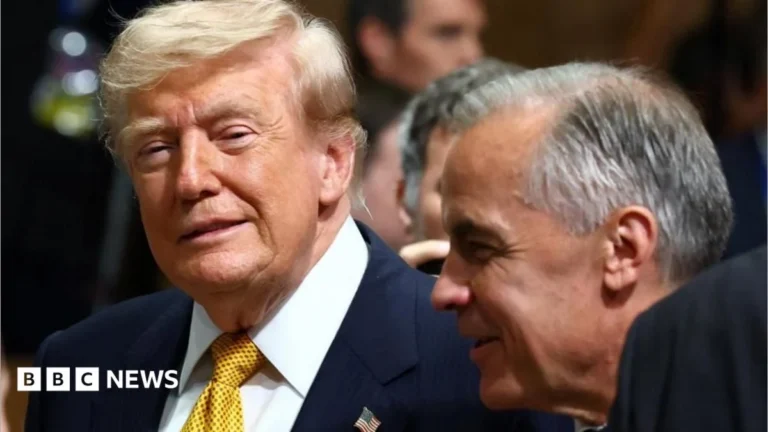
The unfolding events drew attention from unexpected corners, including a direct intervention from former US President Donald Trump. Using his Truth Social platform, Trump initially called for Australia to "give asylum" to the women, adding, "the US will take them if you won’t." Approximately an hour later, he posted again, claiming to have spoken with Prime Minister Albanese and stating, "five have already been taken care of, and the rest are on their way."

Trump’s statements added an unusual layer of international commentary to the situation. While his administration had previously implemented stringent asylum policies and halted immigrant visas for citizens from numerous countries, including Iran, his public support for these athletes highlighted the bipartisan concern over human rights abuses in Iran. His intervention, regardless of its immediate practical impact, underscored the global resonance of the athletes’ plight and the potential for such incidents to become significant diplomatic talking points.
The swiftness of Australia’s response and the explicit criticism of Iranian "minders" could lead to diplomatic strain between Canberra and Tehran. Iran typically reacts negatively to perceived interference in its internal affairs or to actions that lend legitimacy to opposition movements. However, Australia’s firm stance on humanitarian principles may be seen as a necessary assertion of its values on the international stage.
The Broader Implications for Athlete Activism and Geopolitics
This incident carries significant implications, both for athlete activism globally and for the complex geopolitical landscape surrounding Iran. It serves as a potent example of athletes using their platform to voice dissent, even at great personal risk. In an increasingly interconnected world, sports figures from authoritarian states are finding it harder to compartmentalize their athletic pursuits from the political realities of their home countries. The global spotlight on such events can empower athletes, but also expose them to greater danger.
For Iran, the defection of athletes, particularly from a high-profile national team, represents an embarrassment on the international stage. It undermines the regime’s narrative of national unity and highlights the deep internal divisions and widespread discontent within the country. This could prompt the Iranian government to impose even stricter controls on athletes traveling abroad, potentially limiting their participation in international events or increasing the surveillance they face. Such measures, however, risk further isolating Iranian sports and driving more athletes to seek opportunities elsewhere.
The Australian government’s decisive action sets a precedent, demonstrating that host nations can and will intervene to protect athletes who express dissent and face potential persecution. This could encourage other countries hosting international sporting events to develop similar protocols for identifying and assisting vulnerable athletes. It also sends a clear message to authoritarian regimes that the safety and freedom of their athletes abroad will not be overlooked.
Ultimately, the granting of asylum to these Iranian footballers is more than just an immigration decision; it is a powerful statement on human rights, freedom of expression, and the moral responsibilities of host nations in a world where sports and politics are often inextricably linked. The fate of those who returned to Iran remains uncertain, but for the seven individuals now beginning new lives in Australia, their silent protest has led to a new beginning, far from the shadows of persecution. Their story will undoubtedly resonate for years to come, a poignant reminder of the courage required to stand for freedom.