


A groundbreaking research initiative, spearheaded by aerospace engineer Meagan Chappell, has delivered profound insights into the complex mechanisms driving internal pressure buildup within thermal protection system (TPS) materials. This crucial work, detailed in a comprehensive PDF report, provides an unprecedented understanding of how these vital components degrade and fail under the extreme conditions of high-enthalpy environments, particularly through a phenomenon known as spallation. The study’s innovative integration of mass spectrometry and the Hypersonic Materials Environmental Test System (HyMETS) has established a quantitative link between microscale chemical decomposition and macroscale material instability, promising to revolutionize the design and reliability of future spacecraft and hypersonic vehicles.
The Unseen Battle: Why Thermal Protection Systems Are Paramount
Thermal Protection Systems are arguably among the most critical technologies in modern aerospace engineering. They are the unsung heroes that safeguard spacecraft and their precious cargo—whether human or robotic—from the unimaginable inferno generated during atmospheric re-entry. When a vehicle plunges from the vacuum of space into Earth’s atmosphere, friction with air molecules generates immense heat, often exceeding 2,000 degrees Celsius (3,600 degrees Fahrenheit), alongside intense pressure and shear forces. Without a robust TPS, the vehicle would disintegrate in seconds.
For decades, engineers have grappled with the challenge of designing materials that can withstand these extraordinary conditions. Early space missions, such as the Apollo program, relied on ablative materials that sacrificed their outer layers, charring and vaporizing to carry heat away from the spacecraft. Modern systems, like those used on the Space Shuttle or Orion capsules, utilize advanced ceramics, carbon-carbon composites, and various ablative composites (e.g., PICA – Phenolic Impregnated Carbon Ablator; SIRCA – Silicone Impregnated Reusable Ceramic Ablator) tailored to specific mission profiles. Despite significant advancements, ensuring the integrity and predictable performance of TPS materials remains a formidable scientific and engineering hurdle. The stakes are incredibly high; any failure in the TPS can lead to catastrophic consequences, as tragically underscored by incidents like the Space Shuttle Columbia disaster, where damage to the TPS ultimately led to the vehicle’s breakup during re-entry. This historical context provides a stark reminder of the continuous imperative for deeper scientific understanding and robust technological solutions in this domain.
A Deep Dive into Degradation: The Research Mandate
The primary motivation behind this research was to move beyond empirical observations and develop a fundamental, mechanistic understanding of TPS degradation, particularly the phenomenon of spallation. Spallation is a sudden, localized ejection of material fragments from the TPS surface, typically caused by internal stresses exceeding the material’s strength. It’s a highly undesirable failure mode because it exposes underlying structural components to extreme heat, potentially leading to immediate structural failure or burn-through.
Previous research efforts often focused on either the chemical decomposition of materials or their mechanical response in isolation. However, the complex interplay between evolving gases, their migration through the material’s microstructure, and the resulting internal pressure buildup was not fully understood. This knowledge gap hindered the development of truly predictive models and the design of next-generation TPS materials with enhanced resilience. The "effort undertaken" by Chappell and her team sought to bridge this gap by integrating complementary experimental approaches that could simultaneously provide both chemical and mechanical insights into the subsurface processes occurring within the TPS during heating. The objective was clear: to precisely identify the sequence of events and the contributing factors that lead to spallation, thereby enabling engineers to design more robust and reliable thermal protection systems for future missions, including crewed exploration to Mars and the development of advanced hypersonic flight platforms.
Dual-pronged Approach: Unveiling Subsurface Dynamics
To achieve their objective, the research team employed a sophisticated, two-pronged experimental methodology, meticulously designed to provide a comprehensive view of the TPS material’s behavior under simulated re-entry conditions.
HyMETS: Quantifying Dynamic Mechanical Response
The Hypersonic Materials Environmental Test System (HyMETS) played a critical role in quantifying the dynamic buildup of subsurface pressure. HyMETS is a state-of-the-art facility capable of replicating the extreme thermal and aerodynamic environments encountered during hypersonic flight and atmospheric re-entry. It subjects material samples to high-enthalpy plasma flows, mimicking the severe heating rates and shear stresses experienced by actual flight vehicles.
In this study, specialized pressure sensors were embedded within the TPS material samples. These sensors provided real-time, in-depth measurements of internal pressure as the material was heated. This dynamic data was crucial because it allowed researchers to observe the rate and magnitude of pressure accumulation, rather than just post-test analysis. Typical internal pressures recorded during such tests can range from hundreds of kilopascals (kPa) to several megapascals (MPa), depending on the material’s porosity, gas generation rate, and external heating profile. The ability to track these pressure fluctuations with high temporal resolution offered direct evidence of the mechanical response of the TPS microstructure to evolving gases. For instance, a sudden spike in pressure could indicate a blockage in gas pathways or a rapid burst of gas generation, both critical precursors to potential failure. The data from HyMETS provided the macroscale evidence of internal stress development, setting the stage for the microscale chemical analysis.
Mass Spectrometry: Identifying Chemical Signatures of Decomposition
Complementing the mechanical insights from HyMETS, mass spectrometry was employed to characterize the volatile species released as the TPS decomposed under heating. This technique involves heating a material sample in a controlled environment and then analyzing the gaseous products released by their mass-to-charge ratio. This allows for the precise identification and quantification of specific chemical compounds.
The mass spectrometry analysis was particularly revealing in distinguishing between different stages of gas evolution. Researchers identified two primary categories of volatile species:
- Lower-temperature desorbed species: Predominantly water (H₂O) absorbed within the material’s matrix and microballoons. This release occurred at relatively lower temperatures, typically below 200-300°C, and, crucially, prior to significant changes in the material’s bulk permeability due to extensive pyrolysis. The early detection of water desorption was a key finding, suggesting its role in initiating internal stresses even before major structural changes occurred.
- High-temperature pyrolysis products: As heating continued and temperatures soared (often exceeding 500-1000°C), the polymer backbone of the TPS material began to chemically break down (pyrolysis). This process liberated a complex mixture of gases, including carbon monoxide (CO), carbon dioxide (CO₂), methane (CH₄), hydrogen (H₂), and various other hydrocarbons. These species are direct indicators of the material’s structural degradation and contribute significantly to internal pressure buildup at higher temperatures.
By correlating the distinct temperature profiles of these chemical species’ release with the dynamic pressure measurements from HyMETS, the researchers established a direct and quantitative link. This synergistic approach allowed them to precisely map specific chemical decomposition events to observable mechanical responses, forming an unprecedented foundation for interpreting how microscale chemical processes manifest as macroscale material instability.
The Spallation Cascade: A Refined Mechanistic Understanding
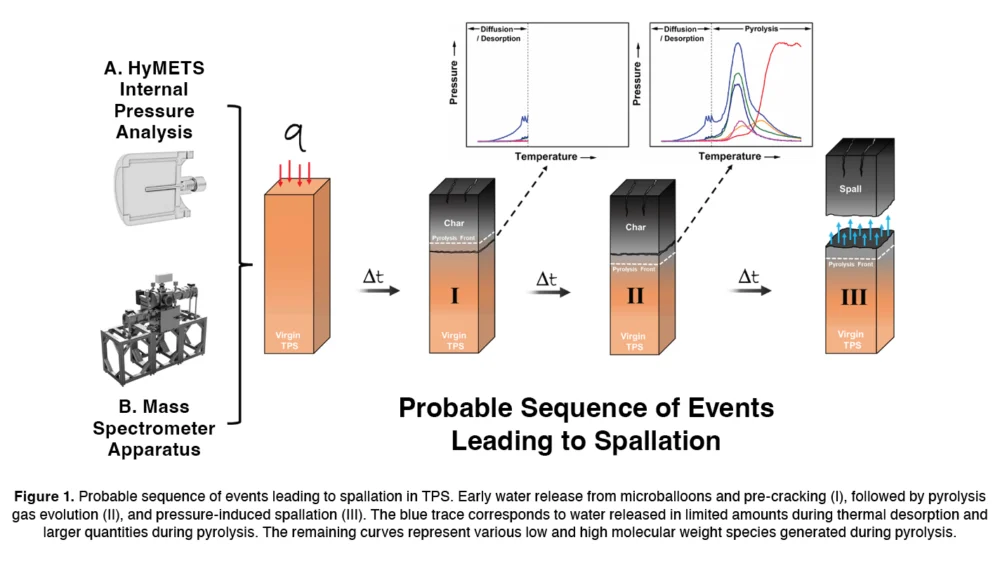
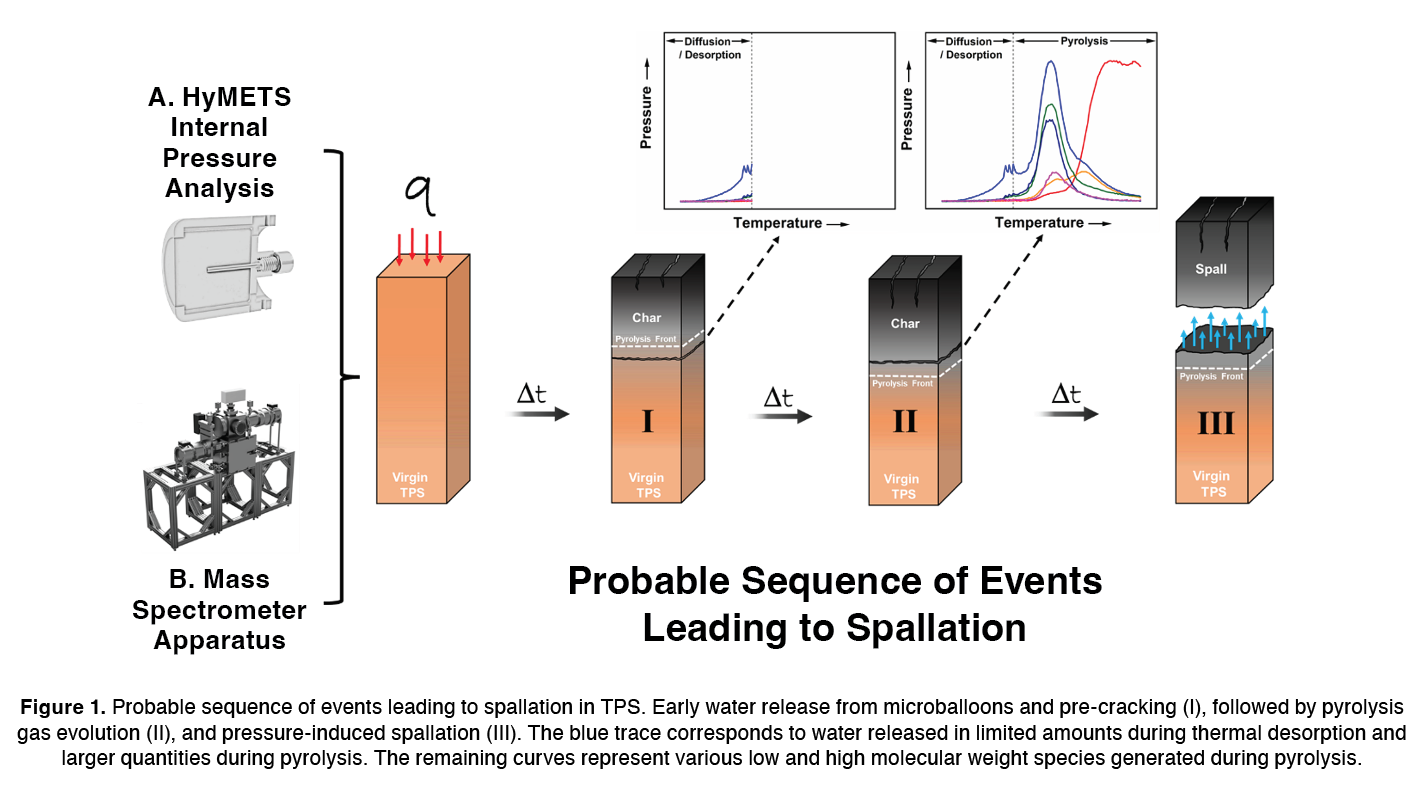
The integrated data from mass spectrometry and HyMETS testing led to a significantly enhanced understanding of the spallation mechanisms in TPS materials. The research revealed a refined, multi-stage sequence of events, highlighting the critical interplay between early-stage volatile release, pyrolysis gas evolution, and stress generation.
Phase I: Early Volatile Release and Initial Stress Generation
The initial heating of the TPS material, even at relatively moderate temperatures, induces the release of absorbed water. This water is typically trapped within the porous structure of the material, including within microscopic voids or "microballoons" and the surrounding polymer matrix. This early release of what the study terms "exiguous water" is critical because it occurs before extensive pyrolysis has significantly altered the material’s microstructure or increased its permeability.
In this early phase, the material is often in a state of relatively low permeability, meaning that the released water vapor cannot easily escape to the surface. As this water vapor accumulates internally, it generates localized stresses within the material. These stresses, even if relatively modest, can be sufficient to initiate micro-crack formation, particularly in areas where the material’s strength is weakest or where pre-existing flaws exist. This is a crucial insight: localized crack formation can begin before the bulk material undergoes significant chemical decomposition or experiences the more intense pressure buildup associated with pyrolysis. This pre-conditioning sets the stage for subsequent, more catastrophic events.
Phase II: Pyrolysis Front Advancement and Rapid Pressure Buildup
As heating continues and the temperature gradient penetrates deeper into the TPS material, the pyrolysis front advances. This front marks the zone where the polymer matrix undergoes thermal decomposition, breaking down into a variety of gaseous products. Unlike the earlier water release, pyrolysis liberates a significant volume of gas. The rapid generation of these gases (CO, CO₂, hydrocarbons, etc.) within the material’s constrained internal structure leads to a swift and substantial buildup of internal pressure.
This pressure accumulation is exacerbated by the fact that the material’s permeability may still be insufficient to vent these gases efficiently, especially if the early micro-cracks have not yet propagated sufficiently or if char layer formation has created new barriers. The rate of pressure increase can be extremely high, directly correlated with the heating rate and the material’s specific decomposition kinetics. This phase represents a critical escalation in internal stress, pushing the material closer to its failure threshold.
Phase III: Critical Pressure Exceedance and Catastrophic Ejection
The final phase of the spallation sequence occurs when the internal pressure generated by the accumulating pyrolysis gases (and potentially residual water vapor) surpasses the local material strength. The "local material strength" refers to the tensile or shear strength of the TPS material at specific points within its microstructure, which can vary due to inherent heterogeneities, pre-existing micro-cracks from Phase I, or localized thermal degradation.
Once the internal pressure exceeds this critical threshold, the material can no longer contain the trapped gases. This leads to a sudden and violent ejection of material fragments from the surface—a spallation event. The fragments can vary in size, from small particles to larger chunks, depending on the energy released and the material properties. This sequence highlights the complex and probable interplay between early-stage volatile release, the massive gas evolution from pyrolysis, and the subsequent stress generation. All these factors collectively govern the stability of TPS material under the extreme entry conditions. Understanding this precise chronology allows engineers to target specific points in the material’s response for mitigation and improvement.
Implications for Next-Generation Thermal Protection
The insights gleaned from this pioneering research carry profound implications for the future of thermal protection system design, mission safety, and the advancement of aerospace capabilities.
Enhanced Design and Predictive Modeling
This work represents a significant leap forward from empirical design practices to physics-based predictive modeling. By understanding the precise mechanisms of internal pressure buildup and its link to chemical decomposition, engineers can develop more accurate computational models that simulate TPS behavior under various re-entry and hypersonic flight profiles. These advanced models can predict not only if spallation will occur but also when and where, allowing for optimized designs that minimize risk. This moves beyond simply testing materials to understanding their fundamental failure modes, leading to more efficient and reliable designs without the need for excessive safety margins.
Material Selection and Development
The research provides clear guidance for the development of new TPS materials. Future materials can be engineered with tailored properties to mitigate spallation risks. This could involve:
- Improved permeability: Designing materials with microstructures that allow for more efficient venting of gases, preventing critical pressure buildup.
- Enhanced high-temperature strength: Developing materials that retain greater mechanical integrity even under pyrolysis, increasing their resistance to internal pressure.
- Modified chemical compositions: Formulating polymers that generate fewer volatile gases during decomposition or release them at lower, more manageable rates.
- Smart materials: Incorporating sensors or features that provide early warnings of internal pressure accumulation or micro-crack formation.
This foundational understanding allows material scientists to precisely target the characteristics most critical for spallation resistance, accelerating the development cycle for next-generation systems.
Mission Safety and Reliability
For both crewed and uncrewed missions, the direct impact on safety and reliability is paramount. A more robust understanding of TPS failure mechanisms means safer re-entries for astronauts and greater assurance for multi-billion dollar robotic probes destined for other planets. Reduced spallation risk translates directly into a lower probability of mission failure and protection of invaluable human lives and scientific instruments. For example, knowing the exact temperatures at which water desorption creates critical stresses could lead to pre-heating protocols or specific material treatments to minimize this early vulnerability.
Advancing Hypersonic Capabilities
Beyond traditional spaceflight, this research is incredibly relevant to the burgeoning field of hypersonic flight. Vehicles capable of traveling at Mach 5 or greater face continuous, extreme aero-thermal loads that challenge existing materials. The principles of internal pressure buildup and spallation elucidated by this study are directly applicable to the thermal management of hypersonic vehicles, enabling the design of more durable and performance-optimized structures for both military and commercial applications.
Economic Efficiencies
By reducing the uncertainty associated with TPS performance, this research can lead to significant economic efficiencies. Less need for over-engineering, fewer catastrophic failures, and more accurate design predictions can lower development costs, accelerate mission timelines, and ultimately make space exploration and hypersonic travel more accessible and affordable. The ability to precisely characterize and predict material behavior can reduce the number of costly physical tests required, streamlining the certification process for new materials and designs.
Voices from NASA: Charting the Future
"This integrated approach, combining the real-time mechanical data from HyMETS with the precise chemical identification from mass spectrometry, represents a significant leap in our understanding," stated Meagan Chappell, lead author of the research. "For too long, the link between microscale chemical changes and macroscale mechanical failure has been inferred. Now, we have quantitative evidence that directly connects these phenomena, allowing us to build a more complete picture of how TPS materials degrade."
Dr. Brody K. Bessire, a key contact for further information on this research at NASA, elaborated on the practical applications. "This foundational work will enable us to simulate and predict TPS behavior with unprecedented accuracy. We can now identify specific vulnerabilities in existing materials and, more importantly, guide the development of new materials with enhanced resistance to internal pressure buildup. This directly translates to safer and more robust designs for both atmospheric re-entry vehicles and future hypersonic platforms, pushing the boundaries of what’s possible in aerospace engineering." The collaborative spirit within NASA, leveraging diverse expertise from material science to fluid dynamics, has been instrumental in bringing these complex findings to light, underscoring the agency’s commitment to advancing the frontiers of space safety and exploration.
The Road Ahead: Continued Research and Application
While this research provides a monumental step forward, the journey to perfected thermal protection systems continues. Future work will involve validating these refined models against a wider array of TPS materials, exploring the effects of different environmental parameters (e.g., varying heating rates, angles of attack), and investigating novel material architectures designed specifically to mitigate the identified spallation mechanisms. The insights gained will be crucial for developing next-generation TPS that are not only lighter and more efficient but also inherently more resistant to the complex failure modes encountered in extreme environments. The long-term vision remains the development of zero-failure thermal protection systems, enabling safer, more ambitious, and more frequent missions across the cosmos and within Earth’s atmosphere.
In conclusion, the detailed investigation into the spallation mechanisms of TPS materials, integrating sophisticated mass spectrometry and HyMETS testing, has unveiled critical insights into the interplay between microscale chemical processes and macroscale material instability. This breakthrough understanding, championed by researchers like Meagan Chappell and Dr. Brody K. Bessire, paves the way for a new era of aerospace safety, performance, and reliability, underpinning humanity’s continued exploration of space and the advancement of high-speed flight technologies.