



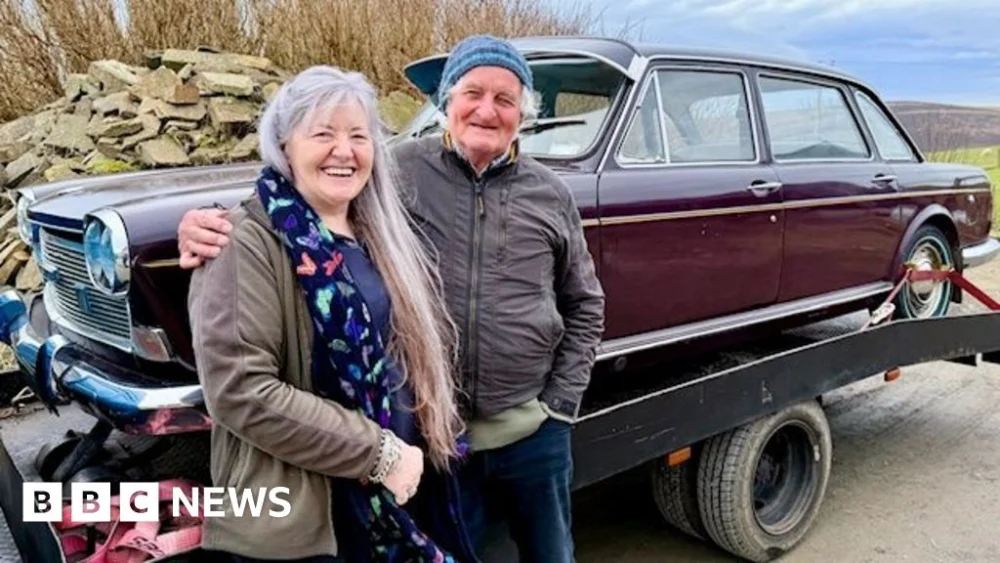
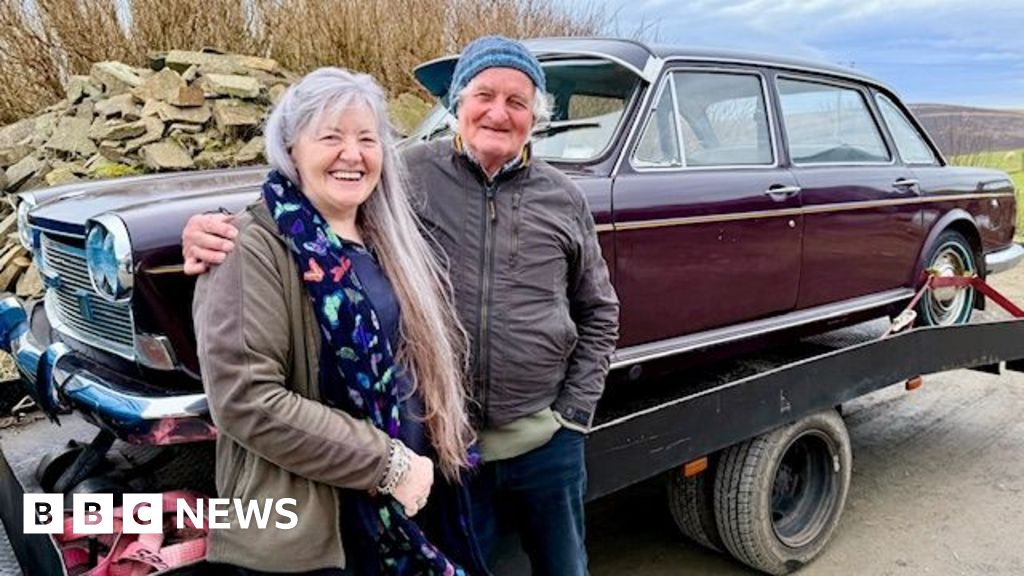
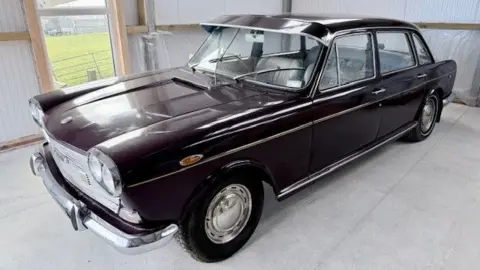
In an extraordinary testament to the enduring power of automotive passion and sentimental attachment, a vintage 1970 Austin 3-Litre has completed an epic journey of over 12,000 miles, travelling from the sunny shores of New Zealand to the remote Orkney Islands off the coast of Scotland. This remarkable odyssey was orchestrated by 86-year-old Dutch classic car enthusiast Hans Compter, who personally delivered the rare vehicle to its new owner, Cathleen Hourie, a resident of Orkney, in an act that transcends a mere transaction to become a tale of dedication and serendipity.
A Lifelong Affection for a British Classic
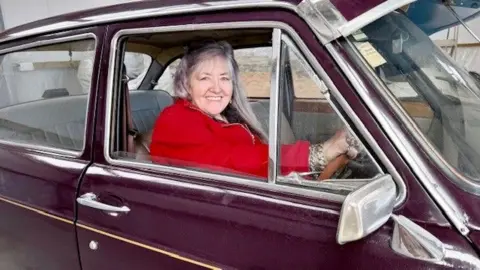
For Cathleen Hourie, the acquisition of the mulberry-coloured Austin 3-Litre is far more than simply adding another vehicle to her garage; it represents the rekindling of a decades-old affection. Her connection to the Austin 3-Litre dates back to her youth, when her first boyfriend purchased one. "I got over the boyfriend but I never got over the car," Cathleen humorously remarked, highlighting the deep-seated nostalgia that fuelled her quest. This particular model, a symbol of a bygone era of British motoring, left such an indelible impression that Cathleen admits to spending her spare time diligently searching online for "Austin 3 litre for sale," a testament to her unwavering devotion. Her pursuit of this specific classic car underscores how deeply personal and emotionally resonant automotive history can be for enthusiasts.
The Austin 3-Litre itself occupies a unique, if somewhat overlooked, niche in the annals of British automotive manufacturing. Launched in 1967 and produced until 1971, it was an executive saloon developed by the British Motor Corporation (BMC) under the project code ADO61. Positioned to compete in the luxury segment against rivals like the Rover P5 and potentially even some Jaguar models, the 3-Litre was ambitious. It featured the robust 3-litre C-Series straight-six engine, a unit known for its reliability, but its most distinctive engineering aspect was its Hydrolastic suspension system. While Hydrolastic was celebrated for its smooth ride quality in BMC’s smaller, front-wheel-drive models like the Austin 1800 and Mini, its application in a larger, conventionally rear-wheel-drive saloon like the 3-Litre was unusual and arguably contributed to its mixed market reception.
Despite its sophisticated engineering and comfortable interior, the Austin 3-Litre struggled to find its footing in the market. Its styling, often criticised for being too similar to the more common Austin 1800 (the "Landcrab"), lacked the distinctive presence expected of a luxury car. Furthermore, its launch coincided with the turbulent period of mergers and restructuring within the British automotive industry, culminating in the formation of British Leyland. This instability, coupled with a relatively high price point and perceived identity crisis, led to disappointing sales figures. Over its four-year production run, fewer than 10,000 units were manufactured, making it a rare sight even in its heyday. Today, automotive historians estimate that only around 30 examples remain roadworthy, elevating its status from a commercial misstep to a highly sought-after collector’s item due to its rarity and distinctive engineering. Cathleen’s 1970 model is thus not merely a car but a tangible piece of automotive history, representing both personal nostalgia and a unique chapter in British motoring.
Hans Compter: The "Car Idiot" and Custodian of History
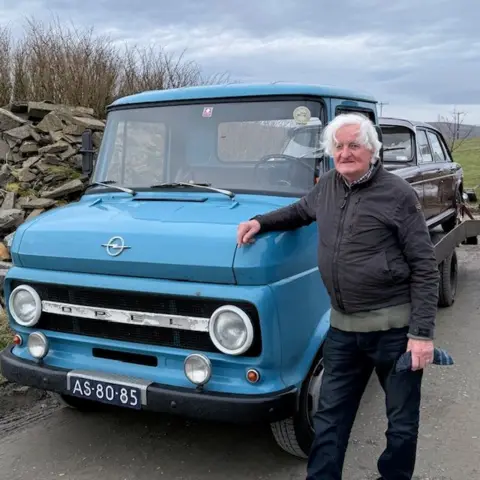
The other central figure in this extraordinary narrative is Hans Compter, an 86-year-old Dutchman whose passion for classic cars knows no bounds. Describing himself as a "car idiot," Compter has dedicated a lifetime to the restoration and preservation of vintage automobiles, assembling an impressive collection in the picturesque Bay of Islands in New Zealand. His website, PreWarCar, serves as a hub for enthusiasts worldwide, showcasing rare vehicles and fostering a global community of collectors. It was on this very platform that Cathleen Hourie stumbled upon the mulberry-coloured Austin 3-Litre that had captured her heart decades ago.
Upon seeing the listing, Cathleen initially dismissed it as "too good to be true" and potentially "fake," a natural reaction given the rarity of the model. Her scepticism intensified when she discovered the car was located in New Zealand, believing the vast geographical distance would render any purchase impossible. However, Hans Compter is not your typical car dealer. His philosophy extends beyond mere commerce; it is rooted in a profound respect for automotive heritage and a desire to connect these historical machines with owners who will cherish them. When Cathleen inquired, Hans responded promptly, demonstrating his commitment to serious enthusiasts, regardless of their location.
Hans’s decision to personally deliver the car across continents is a testament to his unique approach. For him, it wasn’t just about selling a car; it was about ensuring its safe passage to an appreciative owner and, perhaps, embarking on an adventure himself. His dedication highlights a segment of the classic car community where the human connection and the story behind the vehicle are as important as the car itself. His willingness to undertake such an arduous journey, especially at 86 years old, speaks volumes about his character and his deep-seated love for these mechanical marvels. He embodies the spirit of a true automotive historian and enthusiast, for whom distance is merely another challenge to overcome in the pursuit of preserving and celebrating classic motoring.
The Epic Journey: A Transcontinental Delivery
The delivery of Cathleen’s Austin 3-Litre was an undertaking of monumental proportions, meticulously planned and executed by Hans Compter. The journey began in New Zealand, where the car was carefully prepared for its long sea voyage. It was loaded into a container and shipped across the Pacific and through the Suez Canal to Rotterdam in the Netherlands, a maritime journey spanning approximately 11,000 to 12,000 miles and taking several weeks. This initial leg alone required significant logistical coordination and patience.

Upon its arrival in Rotterdam, Hans personally took charge, transporting the Austin to his workshop in the Netherlands. Here, he spent valuable time "fixing it up," ensuring the 55-year-old classic was in prime condition for its onward journey and ready for its new life on the roads of Orkney. This meticulous preparation underscores Hans’s commitment to quality and his desire to present the car in the best possible state.
The next phase of the delivery involved an equally remarkable vehicle: Hans’s own vintage 1970 Opel Blitz truck. This classic transporter, a fitting companion for the Austin, was converted to carry vehicles and added another layer of vintage charm to the entire endeavour. From the Netherlands, Hans embarked on the road journey across Europe to the United Kingdom. His route likely involved a ferry crossing from a Dutch port such as Hook of Holland to a British port like Harwich or Newcastle, depositing him onto mainland Britain.
It was from Newcastle that the journey became particularly challenging. Hans, unfamiliar with the intricacies of Scotland’s northern geography, initially underestimated the travel time to the ferry port at Scrabster, which connects to the Orkney Islands. "Once I got off the ferry in Newcastle I thought it was just a day’s drive to the Orkney Islands but that was a big mistake," Hans recounted. The approximately 400-mile stretch from Newcastle through the Scottish Highlands to Scrabster, typically manageable for modern vehicles, proved to be a two-day expedition for the vintage Opel Blitz carrying its precious cargo. The winding, often narrow roads, combined with the slower pace of a classic truck, made for a rigorous drive.
The Berriedale Braes Incident: A Near Miss
The journey was not without its moments of peril. One particularly harrowing incident occurred at the infamous Berriedale Braes in Caithness, a notoriously steep and winding section of road known for challenging descents. As Hans navigated the treacherous incline with his vintage truck and its load, he noticed a significant queue of up to 20 vehicles forming behind him. In an effort to be courteous and allow faster traffic to pass, Hans pulled into what he believed was a lay-by.
However, his assumption proved incorrect. He quickly realised he had inadvertently steered the Opel Blitz into an escape bed—a safety feature designed with deep gravel to halt vehicles that have lost their brakes on the steep descent. The heavy truck, laden with the Austin, became instantly stuck, almost up to its axles in the soft gravel. For a tense hour, Hans found himself stranded, unsure if he would ever manage to extricate his vintage transporter and its precious cargo. The situation was precarious, with potential damage to the vehicles and a significant disruption to traffic.
Fortunately, a compassionate fellow driver, noticing Hans’s predicament, turned back to offer assistance. With the help of this good Samaritan, Hans’s Opel Blitz was eventually pulled free from the gravel trap. "I want to thank the driver who saw me and came back to pull me out. I thought the Opel might have been damaged but she’s fine," Hans expressed, relieved that both his truck and Cathleen’s Austin had emerged unscathed from the ordeal. This incident highlights the unpredictable nature of such long-distance classic car deliveries and the kindness that can emerge on the open road.
After overcoming the challenge of the Berriedale Braes, Hans completed the final leg of his road journey to Scrabster, where he and the Austin boarded the ferry for the crossing to the Orkney Islands. The arrival in Orkney marked the culmination of a truly global odyssey, a testament to Hans’s unwavering commitment and the irresistible allure of classic motoring.
A Dream Realized: The Austin Arrives in Orkney
The arrival of the Austin 3-Litre in Orkney was a moment of profound joy for Cathleen Hourie. Seeing the mulberry-coloured classic car, delivered personally by Hans Compter on his vintage Opel Blitz, brought her decades-long dream to fruition. "I’ve been grinning since Hans arrived," Cathleen exclaimed, her delight palpable. The meticulous care taken by Hans, from the initial shipment to the final road delivery and the preparatory work in his Dutch workshop, ensured that the car was in exceptional condition. "It’s 55 years old and it is in much better condition than I hoped. It’s just lovely. I’m really pleased with it," she added, clearly thrilled with her new acquisition.
The financial aspect of such an endeavour, while significant, was clearly secondary to the emotional and historical value for Cathleen. She paid a "four-figure sum" for the Austin, a price that included the complex and extensive delivery service. Considering the rarity of the car—with fewer than 10,000 ever made and only around 30 believed to be roadworthy today—and the unique, personalised delivery from halfway across the world, this investment represents both a passion purchase and a commitment to preserving a piece of automotive heritage. The Austin 3-Litre, despite its initial commercial struggles, has a top speed of 110mph, a respectable performance for its era, highlighting its engineering capabilities.
Hans Compter, the dedicated "car idiot" and orchestrator of this transcontinental delivery, remains confident in the Austin’s longevity. He believes that with proper care, Cathleen will enjoy many more years of motoring pleasure. "I don’t see why you couldn’t use it for the next 50 years easily," Hans stated, underscoring the inherent durability of well-maintained classic vehicles. This sentiment resonates deeply within the classic car community, where the focus is not just on ownership but on stewardship—ensuring these historical machines continue to operate and be enjoyed for generations to come. The story of Cathleen and Hans is a powerful illustration of how passion can bridge vast distances and create unforgettable connections, all in the name of a beloved classic car.
Broader Implications: The Global Tapestry of Classic Car Culture
The remarkable journey of Cathleen Hourie’s Austin 3-Litre from New Zealand to Orkney offers a compelling insight into the vibrant and increasingly globalised world of classic car collecting. This incident is not merely a quirky anecdote but a microcosm of several broader trends and implications within this unique subculture.
Firstly, it underscores the enduring and often deeply personal appeal of classic automobiles. For many, these vehicles are more than just modes of transport; they are tangible links to personal histories, cultural eras, and engineering milestones. Cathleen’s decades-long search for an Austin 3-Litre, driven by nostalgic affection, exemplifies how emotional connections can override geographical and logistical barriers. This sentimental value often far outweighs the practicalities or even the monetary cost, transforming a purchase into a quest.
Secondly, the story highlights the crucial role of the internet in connecting a dispersed global community of enthusiasts. Without platforms like PreWarCar, Hans Compter’s website, the likelihood of Cathleen in Orkney discovering a specific 1970 Austin 3-Litre in New Zealand would have been infinitesimally small. The digital age has democratised access to rare vehicles and specialized knowledge, fostering a truly international marketplace where enthusiasts can find their dream cars regardless of location, and sellers can reach a dedicated global audience. This connectivity facilitates transactions that would have been unimaginable just a few decades ago.
Thirdly, Hans Compter’s personal dedication to the delivery speaks to a particular ethos within the classic car community—one that values preservation, personal connection, and the narrative surrounding each vehicle. His willingness to undertake such a challenging journey at 86 years old, using his own vintage transporter, transforms a commercial transaction into a shared adventure. This level of commitment goes beyond customer service; it is a manifestation of a deep-seated passion for automotive history and a desire to see these machines cherished by their new custodians. It also subtly champions the "journey not the destination" philosophy, as Hans took the opportunity to explore parts of Scotland he hadn’t seen before.
Finally, the narrative offers a refreshing perspective on the longevity and sustainability of vintage vehicles. Hans’s assertion that the Austin could easily provide "another 50 years" of motoring pleasure challenges the modern paradigm of planned obsolescence. Classic cars, when maintained with care and dedication, are often built to last, proving that quality engineering and passionate stewardship can extend the lifespan of complex machinery far beyond contemporary expectations. This stands as a quiet counterpoint to the rapid turnover of modern consumer goods, celebrating durability and the joy of sustained ownership.
In essence, the tale of the Austin 3-Litre’s incredible journey from New Zealand to Orkney is a vibrant illustration of how a shared passion for automotive heritage can forge extraordinary human connections, overcome formidable logistical challenges, and ultimately, enrich the lives of those involved, cementing the legacy of a classic car for generations to come.