


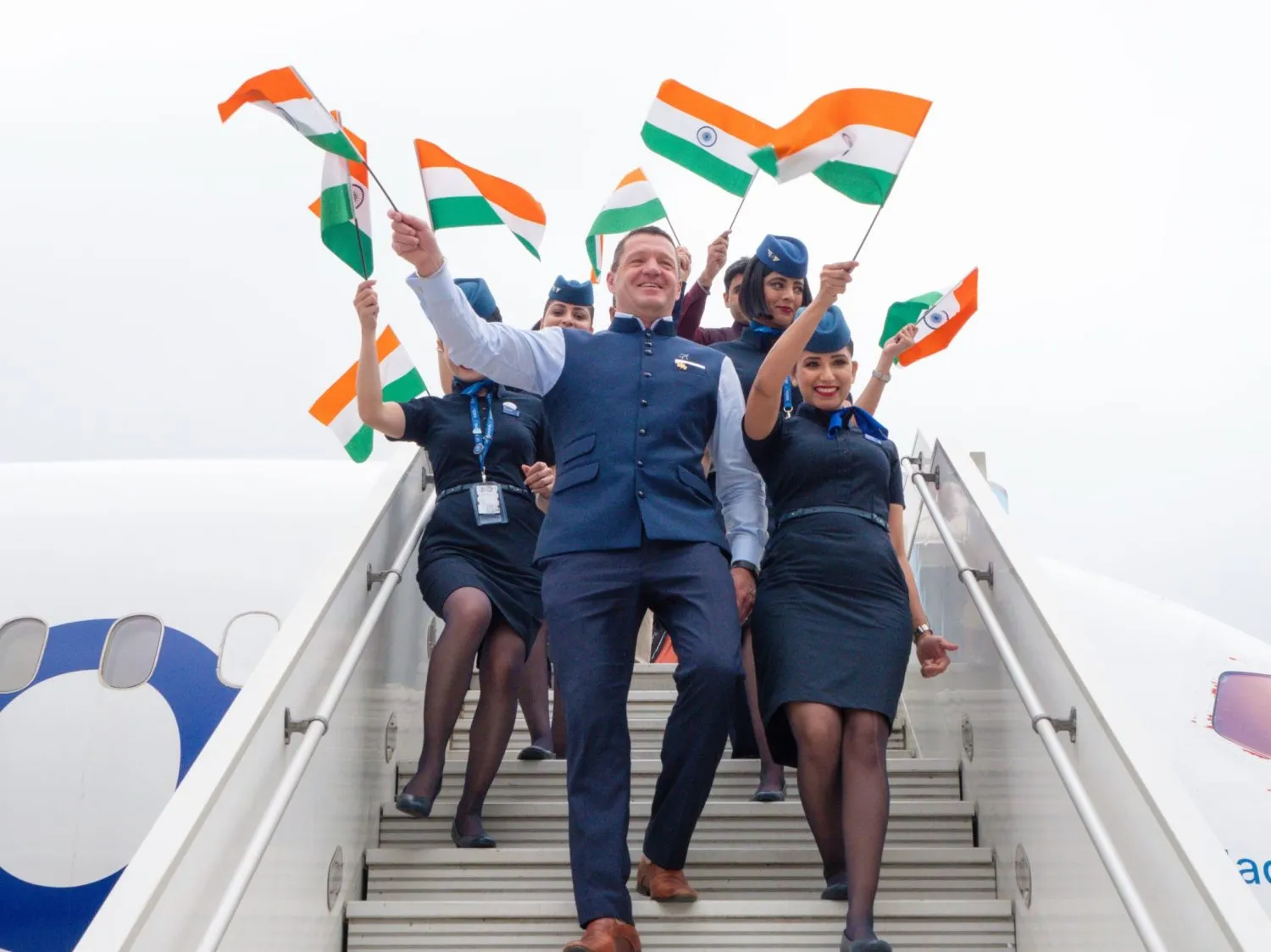
InterGlobe Aviation Limited, the parent company of IndiGo, India’s dominant low-cost carrier, announced on Tuesday the resignation of its Chief Executive Officer, Pieter Elbers. The departure of the Dutch aviation veteran marks a significant turning point for the airline, which currently commands more than 60 percent of the Indian domestic aviation market. While the official resignation letter cited "personal reasons" for his departure, the move follows a period of unprecedented operational turbulence and regulatory scrutiny that has tested the resilience of the carrier’s leadership and its ambitious growth strategy. Elbers, who joined IndiGo in September 2022 after a storied career at KLM Royal Dutch Airlines, was tasked with a clear mandate: to evolve IndiGo from a highly efficient domestic budget carrier into a formidable global player capable of competing on long-haul international routes.
The timing of the resignation has drawn immediate attention from industry analysts and stakeholders. It comes just months after IndiGo experienced the most severe operational breakdown in its nearly two-decade history. During a chaotic period in December and early January, the airline was forced to cancel between 4,500 and 5,000 flights. This scheduling crisis left tens of thousands of passengers stranded across major Indian hubs, including Delhi, Mumbai, and Bengaluru, leading to a public relations crisis and a stern intervention from the Directorate General of Civil Aviation (DGCA). The collapse was largely attributed to the airline’s inability to reconcile its aggressive flight schedule with the implementation of new pilot duty and rest regulations, known as Flight Duty Time Limitations (FDTL), which were designed to combat pilot fatigue.
A Strategic Shift: The Pieter Elbers Era
When Pieter Elbers took the helm of IndiGo in late 2022, he inherited an airline that was already the undisputed leader of Indian skies. However, the post-pandemic landscape required a different kind of leadership. Elbers introduced a vision often referred to as "IndiGo 2.0," which focused on three primary pillars: internationalization, customer experience enhancement, and fleet diversification. Under his leadership, IndiGo moved away from its single-aisle, point-to-point LCC (Low-Cost Carrier) roots to embrace a more complex global hub-and-spoke model.
One of the defining moments of his tenure was the historic order placed at the Paris Air Show in June 2023, where IndiGo committed to 500 Airbus A320-family aircraft. This remains the largest single aircraft purchase agreement in history. Beyond narrow-body expansion, Elbers steered the airline toward wide-body operations—a radical departure for the carrier. In early 2024, IndiGo placed an order for 30 Airbus A350-900 aircraft, signaling its intent to compete directly with Air India and international giants like Emirates and Qatar Airways on long-haul routes to Europe and North America.
Elbers also oversaw the introduction of a business-class product on select domestic and international routes, a move aimed at capturing the high-yield corporate travel segment. By establishing codeshare agreements with major international carriers, including Turkish Airlines, Qantas, and Virgin Atlantic, Elbers effectively expanded IndiGo’s reach to over 30 international destinations, bridging the gap between Indian cities and the rest of the world.
The December Crisis: A Catalyst for Change
Despite the strategic successes on the global stage, the airline’s domestic operations faced a critical stress test in late 2023. The Indian government, through the DGCA, introduced revised FDTL norms following concerns over pilot wellness and safety. These new rules mandated longer rest periods and reduced the maximum flight time during night hours. For an airline like IndiGo, which relies on high aircraft utilization and tight crew scheduling to maintain its low-cost structure, the transition proved disastrous.
The "December Meltdown," as it became known in Indian media, was compounded by severe winter fog in Northern India. However, internal reports and regulatory findings suggested that the primary cause was a systemic failure in crew management. The airline had failed to buffer its rosters sufficiently to account for the new rest requirements. The resulting shortage of "active" pilots led to a domino effect of cancellations.
The crisis prompted a series of show-cause notices from the DGCA and led to intense internal friction between the management and the pilot community. Many pilots expressed dissatisfaction with what they termed "unrealistic scheduling" and "punitive standby shifts." While Elbers publicly defended the airline’s recovery efforts, the operational fragility exposed during this period reportedly caused friction within the board of InterGlobe Aviation, raising questions about whether the push for international expansion had come at the expense of domestic operational stability.
Data and Market Performance Under Leadership
To understand the weight of Elbers’ departure, one must look at the sheer scale of the operation he managed. As of late 2024, IndiGo operates over 2,000 flights daily with a fleet of more than 350 aircraft. The airline’s market share has remained remarkably stable, fluctuating between 60% and 63%, despite the resurgence of a revitalized Air India under the Tata Group and the entry of new players like Akasa Air.
Financial data from the last four quarters indicates that while IndiGo achieved record-breaking revenues, its margins were pressured by rising fuel costs and the grounding of nearly 70 aircraft due to ongoing Pratt & Whitney engine issues. Under Elbers, the airline reported a net profit of ₹1,894 crore ($227 million) in the quarter ending March 2024, a significant turnaround from the losses incurred during the pandemic years. However, the cost of the December cancellations—estimated by analysts to be in the hundreds of crores due to passenger compensation, refunds, and lost productivity—left a mark on the fiscal year’s final tallies.
| Metric | September 2022 (Entry) | Current Status (Departure) |
|---|---|---|
| Market Share | ~57% | ~61% |
| Fleet Size | 280 Aircraft | 360+ Aircraft |
| International Destinations | 26 | 34 |
| Daily Departures | ~1,600 | ~2,000+ |
| Order Book | ~450 Aircraft | ~980 Aircraft |
Chronology of Key Events
The following timeline outlines the major milestones and challenges during Pieter Elbers’ tenure at IndiGo:
- September 2022: Pieter Elbers officially takes over as CEO, succeeding Ronojoy Dutta.
- February 2023: IndiGo announces its first major international expansion plan, including direct flights to Central Asia and Africa.
- June 2023: The airline makes global headlines with a 500-aircraft order at the Paris Air Show.
- August 2023: DGCA announces revised FDTL norms; IndiGo management begins internal reviews of scheduling software.
- December 2023 – January 2024: The scheduling crisis peaks. Over 4,500 flights are cancelled in a 30-day window. The DGCA issues a formal warning regarding passenger rights and compensation.
- April 2024: IndiGo places its first-ever wide-body order for 30 Airbus A350s, marking a definitive shift toward long-haul operations.
- August 2024: The airline announces the introduction of "IndiGo Stretch," a premium business-class cabin.
- Tuesday: Pieter Elbers submits his resignation, citing personal reasons.
Official Responses and Industry Reaction
The announcement of Elbers’ departure was met with a mix of surprise and measured understanding from the aviation community. In a statement, Rahul Bhatia, the Managing Director of InterGlobe Aviation, thanked Elbers for his service. "Pieter has played a pivotal role in navigating IndiGo through a period of immense growth and transition. His vision for internationalization has set a new course for the airline. We respect his decision to step down for personal reasons and wish him the very best," Bhatia stated.
Industry analysts, however, offer a more nuanced view. "While Elbers succeeded in putting IndiGo on the global map, the internal machinery struggled to keep pace with the external ambition," said Kapil Kaul, CEO of the Center for Asia Pacific Aviation (CAPA) India. "The leadership reset is likely an attempt by the board to refocus on operational excellence and mend relations with the workforce, particularly pilots and ground staff, who bore the brunt of the recent crises."
Statements from pilot unions, though unofficial, suggested a sense of relief. A senior captain at the airline, speaking on condition of anonymity, noted, "There was a feeling that the management was disconnected from the ground reality of the new regulations. We hope the next leader prioritizes sustainable scheduling over sheer volume."
Broader Impact and Implications for the Future
The departure of Pieter Elbers leaves IndiGo at a crossroads. The airline is currently in the middle of a massive transformation that requires a leader capable of managing both the minutiae of domestic budget operations and the complexities of international long-haul service.
1. The "IndiGo 2.0" Strategy: There are concerns regarding the continuity of the wide-body strategy. Operating A350s requires a different set of logistical, maintenance, and service standards compared to the A320 fleet. The new CEO will need to prove that an LCC DNA can successfully adapt to a full-service international offering.
2. Regulatory Compliance: The DGCA has signaled that it will not back down on pilot fatigue regulations. The incoming leadership must prioritize a robust scheduling infrastructure that can withstand seasonal disruptions and adhere to stricter labor laws without compromising the airline’s profitability.
3. Competitive Pressure: With the merger of Air India and Vistara nearing completion, IndiGo faces a unified and well-capitalized competitor in the premium and international segments. The leadership transition comes at a time when IndiGo cannot afford a loss of momentum.
4. Investor Confidence: IndiGo’s stock (listed as InterGlobe Aviation on the NSE) has historically been a favorite among investors due to its disciplined cost management. The recent operational failures and the sudden exit of a high-profile CEO may lead to short-term volatility as the market waits for clarity on the succession plan.
In conclusion, Pieter Elbers’ exit signifies the end of a chapter that was as ambitious as it was turbulent. He leaves behind an airline that is significantly larger and more global in its outlook than the one he joined. However, the "operational fragility" mentioned in his departure context serves as a reminder that in the aviation industry, global dreams must be built on a foundation of domestic reliability. The next CEO of IndiGo will inherit a powerhouse, but one that requires a steady hand to navigate the increasingly complex skies of Indian and international aviation.