


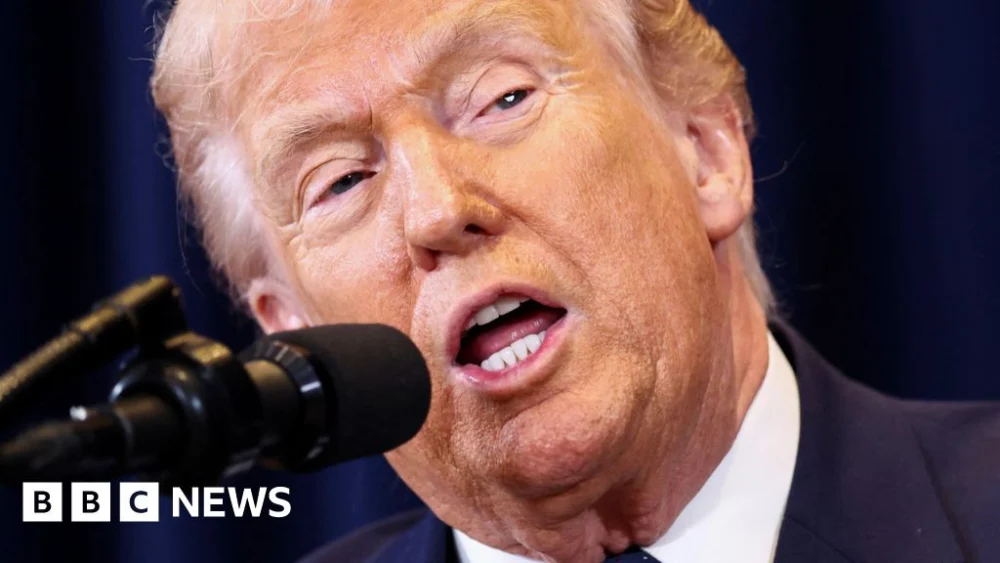
The perilous echo of history resonates ominously in the current geopolitical climate, as experienced observers recall the devastating consequences of inciting rebellion without steadfast support. This stark warning, deeply ingrained in the memory of those who witnessed the aftermath of the 1991 Gulf War, now reverberates amidst calls from leaders like Donald Trump and Benjamin Netanyahu for an uprising within Iran, a nation grappling with internal dissent and external pressure. The parallels are unsettling, suggesting a potential repeat of humanitarian catastrophes and long-term regional instability if history’s lessons are unheeded.
A Look Back: The First Gulf War and Bush’s Regretted Call
The historical precedent begins precisely on February 15, 1991, during the zenith of Operation Desert Storm. George H.W. Bush, then President of the United States, delivered a speech at a Raytheon factory in Andover, Massachusetts, where the cutting-edge Patriot missile interceptors were manufactured. These missiles, making their combat debut in the Gulf War, were hailed as a technological marvel, designed to counter Iraq’s Scud missile attacks on Saudi Arabia and Israel. Bush’s visit was primarily to commend the workers behind this "miracle weapon" and rally American support for the ongoing military campaign to liberate Kuwait from Iraqi occupation. The war, initiated after Iraq’s invasion of Kuwait on August 2, 1990, had garnered broad international support, including UN Security Council Resolution 678, which authorized member states to use "all necessary means" to restore peace and security in the region.
However, nestled within his remarks were a few sentences that would carry immense, unforeseen consequences. With allied air forces, predominantly American and British, relentlessly bombing Iraqi military targets and infrastructure—and inadvertently, Iraqi cities—and tens of thousands of ground troops poised on the borders for the impending ground offensive, Bush declared, "There’s another way for the bloodshed to stop…and that is for the Iraqi military and the Iraqi people to take matters into their own hands and force Saddam Hussein, the dictator, to step aside." This seemingly innocuous statement, met with cheers and applause from the factory workers, was interpreted by many within Iraq as an explicit endorsement, even a promise of American backing, for an internal revolt against Saddam Hussein’s tyrannical rule.
At that time, the war effort was in full swing. Journalists like Jeremy Bowen, then reporting from Baghdad, were immersed in the immediate realities of conflict. Days before Bush’s speech, on February 13, 1991, an American air raid struck the Amiriyah shelter in Baghdad, a facility the US and UK erroneously claimed was a military command centre. In reality, it was a civilian bomb shelter, and the attack resulted in the deaths of over 400 Iraqi civilians, predominantly women, children, and elderly individuals. The harrowing scenes of the still-smouldering shelter and the tragic loss of innocent lives underscored the brutal cost of the conflict, a reality that overshadowed distant presidential pronouncements for those on the ground.
The Iraqi Uprisings and the Betrayal of Hope
Following the swift and decisive expulsion of Iraqi forces from Kuwait in late February 1991, a ceasefire was declared, but Saddam Hussein remained in power. Emboldened by President Bush’s words, and under the impression of impending American support, significant uprisings erupted across Iraq. In the predominantly Shia south, a widespread rebellion, often referred to as the “Sha’aban Intifada,” ignited in cities like Basra, Najaf, and Karbala, spreading rapidly through the marshlands. Simultaneously, in the Kurdish north, peshmerga fighters and civilian populations rose up, seizing control of major cities such as Sulaymaniyah and Erbil. These revolts were organic expressions of decades of simmering resentment against Saddam’s brutal Ba’athist regime, which had notably used chemical weapons against its own Kurdish population in the late 1980s. Bush’s rhetoric had undoubtedly acted as a powerful catalyst, igniting hopes for liberation.
However, the promised American intervention never materialized. Despite urgent pleas for a no-fly zone and direct military assistance, the United States and its coalition partners observed the unfolding tragedy without intervening. The geopolitical calculus at the time was complex: the US feared a potential fragmentation of Iraq, which could inadvertently strengthen neighboring Iran by creating a Shia-dominated state on its border, and believed that preserving a unified, albeit weakened, Iraq might serve as a bulwark against Iranian expansionism. There was also a reluctance to get bogged down in an internal Iraqi conflict after achieving the primary objective of liberating Kuwait, especially after the costly and divisive experience of the Vietnam War.
The consequences were devastating. Saddam Hussein, though militarily crippled by Desert Storm, was permitted to retain his helicopter gunships, which became instruments of terror. His elite Republican Guard units, largely spared during the coalition’s ground offensive, launched a brutal counter-offensive. Thousands of Iraqi Shias and Kurds, who had put their faith in American promises, were massacred. Villages were razed, and entire communities were subjected to collective punishment. The scale of the repression was immense, with estimates of casualties ranging from tens of thousands to potentially hundreds of thousands, and the displacement of millions.
Journalists documented the unfolding humanitarian crisis, particularly in the Kurdish north. Tens of thousands of Kurds fled into the harsh, snowy mountains along the Turkish and Iranian borders, facing exposure, starvation, and disease. Images of fathers carrying their children’s small, blanket-wrapped bodies down mountainsides became a haunting symbol of the betrayal. This humanitarian catastrophe eventually shamed the international community into action, leading to Operation Provide Comfort, a large-scale humanitarian and military operation to establish safe havens and no-fly zones in northern Iraq. However, the Shias in the south did not receive similar protection, enduring years of brutal repression and the draining of the southern marshes, their traditional homeland, as punishment for their defiance.
The Seeds of Future Conflicts: A Legacy of Intervention and Its Absence
The fallout from the 1991 Gulf War and the abandonment of the Iraqi uprisings continued for years, shaping the geopolitical landscape of the Middle East. The commitment to enforce no-fly zones over northern and southern Iraq led to a permanent American military presence in the region, particularly in Saudi Arabia. This presence, viewed by some fundamentalists as a desecration of the land of Islam’s holiest shrines, became a significant grievance for figures like Osama bin Laden, who would go on to found Al-Qaeda and orchestrate the September 11, 2001 attacks against the United States. In this sense, each Gulf War seemed to plant the seeds for the next.
The perceived "unfinished business" of removing Saddam Hussein eventually culminated in the 2003 invasion of Iraq by the United States and its allies, led by George W. Bush, the son of the first President Bush. While the invasion successfully toppled Saddam’s regime, it did so without a comprehensive, workable plan for post-invasion governance and stability. This vacuum of power, coupled with the hasty dismantling of the Iraqi state apparatus, ignited years of sectarian violence, civil war, and ultimately, created fertile ground for the emergence of jihadist extremist groups, most notably the Islamic State (IS), whose brutal reign of terror further destabilized the region.
Ironically, one of the principal beneficiaries of the 2003 invasion was Iran. The removal of its bitter rival, Saddam Hussein, and the subsequent rise of Shia-dominated political power in Iraq, significantly bolstered Tehran’s regional influence. Iran’s projection of power across the "Shia Crescent" – from Iraq to Syria and Lebanon – accelerated dramatically after 2003, a development that deeply concerned both the United States and its regional allies, particularly Israel and Saudi Arabia.
The Current Confrontation: A "Third Gulf War" Aimed at Iran
Today, the region stands at the precipice of what many are calling a "third Gulf War," one explicitly aimed at rolling back the Islamic Republic of Iran’s ascendance to regional power. This confrontation is driven by a complex interplay of factors: Iran’s advanced nuclear program, which Israel and some Western powers view as an existential threat; its development of long-range ballistic missiles; and its extensive network of proxy forces across the Middle East, including Hezbollah in Lebanon, Houthi rebels in Yemen, and various Shia militias in Iraq and Syria.
The current US administration, under Donald Trump, has departed significantly from previous American policies of containment and deterrence. For the first time, the US has engaged in a joint military venture with Israel, whose Prime Minister Benjamin Netanyahu has long advocated for a more aggressive stance against Tehran. Netanyahu has openly declared his lifelong ambition to "destroy the Islamic Republic of Iran," viewing the current moment, with a sympathetic US president, as the optimal opportunity to achieve this goal. In a speech delivered early in this new conflict, he stated, "with ‘the assistance’ of the United States, Israel was able to do ‘what I have yearned to do for forty years: smite the terror regime hip and thigh. This is what I promised and this is what we shall do.’"
Both Trump and Netanyahu have publicly called for a popular uprising in Iran, echoing President Bush’s 1991 rhetoric. This strategy, however, raises profound questions about the commitment to support such a revolt and the potential for severe humanitarian repercussions if it fails to receive external backing. Israel, in particular, appears unconcerned by the prospect of Iran descending into violent chaos, perhaps even viewing it as a favorable outcome for its strategic interests by eliminating a primary ideological and military adversary.
International Skepticism and Domestic Division
The decision to embark on this "third Gulf War" has been met with considerable skepticism and alarm, both internationally and within the United States. Latest polls indicate that the American public is wary of another large-scale military engagement in the Middle East, especially one initiated without clear international consensus or a robust, publicly articulated strategy. This sentiment reflects a broader war-weariness after decades of costly conflicts in Iraq and Afghanistan, which have collectively cost trillions of dollars and thousands of American lives.
European allies, with the notable exception of Israel, have expressed significant "scruples" about the use of force without explicit UN authorization or a convincing, universally accepted case for self-defence. US Secretary of Defence Pete Hegseth, rebranded by some as "Secretary of War," openly lambasted these concerns, accusing European nations of "wringing their hands and clutching their pearls, hemming and hawing about the use of force." This stark divergence highlights a growing transatlantic rift on foreign policy and the role of international law. European leaders, recalling the chaotic aftermath of interventions in Libya and Iraq, prioritize multilateralism, diplomatic solutions, and the avoidance of further regional destabilization that could trigger new refugee crises or economic shocks, particularly given Europe’s geographical proximity to the Middle East.
Adding to the controversy are questions surrounding the veracity of information presented by the US administration. For instance, Trump’s claim that Iran might have fired a Tomahawk missile in an attack on a school, resulting in over 165 casualties, was widely disputed, as Iran does not possess Tomahawk missiles. Such assertions, dismissed by Trump and his supporters as "fake news," erode trust and fuel the perception among critics that the administration is improvising its foreign policy without a coherent strategy or accurate intelligence, relying instead on sensationalism.
Iran’s Internal Dynamics and Nuclear Ambitions
Internally, Iran is a nation simmering with discontent. The Islamic Republic faces severe economic challenges exacerbated by international sanctions, widespread corruption, and a restive population. In January, the regime brutally suppressed nationwide protests, killing thousands of its own citizens who were demonstrating against repression, economic collapse, and the perceived failings of the ruling clerics. Human rights organizations reported thousands of arrests and credible allegations of torture. These internal fragilities are precisely what Trump and Netanyahu hope to exploit, believing that a push from external forces could tip the balance towards regime change.
A core driver of the current conflict is Iran’s nuclear program. Following the US withdrawal from the Joint Comprehensive Plan of Action (JCPOA) in 2018, Iran gradually scaled back its commitments under the deal, enriching uranium to levels far exceeding the JCPOA limits. By 2024, reports indicated Iran had enriched uranium to 60% purity, a level that is technically very close to weapons-grade (90%) and far beyond what is needed for civilian energy production. While Iran maintains its program is for peaceful purposes, these enrichment levels, coupled with its ballistic missile development, are seen by Israel and the US as a clear path towards developing nuclear weapons, which they deem unacceptable. Proponents of military action argue that the potential for higher petrol prices is a small price to pay if this war prevents Iran from acquiring a nuclear weapon and long-range ballistic missiles that could threaten not only Gulf states and Israel but also Europe and even America.
Broader Implications and Geopolitical Shifts
The consequences of this "third Gulf War" are, at best, uncertain and, at worst, catastrophically dangerous. Ending such a conflict will prove far more complex than initiating it, particularly without a clear understanding of its ultimate objectives or an exit strategy.
- Regional Destabilization and Humanitarian Crisis: A full-scale conflict with Iran risks igniting a regional conflagration, drawing in proxy forces (Hezbollah, Iraqi militias, Houthi rebels) into direct confrontations, and potentially leading to widespread civilian casualties and massive refugee flows, echoing the humanitarian disasters of 1991 and 2003. The potential for a power vacuum in Iran, similar to that which incubated ISIS after Saddam’s removal, could give rise to new, even more virulent extremist groups, further destabilizing an already fragile region and posing a renewed threat to global security.
- Economic Fallout: Beyond higher petrol prices, a conflict in the Gulf could severely disrupt global energy markets, impact shipping lanes through the Strait of Hormuz – a critical choke point for 20% of the world’s oil supply – and trigger a global economic recession. Insurance costs for shipping would skyrocket, supply chains would be disrupted, and consumer confidence would plummet worldwide.
- Strain on Alliances and Geopolitical Realignments: Iran’s