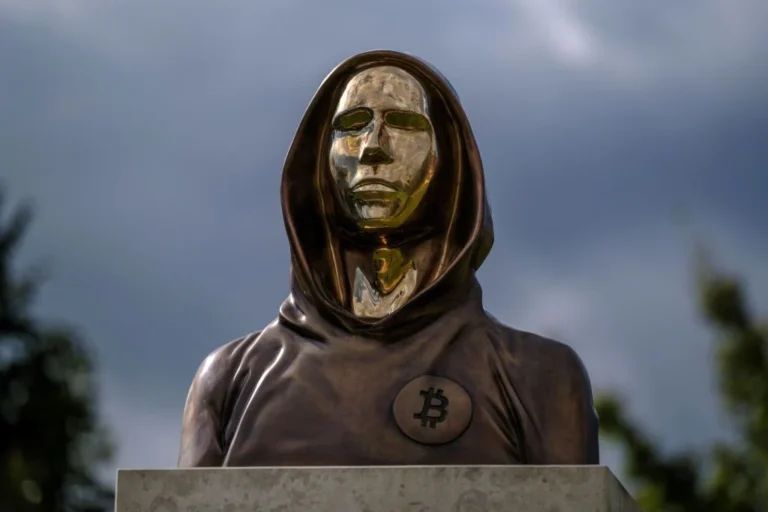




McGlone’s thesis hinges on the belief that the global economy is currently navigating a significant macroeconomic unwind. This process, characterized by deflationary pressures and the purging of excess speculative supply, suggests that the correction in traditional risk markets is unfinished. For McGlone, Bitcoin’s increasing correlation with speculative assets—a byproduct of its growing acceptance among institutional investors—has undermined the long-standing narrative that crypto serves as an uncorrelated hedge. Instead, he views it as a "high-beta" version of the stock market, destined to suffer disproportionately if a recessionary "cleansing" takes place.
The Counter-Argument: A Question of Liquidity and Infrastructure
The response from the broader analytical community has been swift and largely dismissive of the $10,000 target. Mati Greenspan, the founder and CEO of Quantum Economics, provided one of the most vocal rebuttals, characterizing such extreme price targets as the result of analysts getting lost in "short-term macro noise." Greenspan argued that for Bitcoin to revisit the $10,000 mark—a level not seen in several years—the world would need to endure a catastrophe of unprecedented proportions.
"For an asset like bitcoin, which regularly sees tens to hundreds of billions of dollars in daily trading volume across global markets, to revisit $10,000 we’d need a global liquidity crisis, a nuclear war, and the internet to stop working," Greenspan remarked. His perspective reflects a growing belief that Bitcoin has established a "structural floor" due to its widespread adoption, the security of its underlying network, and its integration into the portfolios of major financial institutions.
At the time of these discussions, Bitcoin was trading in a range between $69,000 and $71,000. The price action on Wednesday saw the asset hovering around $69,593, showing resilience even as other sectors of the economy faced volatility. Interestingly, Bitcoin’s recent upward momentum appeared to coincide with a sharp reversal in oil prices. As oil dropped by $3 per barrel within minutes, crypto assets including Ether (ETH), Solana (SOL), and XRP saw sympathetic moves to the upside, suggesting that liquidity was rotating out of energy commodities and back into digital assets.
Analyzing the Macroeconomic Divergence
The debate over Bitcoin’s fair value is inextricably linked to differing interpretations of the current macroeconomic environment. McGlone’s bearish outlook is rooted in the "great unwind" theory. He posits that the massive liquidity injections of the early 2020s created a speculative bubble that has yet to be fully deflated. From this perspective, the current $70,000 price point is an anomaly supported by temporary optimism, and a return to the mean—or lower—is inevitable.
However, other market analysts suggest that while a downside correction is possible, the magnitude of the drop proposed by McGlone is mathematically and behaviorally unlikely. Jason Fernandes, co-founder and market analyst at AdLunam, noted that a move toward even $28,000 would require a significant contraction in global liquidity or a major financial stress event, such as a widening of credit spreads or a banking sector failure. To reach $10,000, the market would essentially have to erase nearly all gains made during the institutional adoption phase of 2024 and 2025.
Jonatan Randin, a senior market analyst at PrimeXBT, echoed this sentiment, describing the $10,000 prediction as "highly improbable." While Randin acknowledges that the market is currently in a primary downtrend, he anticipates a more measured "drift" lower rather than a vertical collapse. He identified the next major accumulation zone—where buyers are likely to step in with significant force—between $30,000 and $40,000.
"There will always be analysts calling for extreme price targets during a bear market," Randin noted. "Can we go down to $10,000? Yes, it’s possible, but I see it as highly unlikely. You’re going to remain in a bear market until the primary trend shifts, but for now, we expect a range-bound environment between $60,000 and $70,000."
Historical Context and the Role of Institutional "Floors"
To understand why the $10,000 call is so controversial, one must look at the historical drawdowns of Bitcoin. Traditionally, Bitcoin has experienced retracements of 80% to 85% during its most severe bear markets. If one were to measure from Bitcoin’s previous all-time highs near $74,000, an 85% drop would indeed put the price in the $11,000 to $12,000 range.

However, proponents of the "new era" of Bitcoin argue that the 2024 approval of Spot Bitcoin ETFs in the United States has fundamentally altered the asset’s volatility profile. With billions of dollars in Assets Under Management (AUM) held by firms like BlackRock and Fidelity, the liquidity profile of Bitcoin is no longer dominated solely by retail "weak hands." Institutional investors typically operate on longer time horizons and are less prone to the panic selling that characterized previous cycles. This institutional "wall" is cited by many as the reason why a drop to $10,000 would be nearly impossible without a total collapse of the traditional financial system itself.
Furthermore, the Wednesday inflation data from the United States provided additional context for the market’s current stance. The data came in largely in line with forecasts, leading markets to price out any immediate possibility of a Federal Reserve rate cut in the first half of the year. In previous years, a "higher for longer" interest rate environment would have been a death knell for Bitcoin. Yet, the asset’s ability to maintain a price above $69,000 in the face of restrictive monetary policy suggests a decoupling from the traditional "cheap money" narrative.
The Deflationary Pressure vs. Scarcity Narrative
McGlone’s argument also touches on the concept of deflation. He believes that as the economy slows, the "excessive speculative supply" of cryptocurrencies will be forced onto the market as investors seek cash to cover obligations. This "forced selling" is a hallmark of major market bottoms. McGlone maintains that the market needs a "prolonged cleansing" before a durable bottom can form. "I think it’s going to last a while, and I don’t think it’s going to end until we purge some of these excesses," he stated.
Conversely, Bitcoin’s supporters point to its fixed supply of 21 million coins as the ultimate defense against deflationary or inflationary shocks. They argue that as fiat currencies continue to be debited by sovereign debt loads, the scarcity of Bitcoin becomes more attractive, not less. This "digital gold" narrative has gained traction among central banks and corporate treasuries, further complicating the bear case for a sub-$10,000 price.
Implications for the Broader Crypto Ecosystem
If Bitcoin were to actually hit $10,000, the implications for the rest of the cryptocurrency ecosystem would be catastrophic. Historically, altcoins (alternative cryptocurrencies) suffer even greater percentage losses than Bitcoin during market crashes. A drop of 85% for Bitcoin would likely result in 95% to 99% losses for assets like Ether, Solana, and Cardano.
Such a scenario would likely lead to the insolvency of numerous crypto-native firms, decentralized finance (DeFi) protocols, and mining operations. Most Bitcoin mining hardware would become unprofitable at a $10,000 price point unless energy costs plummeted simultaneously, potentially leading to a drop in the network’s hash rate. This "death spiral" scenario is precisely what analysts like Greenspan argue is prevented by the current level of network decentralization and global distribution.
Looking Ahead: The Near-Term Outlook
As the market processes these conflicting viewpoints, the immediate focus remains on the $60,000 to $70,000 range. While McGlone advises investors to "sell rallies" in what he identifies as a definitive bear market, others see the current consolidation as a healthy retracement. Greenspan pointed out that Bitcoin has already cleared its major bear market structural issues in 2022 and 2023, and that a 50% retracement from all-time highs is standard behavior for the asset.
The coming weeks are expected to provide more clarity as seven major central banks face inflation tests and policy decisions. These macro events will likely dictate whether Bitcoin can break out toward $80,000 or if the "drift" toward $40,000 predicted by Randin will begin in earnest.
While the $10,000 call remains a fringe outlook embraced by few outside of Bloomberg’s commodity desk, it serves as a sobering reminder of the volatility inherent in digital assets. Whether it requires a "nuclear war" to reach that level or simply a standard macroeconomic correction remains the multi-billion-dollar question for investors worldwide. For now, the "digital gold" remains steady, even as the drums of a potential global recession beat louder in the background.