

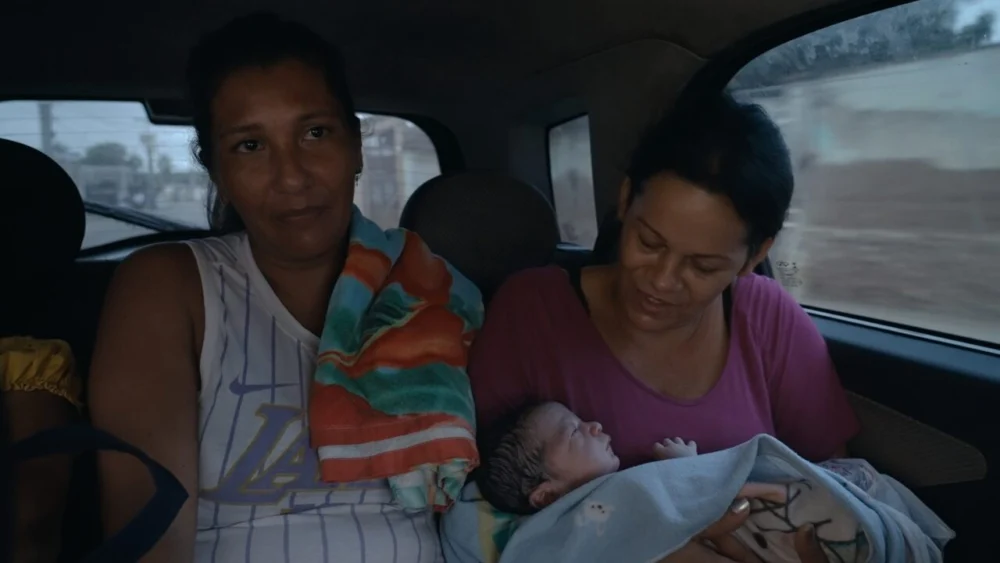
The Cord, a compelling new documentary feature from French journalist-turned-filmmaker Nolwenn Hervé, plunges audiences into the heart of Venezuela’s collapsing healthcare system, a crisis where life itself appears to hang by a precarious thread. The film, officially titled Le cordon in French, offers a raw and intimate portrayal of a nation grappling with profound systemic failures, focusing on the resilience of women and the vital connections they forge in the face of overwhelming adversity. At the core of this narrative is Carolina, a woman depicted as a “maternity warrior,” who, drawing strength from her personal history, tirelessly works to preserve the crucial bond between expectant mothers and their newborns.
Hervé’s documentary arrives at a moment when the act of giving birth in Venezuela has tragically transformed into a life-threatening ordeal, particularly for the nation’s most vulnerable populations. The film’s press notes highlight that for these individuals, the fundamental experience of bringing new life into the world is fraught with peril. Carolina, the film’s protagonist, confronts this crisis with an seemingly inexhaustible wellspring of energy and a robust network of support she has cultivated within her community. She is shown leading women in a determined fight for bodily autonomy and safe birthing conditions, advocating for a future where maternal healthcare is not a privilege but a fundamental right. Her overarching vision is to establish a sanctuary where ancient, ancestral birthing practices can be harmoniously integrated with Western medical knowledge, creating a community-driven model of care. This envisioned space is intended to be a place where women can reclaim agency over their bodies, their childbirth experiences, and ultimately, their futures.
The world premiere of The Cord is scheduled for Saturday, March 14, as part of the main competition at CPH:DOX, the esteemed Copenhagen International Documentary Film Festival. The festival will run through March 22. Nolwenn Hervé not only directed the film but also served as its cinematographer. Estelle Robin You is credited as the producer, with Grande Ourse Films handling the international sales of the documentary.
The Cord has also been selected as one of six films to be featured in the second edition of Europe Docs!, an online showcase designed to elevate and promote outstanding European documentaries. This initiative, jointly curated by European Film Promotion and CPH:DOX, aims to enhance the visibility of these films and improve their access to the North American market, a crucial step for independent filmmakers seeking broader distribution and audience engagement.
The genesis of Hervé’s deep engagement with Venezuela can be traced back to 2016, when she first visited the country as a journalist working on a French television report concerning oil smuggling. “Venezuela was already in the middle of a crisis, and I could see Venezuelan women crossing the border to Colombia to give birth safely, because in Venezuela, they were afraid of losing their babies or maybe dying,” Hervé shared in an interview with The Hollywood Reporter. This initial exposure to the severity of the situation left an indelible mark on her.
During her reporting trip, Hervé was introduced to a nurse who subsequently guided her to a public hospital in Maracaibo, Venezuela’s second-largest city. Maracaibo holds particular symbolic significance, as it is located in the oil-rich region that has historically fueled Venezuela’s economy. “It’s very symbolic, because this is the region that has made Venezuela so rich because of its petrol,” Hervé explained. The conditions she witnessed within this public hospital were profoundly shocking. She observed malnourished children and learned that the very nurse who had facilitated her visit was also selling candies on the street to supplement her meager salary, a stark illustration of the economic desperation gripping healthcare professionals.
The experience resonated deeply with Hervé, not only on a professional level as a journalist but also on a personal one as a woman. This emotional impact spurred her to embark on the ambitious project of creating her first feature film. “I wanted to tell this story, but not as a journalist. I wanted to have the freedom of telling the story with a subjective point of view and with an artistic point of view,” she stated, emphasizing her desire for a more personal and nuanced approach.
Hervé dedicated over five years to the production of The Cord. Her pivotal encounter with the film’s protagonist, Carolina, occurred in 2021, facilitated by a mutual friend from Colombia. Hervé described the meeting as “really impactful,” immediately recognizing Carolina as the embodiment of the film’s narrative heart and soul.
Reflecting the dynamic and energetic spirit of Carolina, the documentary transcends a purely bleak portrayal of the crisis. Instead, it highlights acts of courage and solidarity. “She’s a very good example of how we can try to change things when governments and states just fail, and how solidarity and sisterhood are the only things left to survive,” Hervé observed. The filmmaker expressed profound emotional resonance with the women’s collective experience, stating, “I am getting goosebumps [when thinking about it]. It was a beautiful lesson for me to see all these women together who are feeling, yes, we’re suffering a lot, but we’re together. And I think this is the most beautiful lesson of this experience, of this journey, for me personally and also for the film.”
A particularly poignant anecdote shared by Hervé involves Carolina’s pride in her ability to elicit laughter from patients who were facing their final moments. This detail underscores Carolina’s unwavering humanity and zest for life amidst dire circumstances. “She’s just full of energy, full of life,” Hervé remarked, emphasizing Carolina’s enduring spirit.
Hervé posits that Carolina’s story possesses a universal quality, serving as a potent metaphor for the contemporary global landscape. “I found it to be a metaphor of our world, our capitalist world, which relies on petrol to supposedly grow,” she elaborated. The filmmaker draws parallels between Venezuela’s plight and broader global trends, noting, “We can relate to [Venezuela through] the increase of authoritarianism and conservative [politicians] cutting health budgets. We can also already see the consequences in Western societies. In France, for instance, maternal mortality is increasing.” Hervé concludes with a powerful call to action, urging, “Let’s stay together and let’s remain solidary.” This message underscores the film’s underlying theme of collective strength in the face of systemic collapse.
The creative process behind The Cord fostered a profound personal connection between Hervé and Carolina. Their bond deepened to such an extent that Hervé became the godmother to Carolina’s youngest daughter. This intimate relationship lent an even greater authenticity and emotional weight to the documentary.
Hervé anticipates that some viewers might question her involvement in documenting the Venezuelan crisis as a French national. She preemptively addresses this by stating, "Some people could think I’m French, so what the hell am I doing there in Venezuela? It was something much more universal about being women and being together and just talking and experiencing what life and death are.” This assertion highlights her perspective that the film transcends nationality and explores fundamental human experiences.
Venezuela’s Healthcare Crisis: A Deep Dive
The Venezuelan healthcare system has been in a state of severe deterioration for years, exacerbated by a protracted economic crisis, political instability, and widespread corruption. International organizations and independent reports have consistently documented the dire conditions within hospitals and clinics across the country.
Key Statistics and Context:
- Economic Collapse: Venezuela has experienced one of the most dramatic economic contractions in modern history. Hyperinflation has decimated purchasing power, making essential goods, including medicines and medical supplies, prohibitively expensive for the majority of the population. Reports from organizations like the Venezuelan Observatory of Public Health (VOSP) have indicated severe shortages of basic medications, including antibiotics, chemotherapy drugs, and anesthetics.
- Brain Drain: A significant exodus of healthcare professionals, including doctors, nurses, and specialists, has further crippled the system. Many have sought better opportunities and working conditions abroad, leaving an already understaffed and overburdened workforce.
- Infrastructure Decay: Hospitals and clinics have suffered from a lack of maintenance, outdated equipment, and insufficient resources. Power outages are frequent, disrupting critical medical procedures and life support systems.
- Maternal and Child Mortality: Pre-existing challenges in maternal and child healthcare have been significantly amplified by the crisis. Data from the Pan American Health Organization (PAHO) has indicated a rise in maternal mortality rates, with many deaths attributed to preventable complications arising from lack of adequate care and essential resources. For instance, figures have shown increases in deaths from conditions like pre-eclampsia and hemorrhage, which are manageable with proper medical attention.
- Impact on the Underprivileged: The crisis disproportionately affects the poorest segments of the population, who lack the financial means to access private healthcare or to purchase scarce medications on the black market. For these individuals, public healthcare facilities, however dilapidated, are often their only recourse.
Chronology of Escalation
- 2013-2014: The onset of a severe economic downturn, marked by declining oil prices and increasing state spending, begins to strain public services, including healthcare.
- 2015-2016: Widespread shortages of medicines and medical supplies become increasingly noticeable. Reports emerge of Venezuelan women crossing into Colombia to access healthcare services, particularly for childbirth. Nolwenn Hervé’s initial visit to Venezuela occurs during this period.
- 2017-2018: The economic crisis deepens, leading to hyperinflation and further deterioration of the healthcare infrastructure. International aid organizations begin to express grave concerns about the humanitarian situation.
- 2019-2020: The Venezuelan government acknowledges a severe humanitarian crisis but often attributes it to external sanctions. The COVID-19 pandemic further exacerbates existing healthcare challenges, straining resources and overwhelming the system. The production of The Cord is underway during this period, with Hervé meeting Carolina in 2021.
- 2021 onwards: While some international efforts are made to provide humanitarian aid, the fundamental systemic issues persist. The narrative of resilience and community-led initiatives, as depicted in The Cord, becomes increasingly vital for survival.
Official Responses and International Scrutiny
The Venezuelan government has, at various times, acknowledged shortages within the healthcare sector but has often cited international sanctions imposed by the United States and other countries as a primary cause of the economic and humanitarian crisis. They have also pointed to efforts to procure medical supplies through various channels, including the World Health Organization (WHO) and the Pan American Health Organization (PAHO).
International bodies like the United Nations and the Organization of American States (OAS) have repeatedly called on the Venezuelan government to address the humanitarian crisis and allow for unfettered access for international aid. Reports from these organizations have detailed widespread human rights abuses and a systematic dismantling of democratic institutions, which have contributed to the collapse of public services.
The United States, among other nations, maintains that its sanctions are targeted at the Maduro regime and not intended to harm the Venezuelan people, although critics argue that the broad nature of some sanctions has had a significant negative impact on the economy and, consequently, on healthcare access.
Broader Implications and Analysis
The Cord is more than just a documentary about Venezuela; it serves as a stark warning about the fragility of social infrastructures and the devastating consequences of systemic collapse. Hervé’s emphasis on Carolina’s role as a “maternity warrior” highlights the critical importance of grassroots activism and community solidarity when state institutions fail. The film implicitly critiques political and economic systems that prioritize resource extraction over human well-being, leading to a situation where basic human rights, such as access to healthcare, are severely compromised.
The documentary’s relevance extends beyond Venezuela’s borders. Hervé’s observation that maternal mortality is increasing in Western societies, such as France, suggests that the issues of underfunded healthcare, austerity measures, and the erosion of public services are not confined to nations in crisis but represent a growing global concern. This interconnectedness underscores the universality of the film’s themes: the struggle for autonomy, the power of collective action, and the enduring human spirit in the face of adversity.
The integration of ancestral practices with Western medicine, as envisioned by Carolina and Hervé, points towards a potential paradigm shift in healthcare delivery, emphasizing community ownership and holistic approaches. This model, born out of necessity in Venezuela, could offer valuable insights for reimagining healthcare systems worldwide, particularly in regions facing similar challenges of access, affordability, and trust in traditional institutions. The Cord ultimately serves as a testament to the resilience of women and the profound strength found in human connection when navigating the most extreme circumstances.