



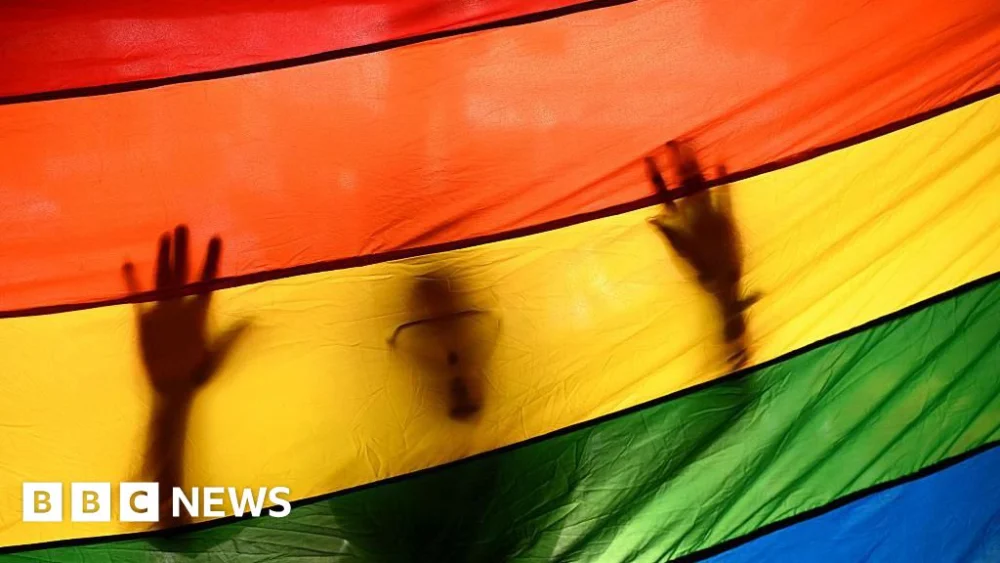
Dakar, Senegal – In a move that has drawn sharp criticism from international human rights organizations and public health experts, Senegal’s parliament has overwhelmingly approved a new law dramatically increasing the maximum prison term for sexual acts between same-sex couples to 10 years and criminalizing the "promotion" of homosexuality. The legislation, passed with a decisive 135 votes in favor, zero against, and three abstentions, now awaits presidential assent to become law, solidifying a contentious stance against LGBTQ+ rights in the West African nation.
The parliamentary vote marks a significant escalation in Senegal’s legal framework concerning same-sex relations, which were already prohibited. Under the previous statutes, individuals found guilty of "unnatural acts" could face prison sentences ranging from one to five years. The newly approved bill doubles this maximum term to a decade, alongside introducing substantial fines of up to 10,000,000 CFA francs ($17,600; £13,000). More critically, it introduces a new offense: the "promotion" of homosexuality, a vague provision that rights groups fear could be broadly interpreted to stifle advocacy, support networks, and even the mere visible existence of LGBTQ+ individuals and organizations.
Background and Political Context
This legislative push did not emerge in a vacuum but is deeply rooted in Senegal’s conservative social fabric and recent political dynamics. The bill was a prominent campaign promise of both President Bassirou Diomaye Faye and Prime Minister Ousmane Sonko, who swept to power in a populist wave earlier this year. Their ascent followed a period of political unrest and a campaign that often emphasized national sovereignty, traditional values, and a rejection of perceived Western influences. By championing stricter anti-homosexuality laws, Faye and Sonko tapped into widespread sentiment within the predominantly Muslim country, where cultural and religious norms largely view same-sex relations as anathema.
The government’s resolve to pass this legislation was further galvanized by a recent wave of arrests. Last month, Senegalese police detained at least 12 men, including two public figures and a prominent journalist, on suspicion of engaging in same-sex relationships. These arrests, which generated significant local and international attention, underscored the existing legal framework’s enforcement and provided momentum for those advocating for even harsher penalties. The swift legislative action following these detentions suggests a coordinated effort to align state policy more closely with public opinion on this sensitive issue.
Government spokesman Amadou Moustapha Ndieck Sarré robustly dismissed international criticism, asserting that the law reflects the authentic views of the Senegalese populace. "The majority of Senegalese do not accept homosexuality. Our culture rejects it and we are firmly opposed to it," Sarré stated, echoing the sentiments of many citizens and conservative groups. This position frames the legislation as an affirmation of national identity and cultural preservation against external pressures.
Conservative Advocacy and Societal Norms
For years, conservative activists in Senegal have lobbied for more stringent laws against homosexuality. Groups such as And Sàmm Jikko Yi, which translates to "Together for the Preservation of Values," have been at the forefront of this movement. Their campaigns frequently invoke arguments about defending Senegalese moral values, cultural heritage, and religious doctrines. Leaders of these organizations argue that such laws are not merely punitive but are essential to protect the foundational cultural and religious norms of the nation, which they believe are under threat from foreign ideologies.
The widespread support for the bill within parliament, with virtually no opposition, reflects the depth of this conservative sentiment. In a country where an estimated 95% of the population identifies as Muslim, religious leaders and traditional authorities hold significant sway, often promoting interpretations of Islamic law that condemn same-sex acts. This societal consensus, combined with political will, created fertile ground for the passage of the new legislation.
Human Rights Condemnation and International Law
The approval of the enhanced anti-LGBTQ+ law has been met with immediate and forceful condemnation from human rights organizations globally. These groups argue that the legislation is a grave violation of fundamental human rights and international legal obligations that Senegal has ratified.
Larissa Kojoué, a researcher with Human Rights Watch, voiced serious concerns, stating, "Criminalizing same-sex conduct and arresting people for their sexual orientation violates multiple internationally protected rights, including equality and non-discrimination." Kojoué further warned that such measures risk exposing already stigmatized individuals to increased "violence and fear," pushing them further to the margins of society and making them vulnerable to harassment, extortion, and abuse.
Alioune Tine, founder of the prominent West African think-tank Afrikajom Center, told the BBC that while social concerns must be addressed, the law could exacerbate social tensions rather than resolve them. Tine emphasized the critical need for legislation to respect human rights and protect public health policies, highlighting a potential conflict between the new law and broader societal well-being.
Rights advocates consistently point out that international human rights instruments, such as the International Covenant on Civil and Political Rights (ICCPR), which Senegal has ratified, guarantee rights to privacy, non-discrimination, and freedom from arbitrary detention. Laws that criminalize consensual same-sex relations are seen as direct contraventions of these universal principles. Critics also highlight that criminalizing a segment of the population based on their sexual orientation fosters an environment of discrimination that can permeate all aspects of life, from employment and housing to healthcare and personal safety.
Impact on the LGBTQ+ Community: Fear and Exodus
For Senegal’s LGBTQ+ community, the new law represents a profound blow, intensifying an already precarious existence. Dr. Charles Dotou, head of the Senegal LGBTQ Association and a medical doctor, shared a grim outlook with BBC Newsday. He noted that same-sex relationships, while illegal, have historically existed, albeit often hidden within the fabric of society. "Most of the same-sex relationships were hidden anyway. There are even people who are married in the society and who are still entertaining a same-sex relationship because of the norm and the cultural norm in that society," Dr. Dotou explained.
The enhanced penalties, however, are expected to deepen this climate of secrecy and fear. "All that will happen is people will be hiding more, it will create more fear and people will be scared to live normally in that community," Dr. Dotou warned. He predicted a potential "exodus of people, particularly people who were already exposed," which could lead to significant social dislocation and instability. The criminalization of "promotion" of homosexuality is particularly concerning, as it could target individuals who offer support, information, or safe spaces, effectively dismantling any nascent LGBTQ+ community infrastructure. This provision could silence activists, prevent educational initiatives, and further isolate an already vulnerable population.
The psychological toll on LGBTQ+ individuals is also a major concern. Living under the constant threat of arrest, imprisonment, and social ostracization can lead to severe mental health issues, including depression, anxiety, and even suicide. The law effectively tells a segment of the population that their very existence is illegal and undesirable, fostering deep-seated shame and fear.
The Perilous Intersection with Public Health: HIV/AIDS Response
Perhaps one of the most critical and alarming implications of the new law is its potential to severely undermine Senegal’s commendable progress in controlling the HIV/AIDS epidemic. Senegal has long been lauded for its effective national response to HIV, boasting one of the lowest prevalence rates in West Africa. According to the health ministry, between 42,000 and 44,000 people are living with the virus in the country, with a national prevalence of about 0.3% among adults.
However, public health experts and organizations like UNAIDS have repeatedly stressed that punitive laws against marginalized groups, including LGBTQ+ individuals, directly impede HIV prevention and treatment efforts. Criminalization drives key populations underground, making it exceedingly difficult for health workers to reach them with essential services such as testing, counseling, antiretroviral therapy (ART), and prevention tools like pre-exposure prophylaxis (PrEP).
Some supporters of the tougher legislation have cited concerns about HIV transmission, often based on misconceptions and stereotypes linking homosexuality to the spread of the virus. Yet, scientifically, it is well-established that HIV can affect people of any sexual orientation, and the most effective way to control its spread is through comprehensive public health interventions, not through criminalization.
Dr. Safiétou Thiam, executive secretary of the National Council for the Fight Against Aids (CNLS) – the body that has coordinated Senegal’s HIV response for decades, based at Fann University Hospital in Dakar – expressed profound worry. "We have managed to control the HIV epidemic and we are moving towards eliminating Aids as a public health problem in Senegal," Dr. Thiam told BBC News Afrique. "But what is happening now risks undermining the results of 30 to 35 years of efforts in the fight against the disease."
The fear of legal repercussions can deter individuals from seeking testing or adhering to treatment, leading to higher rates of undiagnosed infections and treatment interruptions, which in turn can fuel onward transmission. Furthermore, the stigmatization fostered by such laws can create barriers between healthcare providers and patients, eroding trust and hindering effective medical care. The World Health Organization (WHO) and UNAIDS consistently advocate for decriminalization of same-sex relations as a vital component of a successful HIV response, directly contradicting the path Senegal has now chosen.
A Broader Regional Trend
Senegal’s decision is not an isolated incident but rather part of a troubling regional trend across Africa where several countries have recently enacted or are contemplating similarly harsh anti-LGBTQ+ legislation. This phenomenon reflects a complex interplay of religious conservatism, cultural nationalism, and, in some cases, political opportunism, often framed as resistance to Western influence.
- Uganda: In 2023, Uganda passed one of the world’s most draconian anti-homosexuality laws, which includes provisions for the death penalty for "aggravated homosexuality" and lengthy prison sentences for consensual same-sex acts. The law sparked widespread international condemnation and led to aid cuts and sanctions from some Western nations.
- Burkina Faso: In September of last year, Burkina Faso’s transitional parliament approved a bill banning homosexual acts, aligning with a growing regional consensus on such prohibitions.
- Mali: Following suit, Mali also implemented similar bans in 2024, further solidifying the legal landscape against LGBTQ+ individuals in the Sahel region.
- Ghana: Ghana is currently grappling with a proposed "Promotion of Proper Human Sexual Rights and Ghanaian Family Values" bill. While not yet law, activists warn that if passed, it would introduce severe penalties for same-sex relations and related advocacy, threatening basic human rights, safety, and freedom in the country.
This regional pattern suggests a coordinated or at least mutually reinforcing movement among some African nations to enshrine anti-LGBTQ+ sentiment into law, often under the banner of protecting traditional values and sovereignty. This trend puts human rights organizations and international bodies in a challenging position, as they navigate diplomatic relations while upholding universal human rights principles.
Implications and Future Outlook
The new Senegalese law carries significant implications, both domestically and internationally. Domestically, it is expected to deepen the marginalization of LGBTQ+ individuals, potentially leading to increased discrimination, violence, and a curtailment of civil liberties. The "promotion" clause, in particular, poses a severe threat to freedom of expression and assembly, potentially chilling any form of advocacy or even open discussion about sexual diversity.
Internationally, the law could strain Senegal’s relationships with Western donor countries and international organizations that champion human rights and LGBTQ+ equality. While the Senegalese government has dismissed international criticism, potential diplomatic pressure, reviews of development aid, or targeted sanctions cannot be entirely ruled out, as seen in the case of Uganda. However, the strong domestic support for the law suggests that the government may be willing to absorb such pressures in deference to national sentiment.
The coming months will reveal how rigorously the new law is enforced and what its practical impact will be on the lives of Senegalese citizens. The ongoing struggle between universal human rights principles and culturally specific interpretations of morality will continue to define this contentious issue, with profound consequences for Senegal’s social fabric, public health initiatives, and standing on the global stage.