


The acquisition of a motor vehicle for a growing family is typically a process defined by pragmatism, safety ratings, and cargo capacity. However, for London resident Mark Edwards, a routine search for a practical family transport resulted in the purchase of a 1969 Marcos GT 3-Litre, a low-slung, two-seat British sports car that stands as a testament to the idiosyncratic era of boutique English automotive engineering. The decision, which Edwards admits was driven by an immediate emotional connection to the vehicle’s design, highlights the enduring appeal of the Marcos brand and the complexities involved in restoring a rare classic to modern performance standards.
The Impulsive Acquisition and Domestic Compromise
The narrative began when Edwards’ wife tasked him with finding a vehicle suitable for their family and the household dog. While browsing digital listings, Edwards encountered a Facebook advertisement for a Marcos GT 3-Litre. Despite the clear divergence from his original mission, curiosity led him to view the car. Within a week, a deposit had been placed, and Edwards traveled to the West Country to finalize the purchase and drive the vehicle back to London.
The arrival of the Marcos GT—a car so low that the driver’s eye level is often below the door handles of modern sedans—met with immediate skepticism from his spouse. The primary point of contention was the vehicle’s strict two-seat configuration, which rendered it useless for family duties. To rectify the situation and fulfill his original obligation, Edwards was subsequently required to purchase a secondary vehicle, an Audi Q5, to serve as the functional family hauler. This sequence of events underscores the "brave or foolish" nature of classic car enthusiasts who prioritize aesthetic and mechanical soul over utility.
The Engineering Pedigree of Marcos Engineering Ltd.
To understand the significance of Edwards’ purchase, one must examine the history of Marcos Engineering Ltd. Founded in 1959 by Jem Marsh and Frank Costin, the company’s name was a portmanteau of its founders’ surnames. Costin brought expertise from the aviation industry, specifically from his work on the De Havilland Mosquito fighter-bomber, which utilized a revolutionary wooden monocoque construction.
The Marcos GT, launched in 1964, initially mirrored this aeronautical philosophy. The early models featured a complex chassis constructed from 72 separate pieces of marine plywood, glued and screwed together to form a structure that was remarkably stiff and lightweight. While the car Edwards purchased was built in 1969—by which time the company had transitioned to a more conventional steel square-tube chassis for ease of production—the GT’s design language remained unchanged.
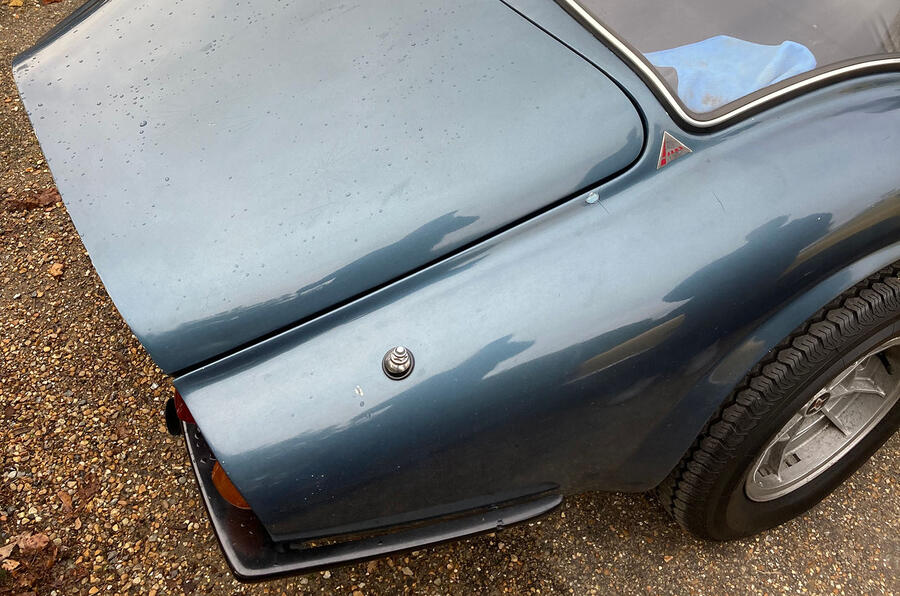
The GT was characterized by its fiberglass bodywork, long "thrusting" bonnet, and a roofline that stood only 43 inches high. One of the most distinctive features of the Marcos GT was its fixed seating position; rather than moving the seat to accommodate the driver, the car featured an adjustable pedal box and a movable steering column, a solution necessitated by the car’s extremely low profile and structural constraints.

Historical Context and Rarity of the 3-Litre Variant
The Marcos GT evolved through several engine configurations, beginning with the Volvo P1800 unit and moving through Ford’s 1500 and 1600 Crossflow engines. The 3-Litre model, introduced in 1968, represented the pinnacle of the GT’s development. It utilized the Ford Essex V6 engine, a robust powerplant also found in the Ford Capri and Reliant Scimitar GTE.
Edwards’ specific vehicle carries a unique historical footnote. Manufactured in 1969, it was dispatched to South Africa as a demonstrator model intended to stimulate international orders. This export drive was largely unsuccessful, and the car was eventually returned to the United Kingdom, where it was officially registered in 1970.
Production figures for the Marcos GT 3-Litre are notably low, contributing to its status among collectors. Only 196 units of the 3-Litre GT were ever produced, with 130 of those designated for the British market. This rarity ensures that surviving examples, such as the one owned by Edwards, are significant artifacts of the UK’s post-war specialist car industry.
The Restoration Process: Mechanical and Financial Realities
When Edwards acquired the car in 2019, the odometer recorded 69,000 miles. While the vehicle was operational, the drive home revealed that the decades-old mechanical components were in need of significant modernization and repair. What followed was a comprehensive restoration project that saw Edwards invest £14,000 into a vehicle he originally purchased for £12,000.
Engine and Performance Upgrades
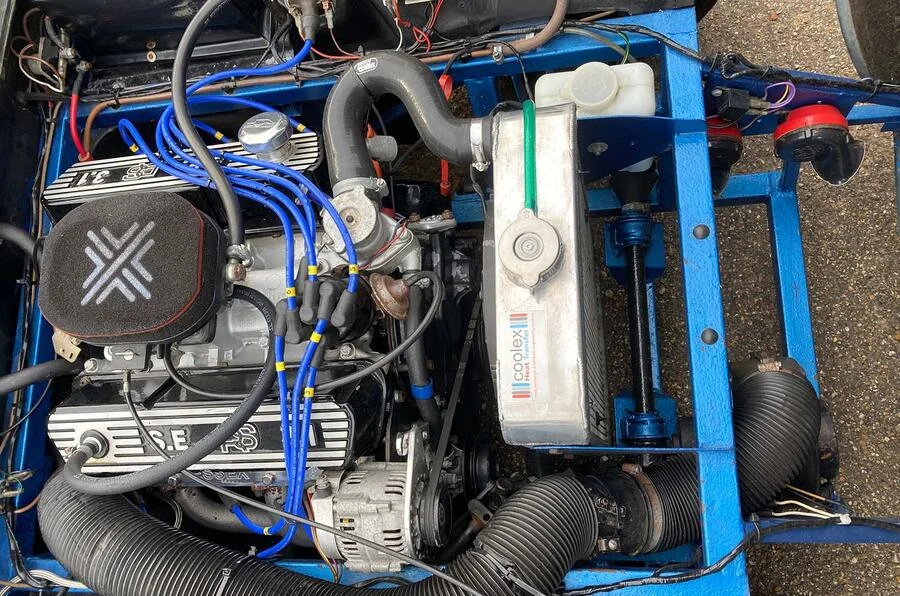
The centerpiece of the restoration was the Ford Essex V6 engine. Edwards commissioned a specialist to perform a "stage-four" makeover. This process included:
- Boring out the cylinders: Increasing the displacement from 3.0 to 3.1 litres.
- Cylinder head modification: High-flow porting and polishing to improve combustion efficiency.
- Camshaft replacement: Installing a high-performance profile to increase power delivery across the rev range.
The result of this £9,000 investment was an increase in output to 180bhp, accompanied by a substantial increase in torque. In a car weighing approximately 900kg, this power-to-weight ratio provides performance that remains competitive with modern sports cars.
Transmission and Electrical Refurbishment
The second phase of the restoration focused on the drivetrain and reliability. The car’s four-speed Ford Type 5 gearbox—a unit known for its durability in the Ford Capri—required a total rebuild, including the replacement of the fourth-gear selector fork. Additionally, the electrical system, a common failure point in hand-built British cars of the 1960s, was completely refurbished. This stage of the project cost an additional £5,000.
Market Analysis and the Value of Boutique British Classics
The financial commitment made by Edwards—totaling £26,000 for the purchase and restoration—reflects a broader trend in the classic car market. While mainstream classics like the Jaguar E-Type or Porsche 911 have seen prices soar beyond the reach of many enthusiasts, boutique brands like Marcos offer a more accessible entry point into high-performance vintage motoring.
However, the "upside-down" nature of Edwards’ investment (spending more on restoration than the initial purchase price) is a common phenomenon. From a purely financial standpoint, such projects are often difficult to justify. Yet, for collectors, the value lies in the preservation of a rare mechanical specimen and the bespoke driving experience it offers. The 180bhp 3.1-litre engine, paired with the car’s aerodynamic fiberglass body, ensures that the Marcos GT remains a formidable "Grand Tourer" in the truest sense.
Broader Implications for the Specialist Car Industry
The story of Mark Edwards and his Marcos GT is emblematic of the challenges faced by low-volume manufacturers. Marcos Engineering struggled with financial stability throughout its history, undergoing several closures and revivals before finally ceasing production in the mid-2000s. The transition from wooden to steel chassis in 1969, seen in Edwards’ car, was a necessary step toward modernization, but it also marked the end of the brand’s most radical engineering experiment.
In the current automotive landscape, dominated by SUVs and increasingly standardized electric platforms, the Marcos GT stands as a reminder of a period when small teams of engineers could produce world-class sports cars in modest workshops. The continued existence of these vehicles depends entirely on private owners willing to invest significant capital into their maintenance.
Conclusion: A Legacy Preserved
Mark Edwards’ decision to purchase a 54-year-old sports car instead of a family SUV may have been an impulsive act of "bravery or foolishness," but the resulting restoration has saved a piece of British motoring history. By upgrading the Essex V6 and reinforcing the mechanical vitals of the GT, Edwards has ensured that this rare 3-Litre variant will remain on the road for the foreseeable future.
While the Audi Q5 now handles the family’s logistical needs, the Marcos GT serves a different purpose: it is a functional piece of industrial art that provides a visceral connection to the 1960s era of sports car design. For the 130 owners of UK-market GT 3-Litres, and the wider community of Marcos enthusiasts, Edwards’ project is a validation of the brand’s enduring charisma and the technical merit of Jem Marsh and Frank Costin’s vision.