


The Palestinian armed group Hamas, which governs the Gaza Strip, has made an unprecedented and significant appeal to its primary ally, Iran, urging an immediate cessation of its attacks on neighbouring Gulf states. This rare public plea, issued in a statement on Saturday, March 16, underscores a growing concern within the Tehran-backed organization regarding the escalating regional conflict, even as it simultaneously affirmed Iran’s sovereign right to self-defense against ongoing strikes by the United States and Israel. The development signals a complex interplay of allegiances and strategic calculations amidst a volatile Middle Eastern landscape, where proxy conflicts and direct confrontations threaten broader stability.
The Unprecedented Appeal from Hamas
Hamas’s statement, delivered from its headquarters, called upon its "brothers in Iran to avoid targeting neighbouring countries," emphasizing the importance of regional cooperation "to preserve the bonds of brotherhood" among all nations in the area. This carefully worded message highlights a delicate balancing act for the group. While acknowledging its deep strategic and financial ties to Tehran – Iran being Hamas’s most crucial benefactor, providing significant funds, weaponry, and political backing – the appeal also suggests a potential divergence in immediate tactical priorities or a growing apprehension about the spillover effects of the ongoing conflict.
The group stated it was "following with deep concern the ongoing war in the region" and urged "all states and international organisations to work towards halting [the war] immediately." This broad call for de-escalation, coming from a group deeply entrenched in its own conflict with Israel, illustrates the widespread anxiety across the Middle East regarding the current trajectory of hostilities. The specific mention of "neighbouring countries" by Hamas is particularly noteworthy, indicating a desire to shield regional Arab nations, many of whom have historically provided varying degrees of support or at least a tacit understanding to the Palestinian cause, from becoming direct casualties of the Iran-US/Israel confrontation. This move could be interpreted as an attempt by Hamas to maintain its standing and legitimacy within the broader Arab world, which has often been critical of interventions that destabilize the region or harm fellow Arab states.
Iran’s Retaliatory Strikes and Regional Impact
For the past two weeks, Iran has intensified its retaliatory drone and missile strikes, asserting that these operations specifically target "American installations" located on Gulf soil. This claim is often made in response to what Tehran perceives as provocations or attacks by the United States and Israel on Iranian assets or interests, both within its borders and in the wider region. However, evidence on the ground and reports from affected nations indicate that numerous attacks have regrettably impacted civilian infrastructure, leading to tragic loss of life and significant material damage across several Gulf Cooperation Council (GCC) states.
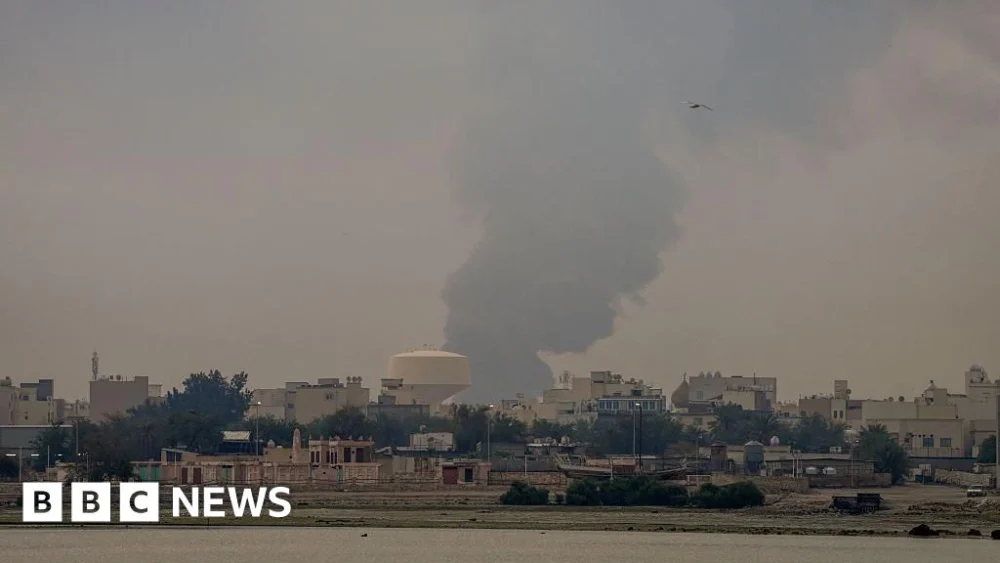
The most recent verifiable incident, captured in an image dated March 12, depicted plumes of smoke rising over fuel tanks in Muharraq, Bahrain, following an Iranian strike. Such incidents underscore the inherent risks of precision targeting in complex environments and the severe consequences when miscalculations or technical failures occur. The civilian toll has been significant: at least 18 people have been confirmed killed across the region so far. The casualties predominantly include security personnel and foreign workers, who often form a substantial part of the workforce in these nations and are frequently on the front lines of infrastructure protection. The nature of these casualties highlights the broad impact, affecting not just military assets but also critical economic infrastructure and the civilian populations that support them.
Specific death tolls reported by Gulf nations include:
- United Arab Emirates (UAE): Six fatalities. The UAE, a major economic hub and strategic ally of the U.S., has seen critical infrastructure and population centers increasingly vulnerable to these long-range attacks. This directly threatens its aspirations as a global business and tourism destination.
- Kuwait: Six fatalities. Kuwait, another significant oil producer with substantial U.S. military presence, has also borne the brunt of these strikes, raising concerns about its national security and economic stability. Its strategic location at the head of the Persian Gulf makes it a critical waypoint for regional trade and energy flows.
- Oman: Two fatalities. While often maintaining a more neutral stance in regional disputes and acting as a mediator, Oman’s geographic proximity makes it susceptible to the collateral damage of escalating tensions. These deaths underscore that no country in the vicinity is truly immune.
- Saudi Arabia: Two fatalities. The Kingdom, a long-standing rival of Iran and a linchpin of regional security, has previously faced numerous drone and missile attacks, albeit often attributed to Iran-backed Houthi rebels in Yemen. These new direct strikes, if confirmed as Iranian, exacerbate existing tensions and complicate its ongoing efforts towards economic diversification under Vision 2030.
- Bahrain: Two fatalities. As host to the U.S. Navy’s Fifth Fleet and a critical node in regional maritime security, Bahrain is a frequent flashpoint. The attack on fuel tanks in Muharraq directly illustrates the economic and strategic targeting, aiming to disrupt energy supply chains and potentially signal a capability to inflict significant economic damage.
These attacks have not only claimed lives but have also created an atmosphere of fear and uncertainty, disrupting trade routes, impacting energy markets, and potentially deterring foreign investment in a region heavily reliant on global economic integration. The targeting of civilian infrastructure, even if unintended, risks alienating key regional players and further complicating any future attempts at de-escalation or diplomatic resolution.
Geopolitical Context and Gulf State Vulnerabilities
The Gulf states—Bahrain, Kuwait, Oman, Qatar, Saudi Arabia, and the United Arab Emirates—occupy a pivotal geostrategic position, sitting atop vast oil and gas reserves and bordering crucial international shipping lanes like the Strait of Hormuz. Their economic prosperity and security are intrinsically linked to regional stability, making them acutely sensitive to any escalation involving Iran, the United States, and Israel. The Strait of Hormuz, in particular, is a choke point through which a significant portion of the world’s oil supply passes, rendering any disruption a global economic concern.
Many of these nations host significant U.S. military bases and personnel, including CENTCOM forward operating bases and naval facilities. This alliance provides a security umbrella against external threats but also renders them potential targets for Iranian retaliation, as Iran views these U.S. installations as direct threats to its own security and regional influence. The dilemma for Gulf states is profound: balancing their security alliances with Western powers against the imperative of maintaining some semblance of peaceful coexistence with their powerful neighbour, Iran, with whom they share deep historical and cultural ties.
The recent strikes represent a significant escalation from previous proxy confrontations, with direct Iranian actions impacting their territories. This situation places immense pressure on Gulf leaderships to respond, protect their populations, and navigate the treacherous waters of regional geopolitics without being drawn into a full-scale war. The economic implications are also severe, as instability can drive up insurance premiums for shipping, disrupt oil production, deter tourism, and significantly reduce foreign direct investment, all vital pillars of their economies as they seek to diversify away from fossil fuels. The psychological impact on their diverse expatriate populations, who form a large part of their workforce, also cannot be underestimated, potentially leading to capital flight and a decline in investor confidence.
The Complex Iran-Hamas Alliance
The relationship between Iran and Hamas is one of the most enduring and strategically significant alliances in the Middle East’s "Axis of Resistance," a loose coalition of Iran-backed groups opposing U.S. and Israeli influence. For decades, Tehran has been Hamas’s most important international patron, extending substantial financial aid, sophisticated weaponry, and crucial political endorsement. This support has been instrumental in enabling Hamas to develop its military capabilities, including its rocket arsenal and tunnel networks, and maintain its governance in the Gaza Strip, particularly in the face of an Israeli and Egyptian blockade.
However, Hamas’s recent appeal to Iran to halt attacks on Gulf states represents a nuanced and potentially pivotal moment in this alliance. While Hamas affirmed Tehran’s "right to defend itself" against American and Israeli aggression, the simultaneous call for restraint against Arab neighbours suggests a potential divergence in strategic priorities or a pragmatic assessment of regional risks. This is not the first time Hamas has shown a degree of independence from its Iranian patron, notably when it disagreed with Iran over the Syrian civil war, temporarily straining their ties.
Several factors could underpin Hamas’s unusual intervention:
- Maintaining Arab Solidarity: Hamas relies on a broader base of Arab and Muslim support, both ideological and financial. Attacks on Gulf states, particularly those with strong popular connections to the Palestinian cause, could erode this goodwill and isolate Hamas within the wider Arab world. The group may be seeking to preserve its standing and appeal among these nations, many of whom have provided humanitarian aid to Gaza.
- Preventing Regional Conflagration: A full-blown regional war, with Gulf states as direct battlegrounds, would inevitably draw in more international actors and could destabilize the entire region, potentially overshadowing the Palestinian issue and diverting resources and attention away from Gaza. Hamas, having just emerged from a devastating conflict, may be keen to avoid such an outcome, which could further complicate any future political settlements for Gaza.
- Protecting its Own Interests: While Iran is a vital ally, Hamas also needs to operate within the broader regional political landscape. Antagonizing Arab states, some of whom have varying degrees of diplomatic or economic ties with Israel and the West, could complicate Hamas’s future maneuvering and potential peace efforts related to Gaza, including negotiations for prisoner exchanges and reconstruction.
- A Signal to Iran: The public nature of the appeal, rather than a private diplomatic channel, might be a subtle signal from Hamas to Iran that the current escalation is becoming counterproductive or risky, even for its allies. It could be an attempt by Hamas to exert a degree of influence over its patron’s actions, demonstrating its agency within the alliance.
Despite this appeal, the fundamental strategic alignment between Iran and Hamas, rooted in their shared opposition to Israel and the U.S., is unlikely to be dismantled. However, this incident reveals the inherent tensions and differing tactical considerations that can emerge even within strong alliances, especially when regional dynamics become acutely perilous and directly threaten the interests of key partners.
The Shadow of the Gaza Conflict
The broader regional conflagration and Hamas’s appeal cannot be fully understood without acknowledging the devastating two-year war fought between Hamas and Israel in the Gaza Strip. This protracted conflict, which began with intense hostilities and widespread destruction, resulted in immense human suffering and infrastructural devastation across the densely populated Palestinian enclave, one of the most crowded places on Earth. The conflict saw thousands of casualties, widespread displacement, and the destruction of homes, hospitals, and schools.
A U.S.-imposed ceasefire came into effect in October, aimed at halting the hostilities and paving the way for a more stable future. This ceasefire, however, has proven to be incredibly fragile. Since its implementation, both Israel and Hamas have consistently accused each other of near-daily violations, highlighting the deep-seated distrust and the inherent difficulties in maintaining peace without a comprehensive political resolution. These violations often involve cross-border incursions, retaliatory strikes, or skirmishes along the border fence.
The human cost of this fragile ceasefire continues to mount. The Hamas-run health ministry in Gaza reported that an additional 649 people have been killed in the Strip since the ceasefire officially took effect in October. These deaths, often attributed to skirmishes, targeted strikes, or residual effects of the war, underscore the ongoing humanitarian crisis and the precarious security situation for Gaza’s two million residents. The lack of significant progress in negotiations over the later phases of the ceasefire deal, which were intended to address issues like reconstruction, prisoner exchanges, and lifting the blockade, further fuels the cycle of violence and instability, creating a fertile ground for radicalization and renewed conflict.
The regional attacks by Iran and the subsequent appeal by Hamas are inextricably linked to this unresolved conflict. The lingering grievances and the perceived injustices stemming from the Gaza war serve as a potent catalyst for broader instability, providing a pretext or justification for various actors to engage in retaliatory actions or to support groups engaged in conflict, thereby drawing the entire region into a dangerous web of interconnected hostilities.
International Reactions and Calls for De-escalation
While Iran has not yet issued a public comment on Hamas’s statement, the call from a key proxy for de-escalation within the Gulf region is likely to resonate in international diplomatic circles. Hamas’s explicit plea to "all states and international organisations" to work towards an immediate halt to the regional war indicates an awareness of the global implications and a desire for external intervention to prevent a wider conflict.
International bodies, including the United Nations, the Arab League, and major global powers like the United States and the European Union, have consistently expressed concerns over the escalating tensions in the Middle East. They routinely issue calls for restraint, dialogue, and diplomatic solutions to prevent a full-scale regional war, which would have catastrophic consequences for global energy supplies, trade, and humanitarian efforts. The UN Secretary-General, for instance, frequently issues statements urging all parties to exercise maximum restraint and abide by international law.
The specific targeting of civilian infrastructure in Gulf states by Iran, even if claimed to be accidental or secondary to military targets, will undoubtedly draw condemnation and increase pressure on Tehran from the international community. Simultaneously, the ongoing Israeli-U.S. strikes against Iran, cited by Hamas as justification for Iran’s right to self-defense, complicate the narrative and highlight the multi-layered nature of the conflict, making it difficult for international mediators to assign blame unilaterally.
The United States, with its significant military presence and strategic alliances in the Gulf, would be particularly concerned by any direct threats to its partners or personnel. Its diplomatic efforts would likely focus on both deterring further Iranian aggression through a combination of sanctions and military posturing, and working with regional allies to enhance defensive capabilities, while also pushing for de-escalation through various overt and back channels. The European Union, heavily reliant on Middle Eastern energy, would also be keenly interested in restoring stability to prevent economic disruptions.
Implications for Regional Stability and Future Outlook
Hamas’s public appeal to Iran marks a significant, albeit subtle, shift in the regional power dynamics. It suggests a pragmatic recognition by Hamas that an uncontrolled escalation between Iran and Gulf states could ultimately undermine the Palestinian cause and the group’s own strategic objectives. By urging restraint, Hamas appears to be attempting to carve out a space for its own interests within a broader, more dangerous regional conflict, potentially repositioning itself as a more responsible actor in the eyes of some Arab states.
For Iran, the appeal from a crucial proxy like Hamas presents a complex challenge. While Tehran remains committed to its regional strategy and its "Axis of Resistance," ignoring such a public plea could risk alienating a valuable ally and signaling a disregard for broader regional stability, potentially diminishing its soft power among sympathetic groups. Conversely, heeding the call might be interpreted by hardliners as a sign of weakness or external influence, potentially leading to internal political friction.
The ongoing cycle of attacks and counter-attacks between Iran, the U.S., and Israel, with Gulf states increasingly caught in the crossfire, paints a grim picture for regional stability. The economic ramifications, coupled with the humanitarian costs, necessitate urgent and concerted international diplomatic efforts. The fragility of the Gaza ceasefire, coupled with the escalating drone and missile strikes, creates a volatile environment where miscalculation could easily spiral into a much larger, devastating conflict that could engulf the entire Middle East.
The future outlook remains uncertain. While Hamas’s appeal offers a glimmer of hope for a potential pathway towards de-escalation, it is by no means a guarantee. The deeply entrenched animosities, the myriad of actors with conflicting interests, and the continued absence of comprehensive political solutions for underlying issues like the Israeli-Palestinian conflict mean that the Middle East is likely to remain on a knife-edge, constantly teetering on the brink of wider war. The world will be watching closely to see if Hamas’s unprecedented call for brotherhood and restraint can exert any tangible influence on its powerful patron’s actions and steer the region away from further catastrophe.