

Filmmaker Ian Purnell’s debut feature documentary, Arctic Link, embarks on an ambitious and visually arresting exploration of a monumental undertaking: bringing high-speed internet connectivity to a remote corner of Alaska. The film, which world premieres in the main competition program of the Copenhagen International Documentary Film Festival (CPH:DOX) on Monday, March 16th, delves into the profound implications of this digital leap for island communities while simultaneously capturing the sheer scale and human element of the technological endeavor. The 23rd edition of CPH:DOX runs through March 22nd.
The Epic Scale of Digital Connection
The synopsis for Arctic Link immediately conveys the immense scope of its subject matter: "In the Arctic Ocean, a colossal ship drifts along, while thousands of kilometers of fiber optic cable slide from the deck into the dark depths of the sea." This imagery underscores the project’s monumental nature, a sentiment echoed by the CPH:DOX website’s description, which highlights that "Everything is enormous – from the massive cables to the images and phenomenal sound design – but the human scale never disappears from view."
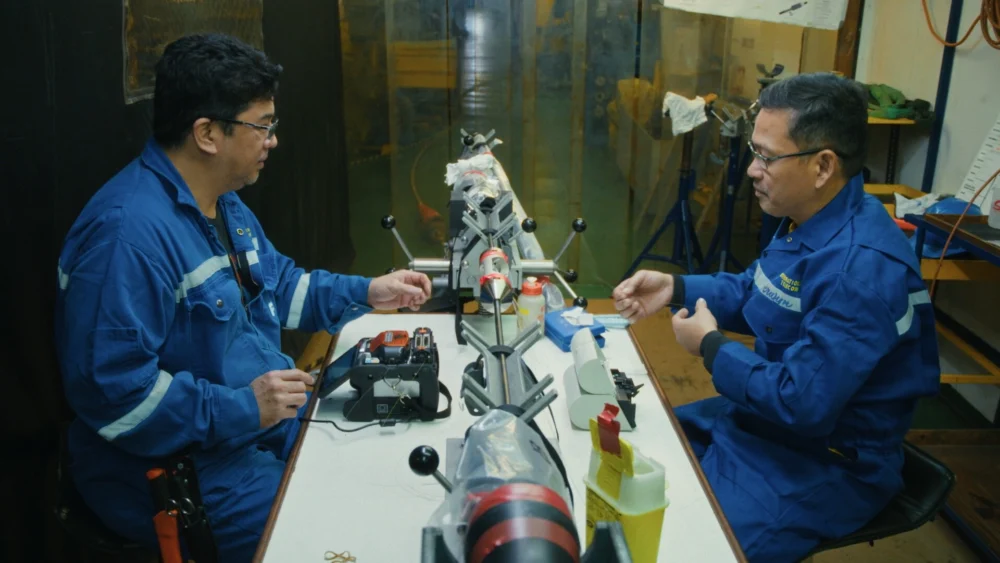
Purnell’s dedication to this project is underscored by the fact that it took approximately ten years to bring to fruition. This extended timeline speaks not only to the complexities of the subject matter but also to the filmmaker’s persistent pursuit of an intimate understanding of a process largely hidden from public view. The film juxtaposes the impending digital transformation with the isolation of the ship’s Filipino crew members, whose cell phones represent their sole, often unreliable, link to loved ones back home. This contrast serves as a poignant reminder of the human cost and experience embedded within such vast infrastructure projects.
A Decade of Pursuit: The Filmmaker’s Vision
Director Ian Purnell’s personal journey into the world of submarine cables began with a simple yet profound realization. "When I first discovered a map of the world’s submarine cables, the internet suddenly took on a physical shape," Purnell shares in his director’s statement. This moment of discovery ignited a compelling urge to "trace these hidden routes – to see how the network disappears beneath the sea and to meet the people who build these connections." His intention was not merely to document the technical aspects but to "understand this infrastructure that usually remains unseen, and I knew I could only approach it emotionally rather than purely technologically." This philosophical approach guided the entire filmmaking process, aiming to imbue the invisible with tangible presence and emotional resonance.
The production of Arctic Link involved significant logistical challenges and required a remarkable degree of patience and flexibility. Purnell recalls, "I had the original idea more than 10 years ago, and quite early on, I researched where I could get on one of these ships. It turned out to be a very difficult exercise to build relationships with these companies and for them to have a reason to take me on." The filmmaker recounted several instances where planned embarkations were thwarted by unforeseen circumstances, including severe storms, canceled cable projects, and the global COVID-19 pandemic. "So, gaining access required a huge amount of patience," he concludes, emphasizing that he and cinematographer Marie Zahir had to remain "extremely flexible."

Establishing Trust in Remote Communities
Beyond the challenges of accessing the colossal ships laying the cables, Purnell faced the delicate task of building rapport with the residents of the remote Alaskan island communities awaiting this digital connection. "It was very important just to be present there and make connections in the village," Purnell tells THR. "It went quite quickly once we were there, but the preparation beforehand was very difficult." His commitment to genuine engagement, rather than superficial observation, was paramount.
A striking aspect of Purnell’s experience was the nuanced understanding the Alaskan residents possessed regarding the impending arrival of the internet. "It was a very wise perspective," he observes. "They weren’t innocent. They knew what it was and would bring [with it], but they also could see it from an outside perspective a bit, which is hard when you are ridiculously immersed in it, like us." This awareness allowed for organic conversations that did not require Purnell to force his conceptual framework onto the subjects. "Once we got off the ship and came to the island, all these conversations just started to flow," the director recalls. "Everyone had this awareness that this ship was bringing the internet. It is a different kind of awareness that a lot of us don’t have, because you don’t see this ship that brings you the internet in front of you. So, these conversations just happened organically. I didn’t want to force my concept on them: ‘Now, talk about the internet!’ So, I was glad that this was just a natural topic of discussion, because they saw it right in front of them, coming towards them." This organic approach allowed the film to capture authentic reactions and insights from the community.
Aestheticizing the Invisible: Visualizing the Internet
The challenge of visually representing something as abstract as the internet was a central focus for Purnell and his creative team. "For me, it was really important to find a new visual connection to the internet," Purnell explains. This meant moving beyond conventional imagery of servers and keyboards. "I was really interested in creating this new imagery that even for me was surprising." Instead, the film embraces the inherent materiality of the infrastructure, juxtaposing the modern technological feat with the aged vessel. "In contrast, the ship was built in the ‘80s, before the World Wide Web existed, so we got this smell of oil and this steampunk aesthetic instead of high-tech imagery."
Purnell and cinematographer Marie Zahir engaged in creative dialogues that drew parallels to zoological observations. "We really tried to make inanimate infrastructure feel alive by portraying the cable like a snake, for example," Purnell elaborates. "We were often talking about what kind of animal something could be, such as a whale. How can we make this physical stuff feel more alive? These discussions helped us make technical things become or function as protagonists, creating a more emotional connection, or sensual connection, rather than just a rational, technical connection." This innovative approach aimed to transform the technical into the visceral, fostering a deeper, more relatable connection with the audience.
The inherent invisibility of the internet’s physical infrastructure presented a unique creative hurdle. "The challenge was to make a film about something that is invisible and create an imagery for it," Purnell tells THR. "And the fact that it is invisible also creates different stories around it. Different people who have a connection to it have to use their own imagination, so that creates a multitude of stories." This multiplicity of interpretations and personal connections to the unseen network became a fertile ground for narrative exploration.
Broader Implications of Digital Connectivity
The installation of submarine cables is a critical component of global digital infrastructure. As of 2023, estimates suggest that over 99% of international internet traffic travels through these underwater conduits. These cables, often spanning thousands of kilometers, are the silent arteries of our interconnected world, enabling everything from financial transactions and scientific research to personal communication and entertainment. The average length of a submarine communication cable is approximately 1,500 kilometers, with some extending over 10,000 kilometers, highlighting the immense engineering feats involved. The total length of all submarine fiber optic cables laid globally is estimated to be over 1.3 million kilometers.

The decision to bring high-speed internet to remote Alaskan communities signifies a crucial step towards bridging the digital divide. Such connectivity offers the potential for enhanced access to education, telemedicine, economic opportunities, and improved public services. For remote regions, this can translate into greater participation in the global economy, improved healthcare outcomes through remote consultations, and richer educational experiences for students.
However, the introduction of widespread internet access also raises complex societal questions. The trailer for Arctic Link itself poses the critical question of whether the internet will ultimately prove to be a "savior or a beast." This reflects a broader societal discourse surrounding issues of data privacy, cybersecurity, the spread of misinformation, and the potential impact on traditional cultural practices and social structures. The "wise perspective" of the Alaskan residents, as noted by Purnell, hints at a mature understanding of these dualities.
The Future of Infrastructure and Exploration
Despite the immense undertaking of Arctic Link, Purnell’s curiosity remains insatiable, and his future projects hint at a continued fascination with vast, often invisible, phenomena. "I have already done some research around topics of astronomy, especially around black holes," he shares. "What fascinates me is the image of a black hole, because it’s something that is not possible to capture in an image. It’s all at a very early stage." This interest in the limits of perception and the nature of the unknown aligns with his exploration of submarine cables. "But whether it is the internet or astronomy, I’m really interested in all these signals and waves. So, with a film about outer space, I would be following a similar approach."
Produced by Franziska Sonder, Arctic Link features cinematography by Marie Zahir, editing by Chris Wright, and sound and music by Tobias Koch. Filmotor is handling international sales for the documentary. The film’s world premiere at CPH:DOX provides a significant platform for Purnell’s debut feature, promising to captivate audiences with its unique blend of technological awe, human drama, and profound philosophical inquiry into the nature of connection in the 21st century.
Key Production Credits:
- Director: Ian Purnell
- Producers: Franziska Sonder
- Cinematography: Marie Zahir
- Editor: Chris Wright
- Sound and Music: Tobias Koch
- Sales: Filmotor
The documentary’s runtime and specific runtime details were not immediately available at the time of reporting, but its inclusion in the main competition at CPH:DOX signifies its strong artistic merit and thematic relevance. The film’s ability to translate the abstract concept of digital connectivity into a compelling visual and emotional narrative is poised to make a significant impact on audiences and critics alike.