



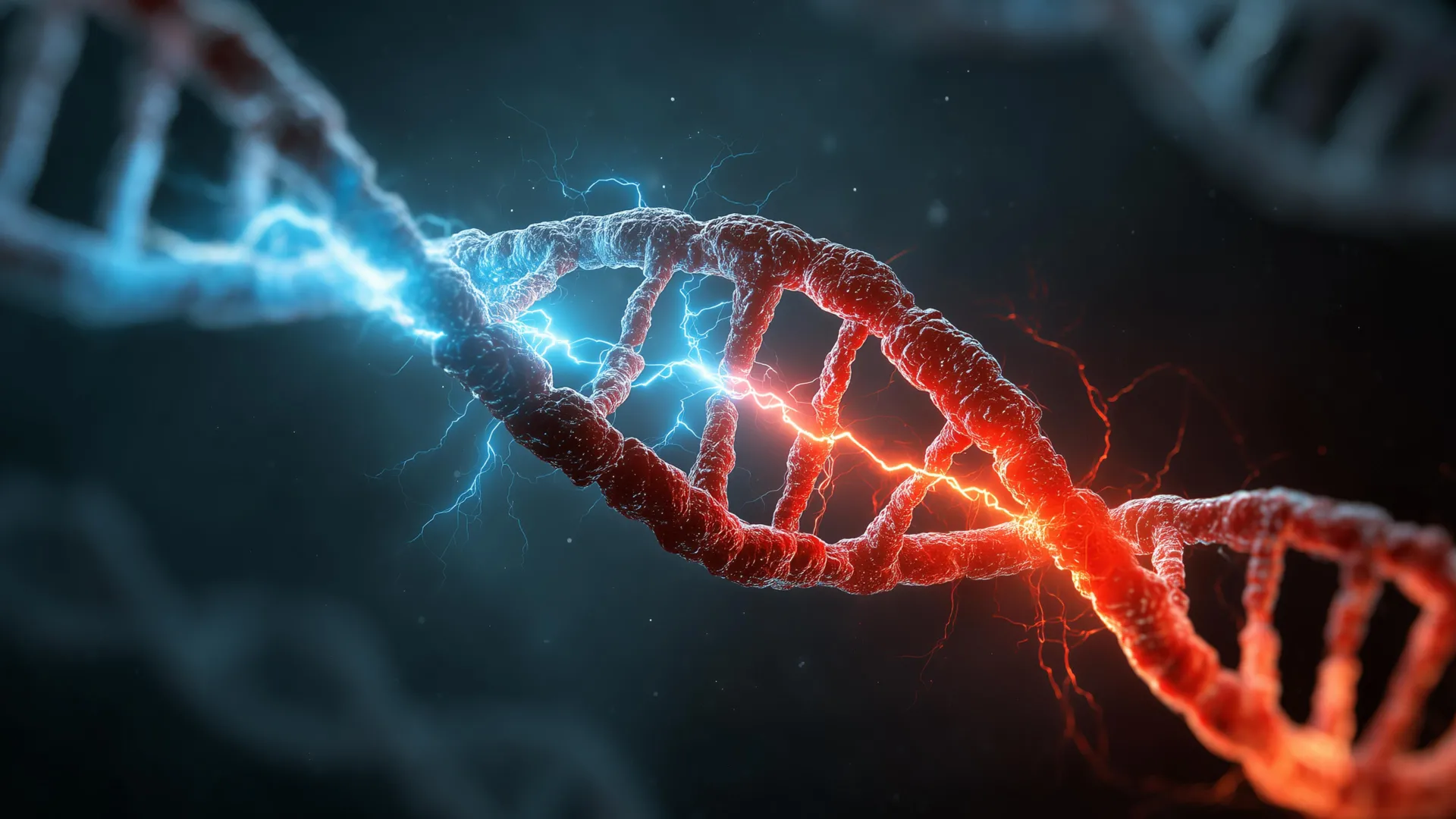
Researchers at Houston Methodist have made a groundbreaking discovery, identifying a protein, TDP43, that plays a pivotal role in both the intricate processes of DNA repair and the development of devastating neurodegenerative diseases like dementia and amyotrophic lateral sclerosis (ALS). This revelation, published in the esteemed journal Nucleic Acids Research, suggests that TDP43’s influence extends far beyond its previously understood functions, potentially bridging the gap between neurological disorders and cancer and prompting a significant re-evaluation of how scientists approach these major health challenges. The findings indicate that the protein’s complex interactions with DNA mismatch repair – a crucial cellular mechanism for correcting errors during genetic replication – could be a unifying factor in understanding and treating a spectrum of diseases.
The study meticulously details how TDP43 acts as a regulator for genes responsible for fixing DNA errors. When the cellular concentration of TDP43 deviates from its optimal range, either becoming too scarce or excessively abundant, the DNA repair genes it governs exhibit abnormal activity. This dysregulation, the research posits, can transform a protective cellular mechanism into a destructive force. Instead of safeguarding the cell, heightened mismatch repair activity under these conditions can inflict damage on neurons, compromise genomic stability, and consequently elevate the risk of cancerous growths. This dual-edged sword nature of TDP43’s interaction with DNA repair mechanisms presents a novel paradigm for understanding disease pathogenesis.
TDP43: A Critical Regulator of DNA Mismatch Repair
At the heart of this discovery lies the protein TDP43, a molecule already implicated in the pathology of neurodegenerative conditions. Previously, TDP43 was primarily recognized for its role as an RNA-binding protein involved in RNA splicing – the process of modifying RNA after transcription. However, the Houston Methodist team’s research elucidates a far more fundamental and critical function: TDP43 is a key orchestrator of the DNA mismatch repair (MMR) machinery.
“DNA repair is one of the most fundamental processes in biology,” stated lead investigator Muralidhar L. Hegde, Ph.D., a professor of neurosurgery at the Houston Methodist Research Institute’s Center for Neuroregeneration. “What we found is that TDP43 is not just another RNA-binding protein involved in splicing, but a critical regulator of mismatch repair machinery. That has major implications for diseases like ALS and frontotemporal dementia (FTD) where this protein goes awry.”
The implications of this finding are profound. DNA mismatch repair is essential for maintaining the integrity of the genome. Every time a cell divides, it must replicate its DNA. During this complex process, errors, or mismatches, can occur. The MMR system acts like a highly efficient proofreader, scanning newly synthesized DNA for these errors and correcting them. This meticulous correction prevents the accumulation of mutations, which can lead to cellular dysfunction and disease. TDP43’s role in this process suggests that its malfunction can directly impact the accuracy of DNA replication, leading to a cascade of detrimental effects.
The research team employed a series of sophisticated experiments to demonstrate TDP43’s regulatory control over MMR genes. Their findings indicate that both a deficiency and an excess of TDP43 can lead to hyperactivation of the MMR system. In the context of neurodegenerative diseases, particularly ALS and FTD, abnormal aggregation or loss of TDP43 function is a hallmark. The discovery that this protein directly influences DNA repair suggests a plausible mechanism by which these neurological deficits arise. When TDP43 levels are imbalanced, the overzealous MMR system might inadvertently damage neuronal DNA, leading to cell death and the progressive neurodegeneration characteristic of these conditions.
Unveiling the Link to Cancer
Beyond its implications for neurodegenerative disorders, the study also presents compelling evidence linking TDP43 to cancer development. By delving into extensive cancer databases, the researchers observed a significant correlation: tumors exhibiting higher levels of TDP43 were associated with a greater number of mutations. This observation is particularly striking because an increased mutation rate is a defining feature of cancer. Cancer cells often accumulate genetic alterations that drive uncontrolled proliferation, evade immune surveillance, and metastasize.
“This tells us that the biology of this protein is broader than just ALS or FTD,” Hegde elaborated. “In cancers, this protein appears to be upregulated and linked to increased mutation load. That puts it at the intersection of two of the most important disease categories of our time: neurodegeneration and cancer.”
The connection between faulty DNA repair and cancer is well-established. When DNA repair mechanisms are compromised, mutations can persist and accumulate, increasing the likelihood of oncogene activation or tumor suppressor gene inactivation. TDP43’s role in regulating the MMR system suggests that its dysregulation could contribute to tumorigenesis through this pathway. If TDP43’s abnormal activity leads to an overly aggressive MMR system, it could paradoxically destabilize the genome, creating an environment ripe for cancer development. Conversely, in some cancers, a deficiency in certain DNA repair pathways can be exploited therapeutically. The dual nature of TDP43’s impact – potentially both promoting and disrupting repair – opens avenues for complex therapeutic strategies.
A Timeline of Discovery and Implications
The research leading to this significant revelation likely involved a multi-year effort, typical of complex molecular biology investigations. The initial identification of TDP43’s involvement in neurodegenerative diseases, particularly ALS and FTD, began decades ago. Scientists observed the aberrant presence of TDP43 in the brains of affected individuals, leading to extensive research into its normal functions and the consequences of its malfunction.
The current study, published in Nucleic Acids Research, represents a crucial step forward, building upon this foundational knowledge. The publication date of Nucleic Acids Research indicates that this research has undergone rigorous peer review, signifying its scientific validity and importance. The timeline of the discovery can be inferred as follows:
- Prior Research: Decades of work established TDP43 as a key player in ALS and FTD, primarily focusing on its role in RNA metabolism and the formation of intracellular aggregates.
- Hypothesis Formation: Researchers at Houston Methodist likely hypothesized that TDP43 might have additional, undiscovered roles in cellular processes, potentially related to DNA integrity, given its widespread cellular presence and involvement in RNA processing which is intimately linked to DNA.
- Experimental Design and Execution: This phase would have involved designing experiments to specifically test TDP43’s interaction with DNA repair pathways. This likely included cell culture studies, genetic manipulation of TDP43 levels, and analyses of DNA repair gene expression.
- Data Analysis and Interpretation: Sophisticated molecular techniques would have been used to quantify protein levels, gene expression, DNA damage, and mutation rates.
- Cancer Database Analysis: A critical component of the study involved mining large-scale genomic and proteomic datasets from cancer patients to identify correlations between TDP43 expression and tumor characteristics.
- Publication and Dissemination: The culmination of this research is the publication in Nucleic Acids Research, making the findings accessible to the broader scientific community for further validation and exploration.
Expert Commentary and Future Directions
The findings have generated considerable interest within the scientific community, with experts acknowledging the potential paradigm shift they represent. While direct quotes from other related parties are not provided in the initial text, the implications suggest that researchers in neurology, oncology, and genetics will be closely scrutinizing these results.
Dr. Hegde’s statements underscore the significance of the discovery, highlighting the protein’s dual role. This perspective is crucial for future research, which will likely focus on dissecting the precise molecular mechanisms by which TDP43 regulates MMR. Understanding whether TDP43 directly binds to DNA repair proteins, influences their transcription or translation, or acts through other intermediary pathways will be key.
The potential for new therapeutic strategies is a major implication of this research. If abnormal TDP43 activity leads to detrimental DNA repair, then modulating this activity could offer a novel treatment avenue. In laboratory models, the Houston Methodist team demonstrated that partially reversing the excessive DNA repair activity caused by aberrant TDP43 levels helped mitigate cellular damage. This suggests that interventions aimed at fine-tuning the MMR system in the presence of TDP43 dysfunction could be beneficial.
Supporting Data and Broader Impact
While specific quantitative data from the study is not detailed in the provided text, the researchers’ reliance on analyses of large cancer databases implies the use of statistical methods to establish correlations. Such analyses typically involve comparing mutation frequencies, gene expression levels, and patient outcomes across thousands of samples. The mention of “greater numbers of mutations in tumors” associated with higher TDP43 levels suggests a statistically significant positive correlation.
The collaborative nature of the research, involving scientists from multiple prestigious institutions including MD Anderson Cancer Center, the University of Massachusetts, UT Southwestern Medical Center, and Binghamton University, underscores the complexity and breadth of the investigation. This interdisciplinary approach is essential for tackling multifaceted biological problems.
The funding sources, primarily the National Institute of Neurological Disorders and Stroke (NINDS), the National Institute on Aging of the National Institutes of Health (NIH), and the Sherman Foundation Parkinson’s Disease Research Challenge Fund, indicate the high priority placed on neurodegenerative disease research. The inclusion of internal funding from the Houston Methodist Research Institute further signifies institutional commitment to this line of inquiry.
The broader impact of this discovery is substantial. It offers a unifying molecular link between two of the most prevalent and devastating classes of diseases: neurodegeneration and cancer. This could lead to:
- New Diagnostic Tools: Understanding TDP43’s role in both disease categories might pave the way for novel biomarkers to predict disease risk or progression.
- Repurposing of Therapies: Existing drugs that target DNA repair pathways might be re-evaluated for their potential efficacy in neurodegenerative diseases, or vice versa.
- Novel Drug Development: The identification of TDP43 as a key regulator opens up possibilities for developing drugs that specifically target its interaction with the MMR system, offering a new class of therapeutics.
- Refined Understanding of Disease Mechanisms: This research challenges existing models of neurodegeneration and cancer, prompting a deeper investigation into the interplay between genetic stability and cellular function.
In conclusion, the Houston Methodist research on TDP43 represents a significant advancement in our understanding of cellular biology and disease. By uncovering its critical role in DNA mismatch repair, scientists have opened new avenues for exploring the complex pathogenesis of neurodegenerative conditions and cancers, potentially revolutionizing diagnostic and therapeutic approaches for these major global health threats. The ongoing exploration of TDP43’s intricate molecular dance with DNA repair promises to yield further insights and therapeutic opportunities in the years to come.