
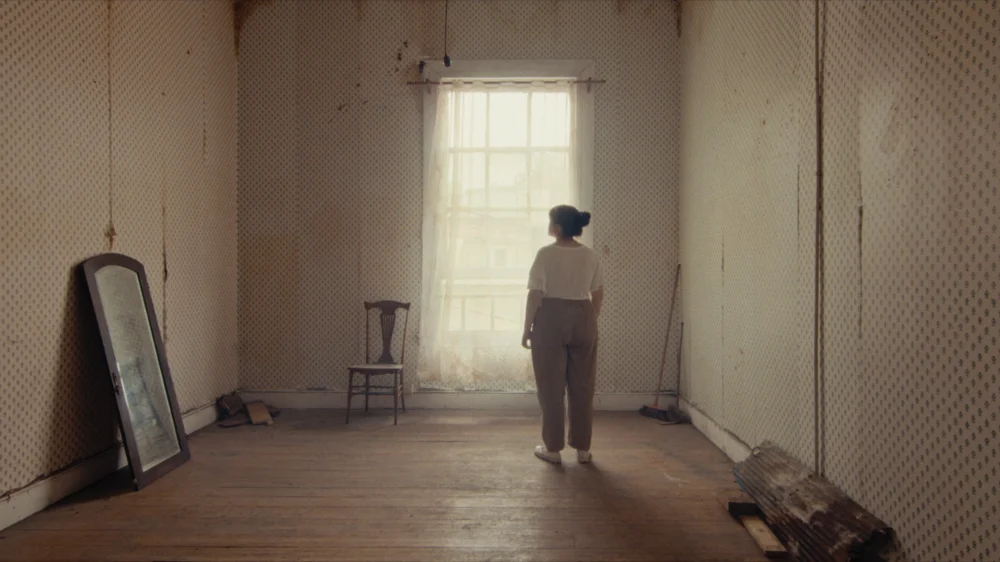
The stark reality of inherited trauma and the enduring power of familial memory are brought into sharp focus in Where the Silence Is Heard, a deeply personal and profoundly moving feature documentary from directors Gabriela Pena and Picho García. This evocative film, set to premiere on Tuesday, March 17, in the Next:Wave program of the 23rd edition of the Copenhagen International Documentary Film Festival (CPH:DOX), embarks on an intimate journey through generations, exploring how love, fear, and the profound weight of silence can be passed down, shaping identities and relationships across time.
The documentary centers on Gabriela Pena’s return to a house in Chile, a place abandoned during her family’s exile. Within its walls, she meticulously traces a three-generation narrative, seeking to unravel the complex tapestry of how love, fear, and the pervasive silence of past traumas have been inherited. The logline itself offers a poignant glimpse into the film’s thematic core: "Returning to a house in Chile abandoned in exile, a granddaughter traces three generations of memory to understand how love, fear, and silence are inherited." This granddaughter, Pena herself, navigates the delicate emotional landscape between the tenderness of her grandparents and the perceived emotional distance of her Barcelona-based mother. Her quest is to understand how love can persevere and transform when it is profoundly shaped by absence, fear, and unspoken truths.
Where the Silence Is Heard chronicles Pena’s arduous process of renovating the abandoned family home, a physical act that mirrors her endeavor to piece together a fractured family history. This history is indelibly marked by the brutal dictatorship of General Augusto Pinochet, the subsequent exile that scattered her family, and the decades of silence that followed, a silence born of survival and perhaps, of an inability to process profound loss and upheaval. The CPH:DOX festival website aptly describes the film as "an aesthetically beautiful story about inherited trauma," further highlighting it as "an original cinematic exploration of memories, identity, and what love really consists of when it is shaped by fear and absence – driven by a single person’s burning desire to find peace before the next generation arrives."
The creative and life partners, Gabriela Pena and Picho García, not only directed and edited the documentary but also co-produced it alongside Gabriela Sandoval and Efthymia Zymvragaki. García also serves as the sales contact for the project, underscoring their deep collaborative investment. In anticipation of the film’s world premiere in Copenhagen, Pena and García spoke with The Hollywood Reporter about the deeply personal and emotionally taxing journey behind Where the Silence Is Heard, their distinct experiences of a shared past, and the profound burden of intergenerational trauma.
Genesis of a Story: From a Grandfather’s Notebook to a Family’s Unfolding Truth
The germ of the idea for Where the Silence Is Heard began to form years before the film’s production. Pena recounts her first significant encounter with her family’s past at the age of 18 or 19. Following her family’s relocation to Barcelona due to her mother’s exile, Pena traveled to Chile and discovered a handwritten notebook belonging to her grandfather. This artifact, a tangible link to a bygone era, was meticulously transcribed and compiled into a book intended for family and friends.
"It was all my grandfather’s story," Pena shared with THR, "but it was also a very masculine narrative, very separated from the emotions and fears. And it had an epic structure, which is very common in the male narrative." This initial immersion revealed a narrative characterized by stoicism and a focus on historical events, rather than the emotional toll they exacted. However, interspersed within her grandfather’s account were passages penned by her grandmother. These were the fragments that resonated most deeply with Pena.

"It also included some parts written by my grandmother, and those touched me very much, because those talked about his absence and the kids and the waiting," Pena recalled. These were the whispers of lived experience, the quiet anxieties and profound emotional labor of a woman left behind, waiting for a husband and father whose absence was a palpable void. These fragments hinted at a deeper, more emotionally charged narrative that lay beneath the surface.
A few years later, after completing university, Pena returned to Chile at the age of 22 or 23, this time choosing to live with her grandparents. It was during this immersive period that the seeds of the documentary truly began to sprout. "And little by little, everything you see in the film is what happened," she explained. "I started to record it. I met Picho, and he helped me with the reconstruction of the old house and with the filming." The renovation of the physical space became inextricably linked to the reconstruction of her family’s emotional and historical narrative.
Pena admits that the full scope and true meaning of the documentary were not immediately apparent to her. "It was a slow discovery," she stated. "One of the epiphanies of making the film was that it was about my relationship with my mother. When I was pregnant with our kid, we understood that this old house was basically about me trying to go back to my mother’s uterus, trying to find this connection that was lost because she was in so much unresolved internal pain." This profound realization shifted the film’s focus from a historical exploration to a deeply personal quest for maternal connection, understanding that her mother’s emotional distance was a direct consequence of her own unresolved childhood traumas.
A Creative Partnership Forged in Shared Vulnerability
The presence of Picho García as both a life partner and a filmmaking collaborator proved instrumental in supporting Pena through the emotionally demanding process. García described their meeting and subsequent artistic partnership: "We met as filmmakers, and I fell in love with her. We started making a short film that I directed, called Familia, and Gabriela produced. And now we worked on this film. On the short film, we worked for four years, and on this movie, it was six. We know that we want to be a creative duo, and we have now helped each other and got so involved dealing with our [respective] families and family issues."
Their shared creative journey, spanning years of collaboration on both Familia and Where the Silence Is Heard, has fostered a deep level of mutual understanding and support. García elaborated on the specific challenges within Where the Silence Is Heard: "Gabriela had to confront inherited wounds, caused by family pain from exile, dictatorship, and silence. We understand each other and can [support the other] with love and patience." This shared experience of confronting inherited pain has strengthened their bond, allowing them to navigate difficult emotional terrain together.
Pena echoed this sentiment, emphasizing the trust inherent in their creative partnership: "We trust so much in each other that if he says to me, you have to go deeper into your relationship with your mother, I trust him. And I know that he will hold my hand while we do so." This profound trust enabled Pena to delve into the most vulnerable aspects of her emotional landscape, knowing she had a steadfast support system.

García views their collaborative work as a process of mutual growth and maturation. "Throughout their joint work on the two films, ‘we became adults,’ says García. ‘It’s been a lot of putting [things] on the table, experiencing a lot of vulnerability, and we have been able to help each other a lot to feel comfortable.’" This shared experience of vulnerability and emotional honesty has been transformative for both of them, creating a safe space for exploration and healing.
Divergent Perspectives on a Shared History
Adding another layer of complexity to Where the Silence Is Heard is the divergent historical context from which Pena and García approach Chile’s past. While Pena’s family experienced exile, García’s family remained in Chile throughout the dictatorship and its aftermath. This difference in lived experience brought distinct perspectives to the film’s creation.
The creative and life partners acknowledge their differing approaches and personalities, which they find to be a source of strength in their collaboration. García humorously described their dynamic: "We don’t romanticize that we are so different, and that’s so helpful. Gabriela is deeper, and I’m a bit crazy." Pena offered a more diplomatic articulation of their complementary styles: "I am the more ethereal, poetic and abstract, and Picho has the strong ideas and [the eye for the] concrete, practical stuff." This blend of abstract emotional exploration and grounded practical execution proved to be a powerful combination for bringing the documentary to fruition.
Confronting Generational Trauma and the Quest for Peace
The central theme of intergenerational trauma is something Pena has grappled with for a significant portion of her life. "This generational trauma is something that I have been wanting to confront since I can remember," she stated. Now, as a mother raising the fourth generation with García, her commitment to breaking this cycle is stronger than ever. "And now that I am a mother, and that I am raising the fourth generation with Picho, I am very, very concerned and interested in stopping this trauma from going on." This maternal instinct fuels her desire to understand and heal the wounds of the past, preventing them from being passed down further.
Pena’s evolving perspective on her relationship with her mother is a significant outcome of the filmmaking process. As Where the Silence Is Heard nears its premiere, she reflects: "The relationship with my mother will never be perfect. She is who she is, and I am a bit more at peace and better understand now. I know that her emotional distance, her unavailability is because she is trapped in what happened in her childhood, [including having to leave Chile from one day to another and leaving her boyfriend behind]. I have realized that it wasn’t me who was insufficient, as I thought before. It is just that these emotional tools are broken." This realization marks a profound shift from self-blame to a deeper understanding of her mother’s limitations, stemming from her own traumatic experiences.
The Delicate Balance Between the Personal and the Political
While the historical context of the Pinochet dictatorship and its ramifications are undeniably present in the film, the directors intentionally centered the narrative on the intimate family experience. García explained this deliberate choice: "We always felt with this project, that we didn’t want to start to politicize intimacy. What happened in these four walls was vulnerable. And the things happening inside the house were more important." This approach underscores the film’s focus on the human cost of political upheaval, emphasizing how personal lives are deeply affected by broader historical forces.

However, Pena acknowledged the challenge in striking this balance. "Sometimes, in previous cuts, we felt that we were not political enough or that we lack positioning," she shared. "I hope that it’s a political film, but it’s not explicit." This suggests a nuanced approach where the political context serves as a backdrop and catalyst for the intensely personal stories of the family, rather than being the primary focus. The film seeks to illustrate how political events have profound and lasting impacts on individual lives and familial relationships.
A New Generation, A New Beginning
Following the intense creative process of Where the Silence Is Heard, Pena and García have recently relocated to Barcelona and are in a phase of recalibrating their lives. Their current focus is not on embarking on another large-scale film project, but rather on nurturing their young son. "That project is our son right now," García stated with a smile. "Our creative energy is really on him. It’s something that is sometimes invisible in this society, but for us, it’s enough. It’s something very beautiful for us," Pena concluded. This signifies a shift in priorities, with their creative energy now directed towards the development and well-being of their child, a testament to their evolving understanding of legacy and the continuation of family.
Premiere in Copenhagen and a Meeting of Exiles
The world premiere of Where the Silence Is Heard at CPH:DOX in Copenhagen holds particular significance, as Pena’s mother will be in attendance. The directors have also organized a gathering of Chilean exiles in the city, an initiative designed to create a space for shared reflection and dialogue. "I think it will be great," Pena expressed. "I think she will cry a lot, which is good. And she will feel seen – by me and by other people." This event promises to be an emotional and cathartic experience, allowing for a collective processing of shared histories and experiences. The film, in its essence, offers a space for recognition and validation, not only for the individuals directly involved but for a broader community grappling with the enduring impact of exile and trauma.