
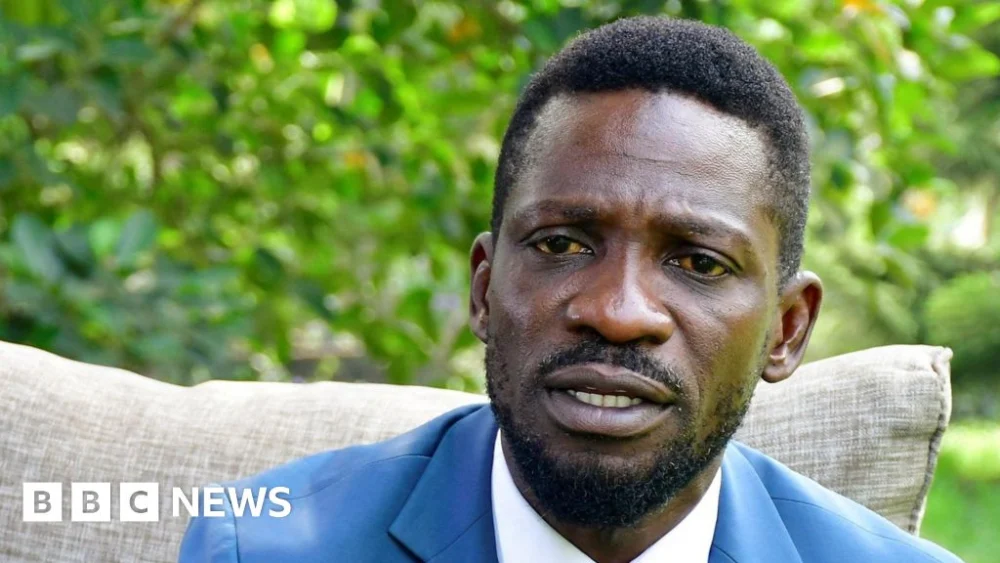
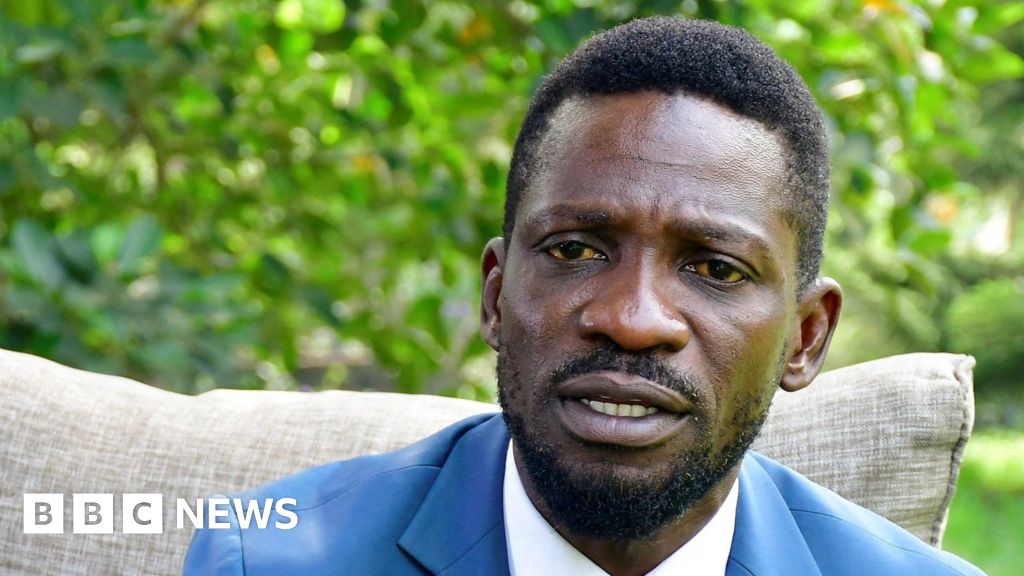
Ugandan opposition leader and pop star Bobi Wine, whose real name is Robert Kyagulanyi Ssentamu, has confirmed his departure from the East African nation after spending two months in undisclosed locations following January’s highly contested presidential election. Wine announced his exit, stating he is undertaking "critical engagements" abroad aimed at mobilizing the international community against the government of President Yoweri Museveni, who has been in power since 1986. His departure underscores the persistent political tension and deep divisions that have gripped Uganda since the polls, which Wine vehemently claims were rigged in favour of the incumbent.
Bobi Wine’s Strategic Departure and Allegations
Speaking from an undisclosed location abroad, Bobi Wine reiterated his unwavering belief that he was the rightful winner of the January election, asserting that the electoral process was systematically manipulated. "Running for president is not a crime," he declared in a video statement, refuting any suggestion of wrongdoing that might warrant the intense surveillance and pursuit he claims to have faced. Wine detailed a period marked by constant vigilance, alleging that state security forces repeatedly raided the homes of his supporters in their search for him. He also reported widespread roadblocks across the country and the continued military encirclement of his residence in the capital, Kampala, a situation he states has persisted since election day.
The opposition leader expressed profound gratitude to "all you fellow Ugandans who have concealed and protected me all the time while the regime was looking for me." His narrative paints a picture of a targeted crackdown on opposition figures and supporters in the aftermath of the polls, forcing him into a clandestine existence within his own country before his eventual departure. His move abroad is a strategic pivot, aiming to leverage international platforms to amplify his allegations of electoral fraud and human rights abuses, thereby increasing pressure on the Museveni administration.
The Disputed 2021 Election: A Backdrop of Tensions
The January 2021 general election was marred by widespread allegations of irregularities, violence, and a severe curtailment of political freedoms, even before a single ballot was cast. President Yoweri Museveni, 81, officially secured a sixth elected term, with the Electoral Commission declaring him the winner with 58.64% of the vote. Bobi Wine, representing the National Unity Platform (NUP), was officially credited with 34.83% of the vote. However, Wine and his party vehemently rejected these results, citing widespread ballot stuffing, voter intimidation, and a biased electoral process.
The pre-election period was characterized by a hostile environment for the opposition. Numerous NUP rallies were violently dispersed, and scores of party members and supporters were arrested, often on charges related to violating COVID-19 restrictions, which critics argued were selectively enforced against the opposition. Bobi Wine himself faced multiple arrests and harassment during his campaign. A significant incident occurred in November 2020 when his arrest sparked widespread protests across the country, leading to clashes with security forces that resulted in the deaths of at least 54 people, according to government figures, though human rights groups estimated higher casualties.
On election day, the government imposed a complete internet shutdown, a move widely condemned by international observers and human rights organizations as an attempt to stifle communication, impede election monitoring, and prevent the dissemination of information regarding potential irregularities. This blackout further fueled suspicions of a non-transparent process. While the Electoral Commission maintained the elections were free and fair, several international bodies, including the European Union and the United States, noted significant concerns regarding the credibility and transparency of the polls. The US Embassy in Kampala, for instance, cancelled its observation mission due to the Ugandan government’s refusal to accredit a majority of its observers.
President Museveni’s Stance and Government Response
President Museveni, who seized power in 1986 through a guerrilla war, has consistently dismissed allegations of electoral fraud and human rights abuses. His government maintains that the elections were conducted transparently and that any actions by security forces were necessary to maintain law and order, particularly in response to what it describes as opposition attempts to incite violence and destabilize the country. Museveni has accused Wine and his supporters of seeking to overturn the results through unconstitutional means and has often characterized opposition figures as agents of foreign interference or as destabilizers.
Following the declared results, Museveni warned against any attempts to challenge the outcome through street protests, emphasizing the government’s resolve to crack down on any perceived threats to national security. He has often framed his long tenure as essential for Uganda’s stability and economic development, contrasting it with the turbulent periods before his rule. The government’s narrative emphasizes the importance of peace and security, often portraying the opposition’s activism as a disruptive force that undermines these critical foundations.
The Controversial Role of General Muhoozi Kainerugaba
Adding another layer of complexity and controversy to the post-election landscape is the highly visible role of General Muhoozi Kainerugaba, President Museveni’s son and the head of the country’s military. General Kainerugaba has been at the forefront of the government’s vocal condemnation of Bobi Wine and the NUP, making a series of inflammatory statements that have drawn significant attention and concern.
In a particularly alarming series of posts on his X (formerly Twitter) account, General Kainerugaba declared Bobi Wine "wanted dead or alive" and, in a separate message, threatened to castrate him. These threats, which were later deleted from his account, sent shockwaves through the political landscape, underscoring the severe risks faced by opposition figures. While some government officials have attempted to distance themselves from such extreme rhetoric or denied that security forces were actively hunting Wine, Kainerugaba’s statements, coming from a high-ranking military official and the president’s son, carry significant weight and are widely seen as reflecting the regime’s hardline stance.
The general’s aggressive posture is also viewed through the lens of presidential succession. Widely perceived as a potential successor to his aging father, Kainerugaba’s increasingly prominent and often confrontational public statements against the opposition are interpreted by many as an attempt to assert his authority and loyalty to the ruling establishment. His claim that 30 "terrorists" from Wine’s party had been killed following post-election protests further highlights the severity of the government’s response to dissent and the military’s deep involvement in political affairs. These actions raise serious questions about the rule of law, accountability, and the militarization of Uganda’s political space.
A Chronology of Post-Election Events and Repression
The period immediately following the January 2021 election was marked by heightened tensions and a sustained crackdown on the opposition.
- January 14, 2021: Ugandans go to the polls. Internet shutdown implemented.
- January 16, 2021: Electoral Commission declares Yoweri Museveni the winner. Bobi Wine rejects the results, alleging massive fraud.
- January 15 – March: Bobi Wine is placed under house arrest at his Kampala residence, which is surrounded by military and police. He is effectively cut off from the outside world for several days, including access to his lawyers and party officials.
- Late January: Ugandan courts uphold Wine’s right to leave his home, but security forces maintain a presence, albeit less overtly. Wine reports continued surveillance and harassment.
- February: Reports surface of widespread arrests and disappearances of NUP supporters and activists. Human rights organizations document cases of alleged torture and arbitrary detention.
- March: Bobi Wine goes into hiding, claiming he fears for his life and liberty due to intensified efforts by security forces to apprehend him. He states that his supporters’ homes are being raided as authorities search for him.
- May: General Muhoozi Kainerugaba makes controversial statements on social media, including threatening Bobi Wine. These posts are later deleted but widely circulated.
- July: Bobi Wine confirms his departure from Uganda, stating his intention to mobilize international support against Museveni’s government. He thanks his supporters for protecting him during his two months in hiding.
This timeline illustrates a consistent pattern of government repression and opposition defiance, underscoring the fragility of democratic institutions in Uganda.
International Reactions and Human Rights Concerns
The international community’s response to the 2021 Ugandan election and its aftermath has been largely critical, with many nations and human rights organizations expressing deep concern over the integrity of the electoral process and the subsequent human rights situation.
The United States, a significant donor to Uganda, voiced serious concerns about the fairness of the election, the internet shutdown, and reports of human rights abuses. While not explicitly rejecting the results, the US called for investigations into alleged irregularities and abuses. The European Union, which did not deploy a full observation mission due to the COVID-19 pandemic, also raised alarms about the restrictions on political freedoms and the lack of a level playing field.
Human rights organizations such as Amnesty International and Human Rights Watch have extensively documented abuses, including arbitrary arrests, detention without trial, torture, and extrajudicial killings of opposition supporters. These reports have highlighted a deteriorating human rights environment in Uganda, particularly targeting those associated with the NUP. The United Nations High Commissioner for Human Rights has also expressed concern over the shrinking democratic space and the excessive use of force by security agencies.
Despite these international condemnations, concrete actions have been limited. Some sanctions have been imposed on individual Ugandan officials by countries like the United States, but broader economic or diplomatic pressure on the Museveni government has not materialized to a significant extent. This lack of decisive international intervention has led critics to suggest that the Museveni regime feels emboldened to continue its policies of repression.
Uganda’s Democratic Landscape: A Deeper Look
President Museveni’s nearly four-decade rule has been characterized by a gradual but persistent erosion of democratic institutions. Initially lauded for bringing stability after years of civil strife, his government has increasingly resorted to authoritarian tactics to maintain power. Constitutional amendments in 2005 removed presidential term limits, and in 2017, the age limit for presidential candidates was abolished, effectively paving the way for Museveni to rule indefinitely.
The rise of Bobi Wine, a charismatic youth icon, represented a significant challenge to Museveni’s long-standing dominance. Wine’s appeal resonated deeply with Uganda’s predominantly young population, many of whom have known no other leader and are grappling with high unemployment rates, limited economic opportunities, and frustration with corruption. His "People Power" movement transformed into the National Unity Platform, galvanizing a generation eager for political change and a more inclusive governance model.
However, the political landscape remains heavily skewed in favour of the ruling National Resistance Movement (NRM). The military, a cornerstone of Museveni’s power, plays an outsized role in politics, often deployed to quell dissent and enforce government mandates. The judiciary and electoral commission, while theoretically independent, are frequently perceived as susceptible to executive influence. This systemic entrenchment of power makes it exceedingly difficult for opposition movements to gain traction through conventional democratic means.
The Path Forward for Bobi Wine and the Opposition
Bobi Wine’s decision to leave Uganda marks a new phase in his political struggle. Operating from abroad presents both opportunities and significant challenges. On one hand, it allows him to escape immediate threats to his safety and to engage directly with international policymakers, media, and human rights organizations without the severe restrictions he faced domestically. This could lead to greater international awareness and potentially increased pressure on the Museveni government.
However, leading an opposition movement from exile is inherently difficult. Maintaining direct contact and galvanizing supporters on the ground, who face severe risks, becomes a logistical and motivational challenge. The NUP will need to adapt its strategies to continue its advocacy within Uganda while Wine works to build international coalitions. The risk of the movement being perceived as disconnected from the daily realities of Ugandans also looms.
For the NUP and other opposition groups, the ongoing struggle is multifaceted. It involves continuing to advocate for electoral reforms, documenting human rights abuses, and mobilizing public support despite the repressive environment. The long-term goal remains to foster a genuine democratic transition in Uganda, where free and fair elections, respect for human rights, and the rule of law are paramount.
Conclusion and Outlook
Bobi Wine’s departure from Uganda underscores the profound political crisis gripping the nation in the wake of the 2021 elections. His claims of a stolen election, coupled with the government’s heavy-handed response and the alarming rhetoric from high-ranking officials, paint a stark picture of a country struggling with its democratic future. As Wine seeks to rally international support, the Museveni government remains steadfast in its narrative of maintaining stability and countering alleged opposition-led destabilization. The coming months will reveal whether international pressure can compel the Ugandan government to address the deep-seated grievances and human rights concerns, or if the political impasse will deepen, further entrenching the authoritarian tendencies that have come to define Uganda’s political landscape. The pursuit of political change in Uganda remains a precarious and challenging endeavor, both within its borders and now, increasingly, on the global stage.