


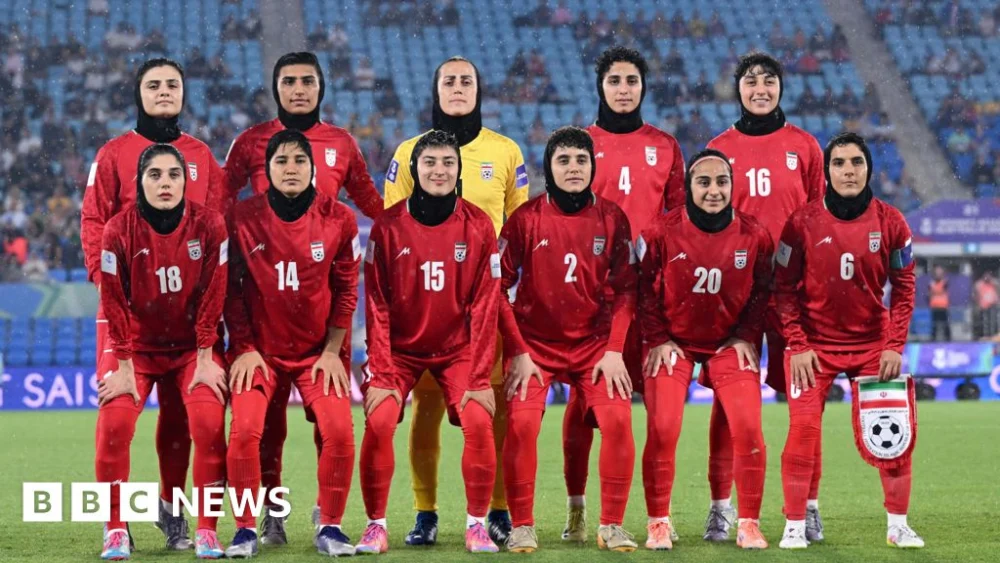
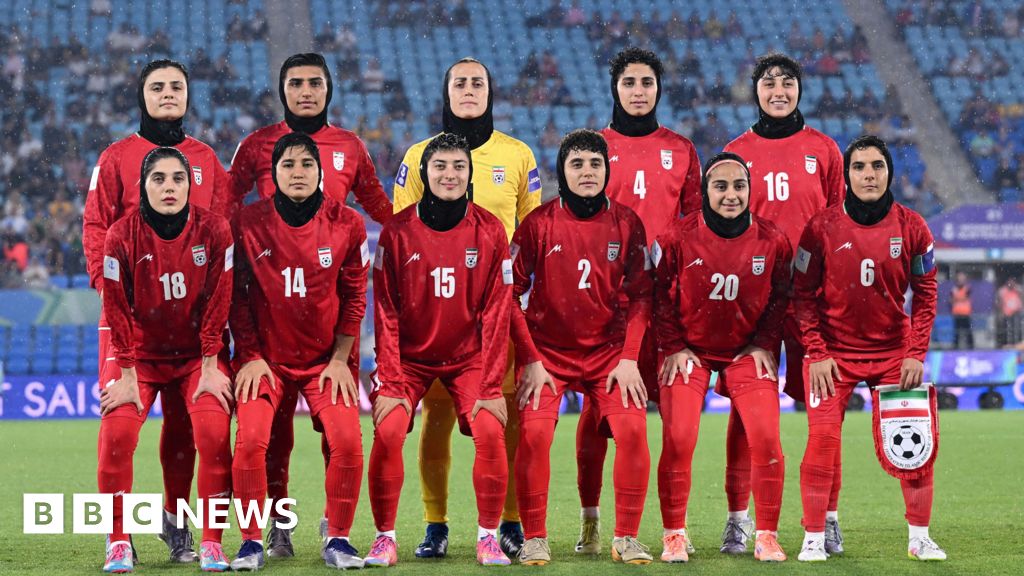
Sydney, Australia – The captain of the Iranian women’s national football team, Zahra Ghanbari, has reportedly withdrawn her application for asylum in Australia, marking her as the fifth member of the delegation to reverse their decision. This development, reported by Iran’s state media, casts a long shadow over the initial hopes for sanctuary expressed by several players and staff members following a silent protest during their opening Asian Cup match. The unfolding saga has ignited a fierce debate between allegations of severe state coercion from human rights advocates and declarations of patriotism from Iranian authorities.
The Retreat from Sanctuary: A Detailed Account of Asylum Reversals
Zahra Ghanbari, a prominent figure and leader of the Iranian squad, is now slated to fly from Malaysia back to Iran, as confirmed by the IRNA news agency on Sunday. Her decision follows closely on the heels of three other team members – Zahra Soltan Meshkehkar, Mona Hamoudi, and Zahra Sarbali – who also withdrew their asylum applications and departed Australia on Saturday. These withdrawals mean that only two individuals from the original group of seven who initially accepted Australia’s offer of humanitarian visas remain in the country, having not rescinded their bids for defection.
The initial group had sought refuge in Australia after widespread concerns that they would face severe repercussions upon returning to Iran. Their act of defiance – remaining silent during the national anthem at their opening Asian Cup match against South Korea on March 2 – was interpreted globally as a powerful statement against the Iranian regime, particularly amidst heightened domestic tensions and international scrutiny regarding human rights. This silent protest, a stark visual contrast to their opponents, quickly circulated, drawing both praise and condemnation, and setting in motion the dramatic events that followed.
Allegations of Systemic Pressure and Threats to Families
The swift and widespread reversal of asylum applications has triggered alarm bells among international human rights organisations and Iranian diaspora communities. Prominent voices, including Shiva Amini, an exiled former Iranian national futsal player and a vocal critic of the Iranian regime, have explicitly accused Iranian authorities of orchestrating the withdrawals through intimidation.
Amini, leveraging her network and platform, stated on social media that she had received credible information indicating intense and systemic pressure exerted by Iran’s Football Federation, allegedly in collaboration with the powerful Islamic Revolutionary Guard Corps (IRGC). According to her and other activists, this pressure was not directed at the players themselves in Australia, but rather at their vulnerable families back in Iran. "Several of the players decided to go back because the threats against their families became unbearable and the intimidation was relentless," Amini wrote, underscoring the severe dilemma faced by the athletes. These allegations paint a grim picture of state apparatuses reaching across international borders to quash dissent and enforce compliance, using familial bonds as leverage. The IRGC, a formidable military and intelligence organisation, is known for its extensive reach into various sectors of Iranian society, including sports and culture, and its history of suppressing perceived threats to the Islamic Republic’s ideology and security.
The Iranian State’s Narrative: Patriotism and Defeat of "Enemy Plans"
In stark contrast to the human rights community’s concerns, Iranian state media has enthusiastically embraced the players’ decisions, framing them as acts of unwavering patriotism and loyalty to the homeland. IRNA, the official news agency, reported Ghanbari’s return as her "returning to the embrace of the homeland," while the Mehr news agency lauded it as a "patriotic decision."
This narrative was further amplified by Iran’s sports ministry, which issued a statement declaring that "the national spirit and patriotism of the Iranian women’s national football team defeated the enemy’s plans against this team." The ministry went further, accusing the Australian government of "playing in Trump’s field," a thinly veiled reference to previous US administrations’ confrontational stance towards Iran and a common trope used by Iranian state media to discredit Western actions.
Tasnim news agency, another state-linked outlet, echoed these sentiments, reporting that the three players who departed on Saturday were "returning to the warm embrace of their families and homeland after withdrawing their asylum application in Australia." It asserted that these players had bravely resisted "psychological warfare, extensive propaganda and seductive offers" from foreign entities attempting to destabilise the team and the nation. This official portrayal serves to reassert state control, demonise external influences, and project an image of national unity and resilience against perceived foreign meddling.
Australia’s Position: Offering Choices Amidst Complexities
Australian authorities have largely maintained a measured and principled stance throughout the unfolding drama. While they have not directly commented on Zahra Ghanbari’s latest change of heart, Home Affairs Minister Tony Burke previously addressed the withdrawals of the three other players. He confirmed their decisions and expressed the Australian government’s commitment to providing a safe environment for the women to make their choices.
"Australians should be proud that it was in our country that these women experienced a nation presenting them with genuine choices and interacted with authorities seeking to help them," Burke stated. He acknowledged the profound challenges involved, adding, "While the Australian government can ensure that opportunities are provided and communicated, we cannot remove the context in which the players are making these incredibly difficult decisions." This statement highlights the inherent limitations faced by host countries when individuals from authoritarian regimes are potentially subject to external pressures, particularly threats against family members in their home country. Australia’s humanitarian visa program aims to offer a lifeline to those fleeing persecution, but it cannot fully insulate applicants from the complex geopolitical realities and the long reach of state actors.
A Chronology of Defiance, Hope, and Retreat
The timeline of events paints a vivid picture of the fluctuating fortunes and pressures surrounding the Iranian women’s football team:
- March 2: The Iranian women’s national football team plays its opening match against South Korea in the Women’s Asian Cup. During the national anthem, several players remain conspicuously silent, a powerful act of dissent.
- Following the Match: Reports emerge that a significant number of players and staff, initially seven individuals, seek humanitarian visas and asylum in Australia, fearing retribution for their silent protest. Concerns are voiced by human rights activists about potential "harsh punishment" awaiting them in Iran, where such acts are often branded as disloyalty or "wartime treason."
- Subsequent Matches: Despite the initial protest, the team sings the anthem in their last two games before being eliminated from the tournament. This reversal fuels speculation among critics that government officials accompanying the team may have coerced them into compliance.
- Mid-March: The first player reportedly changes her mind and withdraws her asylum bid, choosing to return to Iran.
- Saturday, [Date inferred]: Three more members – Zahra Soltan Meshkehkar, Mona Hamoudi, and Zahra Sarbali – withdraw their bids for asylum and depart Australia, reportedly en route to Kuala Lumpur to rejoin the remaining squad members.
- Sunday, [Date inferred]: Iran’s state media reports that Captain Zahra Ghanbari has also withdrawn her asylum bid and will return to Iran. This brings the total number of withdrawals to five out of the initial seven.
- Tuesday, [Date inferred]: The remaining Iranian players, including those who did not seek asylum or had withdrawn their applications, leave Australia, two days after their elimination from the Women’s Asian Cup.
Broader Context: Women, Sports, and Dissent in Iran
This incident is not an isolated event but rather a poignant manifestation of the broader struggle for human rights and freedom of expression in Iran, particularly for women. Iranian female athletes often operate within highly restrictive frameworks, balancing their passion for sport with strict religious and governmental decrees regarding dress, public appearance, and interaction with men. The national anthem itself has become a recurring symbol of dissent, notably during the 2022 World Cup in Qatar, where the men’s national team also notably refused to sing it in solidarity with anti-government protests following the death of Mahsa Amini. That act of defiance also led to widespread concern for the players’ safety and potential reprisals.
The Iranian government views public displays of dissent, especially on international platforms, as challenges to its authority and legitimacy. Athletes, by virtue of their public profile, become potent symbols, and their actions are meticulously scrutinized. The alleged involvement of the IRGC in pressuring the families of the football players underscores the regime’s sophisticated and often brutal methods of maintaining control, extending its influence beyond national borders through threats and coercion. Previous instances have seen Iranian athletes, particularly those who defect or refuse to compete against Israeli opponents, face severe consequences for themselves and their families. The stakes are incredibly high, transforming an act of personal conscience into a geopolitical incident.
Geopolitical Backdrop and Implications
The football drama has unfolded against a volatile geopolitical backdrop in the Middle East. The original article briefly notes "war in the Middle East after US-Israeli strikes on Iran prompted retaliatory attacks from Iran across the region." While this specific incident is not directly tied to those military actions, it reflects the heightened tensions and the Iranian regime’s increased sensitivity to any perceived internal or external threats to its stability. In such an environment, acts of individual dissent are often magnified and interpreted through a lens of national security, leading to harsher responses.
The implications of this incident are far-reaching. For the two remaining players who continue to seek asylum in Australia, their situation becomes even more precarious, highlighting the immense pressure they are likely to face and the potential isolation from their former teammates. For Iranian athletes broadly, the episode sends a chilling message about the limits of freedom and the pervasive reach of state control, even when competing internationally. It underscores the profound personal sacrifices required for dissent and the difficult choices individuals must make when their aspirations clash with state ideology.
For the international community, the incident serves as a stark reminder of the complexities involved in supporting human rights in authoritarian contexts. While host nations like Australia can offer safe havens, they grapple with the limitations of their sovereignty against the determined efforts of powerful states to enforce compliance through indirect means. It calls into question the ethical responsibilities of international sports bodies to protect athletes from political coercion and to ensure fair and safe participation for all. The story of the Iranian women’s football team is a powerful testament to the courage of individual defiance, but also a tragic illustration of the enduring power of authoritarian regimes to quash it.