
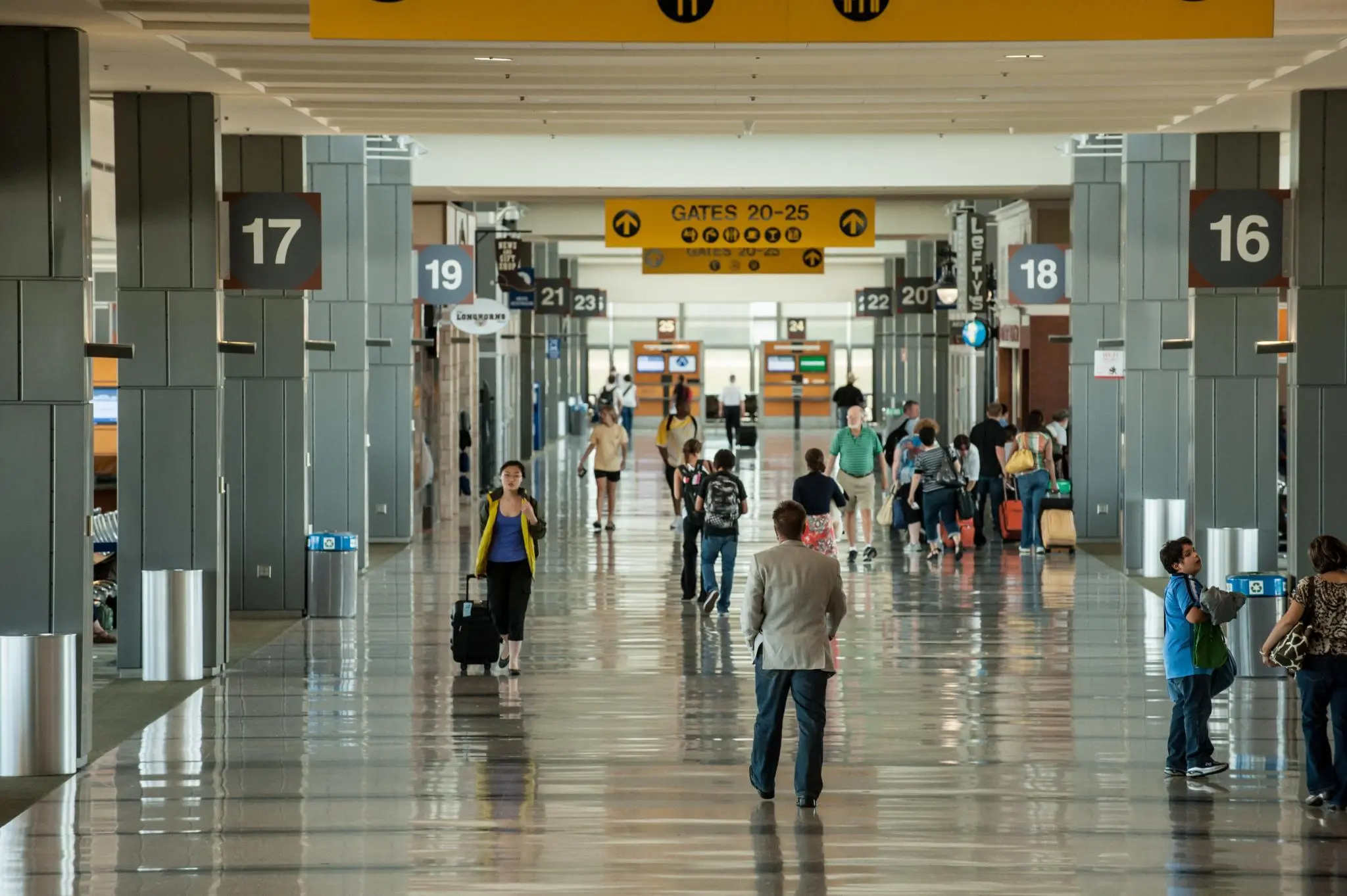
The American aviation infrastructure is currently grappling with a logistical crisis as the partial federal government shutdown enters its second month, triggering significant disruptions at major transportation hubs across the United States. Security screening checkpoints, the vital arteries of domestic and international travel, have become the primary site of friction as Transportation Security Administration (TSA) officers continue to work without pay. This financial strain has led to a sharp increase in unscheduled absences, resulting in wait times that have exceeded several hours at some of the nation’s busiest facilities. From Atlanta to Chicago and Austin, the visible signs of a system under duress are manifesting in lines that snake through terminals and, in some instances, extend into parking garages and curbside drop-off zones.
The crisis reached a new threshold of visibility this week following the first missed paycheck for approximately 800,000 federal employees, including the roughly 51,000 TSA screening officers who are classified as essential personnel. Unlike non-essential staff who have been furloughed, these officers are required by law to report to duty despite the absence of a recurring salary. The resulting morale dip and financial hardship have forced many screeners to seek alternative income or remain home to mitigate the costs of commuting and childcare, leading to a "blue flu" effect that has severely thinned the ranks of active security personnel.
The Epicenter of Congestion: Atlanta, Chicago, and Austin
At Hartsfield-Jackson Atlanta International Airport, widely recognized as the busiest airport in the world by passenger traffic, the situation reached a critical point over the weekend. On Sunday and Monday morning, travelers encountered security queues that spanned the length of the terminal. Airport officials were forced to issue urgent advisories, recommending that passengers arrive at least three hours prior to their scheduled departures—a significant increase from the standard two-hour window. The congestion in Atlanta is particularly impactful given its status as a primary hub for Delta Air Lines and a major connecting point for international transit.
Similar scenes were documented at Chicago O’Hare International Airport, another cornerstone of the U.S. aviation network. Social media footage and traveler reports highlighted lines that moved at a crawl, with staffing levels at PreCheck and standard lanes visibly reduced. The bottleneck at O’Hare, which serves as a dual hub for United Airlines and American Airlines, threatens to create a domino effect of delays across the national airspace system, as late departures from Chicago frequently disrupt schedules at destination airports.
In Texas, Austin-Bergstrom International Airport faced such severe staffing shortages that security lines extended outside the terminal building entirely. Over the weekend, the airport administration took the unusual step of requesting that passengers arrive at least 2.5 hours early, noting that the volume of travelers simply could not be processed at the usual rate given the available personnel. The situation in Austin highlights a growing trend among mid-sized, high-growth airports that lack the redundant capacity of larger mega-hubs to absorb staffing shocks.
Chronology of the Shutdown and Its Impact on Aviation
The current disruption is the direct result of a budgetary impasse that began in late December, centered on funding for a proposed wall along the U.S.-Mexico border. As the shutdown progressed from days into weeks, the impact on the Department of Homeland Security (DHS) transitioned from administrative to operational.
- December 22: The partial government shutdown begins. TSA agents are informed they are essential and must work without pay.
- Early January: TSA begins reporting a slight uptick in "unscheduled absences." Most airports maintain standard wait times.
- January 11: Federal employees officially miss their first full paycheck.
- January 13-15: Absence rates among TSA officers spike significantly. Major hubs like Miami International Airport are forced to close entire concourses early due to lack of staff.
- Current Status: Wait times at major airports hit record highs for the duration of the shutdown, and community-led efforts to support unpaid workers begin to emerge.
This timeline illustrates a clear correlation between the duration of the financial lapse and the degradation of airport efficiency. While the TSA initially characterized the absences as manageable, the cumulative effect of a month without income has rendered the situation increasingly volatile.
Statistical Breakdown of TSA Staffing and Wait Times
Data released by the TSA provides a stark look at the operational challenges. Under normal circumstances, the national rate of unscheduled absences for TSA personnel hovers around 3 percent. However, during the current peak of the shutdown, that figure has climbed as high as 7 to 10 percent on certain days. In some specific regions, the call-out rate has been reported to be even higher, particularly in areas with a high cost of living where a missed paycheck translates immediately into an inability to pay for basic necessities.
While the TSA maintains that the majority of travelers are still seeing wait times under 30 minutes, these national averages often obscure the reality at major hubs. At peak travel times in Atlanta and Minneapolis-St. Paul, wait times in standard screening lanes have frequently exceeded 60 to 90 minutes. Furthermore, the agency has had to consolidate operations, closing certain checkpoints to concentrate remaining staff in central areas, which inherently creates longer queues in those specific locations.
Humanitarian Concerns and Official Responses
The strain on the workforce has elicited a humanitarian response from the very communities the TSA serves. In several airports, donation bins have been established to collect non-perishable food items, toiletries, and gift cards for TSA agents. At Austin-Bergstrom, local businesses and private citizens have organized "food pantries" within the airport breakrooms to ensure that officers can eat during their shifts.
Official responses have been a mix of administrative stoicism and growing alarm. TSA Administrator David Pekoske recently approved a one-day bonus of $500 for officers who have worked during the shutdown, along with pay for one day of work performed early in the hiatus. While intended to boost morale, labor unions representing the officers, such as the American Federation of Government Employees (AFGE), have argued that these gestures are insufficient to cover rent, mortgages, and utility bills.
"The stress these officers are under is untenable," said an AFGE spokesperson. "They are being asked to maintain the highest levels of national security while wondering how they will feed their families. This is not just a labor issue; it is a safety issue."
The Department of Homeland Security has consistently maintained that security standards have not been compromised. However, industry experts warn that the longer the shutdown continues, the greater the risk of "security fatigue," where overworked and stressed agents may become less effective at identifying threats.
Broader Economic and Security Implications
The implications of the ongoing airport delays extend far beyond the inconvenience of individual travelers. The aviation industry is a primary driver of the U.S. economy, and prolonged disruptions can lead to significant financial losses for airlines, concessionaires, and the tourism sector.
- Airline Profitability: Delays at security checkpoints can lead to "missed-trip" scenarios where passengers fail to reach their gates in time for departure. This requires airlines to rebook passengers, often at a loss, and can lead to lower load factors if travelers begin to cancel plans due to the uncertainty of airport transit.
- Concession Revenue: When travelers spend their entire pre-flight window standing in security lines, they have less time to spend at airport restaurants and retail shops. This impacts the revenue of airport authorities and private vendors.
- National Security Risks: The TSA is the first line of defense against aviation-related terrorism. Staffing shortages force the agency to move personnel from specialized tasks to general screening, potentially thinning the layers of security that the "Screening of Passengers by Observation Techniques" (SPOT) program and other initiatives provide.
- Long-term Recruitment: The TSA has historically struggled with high turnover rates. A prolonged period of unpaid labor may permanently damage the agency’s reputation as an employer, making it difficult to recruit and retain high-quality personnel in the future.
Conclusion: A Fragile System at a Breaking Point
The scenes of sprawling lines at Atlanta, Chicago, and Austin serve as a barometer for the health of the nation’s essential services during a political stalemate. While the aviation system has shown a degree of resilience, the current trajectory is unsustainable. The reliance on the goodwill and personal sacrifice of federal employees has its limits, and the "month-long" mark of the shutdown represents a psychological and financial breaking point for many.
As travelers continue to navigate a landscape of three-hour wait times and donation bins for federal workers, the focus remains on Washington D.C. The resolution of the shutdown is no longer merely a matter of political debate but a prerequisite for the functional stability of the American travel industry. Until a budget is passed and paychecks are restored, the "busiest airports in the world" will likely continue to operate at a fraction of their intended efficiency, testing the patience of the public and the endurance of the workers holding the system together.