


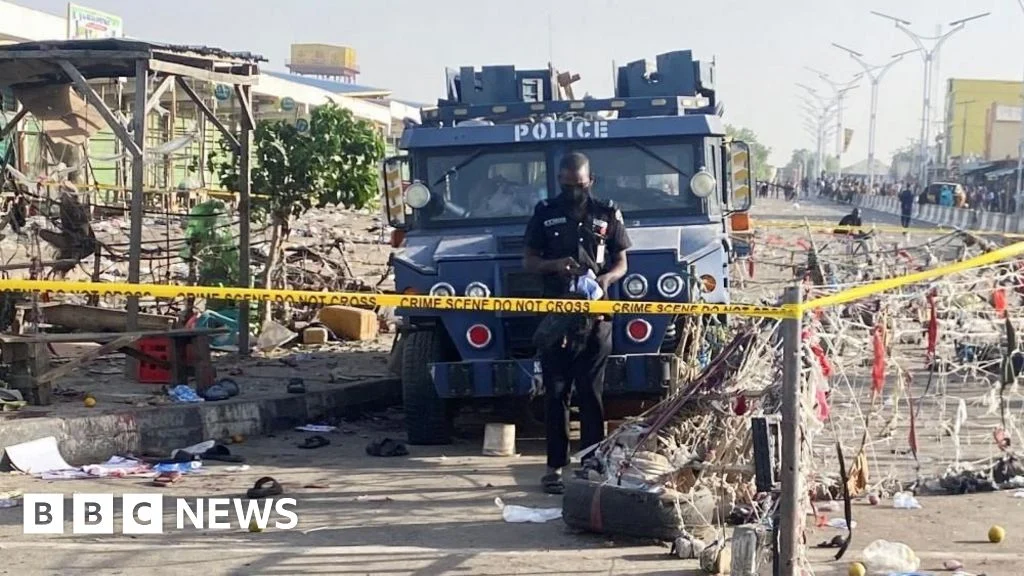
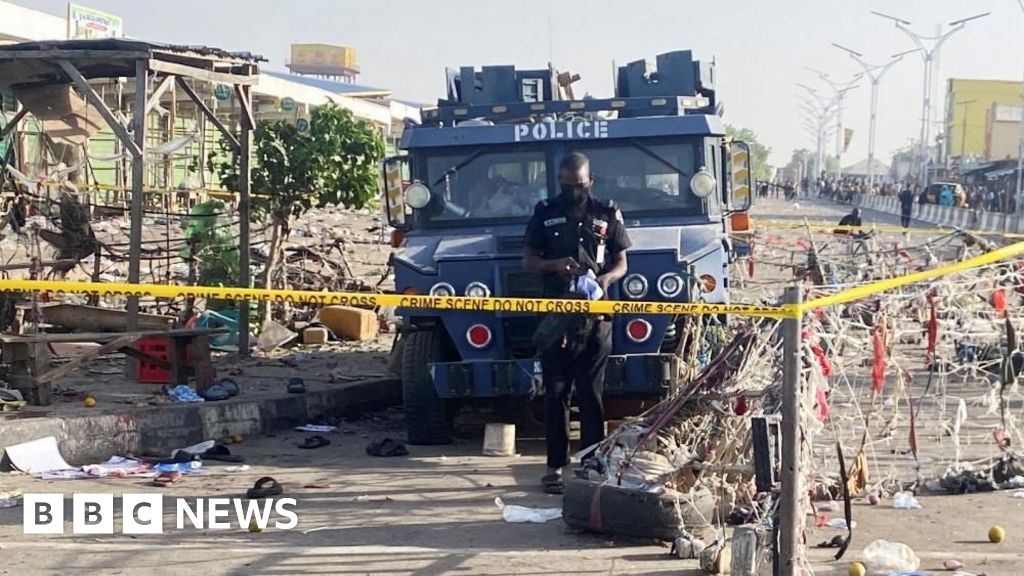
Maiduguri, the capital of Nigeria’s Borno State, was plunged into chaos on Monday evening when a series of suspected suicide bombings claimed the lives of at least 23 people and left 108 others wounded. The coordinated attacks, striking a post office, a bustling weekly market, and the University of Maiduguri Teaching Hospital, represent one of the most severe security breaches in the city in recent memory. The incidents, which occurred within minutes of each other around 19:30 local time (18:30 GMT), targeted locations that had drawn large crowds after residents had just broken their Ramadan fast, amplifying the devastating impact.
A Night of Terror: Unfolding Events in Maiduguri
The tranquility of Maiduguri was shattered by three powerful explosions that ripped through prominent public spaces. The first blast reportedly occurred near a post office, a central point of activity. Almost simultaneously, the popular Monday Market, a vital economic hub, became another target, creating widespread panic. Moments later, the very institution meant to save lives, the University of Maiduguri Teaching Hospital, was also struck, further exacerbating the unfolding humanitarian crisis.
The timing of the attacks, shortly after the evening call to prayer and the breaking of the Ramadan fast (Iftar), meant that these locations were particularly crowded. Families and individuals were congregating, shopping, or simply moving through the city, making them highly vulnerable "soft targets" for the perpetrators. The deliberate choice of such a sensitive time and location points to a calculated effort to maximize casualties and sow terror among the civilian population.
Eyewitnesses recounted scenes of utter pandemonium. Modu Bukar, a resident who was near the market when the blast occurred, described the immediate aftermath to AFP news agency: "We were sitting when we suddenly heard a loud explosion. Everyone immediately started running in fear. As we ran, people kept shouting that we should keep going." Another resident, Mala Mohammed, 31, detailed the tragic sequence of events: "People ran toward the post office area because the market entrance and the post office are not far apart. Unfortunately, as they were running towards the post office, the person who had the explosive device ran into the crowd while people were still trying to escape." These accounts paint a grim picture of innocent civilians caught in a desperate struggle for survival, fleeing one danger only to encounter another.
Emergency services, supported by local residents and security forces, swiftly mobilized to the blast sites. The injured were rushed to various medical facilities, including the very teaching hospital that had been targeted, overwhelming its capacity. Medical personnel, already operating under strain in a region grappling with protracted conflict, faced an immediate surge in trauma cases, including severe burns, shrapnel wounds, and psychological shock. The sheer number of casualties underscored the scale of the coordinated assault.
Maiduguri: The Epicenter and Symbol of Resilience
Maiduguri holds a unique and poignant position in the history of the Boko Haram insurgency. It is not only the capital of Borno State, the region most heavily affected by the conflict, but also the birthplace of the Islamist extremist group. Founded in the early 2000s, Boko Haram initially operated from Maiduguri before escalating its violent campaign in 2009. For years, the city served as the epicenter of their terror, enduring countless attacks, bombings, and raids that instilled fear and devastated communities.
Over the past few years, Maiduguri had experienced a period of cautious optimism. Intensified military operations by the Nigerian armed forces, often supported by regional partners through the Multi-National Joint Task Force (MNJTF), had largely succeeded in pushing armed groups out of the city center and into remote border areas around the Lake Chad Basin. This relative stability had allowed some semblance of normalcy to return, with markets reopening, educational institutions attempting to function, and efforts to resettle internally displaced persons (IDPs) slowly progressing. The city, which hosts a significant population of displaced individuals seeking refuge from rural violence, had become a symbol of resilience, a place where people dared to hope for an end to the decade-long conflict.
The Monday night attacks, therefore, struck not just at physical targets but also at the fragile sense of security and renewed hope that residents had begun to cultivate. The depth of the penetration by the attackers, reaching deep within the city’s busiest areas, has deeply shaken a populace that had cautiously believed the worst years of Boko Haram’s insurgency might be behind them.
Boko Haram and ISWAP: A Persistent, Evolving Threat
Nigeria’s military has swiftly attributed the attacks to militants from the notorious Boko Haram group. Boko Haram, whose name translates roughly to "Western education is forbidden," seeks to establish an Islamic caliphate in Nigeria and has been responsible for widespread atrocities, including mass abductions, bombings, and killings. While the group’s leadership has been fractured, particularly since the death of its long-time leader Abubakar Shekau, the threat it poses remains potent.
Adding to the complexity of the security landscape is the presence of Islamic State West Africa Province (ISWAP), a formidable splinter faction that emerged from Boko Haram in 2016. ISWAP, which pledges allegiance to the Islamic State (ISIS), has grown in influence and is often considered to be more tactically sophisticated, focusing on attacking military targets and government infrastructure while attempting to win over local populations through the provision of basic services in areas under its control. Both groups continue to operate in the wider North-East, primarily in Borno, Yobe, and Adamawa states, and have occasionally launched attacks on Maiduguri.
The insurgency, which began in 2009, has exacted a horrific toll on Nigeria and the wider Lake Chad region. Estimates suggest that over 35,000 people have been killed, and more than 2 million have been internally displaced, making it one of the world’s most severe humanitarian crises. Millions more are food insecure, and access to education, healthcare, and basic services remains severely hampered across large swathes of the region. The recent attacks in Maiduguri serve as a stark reminder that despite military gains, the underlying ideological and operational capabilities of these extremist groups persist, allowing them to still inflict significant harm on civilian populations.
Official Reactions and Heightened Vigilance
In the immediate aftermath, Borno police confirmed the nature of the incidents. "Preliminary investigation reveals that the incidents were carried out by suspected suicide bombers," read a statement from the Borno police command, adding that a thorough investigation was underway to establish the identities of the attackers and any broader network behind the coordinated assault.
Nigerian President Bola Tinubu issued a strong condemnation of the attacks on Tuesday, describing them as "profoundly upsetting" and "the desperate acts of the evil-minded terrorist groups." In response to the grave security situation, President Tinubu announced that he had ordered security chiefs to relocate to Maiduguri and "take charge of the situation," signaling a high-level federal intervention and a renewed focus on bolstering security in the embattled state capital. Such a directive underscores the seriousness with which the federal government views this resurgence of urban terrorism.
International humanitarian organizations, many of which maintain a significant presence in Maiduguri due to the ongoing crisis, are expected to express grave concern over the attacks. The targeting of civilians and public infrastructure, particularly a hospital, is a clear violation of international humanitarian law and exacerbates the already dire humanitarian situation. The international community, which has long supported Nigeria’s efforts to combat terrorism and provide aid to affected populations, will likely reiterate its solidarity and call for increased protection of civilians.
Broader Security Implications and Lingering Shadows
The Monday night bombings did not occur in isolation. Just hours before the devastating urban attacks, security forces successfully repelled an overnight assault by suspected Islamist fighters on a military post in the Ajilari Cross area, located on the outskirts of Maiduguri. This preceding engagement suggests a potential concerted effort by extremist groups to test and overwhelm the city’s defenses, perhaps using the earlier military engagement as a diversion or a prelude to their more devastating urban campaign.
The scale and location of Monday’s attacks—deep within the city and targeting crowded civilian areas—have undoubtedly shaken residents and raised critical questions about the effectiveness of current counter-insurgency strategies. For years, the narrative from the military has been one of degrading Boko Haram’s capabilities and confining their operations to remote areas. These attacks challenge that narrative, highlighting the groups’ continued ability to plan and execute complex, multi-pronged assaults on urban centers.
The Nigerian military faces immense challenges in combating an enemy that employs asymmetric warfare tactics, blending into civilian populations and utilizing suicide bombers. While significant progress has been made in reclaiming territory and weakening the command structures of these groups, the pervasive threat of terrorism persists. The attacks underscore the need for continuous intelligence gathering, community engagement to prevent radicalization, and enhanced security measures for soft targets.
Humanitarian Strain and the Road Ahead
The immediate humanitarian impact of the Maiduguri bombings is profound. The injured require urgent medical attention, and the already stretched healthcare system in Borno State will face additional pressure. The University of Maiduguri Teaching Hospital, a critical facility in the region, will now have to contend with treating its own staff and patients while simultaneously managing a mass casualty event, all while potentially repairing damage to its premises.
Beyond the physical injuries, the psychological trauma inflicted upon the survivors and the wider community is immense. Living under the constant threat of violence takes a heavy toll, fostering anxiety, fear, and a sense of hopelessness. The attacks also disrupt economic activity, deter investment, and impede efforts to rebuild livelihoods in a region desperately needing stability and development.
Looking ahead, the Maiduguri bombings serve as a stark reminder that the fight against insurgency in North-East Nigeria is far from over. Officials have rightly warned that the threat of further violence remains, even as emergency and security agencies work tirelessly to reinforce safety measures across the city. This incident will likely necessitate a re-evaluation of security protocols, intelligence gathering, and the deployment of resources within Maiduguri. The ongoing debate about whether these attacks signify a genuine resurgence of urban terrorism or are desperate acts by a cornered enemy will continue. Regardless, the need for a comprehensive, multi-faceted approach – combining robust military action with socio-economic development, deradicalization programs, and sustained humanitarian aid – remains paramount to truly address the root causes and enduring consequences of this devastating conflict. The resilience of Maiduguri’s residents will once again be tested as they grapple with the aftermath of this latest wave of terror.