

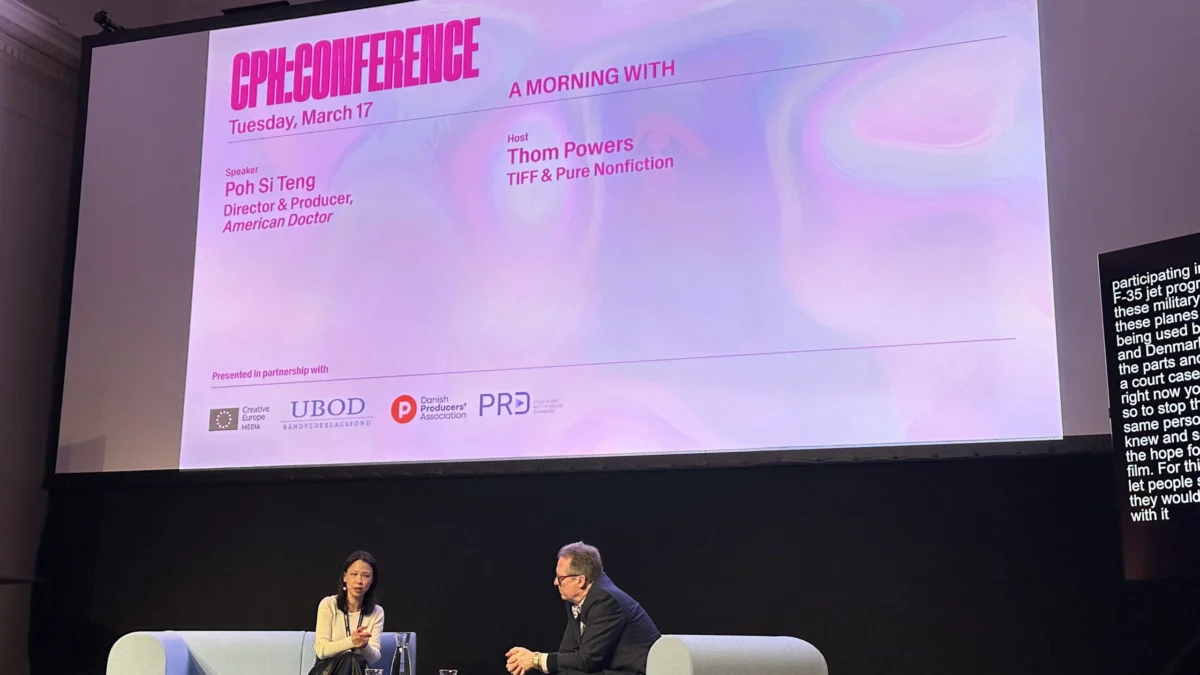
The 23rd edition of the Copenhagen International Documentary Film Festival (CPH:DOX) served as the backdrop for an intimate and profound exploration of the arduous journey behind Poh Si Teng’s feature directorial debut, American Doctor. The documentary, which offers a stark look at the physicians working amidst the brutal realities of war in Gaza, had its world premiere at Sundance earlier this year, garnering significant attention for its unflinching portrayal of humanitarian efforts under siege. At CPH:DOX, Teng shared the deeply personal and often harrowing path that led to the creation of this impactful film during a session titled "A Morning With Poh Si Teng," expertly guided by veteran documentary programmer Thom Powers of TUFF and Pure Nonfiction.
From Journalist to Visionary Director: A Shift in Purpose
For a considerable period, Poh Si Teng operated behind the scenes as a producer of documentaries, contributing to projects such as Patrice: The Movie. When questioned about this extended focus on producing rather than directing, Teng explained her initial rationale. "I just didn’t feel the field needed another director for a long time," she stated, emphasizing her commitment to "helping other directors to push and achieve their vision." She believed her skill set was optimally utilized in this supportive capacity. This period of dedicated production work undoubtedly honed her understanding of storytelling and the intricacies of documentary filmmaking, laying a crucial foundation for her eventual directorial endeavors.
Teng’s personal trajectory, from her upbringing in Malaysia to her move to the United States and her subsequent career as a journalist, has profoundly shaped her perspective. Her experiences, which spanned various international locales including India, exposed her to the full spectrum of human behavior. "The most cruel things that could have happened to human beings, but also the best in humanity, have shaped me very much as a filmmaker," she reflected. This dual exposure to both profound suffering and extraordinary resilience has clearly informed the thematic core of her work. She poignantly added, "Low points define who you will be," a sentiment that underscores the transformative power of adversity in forging character and artistic vision.
The Genesis of American Doctor: An Emotional Imperative
The decision to focus on the war in Gaza through a humanitarian lens in American Doctor was not an easy one. Teng described a point, approximately a year into what she termed "the genocide," where she felt overwhelmed by a potent cocktail of anger and despair. "I didn’t have any more words," she admitted. "I was very angry. And then came despair. I didn’t know what to do with those emotions." This profound emotional burden became the catalyst for a radical personal and professional shift.
In a move that demonstrated the depth of her commitment, Teng made the significant decision to quit her job and liquidate her savings. She revealed that she emptied her bank account of approximately $150,000, a sum she had meticulously saved for her young daughter. Addressing her daughter, who was present in the front row, Teng shared, "This is all the money I saved for you, my child. Maybe one day you will understand why." This act of profound sacrifice underscored the urgency she felt to bring the story of those enduring unimaginable hardship to light, even at immense personal cost.
Finding the Heart of the Story: The Doctors of Gaza
The film’s narrative coalesced around the remarkable individuals providing essential medical care in Gaza. Teng found inspiration in the dedication of Dr. Mark Perlmutter, whom she described as "an incredible storyteller," and his colleagues, Dr. Thaer Ahmad and Dr. Feroze Sidhwa. These physicians were on the front lines, offering critical emergency care amidst the chaos of conflict. "I thought if I could learn something from them, then maybe people watching would be able to learn something too," Teng explained, highlighting her aspiration to translate their courage and compassion into a universally relatable message.
The production of American Doctor was a testament to the collective dedication of the entire team. Teng shared that the crew accepted significantly reduced compensation to ensure the project could be realized. Production commenced in December 2024 and concluded a year later, a testament to the sustained effort and shared vision.
Navigating Perilous Terrain: The Risks and Sacrifices of Filming
The safety of journalists and those documenting conflict zones is a constant and grave concern. Teng acknowledged the immense risks involved, stating, "They shoot people with cameras there." This stark reality made the request to film with doctors in such a volatile environment a "big ask." She expressed profound gratitude for the local cinematographers who worked on the film, acknowledging their immense bravery. These individuals, each with five children, were separated from their families, demonstrating an extraordinary level of commitment to the project. Teng lauded their "passion and focus," relaying their earnest plea: "Please bring the story back to America." Their sacrifice and dedication are woven into the fabric of the film.

The Power of Collective Action: Overcoming Financial Hurdles
The financial challenges of independent filmmaking are often compounded when tackling sensitive and controversial subjects. Teng candidly shared moments of profound doubt during the production, recounting a period where she "was just crushed" by the lack of incoming funds. However, a crucial turning point arrived through a supportive call from a friend in Malaysia. "I don’t know how it is in the United States, but come back home. We’re not divided on the genocide," her friend conveyed. This message of solidarity galvanized Teng, and she subsequently managed to raise nearly $200,000 in cash donations. This influx of support "gave us the wind in our sails that we so badly needed," she said.
Upon her return to the U.S., Teng observed a subtle shift in the societal discourse surrounding the conflict. "By that time, society in the U.S. had shifted. But [during] the first half of 2025, all the doors were shut," she noted, highlighting the persistent challenges in gaining traction for the film’s narrative.
A Legacy of Witness: The Imperative of Documentation
A central tenet of Teng’s motivation for creating American Doctor was the desire to establish a permanent record of the events unfolding in Gaza. She spoke of the overwhelming sentiment within the medical community on the ground, where the plight of over 100 international doctors working in Gaza seemed to be met with indifference. "Nobody cares," she stated, conveying the sense of abandonment felt by those on the front lines. She revealed an attempt to reach out to President Trump, which, like many other efforts, yielded no significant response. "And I thought to myself, we will have a record of who stood their ground when it mattered so much, when it was so hard. I wanted to make that [record]," she declared. "Even if nobody cares, we will make it for us and for our own children."
Adding another layer of complexity and risk, Teng admitted to a pervasive fear of sabotage during the film’s development. "That’s why I didn’t tell you anything. Thom, for so long. I didn’t tell anybody anything," she confessed to Powers. This cautious approach, extending until late summer or early autumn, was a strategic decision to ensure the project’s momentum was unstoppable. "We wanted to make sure that the train had left the station, and there was no stopping it anymore."
Watermelon Pictures: A Crucial Partnership
The U.S. production and distribution company Watermelon Pictures eventually joined forces with American Doctor. Teng expressed her gratitude for their support, commending the firm for its commitment to the film and its early recognition, evidenced by being shortlisted for three Oscars. This partnership provided essential validation and resources, further solidifying the film’s potential reach and impact.
The Weight of the "American Doctor" and its Implications
The choice of title, American Doctor, is deliberate and carries significant weight. Teng explained her reasoning: "I just thought there is too much blood on our hands." This stark statement reflects a broader critique and a sense of responsibility, suggesting that the title serves as a potent reminder of the complex geopolitical factors and international roles that contribute to the ongoing crisis. It compels viewers to consider the wider context and the interconnectedness of global actions and their consequences.
A Call to Consciousness: The Film’s Enduring Hope
Poh Si Teng’s ultimate hope for American Doctor is that it will serve as a catalyst for change. "The hope for this film is to let people see it. If they see it, they would not be okay with this. No one would be okay with it," she asserted. Her conviction lies in the power of visual storytelling to evoke empathy and inspire a visceral reaction against the atrocities depicted.
As the United States and many other nations approach significant election cycles, Teng issued a powerful and timely appeal. "Every country that has an election this year, this is your chance to say something," she urged. "You are not for the killing of children and innocent people, and you will tell them with your vote." This concluding statement underscores the film’s broader political and social message, framing American Doctor not just as a documentary, but as an urgent call to conscience and a plea for action in the face of humanitarian catastrophe. The film’s journey from conception to its presentation at international festivals is a testament to Teng’s unwavering dedication to bearing witness and advocating for a more just and humane world.