

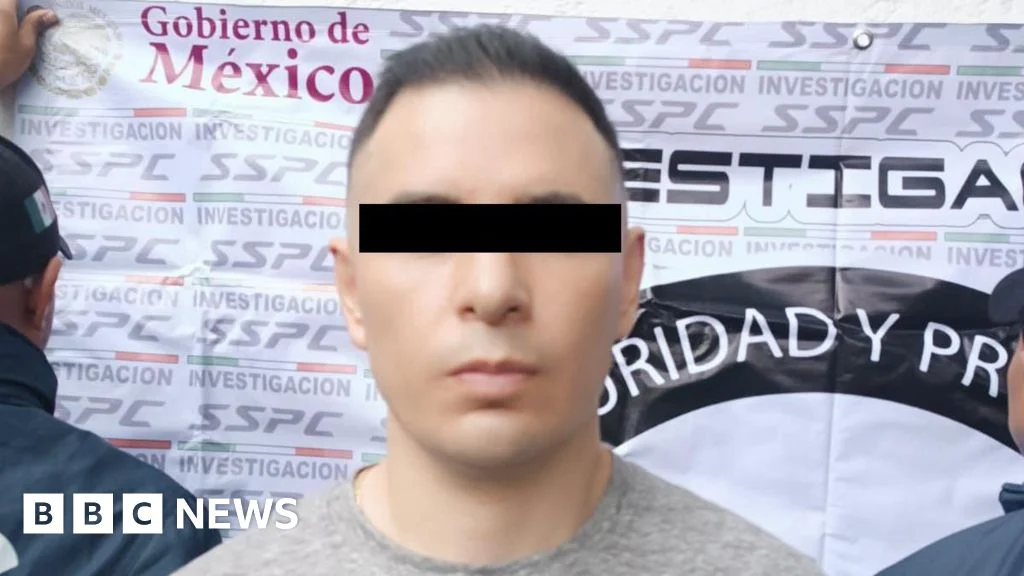
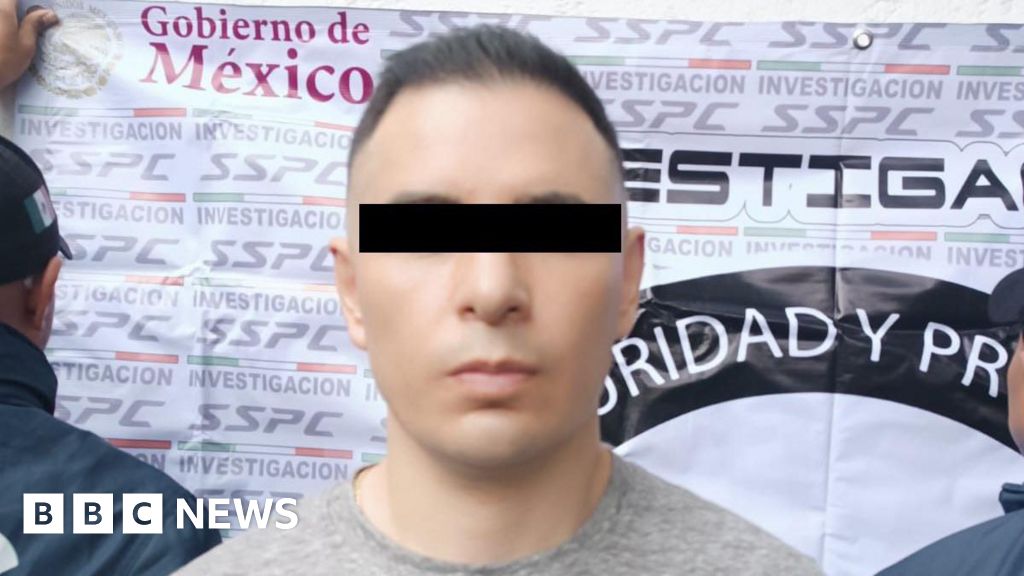
In a major development poised to reshape the landscape of Latin American organized crime, Ángel Esteban Aguilar Morales, known by his notorious alias "Lobo Menor," a key leader of one of Ecuador’s most formidable drug-trafficking syndicates, Los Lobos, has been apprehended in Mexico City. The arrest, confirmed by high-ranking officials from Ecuador, Mexico, and Colombia, represents a critical breakthrough in the ongoing investigation into the shocking 2023 assassination of Ecuadorian presidential candidate Fernando Villavicencio, a murder that plunged the Andean nation into an unprecedented security crisis. Aguilar Morales, who reportedly operated under a sophisticated web of deception using falsified Colombian identity documents, was a high-value target for international law enforcement, subject to an Interpol Red Notice for a litany of grave offenses including drug trafficking, extortion, and homicide.
The apprehension of "Lobo Menor" on Wednesday was the culmination of an intricate trilateral operation, underscoring a heightened level of cross-border intelligence sharing and collaborative action among regional powers. Mexican security minister Omar Garcia Harfuch detailed that the operation involved elements of Ecuador’s navy, security forces, and migration officers, working in concert with Mexican authorities. Colombian President Gustavo Petro lauded the arrest as a "significant blow against transnational organised crime," emphasizing the effectiveness of this trilateral cooperation in confronting "multi-crime networks" that have destabilized large swathes of the continent. Petro further characterized Aguilar Morales as "one of the world’s most notorious assassins," a stark indicator of the gravity of the charges and the perceived threat he posed to regional stability.
The Shadow of Fernando Villavicencio’s Assassination
The specter of Fernando Villavicencio’s murder has loomed large over Ecuador for nearly a year, serving as a brutal reminder of the pervasive reach of criminal organizations within the nation’s political fabric. Villavicencio, a tenacious former journalist and member of the National Assembly, had built his presidential campaign on an unwavering platform of anti-corruption and a direct challenge to the burgeoning power of drug cartels. His assassination on August 9, 2023, as he exited a campaign rally in the capital, Quito, just days before the first round of presidential elections, sent shockwaves across the globe. The brazenness of the attack, carried out in broad daylight amidst heavy security, underscored the perilous state of law and order in Ecuador and ignited widespread fears that the country was rapidly succumbing to narco-violence.
Following Villavicencio’s death, Ecuador was plunged into a state of emergency, with outgoing President Guillermo Lasso deploying military forces to restore order and safeguard the electoral process. The immediate aftermath saw a flurry of arrests, and within a year, five individuals linked to Los Lobos were convicted and jailed for their roles in the murder. Among those implicated was Carlos Angulo, widely known as "The Invisible," who prosecutors alleged ordered the hit from his detention cell in a Quito prison. While Angulo vehemently denied the accusations, his alleged involvement highlighted the alarming capacity of imprisoned gang leaders to orchestrate high-profile crimes from behind bars, a testament to the deep institutional corruption and lack of state control within the country’s penal system. Aguilar Morales’s arrest now adds a crucial new dimension to this complex investigation, potentially unraveling further layers of command and operational structures within Los Lobos related to the assassination.
The Rise of Los Lobos and Ecuador’s Transformation into a Narco-State
The ascent of Los Lobos, alongside rival gangs such as Los Choneros, Los Tiguerones, and Los Lagartos, is intrinsically linked to Ecuador’s tragic transformation from a relatively peaceful Andean nation into a critical hub for global cocaine trafficking. Geographically positioned between Colombia and Peru—the world’s two largest producers of cocaine—Ecuador offers an ideal transit corridor for illicit drugs destined for markets in North America and Europe. The country’s extensive Pacific coastline, with its numerous ports like Guayaquil, provides direct access to international shipping routes, making it an indispensable logistical artery for transnational criminal organizations. Estimates suggest that approximately 70% of the cocaine produced in Colombia and Peru is now shipped through Ecuadorian territory, a staggering figure that illustrates the country’s strategic importance to the global drug trade.
Los Lobos, initially emerging as a splinter group from the powerful Los Choneros gang, rapidly expanded its influence through brutal violence, extortion, and control over drug routes, particularly in the central and southern regions of Ecuador. Their modus operandi often involves sophisticated networks of corruption within state institutions, enabling them to operate with a degree of impunity. The gang’s growth has been fueled by a combination of factors, including economic vulnerabilities, a weak justice system, and the porous nature of Ecuador’s borders. The influx of drug money has exacerbated social inequalities, corrupted local governance, and armed criminal groups with advanced weaponry, overwhelming state security forces. The consequences have been devastating: Ecuador’s homicide rate has skyrocketed from around 6 per 100,000 inhabitants in 2018 to an alarming 47 per 100,000 in 2023, making it one of the most violent countries in the region. This dramatic increase reflects a broader collapse of public security and the entrenchment of organized crime as a dominant force.
The United States, recognizing the severe threat posed by such groups, designated Los Lobos as a Foreign Terrorist Organization (FTO) in 2023. This designation, a powerful tool in combating international terrorism, underscores the group’s "terrorizing and inflicting brutal violence on the Ecuadorean people," according to U.S. officials. The FTO label not only imposes financial sanctions and travel restrictions on the group and its affiliates but also enables a broader range of counter-terrorism measures, including increased intelligence sharing and military cooperation, aimed at dismantling their networks. This move highlights a growing international consensus that drug cartels operating with such extreme violence and political interference are functionally indistinguishable from terrorist organizations.
International Cooperation and the Web of Transnational Crime
The successful operation to apprehend "Lobo Menor" serves as a powerful testament to the critical need for and increasing effectiveness of international cooperation in confronting the intricate web of transnational organized crime. The involvement of authorities from Ecuador, Mexico, and Colombia underscores the regional dimension of the drug trade, where criminal networks transcend national borders with ease, necessitating a coordinated response from affected states.
Mexico’s role in the arrest is particularly significant, given its own protracted battle against powerful drug cartels. The reported "deep connections" between Los Lobos and Mexico’s Jalisco New Generation Cartel (CJNG) highlight the transnational alliances that fuel the global drug trade. CJNG, considered one of the most dangerous and rapidly expanding criminal organizations globally, has established a formidable presence across Mexico and has sought to expand its international reach. The collaboration between Los Lobos and CJNG likely involves sophisticated logistical arrangements for drug transshipment, money laundering, and potentially arms trafficking, creating a formidable challenge for law enforcement. Aguilar Morales’s presence in Mexico City, allegedly utilizing a fake Colombian identity, further illustrates the intricate routes and deceptive tactics employed by these groups to evade capture and facilitate their operations across multiple jurisdictions. His arrest in Mexico could provide invaluable intelligence on the operational linkages between Ecuadorian and Mexican cartels, potentially exposing critical nodes in their supply chains and financial networks.
Colombia’s participation, as articulated by President Petro, reflects its ongoing commitment to combating drug trafficking, a perennial challenge for the nation. For decades, Colombia has been at the forefront of the war on drugs, and its experience in combating powerful cartels and guerrilla groups makes it a crucial partner in regional anti-narcotics efforts. The shared threat of organized crime, particularly the destabilizing impact of cocaine production and trafficking, necessitates a unified front among these nations. The Interpol Red Notice, a global alert to seek the location and arrest of a person wanted for extradition, further demonstrates the international consensus on Aguilar Morales’s culpability and the imperative of his capture.
Broader Implications and Future Challenges
The arrest of "Lobo Menor" is undoubtedly a significant victory for law enforcement and a morale boost for a region grappling with escalating violence. For Ecuador, it represents a crucial step towards accountability for the assassination of Fernando Villavicencio and a tangible demonstration of progress in its fight against organized crime. It sends a clear message to criminal organizations that even their highest-ranking leaders are not beyond the reach of justice, especially when international cooperation is brought to bear.
However, the implications of this arrest are complex and multifaceted. While a blow to Los Lobos’ leadership, it is important to note that such organizations are often highly resilient, with established succession plans. The removal of one leader can sometimes lead to internal power struggles, potentially triggering new waves of violence as factions vie for control. Ecuadorian authorities will need to remain vigilant against potential retaliatory actions or attempts by the gang to consolidate power under new leadership.
Furthermore, this arrest, while important, does not fundamentally alter the underlying conditions that have allowed organized crime to flourish in Ecuador. The country still faces profound challenges, including endemic corruption, weak state institutions, and a struggling economy. President Daniel Noboa, who took office after the tumultuous 2023 elections, has declared a "state of internal armed conflict" against criminal gangs, deploying the military to combat them directly. His administration has initiated ambitious security reforms, including plans for new high-security prisons and enhanced intelligence capabilities. The successful apprehension of Aguilar Morales provides momentum for these efforts, validating the strategy of aggressive action and international collaboration.
Ultimately, the capture of "Lobo Menor" underscores the persistent and evolving threat posed by transnational organized crime to democracy, stability, and human security across Latin America. It highlights the interconnectedness of criminal enterprises across borders and the indispensable role of sustained international collaboration, intelligence sharing, and institutional strengthening to effectively counter them. While this arrest marks a significant achievement, it is but one battle in a much larger, ongoing war against criminal forces that continue to challenge the sovereignty and well-being of nations throughout the region. The focus must now shift to leveraging the intelligence gained from Aguilar Morales’s capture to further dismantle Los Lobos and its affiliates, bringing greater justice for the victims of their violence and working towards a more secure future for Ecuador and its neighbors.