



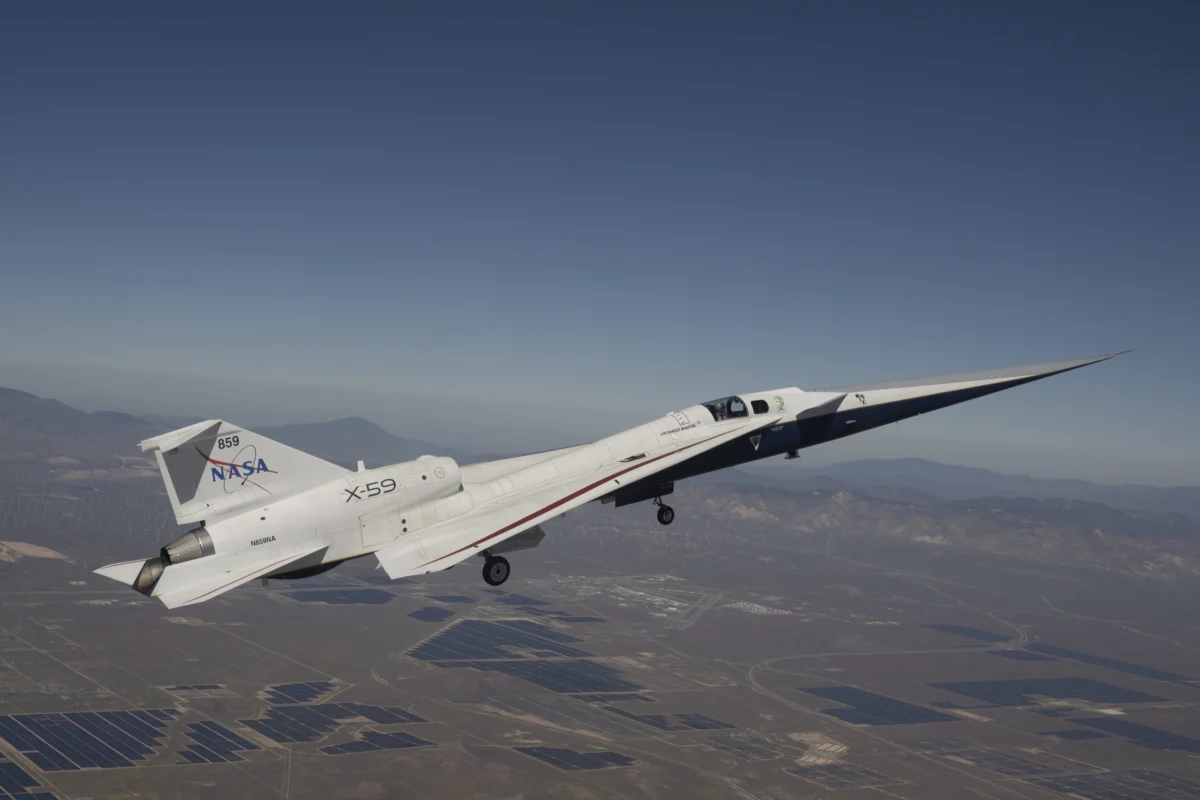
Edwards, California – NASA’s groundbreaking X-59 Quiet Supersonic Technology (QueSST) aircraft successfully completed its second test flight on Friday, March 20, 2026, marking a significant step in a meticulously planned series of dozens of flights scheduled throughout the year. While the flight duration was abbreviated due to an encountered technical issue, the mission team at NASA’s Armstrong Flight Research Center in Edwards, California, confirmed that valuable data was collected, which will be instrumental in informing subsequent tests and refining the ambitious flight campaign. This milestone positions the X-59 at the forefront of a global effort to redefine commercial air travel by overcoming the long-standing challenge of the sonic boom.
The Second Flight: A Detailed Chronology
The X-59 aircraft, a distinctive single-pilot experimental jet developed in collaboration with Lockheed Martin Skunk Works, took off from Edwards Air Force Base at 10:54 a.m. Pacific Daylight Time (PDT). The departure point, adjacent to NASA Armstrong, serves as the primary operational hub for the QueSST mission. Veteran test pilot Jim "Clue" Less was at the controls, guiding the unique aircraft through the initial phases of its envelope expansion objectives.
Several minutes into the flight, a vehicle system warning was displayed in the cockpit. Adhering strictly to established flight procedures designed for such contingencies, pilot Less initiated a return-to-base protocol. The aircraft landed safely at 11:03 a.m. PDT, bringing the flight duration to approximately nine minutes. Despite the premature landing, the safe return of the aircraft and pilot, coupled with the acquisition of pertinent flight data, underscored the rigorous safety protocols and the robust design of the experimental platform.
Cathy Bahm, project manager for NASA’s Low-Boom Flight Demonstrator at Armstrong Flight Research Center, emphasized the positive takeaways from the event. "Despite the early landing, this is a good day for the team. We collected more data, and the pilot landed safely," Bahm stated, reflecting the project’s methodical approach to risk management and data-driven progress. "We’re looking forward to getting back to flight as soon as possible." Pilot Less echoed this sentiment, drawing parallels to simulated scenarios: "As we like to say, it was just like the simulator – and that’s what we like to hear. This is just the beginning of a long flight campaign." This response highlights the extensive preparation and training that precedes each flight, ensuring that pilots are well-versed in handling unexpected events.
The Quesst Mission: A Paradigm Shift in Supersonic Travel
The X-59 is the centerpiece of NASA’s Quesst mission (Quiet Supersonic Technology), an ambitious initiative aimed at making commercial supersonic flight over land a viable reality. For decades, the loud, disruptive sonic boom generated by aircraft breaking the sound barrier has prohibited supersonic travel over populated areas. This restriction, codified in regulations by the Federal Aviation Administration (FAA) in the United States and similar bodies globally, has severely limited the commercial application of supersonic aircraft to niche routes, primarily transoceanic flights. The iconic Concorde, which ceased operations in 2003, famously suffered from this limitation, unable to fly at its full supersonic speed over land due to noise concerns.
The X-59 is engineered to circumvent this fundamental challenge. Its distinctive long, slender airframe, a radical departure from conventional aircraft designs, is specifically crafted to disperse the shockwaves typically associated with supersonic flight. Instead of a thunderous "boom," the X-59 is designed to generate a "thump" – a significantly quieter, barely perceptible sound, akin to the distant closing of a car door, which would be acceptable to communities on the ground. This "low-boom" technology is the linchpin of the Quesst mission.
The aircraft’s unique design features include a pointed nose nearly 38 feet long, comprising almost a third of its 99.7-foot total length, which is crucial for reducing the intensity of shockwaves. It lacks a forward-facing window, with the pilot relying on an eXternal Vision System (XVS) that uses 4K cameras and monitors to provide a forward view, enhancing the aerodynamic efficiency required for quiet supersonic flight. Powering the X-59 is a single General Electric F414 engine, capable of propelling the aircraft to speeds of Mach 1.42 (approximately 940 mph or 1,510 km/h) at an altitude of 55,000 feet (16,764 meters).
The Broader Context: A New Era for Aviation
The successful execution of even an abbreviated test flight provides invaluable data for the ongoing "envelope expansion" phase of the X-59 program. This phase involves gradually pushing the aircraft’s performance limits – increasing speed, altitude, and maneuvering capabilities – to thoroughly evaluate its airworthiness and performance across its intended flight envelope. Each test flight, regardless of duration, contributes critical information on aerodynamic characteristics, propulsion system performance, and the functionality of its unique low-boom design elements.
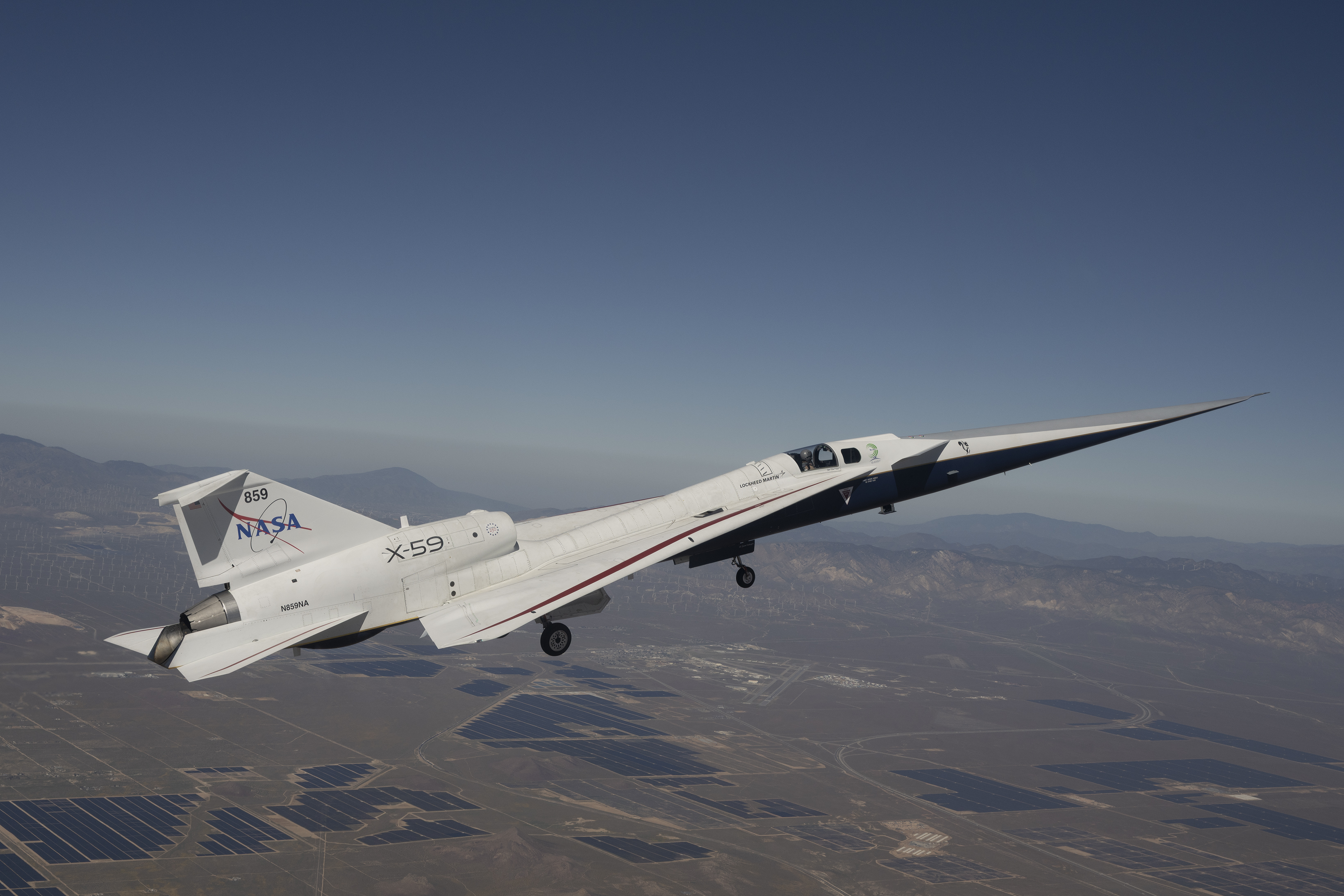
Following this initial flight test phase at Armstrong, scheduled to continue through 2026, the Quesst mission will transition to its most critical phase: community overflights. Beginning in 2027, NASA plans to fly the X-59 over selected U.S. communities to gather crucial public feedback on the perceived sound of its "sonic thump." This data will be shared with the FAA and international regulatory bodies to support the development of new, noise-based regulations that could potentially lift the existing ban on commercial supersonic flight over land.
The implications of such regulatory changes are profound. Imagine flights from New York to Los Angeles taking half the time, or trans-Pacific journeys significantly shortened, opening up new possibilities for business, tourism, and global connectivity. This potential has spurred renewed interest and investment in supersonic technologies from various private companies globally, including Boom Supersonic and Hermeus, all vying to develop the next generation of high-speed airliners. The X-59, however, is unique as a government-led demonstrator focused explicitly on regulatory change through noise reduction.
Historical Perspective and Future Outlook
The pursuit of supersonic commercial travel is not new. The Concorde, jointly developed by the United Kingdom and France, represented the pinnacle of supersonic passenger flight from 1976 to 2003. Despite its technological marvel, the Concorde was plagued by high operating costs, limited routes due to sonic boom restrictions, and a devastating accident in 2000 that ultimately led to its retirement. Its legacy highlighted the critical need for a solution to the sonic boom problem to make supersonic flight economically and environmentally sustainable.
NASA’s Quesst mission directly addresses this legacy by focusing on the core issue of noise. If the X-59 successfully demonstrates that a quiet supersonic flight is achievable and publicly acceptable, it could trigger a paradigm shift in aviation. The economic benefits could be substantial, creating new markets for aircraft manufacturers, airlines, and related industries. Furthermore, reduced travel times could facilitate faster global commerce and improve emergency response capabilities across vast distances.
However, challenges remain. Beyond the acoustic validation, future supersonic aircraft will need to address concerns regarding fuel efficiency, emissions, and the overall environmental footprint. While the X-59 is a research aircraft and not a prototype for a commercial airliner, the data it provides will be crucial for informing the design of environmentally conscious supersonic transport. The material science, propulsion systems, and aerodynamic principles validated by the X-59 will serve as foundational knowledge for the entire industry.
Collaboration and Expertise
The X-59 program is a testament to sophisticated engineering and collaborative effort. Lockheed Martin Skunk Works, renowned for its innovative aerospace projects, designed and built the X-59 under a $247.5 million contract from NASA. This partnership leverages decades of expertise in advanced aircraft design and manufacturing, combining NASA’s research objectives with Lockheed Martin’s development capabilities. The project team, comprising engineers, scientists, and test pilots from both organizations, exemplifies a commitment to pushing the boundaries of aerospace technology.
The flight test campaign planned for 2026, now formally underway with this second flight, will meticulously gather performance data, validate the aircraft’s systems, and prepare it for the critical acoustic validation phase. Each flight, whether routine or abbreviated, provides invaluable insights, ensuring the safety and scientific rigor of the mission. The team’s swift response to the technical issue during the second flight underscores the robust test methodologies in place and the high level of preparedness.
As the X-59 gradually expands its flight envelope, reaching higher altitudes and eventually supersonic speeds, the world watches with anticipation. The prospect of commercial supersonic travel that is quiet, efficient, and accessible moves closer to reality with each test. The journey is long and complex, but the successful, albeit brief, second flight of the X-59 reaffirms NASA’s commitment to innovation and its pivotal role in shaping the future of aviation. The data gathered today, even from a shortened flight, will be meticulously analyzed, paving the way for the X-59 to resume its flight campaign and continue its mission to usher in a new era of faster-than-sound travel for all.