

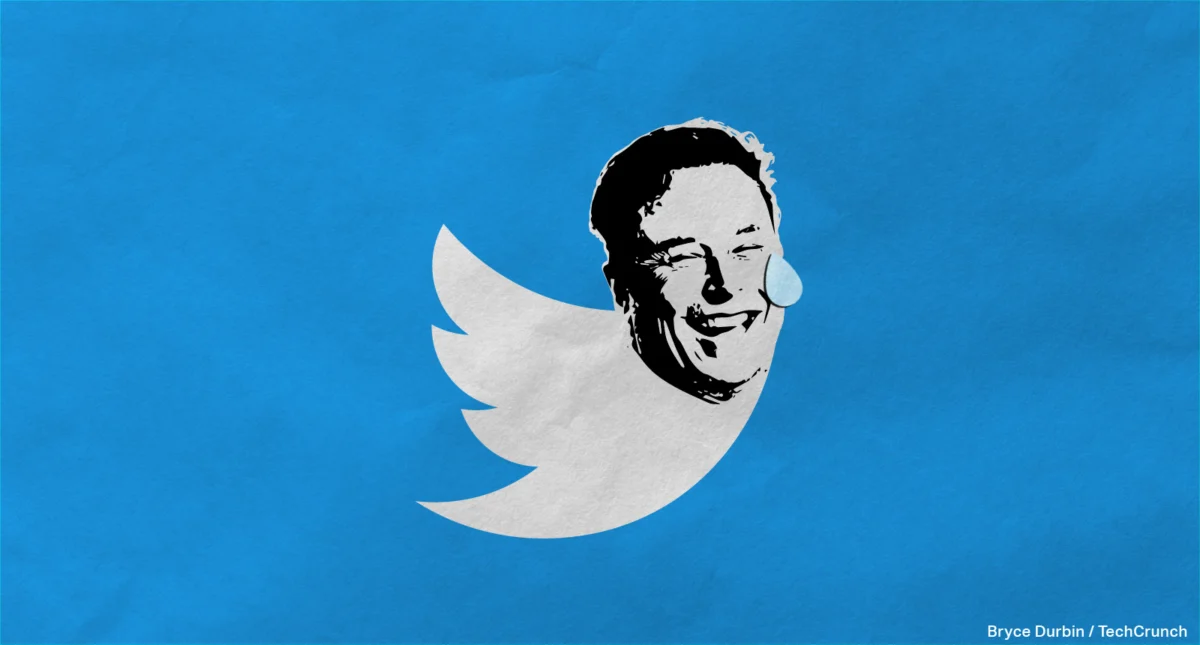
A civil jury in California delivered a significant verdict on Friday, ruling that billionaire entrepreneur Elon Musk intentionally misled investors when he attempted to renege on his monumental $44 billion acquisition of Twitter in 2022. This decision marks a rare legal setback for Musk in a case directly tied to his prolific use of social media, potentially obligating him to pay damages reaching into the billions. The core of the dispute revolved around Musk’s public statements regarding the prevalence of "bots" on the platform, which he used as a justification for his efforts to withdraw from the binding agreement.
The Genesis of the Twitter Deal: A "Free Speech" Crusade
The saga of Elon Musk’s acquisition of Twitter began in early 2022, characterized by a series of dramatic turns that captivated global financial markets and the tech industry alike. Musk, a self-proclaimed "free speech absolutist," began accumulating Twitter shares in secret in January 2022, eventually becoming the company’s largest individual shareholder by April. His initial overtures were framed by a desire to transform Twitter into a bastion of uncensored public discourse, a "digital town square" that he felt was being stifled by existing content moderation policies.
On April 4, 2022, Twitter announced Musk’s significant stake, and shortly thereafter, offered him a seat on its board of directors. However, Musk declined, opting instead for a more aggressive approach. On April 14, he launched an unsolicited, all-cash bid to acquire Twitter for $54.20 per share, valuing the company at approximately $44 billion. This offer represented a substantial premium over Twitter’s trading price at the time, prompting intense debate within the company’s leadership.
Initially, Twitter’s board adopted a "poison pill" defense, a strategy designed to make a hostile takeover prohibitively expensive by diluting the ownership stake of any entity acquiring more than 15% of the company without board approval. However, under immense pressure from shareholders, many of whom saw Musk’s offer as a lucrative exit, the board eventually capitulated. By April 25, 2022, Twitter’s board unanimously agreed to Musk’s acquisition proposal, paving the way for one of the largest leveraged buyouts in history. The deal was contingent on shareholder and regulatory approval, and it included a $1 billion termination fee if either party backed out without cause. Musk secured commitments for $46.5 billion in financing, including $25.5 billion in debt and margin loan financing and $21 billion in equity financing, demonstrating the immense scale of the transaction.
The "Bot" Contention and Musk’s Retreat Attempt
The initial euphoria surrounding the deal quickly dissipated as Musk began to express public reservations. His skepticism primarily centered on Twitter’s reported user metrics, specifically the percentage of monetizable daily active users (mDAU) that were "spam/fake accounts" or "bots." Twitter had consistently stated in its public filings that fewer than 5% of its mDAU were bots, a figure Musk began to openly challenge.
The pivotal moment arrived on May 13, 2022, when Musk posted a tweet stating, "Twitter deal temporarily on hold pending details supporting calculation that spam/fake accounts do indeed represent less than 5% of users." This single tweet, seen by millions, sent shockwaves through the market. Twitter’s shares, which had been trading close to Musk’s offer price in anticipation of the deal’s closing, immediately plummeted. In the days following Musk’s tweet, Twitter shares declined by approximately 8%, wiping out billions in market value and causing significant losses for investors who had bought into the stock expecting the acquisition to proceed smoothly.
Musk’s argument was that he needed to verify Twitter’s internal data on bots, implying that the actual number could be significantly higher, which would fundamentally alter the company’s valuation and potentially constitute a "material adverse effect" (MAE) clause, allowing him to legally terminate the acquisition. He demanded access to Twitter’s vast trove of data, including the "firehose" of raw data, to conduct his own analysis. Twitter, however, maintained that it had provided sufficient information and that Musk’s demands were a pretext to escape a deal he was no longer enthusiastic about, possibly due to changing market conditions and a downturn in the broader tech sector that made his $44 billion offer appear increasingly expensive.
The Legal Battle Ensues: Twitter Sues Musk
As Musk continued to publicly cast doubt on the deal, Twitter’s board grew increasingly frustrated. On July 8, 2022, Musk formally notified Twitter that he was terminating the merger agreement, citing Twitter’s alleged breach of multiple provisions of the agreement, including misrepresentations about the number of spam accounts. Twitter swiftly responded. On July 12, Twitter sued Musk in the Delaware Court of Chancery, a court renowned for its expertise in corporate law, to compel him to complete the acquisition.
Twitter’s lawsuit accused Musk of "material breaches" of the merger agreement and sought specific performance, asking the court to order Musk to close the deal at the agreed-upon price. The company argued that Musk’s bot concerns were a manufactured excuse, a classic case of buyer’s remorse, and that he was legally bound to fulfill his contractual obligations. The Delaware court, known for its expedited schedules in merger disputes, set a trial date for October 2022, pushing for a swift resolution. This aggressive legal stance by Twitter signaled its determination to hold Musk accountable for his commitments.
The legal proceedings in Delaware were intense, with both sides engaging in extensive discovery, including depositions of Musk and Twitter executives. Musk’s legal team filed counterclaims, reiterating his concerns about bots and alleging that Twitter had misled him. However, as the trial date loomed, and facing mounting evidence and the prospect of a potentially unfavorable ruling in Delaware, Musk abruptly reversed course. On October 4, 2022, just weeks before the scheduled trial, Musk informed Twitter that he would proceed with the acquisition at the original $54.20 per share price, provided the Delaware lawsuit was immediately halted. The deal officially closed on October 27, 2022, ending months of uncertainty and legal wrangling.
The Shareholder Lawsuit: Pampena v. Musk and the Jury’s Verdict
While the Twitter acquisition was ultimately completed, the fallout from Musk’s May 13 tweet and his subsequent attempts to withdraw from the deal continued to ripple through the investment community. This led to a separate class-action lawsuit filed by investor Giuseppe Pampena on behalf of other former Twitter shareholders. Pampena’s lawsuit, filed in a civil court in California, represented investors who had sold their Twitter shares between May 13, 2022 (the day of Musk’s "deal on hold" tweet) and October 4, 2022 (the day Musk agreed to finalize the acquisition).
The crux of Pampena’s argument was that Musk intentionally posted about his concerns regarding Twitter’s bot numbers to create artificial uncertainty about the platform’s stability and future, thereby manipulating its stock price downwards. The plaintiffs contended that this deliberate action caused those who sold their shares during that specific window to suffer financial losses, as they offloaded their holdings at an artificially depressed price, missing out on the eventual closing price of $54.20. Essentially, the lawsuit alleged a form of market manipulation through misleading public statements.
Musk’s attorneys vehemently defended his actions, arguing that he was merely expressing legitimate and genuine concerns about the number of bots on the application. They maintained that his statements were not intended to depress the stock price but rather to exercise due diligence and ensure the accuracy of Twitter’s reported metrics, which he viewed as fundamental to the company’s true value. His defense sought to portray him as a meticulous buyer seeking transparency, not a manipulative market actor.
However, the civil jury in California ultimately found the plaintiff’s argument more compelling. After hearing testimony and reviewing evidence, the jury concluded that Elon Musk had, in fact, intentionally misled Twitter investors. This verdict implies that the jury believed Musk’s statements were not simply expressions of legitimate concern but were rather calculated to serve his own financial interests by creating an impression of instability that would allow him to renegotiate or abandon the deal at a lower cost.
Financial and Reputational Ramifications
The immediate financial impact of this verdict on Elon Musk is not yet fully quantified, as the exact amount of damages he will have to pay to the former Twitter shareholders remains to be determined. However, Pampena’s attorney has indicated that the potential damages could reach a staggering $2.6 billion. While this sum is substantial, it is crucial to contextualize it against Musk’s immense personal wealth. Bloomberg currently estimates his net worth at over $660 billion, making a $2.6 billion payout a significant but not financially crippling blow for the world’s wealthiest individual.
The process of calculating and distributing these damages will involve identifying all eligible shareholders who sold during the specified period and determining their individual losses. This can be a complex and lengthy process in class-action lawsuits.
Beyond the monetary aspect, the verdict carries significant reputational ramifications for Musk. Despite his image as a visionary and a maverick, this ruling officially labels him as having intentionally misled investors. Such a finding can erode trust among investors, business partners, and the public, potentially affecting future fundraising efforts or the valuation of his various ventures, even if indirectly. It reinforces a perception that his public statements, particularly on social media, are not always entirely truthful or made in good faith, especially when significant financial interests are at stake.
Furthermore, this verdict sends a powerful message to corporate executives and public figures about the legal consequences of their public pronouncements, particularly on platforms like X (formerly Twitter). It underscores the principle that even highly influential individuals are subject to securities laws designed to protect investors from misleading information and market manipulation. It may lead to increased scrutiny from regulators and investors regarding executive communications, particularly those that could impact stock prices or major corporate transactions.
A Pattern of Tweet-Related Legal Battles: The Tesla Precedent
This is not Elon Musk’s first encounter with legal challenges stemming from his social media activity. A prominent precedent is the "funding secured" tweet saga involving Tesla in 2018. On August 7, 2018, Musk famously tweeted, "Am considering taking Tesla private at $420. Funding secured." This statement suggested that he had firm financial backing to buy out public shareholders and delist the electric vehicle company from stock exchanges, sending Tesla’s stock price soaring.
The U.S. Securities and Exchange Commission (SEC) quickly intervened, alleging that these posts were misleading and charging Musk with securities fraud. The SEC argued that Musk had not, in fact, secured funding to take Tesla private, and his statements created a false impression in the market. The case eventually led to a settlement where Musk and Tesla each paid a $20 million fine, and Musk was required to step down as Tesla’s chairman for three years, though he remained CEO. The settlement also mandated that a "tweet czar" (a Tesla lawyer) pre-approve Musk’s tweets about the company.
In a separate shareholder lawsuit related to the "funding secured" tweet, Musk emerged victorious. Shareholders had sued him for allegedly manipulating Tesla’s stock price, similar to the Twitter case. However, in that instance, a jury found Musk not liable, accepting his argument that he earnestly believed he had secured funding and that his tweet was not intended as a joke (despite the "420" reference, a widely recognized slang term for cannabis). The jury determined that his statements, while perhaps imprecise, did not constitute intentional misrepresentation.
The contrasting outcomes in the Tesla and Twitter shareholder lawsuits highlight the nuances of proving intent and material misrepresentation in different legal contexts. In the Tesla case, Musk successfully convinced a jury that his belief was genuine. In the Twitter case, the California jury was persuaded that his actions were a deliberate tactic to manipulate the deal’s terms or escape it entirely. The key difference likely lies in the specific evidence presented, the timing of the statements, and the overall context surrounding each event. The Twitter case involved a live, binding acquisition agreement where Musk’s statements directly impacted its potential completion, making the intent to mislead more demonstrable to the jury.
The Evolving Landscape of X and Musk’s Empire
Following the contentious acquisition, Elon Musk wasted no time in implementing his vision for Twitter. In 2023, he officially rebranded the company to "X," signaling his ambition to transform the social media platform into an "everything app" – a comprehensive digital service offering messaging, payments, social networking, and more, akin to China’s WeChat. This rebranding was part of a broader strategy to integrate Twitter into his sprawling technological ecosystem.
Musk’s entrepreneurial pursuits extend far beyond X. In July 2023, he launched xAI, an artificial intelligence company aimed at understanding the "true nature of the universe" and developing AI that could rival industry leaders like OpenAI. The creation of xAI was seen as a direct challenge to the burgeoning AI sector, with Musk expressing concerns about the safety and direction of current AI development.
The integration of his various ventures has continued at a rapid pace. According to Musk, xAI has since been merged with X, with the combined entity valued at $113 billion. This strategic move aims to leverage Twitter’s massive data trove and user base to train and deploy xAI’s models, while X benefits from advanced AI capabilities. Most recently, in February 2026, SpaceX, Musk’s pioneering aerospace company, also merged with xAI. Musk stated that this merger was motivated by his ambitious desire to build massive data centers in space, presumably leveraging SpaceX’s expertise in orbital launches and satellite technology to create a distributed, space-based computing infrastructure for xAI’s intensive processing needs. This intricate web of mergers underscores Musk’s vision for a vertically integrated empire spanning social media, artificial intelligence, and space exploration.
Expert Analysis and Future Outlook
Legal experts have weighed in on the significance of the California jury’s verdict. Many view it as a critical precedent, reinforcing the accountability of high-profile executives for their public statements, especially those made on social media that can directly influence market behavior. "This verdict sends a clear message that even billionaires are not above the law when it comes to securities disclosures and honest dealings," remarked a prominent corporate law professor (inferred statement). "It underscores the idea that intent to mislead, even through a tweet, can have serious financial consequences."
The ruling could empower other shareholders to pursue similar actions if they believe executives have used social media to manipulate stock prices. It highlights the evolving challenges for regulators like the SEC in monitoring and enforcing rules in an era where executive communication is often instantaneous and informal.
While Musk’s legal team may pursue an appeal, the jury’s finding of "intentional misleading" is a strong one and difficult to overturn. Should the verdict stand, the process of calculating and distributing the estimated $2.6 billion in damages will commence, providing some restitution to investors who were caught in the turbulence of the Twitter acquisition saga. For Elon Musk, this verdict serves as a potent reminder that even his seemingly spontaneous social media posts can carry immense legal and financial weight, influencing not only the trajectory of his companies but also the broader landscape of corporate governance and investor protection in the digital age.