

The global aviation industry is witnessing a significant contraction in the price premium of Sustainable Aviation Fuel (SAF) relative to conventional kerosene-based jet fuel, a development primarily driven by surging crude oil prices linked to escalating geopolitical tensions in the Middle East. Recent data from S&P Global Commodity Insights indicates that SAF prices in Western Europe reached approximately $2,500 per metric ton in March, marking a notable increase from the $2,300 per metric ton recorded in late February. However, while the nominal price of SAF has ascended, its relative costliness compared to traditional jet fuel has diminished as the latter experiences more aggressive price hikes due to supply chain disruptions and market shocks stemming from the ongoing conflict involving Iran and its regional implications.
This narrowing "green premium"—the extra cost an airline pays to choose a sustainable alternative over a fossil fuel—comes at a critical juncture for an industry under intense pressure to decarbonize. For years, the prohibitive cost of SAF, which has historically been three to five times more expensive than conventional fuel, has been cited as the primary barrier to widespread adoption. The current market dynamics suggest that as fossil fuel prices become increasingly volatile and expensive due to geopolitical instability, the economic case for SAF may be strengthening, albeit through the undesirable mechanism of rising costs across the entire energy spectrum.
The Geopolitical Catalyst: Oil Market Shocks and Refining Pressures
The primary driver behind the rising cost of conventional jet fuel is the heightened state of alert in the Persian Gulf and the broader Middle East. Following direct military engagements and the targeting of energy infrastructure, the global oil market has priced in a significant "war premium." Iran’s strategic position near the Strait of Hormuz, a conduit for a fifth of the world’s total oil consumption, means that any perceived threat to shipping or production leads to an immediate spike in Brent crude benchmarks.
As traditional crude prices rise, the cost of refining those products into Jet A-1 fuel also climbs. European refineries, already facing constraints due to shifts away from Russian energy imports, have seen their margins squeezed. The direct targeting of energy assets in the region has created a ripple effect, increasing insurance premiums for tankers and forcing rerouting of supplies. This has resulted in a tighter supply of conventional jet fuel in Western European hubs, pushing prices higher and effectively closing the gap with the more expensive, but more stable, SAF production lines.
Understanding the SAF Composition: The Dominance of HEFA
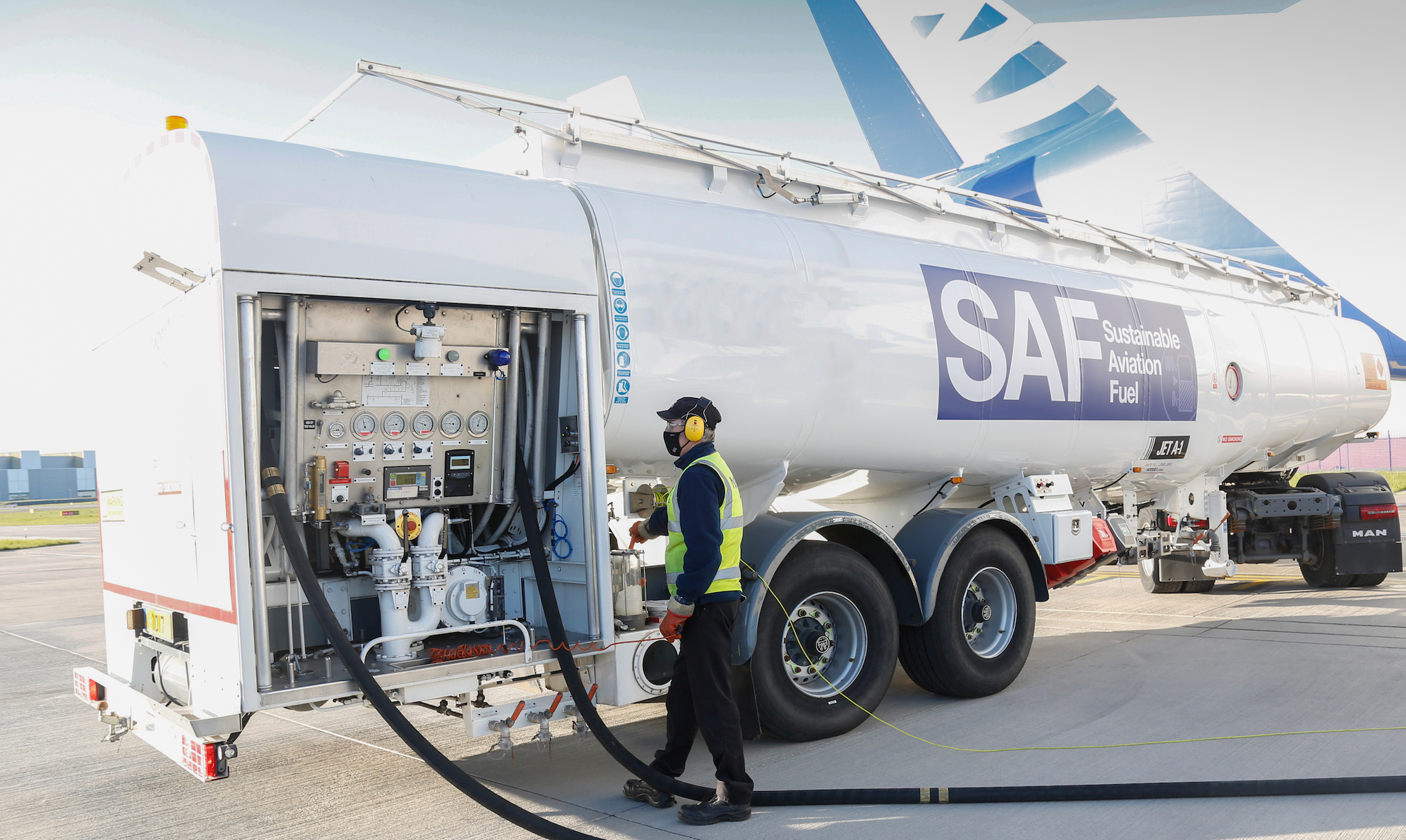
Current SAF production is largely dominated by the HEFA (Hydroprocessed Esters and Fatty Acids) pathway. This process involves the refining of used cooking oil (UCO), animal fats (tallow), and vegetable oils into a "drop-in" fuel that can be used in existing aircraft engines without modification. While HEFA is the most mature and commercially viable SAF technology, it remains inherently more expensive to produce than fossil-based kerosene.
The production of HEFA-based SAF requires specialized biorefineries and a consistent supply of bio-feedstocks. Unlike crude oil, which is extracted in massive volumes, the collection and processing of used cooking oil and animal fats are logistically intensive and subject to their own supply chain constraints. However, because the feedstock for SAF is not directly tied to the same geopolitical triggers as crude oil, its price movements tend to be more influenced by agricultural trends and waste-collection efficiency rather than the immediate fluctuations of the Iranian war or OPEC+ production quotas. This relative stability in production logic is what allows the price gap to narrow when the fossil fuel market experiences a shock.
Chronology of Market Shifts: Early 2024 to Present
The timeline of the current price convergence reflects the rapid escalation of regional tensions and their immediate impact on energy commodities:
- January 2024: Conventional jet fuel prices remain relatively stable, with SAF maintaining a premium of nearly 200% over fossil fuels. Airlines continue to call for government subsidies to bridge the cost gap.
- February 2024: Geopolitical rhetoric in the Middle East intensifies. Western European SAF prices are quoted at roughly $2,300 per metric ton. Conventional jet fuel begins a slow climb as shipping disruptions in the Red Sea begin to impact delivery timelines.
- Early March 2024: Direct military actions involving Iranian-backed interests and retaliatory measures lead to a sharp spike in Brent crude. The price of SAF in Western Europe climbs to $2,500 per metric ton, but conventional jet fuel prices rise at a faster percentage rate.
- Late March 2024: S&P Global reports a narrowing premium for SAF. The "green premium" hits a multi-month low, as the cost of traditional kerosene approaches levels that make the transition to SAF less financially jarring for major carriers.
Supporting Data: A Closer Look at the Numbers
The narrowing gap is best understood through the specific pricing data emerging from European energy hubs. In late February, the spread between Jet A-1 and SAF was at a level that many analysts considered a deterrent to voluntary SAF purchasing beyond mandatory requirements. By the third week of March, however, the price of Jet A-1 had surged by double digits in several European markets.
According to S&P Global, the $200 per metric ton increase in SAF (from $2,300 to $2,500) was eclipsed by the rising floor of the energy market. In some trading sessions, the premium for SAF over jet fuel dropped by as much as 15% compared to the start of the year. This does not mean SAF has become "cheap"; rather, it indicates that fossil fuels have become significantly more expensive, reducing the marginal cost of choosing the sustainable option.
Furthermore, the demand for HEFA feedstocks remains high. Europe’s dependence on imported used cooking oil, primarily from Asia, means that shipping costs also play a role in the $2,500 price tag. Despite these logistical costs, the surge in Brent crude has remained the dominant factor in the overall fuel price index for the aviation sector.
Industry Responses and Regulatory Landscape
The narrowing price gap has elicited a mixed response from airline executives and environmental policy experts. On one hand, the reduced premium makes it easier for airlines to meet the requirements of the ReFuelEU Aviation initiative, which mandates that fuel supplied at EU airports contains a minimum percentage of SAF starting in 2025.
International Air Transport Association (IATA) Perspective:
Industry analysts at IATA have noted that while a narrower price gap is technically a positive for SAF adoption, the fact that it is driven by high fossil fuel prices is a "double-edged sword." High fuel prices across the board increase the overall operating costs for airlines, which are often passed on to consumers in the form of higher ticket prices. "The goal should be to bring SAF prices down through scaling and innovation, not to wait for fossil fuels to become so expensive that SAF looks affordable by comparison," an industry spokesperson noted in a recent briefing.
Airline Reactions:
Major European carriers, including Air France-KLM and the Lufthansa Group, have already integrated SAF surcharges into their pricing models. For these companies, a narrowing gap simplifies the financial accounting of their sustainability programs. However, they remain cautious, noting that the volatility in the Middle East makes long-term fuel hedging difficult. If the conflict were to de-escalate and oil prices were to crash, the SAF premium would widen once again, potentially stalling voluntary investments.
Broader Impact and Implications for Net Zero 2050
The current market shift provides a real-world case study for the "Net Zero 2050" roadmap established by the aviation industry. One of the central tenets of this roadmap is the eventual parity of SAF and conventional fuel prices.
- Accelerated Investment: If the price gap remains narrow for an extended period, it may encourage more private equity investment into SAF production facilities. Investors are more likely to fund biorefineries if the market price for the output is competitive with traditional alternatives.
- Feedstock Scarcity: As the price gap narrows and demand for SAF increases, the industry faces a looming shortage of HEFA feedstocks. There is only so much used cooking oil and animal fat available globally. This highlights the urgent need to move toward "second-generation" SAF, such as synthetic fuels (e-fuels) made from captured carbon and green hydrogen, or alcohol-to-jet pathways using agricultural waste.
- Policy Adjustments: Governments may view the current price convergence as an opportunity to implement more aggressive SAF mandates without the fear of crippling the aviation industry. If the "market shock" has already raised fuel prices, the incremental cost of a SAF mandate becomes less noticeable to the end consumer.
Future Outlook: Sustainability Amidst Instability
As the industry moves into the second quarter of 2024, the trajectory of fuel prices remains tethered to the geopolitical situation in the Middle East. Should the conflict involve further direct targeting of oil infrastructure, the price of conventional jet fuel could see unprecedented highs, potentially bringing it closer to SAF than ever before.
However, analysts warn that this is an artificial form of price parity. A sustainable transition for the aviation sector requires the decoupling of fuel prices from geopolitical volatility. This can only be achieved by scaling up production to a level where economies of scale drive down the $2,500 per metric ton price point of SAF.
The current narrowing of the price gap serves as a reminder of the vulnerability of a global transportation system dependent on fossil fuels sourced from volatile regions. While the circumstances are far from ideal, the resulting shift in energy economics may inadvertently provide the impetus needed for the aviation sector to accelerate its pivot toward renewable energy sources. In the long term, the goal remains a stable, predictable market where SAF is not just a "sustainable" choice, but the most economically rational one.