



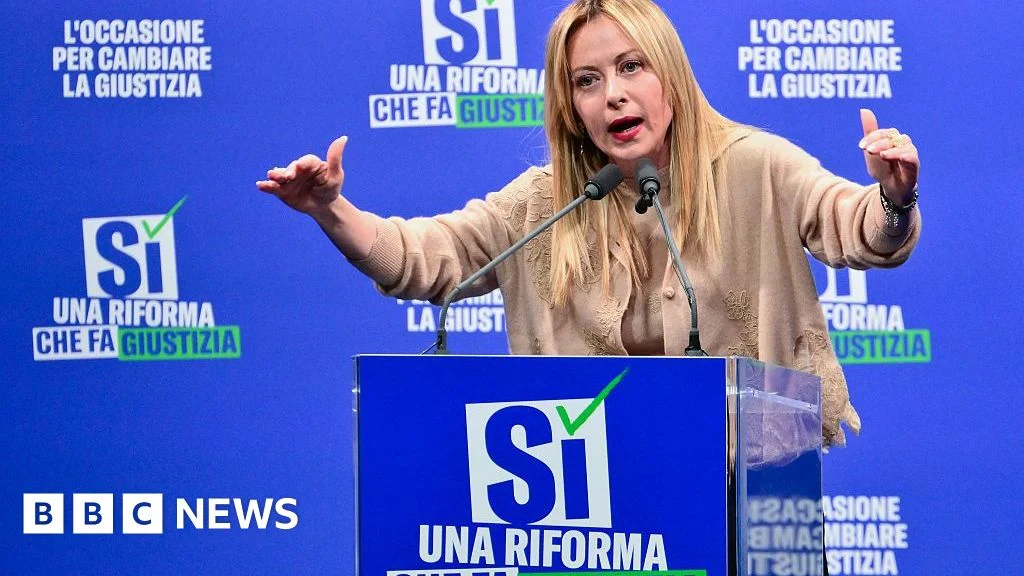
Italy stands at a critical juncture as citizens head to the polls this weekend to vote on significant changes to the nation’s constitution, a move that represents a substantial gamble for Prime Minister Giorgia Meloni and her right-wing government. This referendum, focusing primarily on the judicial system, has quickly evolved beyond its technical merits to become a de facto confidence vote on Meloni’s leadership, three-and-a-half years into her tenure—a period of unusual stability for Italy’s often-volatile political landscape.
The Constitutional Crossroads: A High-Stakes Referendum for Italy
The proposed constitutional amendments seek to reform Italy’s judiciary, a system long plagued by inefficiencies and perceived political entanglement. At its core, the reform aims to separate the career paths of judges and public prosecutors, establishing distinct governing bodies and a new disciplinary court for each. Proponents argue this will enhance accountability, meritocracy, and efficiency within the judicial system, addressing long-standing complaints about its sluggishness and perceived susceptibility to political influence.
However, the initiative has ignited fierce debate across the political spectrum, transcending technical legal arguments to become a broader ideological battleground. For Prime Minister Meloni, a "yes" vote would not only validate her government’s reform agenda but also strengthen her mandate, potentially paving the way for further constitutional changes, including a controversial proposal for the direct election of the Prime Minister. Conversely, a "no" vote, while not directly threatening her government’s survival, would undoubtedly inflict a significant political blow, undermining her image of strong, stable leadership and potentially emboldening opposition forces. Political scientist Roberto D’Alimonte of Luiss University notes the high stakes: "She wants to win. If she loses, there will be an impact and she understands that." The outcome, he suggests, is "touch and go," demanding a robust mobilization of her voter base.
Meloni’s Bold Bid for Judicial Reform
Prime Minister Giorgia Meloni has personally spearheaded the campaign for a "yes" vote, deploying unconventional communication strategies to reach diverse segments of the Italian electorate. In a notable departure from traditional political campaigning, Meloni recently appeared on the popular "Pulp" podcast, hosted by rapper Fedez and personal trainer-turned-podcaster Mr Marra. Swapping her customary formal attire for a more casual woolly jumper with sparkles, she engaged in an hour-long discussion, fielding questions designed to resonate with younger voters. Her message was clear: these reforms are essential to create a judicial system that is "more meritocratic, more responsible, more efficient" for all Italians.
Meloni vigorously countered the opposition’s strategy of framing the referendum as a plebiscite on her government. She argued that a "no" vote, motivated purely by a desire to oust her, would be a self-defeating act. "If you vote ‘no’ today just to send Meloni home, you’ll find yourself keeping both Meloni and a justice system that doesn’t work," she asserted, emphasizing that her resignation was not on the table. This direct appeal sought to decouple the substance of the reform from the broader political frustrations that often find an outlet in popular votes. Her campaign efforts extended to traditional rallies, where she continued to link judicial inefficiency to broader societal concerns, controversially claiming in Milan that rejecting the referendum would lead to "even more… immigrants, rapists, paedophiles, drug dealers being freed and putting your security at risk," a statement that drew sharp criticism for its inflammatory nature and lack of evidential basis. For Meloni, winning this referendum is about proving her government’s capacity to deliver substantive change and solidify her reformist credentials.
The Heart of the Proposed Changes: Separating Powers
The constitutional reform primarily targets the structure and governance of Italy’s judiciary. Currently, judges and public prosecutors, while having distinct roles, share a common career path and are governed by the same self-regulatory body, the Consiglio Superiore della Magistratura (CSM). Critics argue this intertwining creates a "revolving door" phenomenon, where individuals can switch between adjudicative and prosecutorial roles, potentially fostering conflicts of interest or a lack of objective oversight.
The proposed changes aim to:
- Separate Career Paths: Judges and public prosecutors would embark on entirely distinct professional trajectories from the outset of their careers, preventing the current practice of switching roles. This would mean that a legal professional would choose either a judicial or a prosecutorial track and remain on it, theoretically enhancing specialization and reducing potential for bias.
- Establish Distinct Governing Bodies: Instead of a single CSM, there would be two separate high councils: one for judges and another for public prosecutors. This aims to ensure independent oversight tailored to each function, allowing for more focused management and disciplinary action within each branch without cross-pollination of influence.
- Create a New Disciplinary Court: A dedicated court would be established to handle disciplinary proceedings against both judges and prosecutors, intended to introduce greater impartiality and rigor into accountability mechanisms. This body would be separate from the governing councils, aiming for a more objective review process for misconduct allegations.
While the government frames these changes as crucial for enhancing judicial independence and efficiency, opposition parties and many legal experts express deep reservations. They contend that the reforms do not address the fundamental issue of chronic judicial overload, which is rooted in understaffing, outdated procedures, and complex legal codes. Italy’s judicial system is notoriously slow; some trials can drag on for years, leading to significant backlogs and undermining public trust. The proposed reforms, critics argue, offer structural changes without tackling the resource and procedural bottlenecks that cause delays.
Instead, opponents fear the true agenda is to weaken the judiciary’s autonomy and make it more susceptible to political influence. Historically, figures like the late Silvio Berlusconi, whose Forza Italia party (a member of the current coalition) championed similar reforms, frequently clashed with the judiciary, labeling it a "communist" block on his power. This historical context fuels suspicions among the opposition that Meloni’s government, which has also had public disputes with the courts, seeks to gain greater control over a critical check on executive power.
Constitutional law professor Alessandro Sterpa of Tuscia University, while not typically a Meloni supporter, offers a nuanced perspective. He supports the reform, citing past complaints about the influence of political factions, or "correnti," within the judiciary. "It’s like, I help you for this case, so you help me. It’s like a little parliament where they all act together. It’s not normal," Sterpa explains, suggesting the reforms could curb such informal networks. Crucially, he sees no explicit provisions in the proposed reform that would increase direct government control over the judiciary. This highlights the complexity of the debate, where even some on the left see merits in addressing perceived internal issues within the judicial system.
A Campaign of Contrasts: Mobilizing Support and Opposition

The campaign leading up to the referendum has been characterized by stark contrasts. Meloni’s outreach, including the podcast appearance, aimed to inject energy and clarity into the "yes" message, particularly among younger and less politically engaged demographics. Her government coalition, comprising Fratelli d’Italia, Lega, and Forza Italia, has largely united behind the reforms, presenting a common front despite historical differences on specific judicial issues. Andrea di Giuseppe, a member of Meloni’s Fratelli d’Italia party, urged voters to focus on the substance of the reform rather than using it as a proxy vote against the government. "If you are not happy about this government, then in 2027 [you can] just kick it off the bus, change to another government. Now, the matter of the referendum is what counts," he stated, attempting to depoliticize the vote.
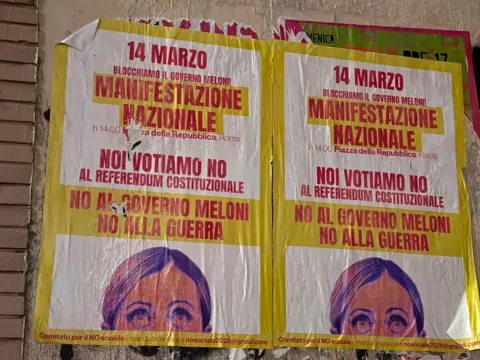
Conversely, the "no" campaign has coalesced around a powerful narrative of defending Italy’s post-fascist constitution and safeguarding democratic checks and balances. Trade unions, civil society organizations, and a broad spectrum of opposition parties, from the centre-left Democratic Party to more radical groups, have vehemently opposed the reforms. Their arguments often evoke the spirit of Italy’s foundational document, drafted in the wake of Mussolini’s dictatorship, which meticulously designed a system of separated powers to prevent the resurgence of authoritarianism.
The "no" campaign’s final rally in Rome’s historic Piazza del Popolo saw a vibrant demonstration, with participants spelling out "Vote No" on the cobblestones and an inflatable unicorn bearing a sign reading "Leave the Constitution in Peace." Andrea Malpassi from the CGIL trade union articulated the core concern: "The constitution gave us the guarantee of this balance of powers after fascism. We needed that not to fall again in that kind of state." He expressed deep apprehension about any constitutional changes initiated by a prime minister whose political roots trace back to admiration for Mussolini, fearing that weakening judicial independence could pave the way for executive overreach. Malpassi pointed to "a lot of inquiries into what ministers of this government did" in recent years, underscoring the importance of an unhindered judiciary.
Historical Echoes and the Post-Fascist Constitution
Italy’s constitution, adopted in 1948, is revered by many as a symbol of the nation’s rebirth from fascism and a guarantor of democratic freedoms. Its meticulously crafted system of checks and balances, including a strong role for the judiciary, was specifically designed to prevent the concentration of power that characterized the fascist era. Any attempt to alter this foundational document is thus viewed with intense scrutiny, particularly when proposed by a right-wing government.
This is not Italy’s first constitutional referendum. In 2016, then-Prime Minister Matteo Renzi proposed sweeping reforms aimed at streamlining Italy’s notoriously slow legislative process and strengthening the executive. Renzi staked his political future on the outcome, promising to resign if the "no" vote prevailed. The reforms were decisively rejected, and Renzi resigned, illustrating the profound political risk associated with constitutional referendums in Italy. The current referendum, while more focused on the judiciary, carries similar political weight for Meloni, albeit with her explicit declaration that she will not resign. The memory of Renzi’s defeat looms large, reminding political observers of the Italian electorate’s historical reluctance to endorse significant constitutional changes without broad consensus. The question for many voters remains whether the proposed reforms genuinely address systemic issues or represent a veiled attempt to consolidate political power.
The Broader Political and Economic Climate
The referendum takes place against a backdrop of complex domestic and international challenges. Italy, like much of Europe, is grappling with persistent inflation, rising energy costs, and the lingering economic uncertainties stemming from geopolitical tensions, including the ongoing war in Ukraine. These external pressures have a tangible impact on the daily lives of Italians, potentially fueling a general sense of frustration and disillusionment with the political class. The Eurostat inflation rate for Italy, while having cooled from its peak, remains a significant concern for households.
Political scientist D’Alimonte highlights this confluence of factors: "The geopolitical situation is very tough, of course. People are scared. I completely feel that. But we need to stay focused on the purpose of the referendum." He acknowledges that "the rise in gas prices damages the popularity of the government," suggesting that voters might use the referendum not necessarily to express an informed opinion on judicial reform, but as an opportunity to vent broader grievances against the government’s handling of the economy or foreign policy. This "protest vote" dynamic, common in referendums, makes predicting the outcome even more challenging. With no minimum turnout threshold required for the referendum to be valid – the simple majority of votes cast determines the result – low participation could disproportionately favor the "no" camp, which enjoys stronger organizational backing from trade unions and established opposition parties. Recent polls, though limited in their ability to capture last-minute shifts, have indicated that lower participation would likely benefit those against the reform, as committed "no" voters are often more mobilized.
Implications for Giorgia Meloni and Italy’s Political Landscape

The outcome of this referendum carries profound implications for Giorgia Meloni’s premiership and the future trajectory of Italian politics.
- If the "Yes" vote prevails: A victory would significantly bolster Meloni’s authority, demonstrating her ability to enact substantial reforms despite strong opposition. It would provide her with a renewed mandate, potentially strengthening her hand within the ruling coalition and on the international stage. Such a win could also embolden her to pursue other ambitious constitutional changes, most notably the proposed "premiership" reform that would grant the prime minister greater executive powers and make the office directly elected. This would fundamentally reshape Italy’s parliamentary system, moving it closer to a semi-presidential model, a long-held ambition of many right-wing parties seeking greater governmental stability. A successful referendum would cement Meloni’s image as a strong, decisive leader capable of overcoming institutional inertia, enhancing her leverage in European and international forums.
- If the "No" vote prevails: While Meloni has explicitly stated she would not resign, a defeat would undoubtedly weaken her politically. It would mark her first significant setback since taking office, puncturing the image of an unstoppable leader who has brought unprecedented stability to Italy. An emboldened opposition would seize on the result, intensifying pressure on her government and potentially exploiting any signs of internal dissent within the coalition. While a government collapse is unlikely, the "no" outcome would complicate her legislative agenda, making it harder to push through other reforms and potentially diverting her government’s focus towards managing political fallout rather than implementing policy. As Professor D’Alimonte puts it, "She will not resign… But she will be politically weakened, there is no question about that." This weakening could manifest in reduced leverage with coalition partners, a more challenging environment for passing legislation, and a dent in her approval ratings, making the path to the next general election in 2027 more arduous. It might also force her to reconsider the timing and viability of future, more expansive constitutional reforms.
The Verdict of the People: Uncertainties and Anticipation
As Italians prepare to cast their ballots over two days, the outcome remains uncertain. The technical nature of the reforms, coupled with the highly politicized campaign, has created an environment where voter engagement and interpretation of the issues are varied. Many Italians admit to struggling to fully grasp the intricacies of the proposed changes, making the emotional and political narratives surrounding the referendum particularly potent.
The "no" campaign’s emphasis on defending the constitution’s legacy and preventing executive overreach resonates deeply with those wary of strong centralized power, especially given Italy’s historical experiences. Conversely, the "yes" campaign’s promise of a more efficient and accountable judicial system appeals to those frustrated by the current system’s perceived failings. The decision will not only shape the future of Italy’s justice system but will also serve as a crucial barometer of public sentiment towards Meloni’s government, influencing her domestic agenda and international standing. The nation awaits the verdict, understanding that its implications will reverberate far beyond the specific articles of the constitution.
Additional reporting by Giulia Tommasi.