

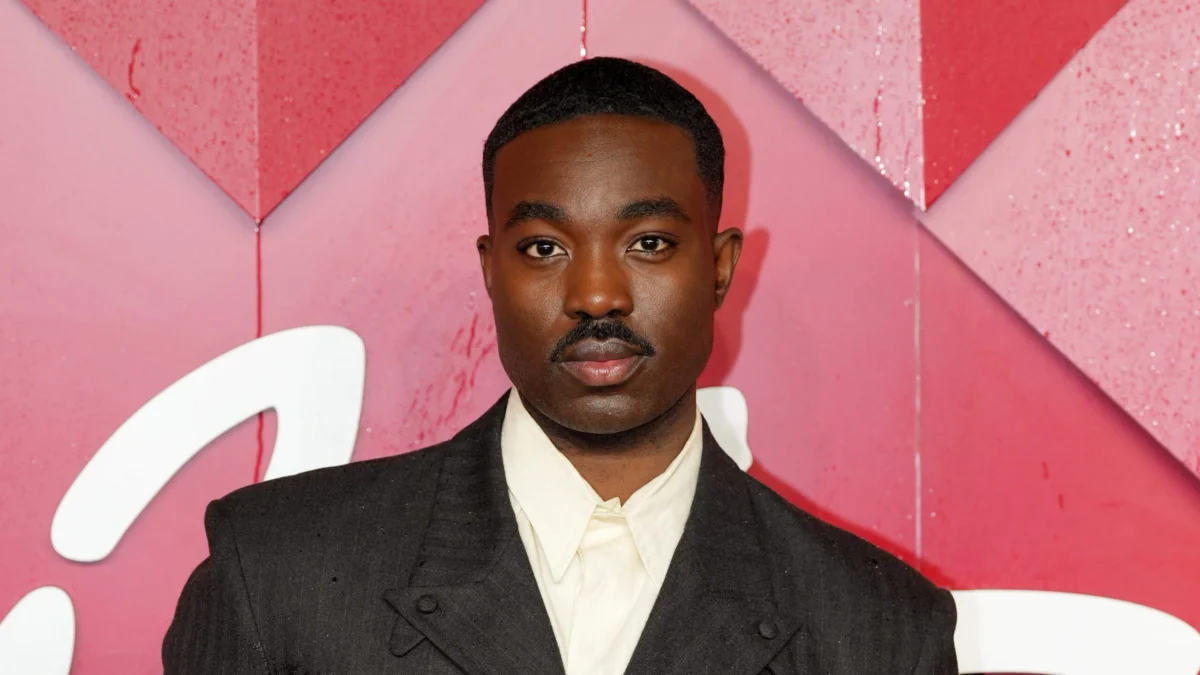
Award-winning actor Paapa Essiedu has revealed the deeply disturbing reality of racist death threats he has received in the wake of his casting as Professor Severus Snape in HBO’s upcoming Harry Potter television series. The revelations, made in a candid interview with The Times, highlight the persistent and virulent nature of online hate speech, particularly within fandom spaces that often exhibit resistance to diverse casting choices. Essiedu disclosed the gravity of these threats, stating, "I’ve been told, ‘Quit or I’ll murder you.’” This chilling declaration underscores the personal toll such vitriol can take on individuals performing their professional duties.
The backlash intensified following the official announcement of Essiedu’s casting in April 2025. As a Black actor stepping into a role iconically portrayed by the late Alan Rickman in the blockbuster film franchise, Essiedu became the target of prejudiced commentary and explicit threats. He elaborated on the pervasive nature of this abuse, sharing, "It really matters. The reality is that if I look at Instagram I will see somebody saying, ‘I’m going to come to your house and kill you.’ So while I’m pretty sure I’m not going to be murdered… That could age badly! But, yes, while I hope I’ll be OK, nobody should have to encounter this for doing their job." The actor’s poignant observation that "nobody should have to encounter this for doing their job" resonates with a broader discussion about the safety and well-being of performers in the public eye.
A History of Fan Backlash and Diversity in Casting
The casting of minority actors in roles previously held by white performers has, unfortunately, become a recurring flashpoint in fan communities. While the Harry Potter universe has long been celebrated for its magical narrative and intricate world-building, it has not been immune to such controversies. The original film series, which ran from 2001 to 2011, featured Alan Rickman in the pivotal role of Severus Snape, a character whose complex morality and tragic backstory made him a fan favorite. Rickman’s portrayal, spanning eight films, left an indelible mark on the franchise.
Essiedu’s experience echoes sentiments expressed by other actors who have faced similar backlash. The debate often centers on perceived adherence to the source material versus the artistic interpretation and evolution of beloved characters for a contemporary audience. While some argue for strict fidelity to the original depictions, a growing consensus advocates for the benefits of diverse representation, which can enrich storytelling and resonate with a wider demographic. The introduction of a Black actor as Snape in the HBO series signifies a deliberate creative choice by the production team, likely aiming to bring a fresh perspective to a character whose origins are not explicitly tied to a specific race in J.K. Rowling’s novels.
The Emotional and Psychological Impact of Online Abuse
Despite the inherent fantastical nature of the world he is inhabiting—playing a wizard in Harry Potter—Essiedu admitted the emotional impact of the threats is undeniable. "And I’d be lying if I said it doesn’t affect me emotionally," he stated. This candid admission highlights the psychological burden that actors, and indeed anyone in the public sphere, can face due to online harassment. The constant barrage of negativity, even when accompanied by a rational understanding that the threats are unlikely to materialize, can erode mental well-being and create a climate of anxiety.
Essiedu, an Emmy nominee known for his critically acclaimed roles in I May Destroy You and The Lazarus Project, has a history of tackling challenging and nuanced characters. His willingness to engage with the role of Snape, even in the face of such hostility, speaks to his artistic conviction. He further articulated how the abuse, paradoxically, serves as a motivator. "The abuse fuels me," he declared, "and makes me more passionate about making this character my own, because I think of how I felt as a kid." This powerful statement connects his personal journey and the importance of representation to his professional drive.
A Catalyst for Representation and a Vision for Inclusivity
Essiedu’s reflections on his childhood experiences offer a profound insight into the significance of seeing oneself reflected in popular culture. "I would imagine myself at Hogwarts on broomsticks, and the idea that a kid like me can see themselves represented in that world? That’s motivation to not be intimidated by someone saying they’d rather I died instead of doing work I’m going to be really proud of," he explained. This sentiment underscores the transformative power of representation, suggesting that seeing diverse faces in aspirational roles can inspire young viewers and foster a sense of belonging. For children from underrepresented backgrounds, such representation can be a vital counterpoint to the exclusionary messages they may encounter elsewhere.
The actor also addressed the challenge of disengaging from the online discourse, noting that even successful avoidance does not negate the underlying problem. "Even if you successfully ignore it, it doesn’t mean it’s not happening," Essiedu observed. "The issue remains endemic and, anyway, people see stuff and message to ask if I’m OK." This highlights the interconnectedness of online spaces and real-world impact, as well as the burden placed on individuals to manage the fallout of others’ malicious behavior. The fact that acquaintances reach out to check on his well-being further illustrates the tangible consequences of the online abuse.
The Ambitious Scope of HBO’s Harry Potter Series
The upcoming Harry Potter television series from HBO represents a significant undertaking, aiming to adapt each of J.K. Rowling’s seven novels into a separate season, promising an eight-season run. This ambitious project seeks to delve deeper into the nuances of the books, offering a more comprehensive and character-driven narrative than the film adaptations. Production on the series commenced in July of the previous year at Warner Bros. Studios Leavesden, U.K., the same location that served as a primary filming site for the original Harry Potter films.
The casting news surrounding the series has been met with considerable anticipation. The Hollywood Reporter had previously exclusively reported in December 2024 that Essiedu was being considered for the role of Snape. The ensemble cast is substantial, with Dominic McLaughlin slated to portray the titular character, Harry Potter. Other key roles are being filled by Alastair Stout as Ron Weasley and Arabella Stanton as Hermione Granger, Harry’s closest friends. The supporting cast includes notable actors such as John Lithgow as Albus Dumbledore, Janet McTeer as Professor Minerva McGonagall, Nick Frost as Rubeus Hagrid, and Lox Pratt as Draco Malfoy, among many others. This carefully curated ensemble suggests a commitment to bringing a high caliber of talent to the adaptation.
Analysis of Implications: Navigating Fandom, Diversity, and Creative Freedom
Essiedu’s experience brings to the forefront critical issues concerning fandom culture, the increasing demand for diversity in media, and the creative liberties taken by production houses. The backlash he has faced is not an isolated incident but rather a symptom of a broader societal tension where traditional fan bases sometimes struggle to embrace evolving casting practices.
Data on Online Harassment: Statistics from organizations like the Pew Research Center consistently show that a significant portion of internet users have experienced some form of online harassment, with race and ethnicity being common targets. While specific data for Harry Potter fandom is not readily available, the general trend of online abuse towards minority actors in prominent roles is well-documented.
Industry Response and Responsibility: The casting of Essiedu as Snape represents a conscious decision by HBO and the showrunners to reimagine certain characters. This decision, while artistically motivated, places the actor in a difficult position, requiring him to withstand a level of prejudice that extends beyond mere criticism of performance. The industry’s response to such threats is crucial. While Essiedu’s stoic and defiant stance is commendable, there is an onus on the production and the platform to ensure robust safety protocols and support systems for their talent.
The Future of Representation: Essiedu’s resilience and his determination to “make this character my own” offer a powerful example of how to confront prejudice. His articulation of the motivation derived from inspiring young viewers speaks to the long-term benefits of inclusive casting. As media continues to diversify, the challenges faced by actors like Essiedu will likely persist, but so too will the growing momentum for authentic representation. The success of the HBO Harry Potter series, both critically and commercially, will be watched closely, not only for its narrative fidelity but also for its ability to foster an inclusive environment within its fandom. The conversation around Essiedu’s casting and the subsequent threats serves as a stark reminder that while the world of magic may be fictional, the real-world impact of prejudice and hate speech is profoundly tangible.