


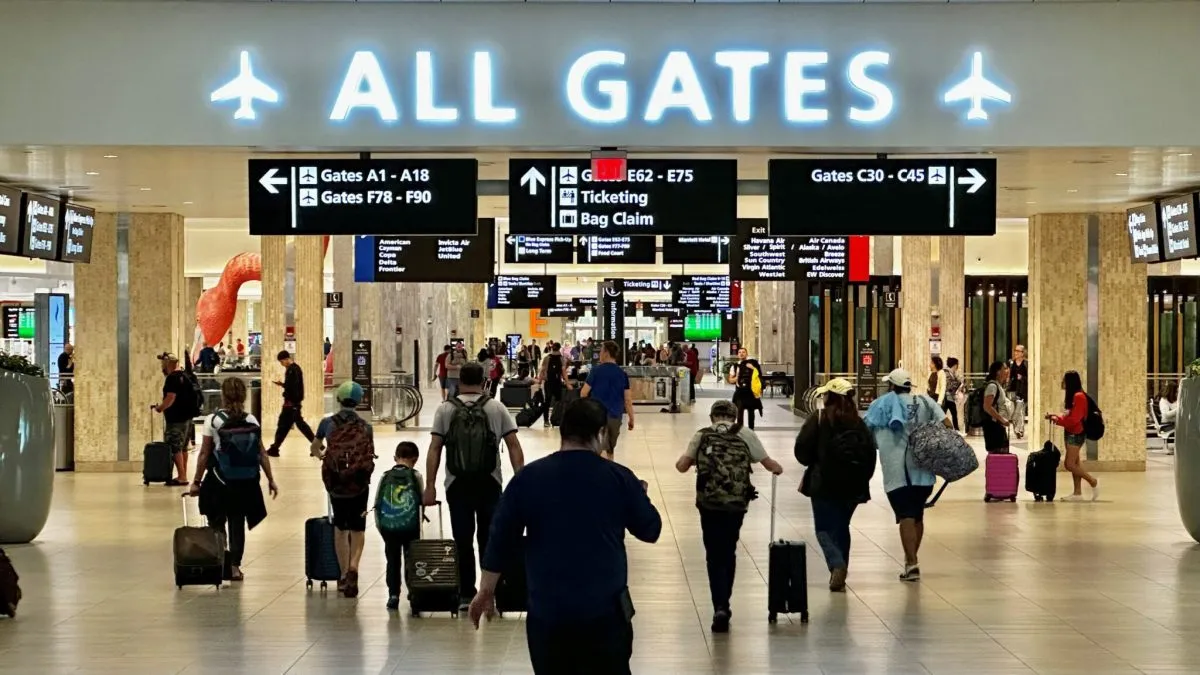
The Trump administration has officially announced the deployment of U.S. Immigration and Customs Enforcement (ICE) agents to several major domestic airports starting Monday, a move designed to alleviate the mounting pressure on the Transportation Security Administration (TSA) as the ongoing partial government shutdown continues to deplete the federal workforce. This strategic reallocation of resources aims to address the critical staffing shortages that have led to elongated security lines, terminal closures, and growing concerns regarding the efficiency of the nation’s aviation security infrastructure. The decision highlights the intensifying strain on federal operations as thousands of essential employees are forced to work without pay, leading to a significant spike in unscheduled absences among frontline screeners.
Border czar Tom Homan, who has been tapped to oversee the implementation of this initiative, clarified the scope of the deployment during a Sunday interview on CNN’s "State of the Union." Homan emphasized that the integration of ICE personnel is intended to be a supportive measure, allowing highly trained TSA officers to remain focused on the technical aspects of passenger and baggage screening. By delegating secondary tasks—such as monitoring security checkpoint exits and managing queue flow—to ICE agents, the administration hopes to maximize the throughput of passengers at a time when travel demand remains high despite the administrative crisis in Washington.
Strategic Allocation of DHS Personnel at Security Checkpoints
The primary objective of the ICE deployment is to decouple administrative and logistical tasks from the core security screening process. Under the current protocol, TSA agents are responsible for a wide array of duties, ranging from the operation of sophisticated X-ray technology and Advanced Imaging Technology (AIT) scanners to the manual verification of travel documents and the monitoring of exit lanes to prevent unauthorized entry into secure areas. The influx of ICE agents is specifically targeted at the latter categories.
"I don’t see an ICE agent looking at an x-ray machine because they’re not trained in that," Homan stated during his CNN appearance, addressing concerns regarding the qualifications of the temporary reinforcements. "This is about helping TSA do their mission and get the American public through that airport as quick as they can while adhering to all the security guidelines."
By placing ICE agents at exit points and in "queue management" roles, the Department of Homeland Security (DHS) intends to free up every available certified TSA officer to man the screening lanes. This shift is critical because the training required for TSA screeners is specialized and regulated by federal law; replacing them with untrained personnel for actual screening duties would represent a violation of standard aviation security protocols. ICE agents, who are already vetted federal law enforcement officers familiar with security environments, are seen as the most logical "surge" force available within the DHS umbrella.
The Context of the Partial Government Shutdown
The deployment comes as the United States navigates one of the most protracted partial government shutdowns in its history. The impasse, centered largely on a budgetary dispute regarding funding for a wall along the U.S.-Mexico border, has left approximately 800,000 federal employees either furloughed or working without a definite date for their next paycheck. Among those deemed "essential" are the roughly 51,000 TSA screening officers who are required to report for duty despite the lack of immediate compensation.
The financial reality of the shutdown has created a "sick-out" phenomenon. While the TSA has officially attributed the rise in absences to "financial hardship," the practical result is a daily increase in the number of officers calling out of work. Many employees have reported that they can no longer afford the fuel or childcare necessary to commute to work, while others have sought temporary employment in the private sector to cover basic living expenses such as rent and groceries.
According to recent DHS data, the national unscheduled absence rate for TSA personnel has trended significantly higher than the typical 3% seen during the same period in previous years. In some major hubs, such as Miami International Airport and Hartsfield-Jackson Atlanta International Airport, absence rates have occasionally surged to over 10%, forcing airport authorities to close entire concourses or consolidate security checkpoints, thereby funneling thousands of passengers into fewer lanes.
Chronology of the Crisis and the Administrative Response
The timeline leading to the Monday deployment of ICE agents reflects a rapidly deteriorating operational environment for the TSA:
- Day 1-10 of Shutdown: TSA leadership reports "business as usual," with minimal impact on wait times. However, labor unions begin warning of imminent staffing shortages as the first missed paycheck approaches.
- Day 15-20: Unscheduled absences begin to climb. Major airports start reporting wait times exceeding 60 to 90 minutes during peak hours. Reports emerge of TSA agents volunteering at food banks or taking side jobs as ride-share drivers.
- Day 22: The TSA announces it will begin reallocating "National Deployment Force" officers—a roving team of screeners used for emergencies—to the hardest-hit airports.
- Day 25: Internal DHS memos indicate that the National Deployment Force is stretched to its limit. Discussions begin regarding the use of other DHS components, including ICE and Customs and Border Protection (CBP), to provide logistical support.
- The Weekend Prior to Deployment: Tom Homan appears on national television to confirm that ICE agents will be stationed at airports starting the following Monday.
The administration’s decision to tap ICE for this role is also seen as a move to demonstrate the versatility of the Department of Homeland Security. By utilizing ICE agents, the administration is attempting to show that it can maintain "law and order" within the aviation sector even as the legislative branch remains in a stalemate over border security funding.
Data Analysis: The Economic and Operational Impact of Delays
The disruption of airport operations carries significant economic weight. The U.S. travel and tourism industry contributes over $1.6 trillion to the national GDP. Delays at security checkpoints do more than frustrate passengers; they threaten the punctuality of the global supply chain and the profitability of the airline industry.
Recent data from travel analytics firms suggests that a 10-minute increase in average security wait times can lead to a measurable decrease in "non-aeronautical revenue" for airports—money spent by passengers at terminal restaurants and retail shops. Furthermore, the "missed connection" rate has seen a slight uptick in hubs where TSA staffing is thinnest.
- Staffing Levels: At peak times, a standard Category X airport requires approximately 40 to 60 screeners per shift to operate at full capacity. Recent reports indicate some shifts are running at 70% capacity.
- Wait Time Spikes: At Washington Dulles International and Newark Liberty International, wait times during the morning rush have reached record highs for the month of January, occasionally tripling the standard processing time.
- ICE Contribution: The administration has not released the exact number of ICE agents being deployed, but internal sources suggest an initial wave of several hundred officers distributed across the top 10 most affected airports.
Reactions from Stakeholders and Labor Unions
The announcement has met with a mixed reception from industry stakeholders, labor representatives, and political figures.
The American Federation of Government Employees (AFGE), the union representing TSA workers, has expressed skepticism regarding the deployment. Union leaders argue that while any help is welcome, the use of ICE agents is a "Band-Aid solution" that fails to address the root cause of the problem: the lack of a paycheck. "Our officers are professionals who take pride in their work, but they cannot work for free indefinitely," a union spokesperson stated. "Bringing in ICE agents to stand at exits doesn’t pay the rent for a TSA officer who is struggling to feed their family."
Conversely, airline industry groups, such as Airlines for America (A4A), have urged the government to take all necessary steps to ensure the continuity of travel. While not explicitly endorsing the use of ICE agents, the group emphasized that "the safety and security of the traveling public is the top priority, followed closely by the need for an efficient system that supports the millions of jobs tied to the aviation industry."
Critics of the administration have raised concerns about the optics of placing ICE agents—officers primarily associated with immigration enforcement and removals—in a high-visibility public service role at airports. Some civil rights advocates have questioned whether the presence of ICE agents might intimidate certain segments of the traveling public, even if the agents are only tasked with monitoring exits.
Implications for Aviation Security and DHS Policy
The deployment of ICE to support the TSA represents a significant moment in the history of the Department of Homeland Security. It underscores the "One DHS" philosophy, which seeks to create a more integrated and flexible workforce across the department’s various agencies. However, the move also raises questions about the long-term sustainability of such cross-agency support.
From a security standpoint, the risk is that the dilution of specialized TSA roles could lead to lapses. While ICE agents are law enforcement professionals, the environment of a TSA checkpoint is governed by specific regulatory frameworks that differ from standard police or immigration work. The administration has countered this by insisting that ICE agents will have no role in the actual screening of passengers or property.
Furthermore, there is the issue of "mission creep" for ICE. The agency is already tasked with a heavy workload regarding interior enforcement and the management of detention facilities. Diverting personnel to airports could potentially create gaps in ICE’s primary mission areas, suggesting that the government is essentially "robbing Peter to pay Paul" to keep the aviation system afloat.
Future Outlook and the Path Forward
As the Monday deployment begins, all eyes will be on the major hubs of the Northeast and the South, where the staffing shortages have been most acute. The success of this initiative will be measured by whether wait times stabilize and whether the "sick-out" rates among TSA officers continue to climb or begin to level off.
The broader implication remains the stability of the federal workforce. Experts in public administration warn that the longer the shutdown continues, the greater the risk of a "brain drain" from the TSA. Highly experienced officers and supervisors may choose to leave the agency for more stable opportunities in the private sector or local law enforcement, leaving the TSA with a younger, less experienced workforce that could take years to fully train.
The deployment of ICE agents is a clear signal that the Trump administration is prepared to use unconventional methods to maintain infrastructure during the political stalemate. However, until a budget agreement is reached and federal employees receive their back pay, the tension at the nation’s airports is likely to remain high. For now, travelers heading to the airport on Monday can expect to see a new uniform at the security checkpoint—a visual reminder of the ongoing crisis in the nation’s capital and the lengths to which the government must go to keep the country moving.