


The rapid proliferation of autonomous artificial intelligence systems has led to a state of significant architectural fragmentation, leaving software developers caught between competing ecosystems. Currently, engineers building autonomous agents must generally commit to one of several dominant but incompatible frameworks, including LangChain, Microsoft’s AutoGen, CrewAI, the OpenAI Assistants API, or the recently released Claude Code. Each of these "Five Frameworks" utilizes a proprietary method for defining agent logic, managing memory persistence, and handling tool execution. This lack of a common standard has created high switching costs and mounting technical debt, as migrating an agent from one framework to another typically necessitates a near-total rewrite of the core codebase.
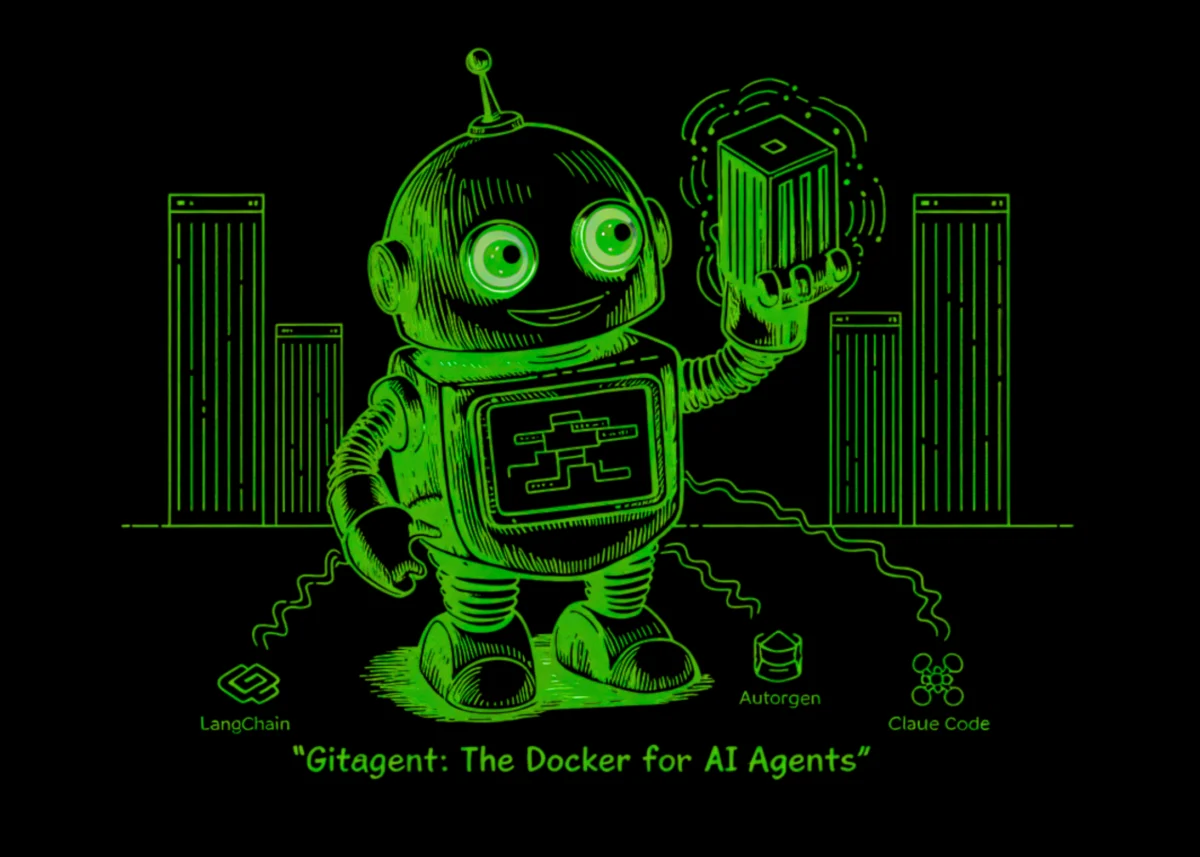
In response to this interoperability crisis, the release of GitAgent, an open-source specification and Command Line Interface (CLI) tool, introduces a framework-agnostic format designed to decouple an agent’s definition from its specific execution environment. By treating the agent as a structured directory within a Git repository, GitAgent establishes a "Universal Format" that allows developers to define an agent’s characteristics and capabilities once and then export them to any of the major orchestration layers. This shift represents a move toward the standardization of "Agentic AI," mirroring the way containerization standardized software deployment a decade ago.
The Landscape of Architectural Fragmentation
The current AI development environment is often described by industry analysts as a "walled garden" era. While LangChain provides a robust library for chain-of-thought processing, AutoGen excels in multi-agent conversation patterns, and CrewAI focuses on role-based task delegation. However, the underlying data structures—how an agent "remembers" a conversation or how it "decides" which tool to use—are not shared across these platforms.
For enterprise-level development, this fragmentation is a significant bottleneck. According to recent industry surveys, nearly 40% of AI development time is spent on "boilerplate" code—writing the glue that connects a model to its specific framework’s memory and tool-calling modules. When a superior model or a more efficient orchestration library is released, teams are often unable to pivot quickly because their agentic logic is "locked in" to their initial framework choice. GitAgent aims to mitigate this by providing a middle layer that abstracts the agent’s "soul" and "skills" from the underlying engine.
The Component-Based Architecture of GitAgent
For AI developers, GitAgent shifts the focus from writing framework-specific boilerplate to defining modular, portable components. A GitAgent is defined by a specific folder structure containing several key files that govern its behavior, state, and evolution. This structure is designed to be human-readable and machine-exportable.
The core of a GitAgent repository typically includes the SOUL.md file, which serves as the primary definition of the agent’s persona, ethical constraints, and high-level logic. Unlike traditional prompt engineering, which is often buried in Python or TypeScript strings, the SOUL.md file provides a centralized document that dictates how the agent should perceive its world and interact with users.
Supporting this is the context.md file, which manages the agent’s internal state and memory. In traditional frameworks, memory is often stored in opaque databases or proprietary cloud caches. In the GitAgent specification, the state is represented as a structured document, making it easier to audit and manipulate. Furthermore, the skills/ directory contains the various tools and functions the agent can execute. By modularizing these skills as standalone scripts or definitions, developers can ensure that an agent’s ability to "search the web" or "query a database" remains consistent regardless of whether the agent is running on OpenAI’s infrastructure or a local AutoGen instance.
Supervision and the Versioning Layer
One of the primary technical challenges in deploying autonomous agents is the lack of transparency regarding how an agent’s behavior evolves over time. As agents "learn" from interactions or update their internal memory, their behavior can drift, leading to what researchers call "agentic decay" or hallucinations. GitAgent addresses this by utilizing Git—the industry standard for source control—as the primary supervision layer.
In a standard GitAgent workflow, any update to the agent’s internal state is treated as a code change. For instance, if an agent updates its context.md file based on a new learning experience or modifies its SOUL.md to refine its personality, the system can be configured to automatically create a new Git branch and a Pull Request (PR).
This integration allows software developers to apply established Continuous Integration and Continuous Deployment (CI/CD) practices to AI behavior. A human reviewer can inspect the "diff" of the agent’s memory or personality changes, ensuring the agent remains aligned with its original intent. If an agent begins to exhibit unintended behaviors or drifts from its persona, the developer can simply use a git revert command to return the agent to a previous stable state. This transforms the "black box" of agentic memory into a version-controlled, auditable asset, providing a level of safety and oversight previously unavailable in autonomous systems.
Framework Interoperability and the Export Workflow
The core utility of GitAgent lies in its CLI-driven export mechanism. Once an agent is defined in the universal format, it can be ported to the specialized environments of the "Five Frameworks" through a simple command-line interface.
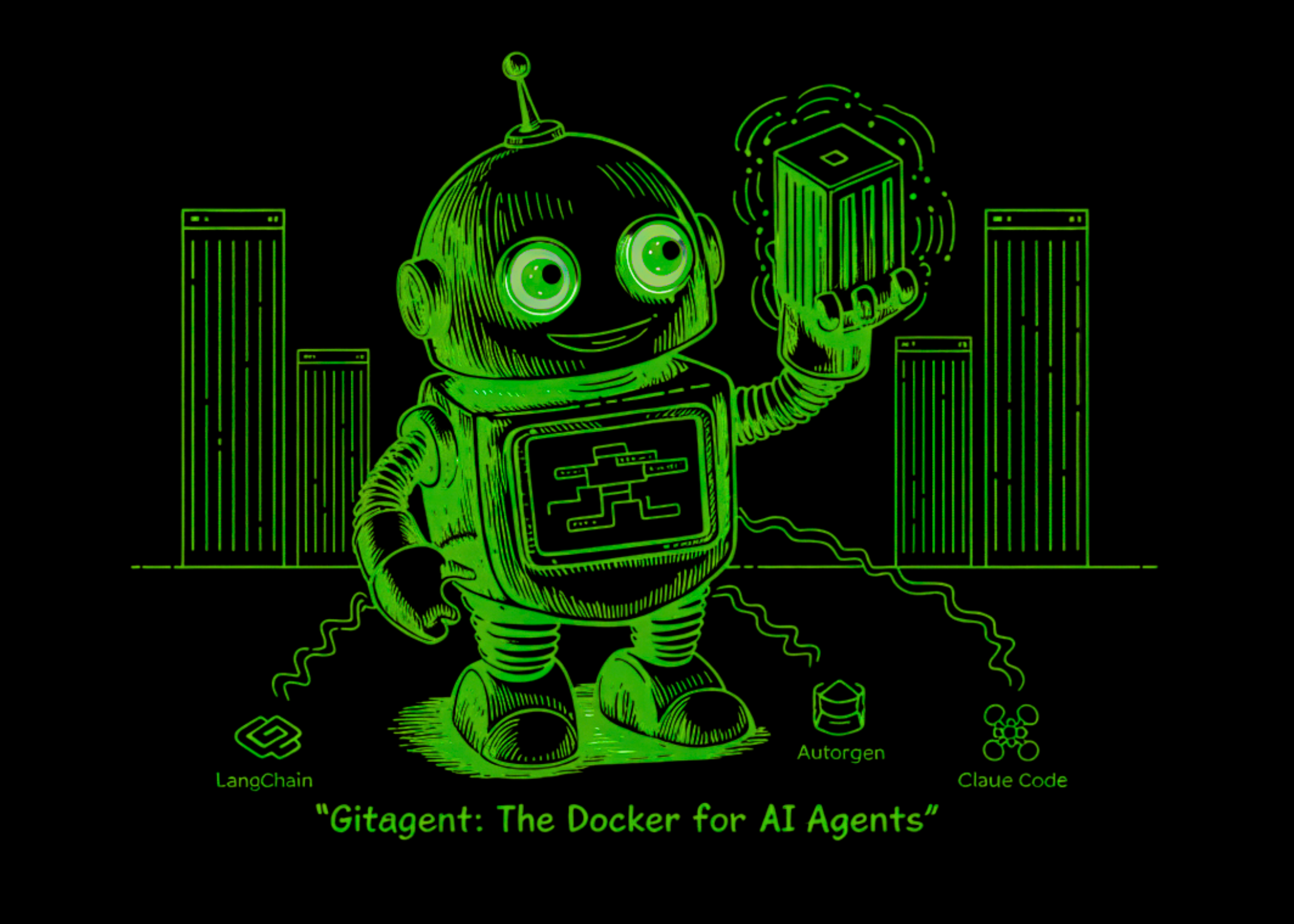
By using the command gitagent export -f [framework_name], developers can switch execution engines without altering the underlying logic stored in their repository. For example, a developer might initially build an agent for a simple chatbot using the OpenAI Assistants API. As the project scales to require complex multi-agent collaboration, the developer can export that same agent definition to CrewAI or AutoGen without rewriting the agent’s persona or toolsets.
This modularity prevents vendor lock-in and allows development teams to choose the orchestration layer that best fits a specific task. It also enables "hybrid" deployments where the same agent definition is used across different frameworks for testing, benchmarking, and production, ensuring consistency in behavior across various environments.
Enterprise Compliance and Segregation of Duties
For developers and AI researchers in highly regulated sectors such as finance, healthcare, and legal services, GitAgent provides built-in support for stringent compliance standards. The specification includes features designed to align with FINRA, SEC, and Federal Reserve regulations, particularly regarding the "Segregation of Duties" (SOD).
In complex financial workflows, it is often a regulatory requirement that the individual or system that initiates a process is not the same as the one who approves it. GitAgent allows developers to define a "conflict matrix" within the repository. In this matrix, specific agents are assigned roles such as maker (the initiator), checker (the auditor), or executor (the final actor).
Before any deployment or execution, the gitagent validate command checks the configuration against these predefined SOD rules. This ensures that no single agent possesses excessive authority that would violate compliance protocols. By embedding these checks into the architecture itself, GitAgent provides an automated path to compliance that is often difficult to achieve with ad-hoc agent implementations.
Chronology of the Agentic Ecosystem
The emergence of GitAgent marks a new phase in the timeline of AI development. The journey began in late 2022 with the release of ChatGPT, which sparked the initial interest in Large Language Models (LLMs). By early 2023, LangChain had emerged as the first major framework to help developers "chain" LLM calls together.
In mid-2023, Microsoft Research released AutoGen, introducing the concept of multi-agent systems where multiple AIs could converse to solve problems. This was followed by the launch of the OpenAI Assistants API in late 2023, which sought to simplify agent creation by hosting memory and tools on OpenAI’s servers. Throughout 2024, frameworks like CrewAI gained popularity for their focus on "process-driven" AI, while Anthropic’s Claude Code pushed the boundaries of agents that could interact directly with terminal environments.
The release of GitAgent in 2025 (or late 2024) serves as a response to the "framework fatigue" that characterized the preceding year. It represents a maturation of the industry, moving from a period of rapid, divergent experimentation toward a period of convergence and standardization.
Industry Implications and Market Analysis
The introduction of a universal format for AI agents is expected to have broad implications for the software industry. Much like the SQL standard allowed for a flourishing ecosystem of interchangeable databases, a standard for agents could lower the barrier to entry for startups and increase the speed of innovation.
Market analysts suggest that the "Agentic AI" sector is poised for exponential growth, with some estimates valuing the market at over $30 billion by 2028. However, this growth is contingent on the ability of enterprises to manage agents at scale. GitAgent’s focus on version control and auditability directly addresses the "trust gap" that has prevented many Fortune 500 companies from moving autonomous agents out of the pilot phase and into full production.
Furthermore, the open-source nature of GitAgent ensures that the standard can evolve with the community’s needs. By decoupling the "intelligence" (the agent’s definition) from the "compute" (the orchestration framework), GitAgent empowers developers to treat AI agents as durable assets rather than ephemeral scripts tied to a specific API.
In conclusion, GitAgent provides a technical bridge between the fragmented world of AI frameworks and the rigorous requirements of enterprise software development. By leveraging the power of Git for versioning, providing a CLI for framework-agnostic exports, and embedding compliance protocols into the core architecture, it offers a path toward a more stable, transparent, and interoperable future for autonomous AI. As the industry continues to move toward "Agent-First" applications, the adoption of universal standards like GitAgent may become the defining factor in the successful deployment of large-scale AI systems.