



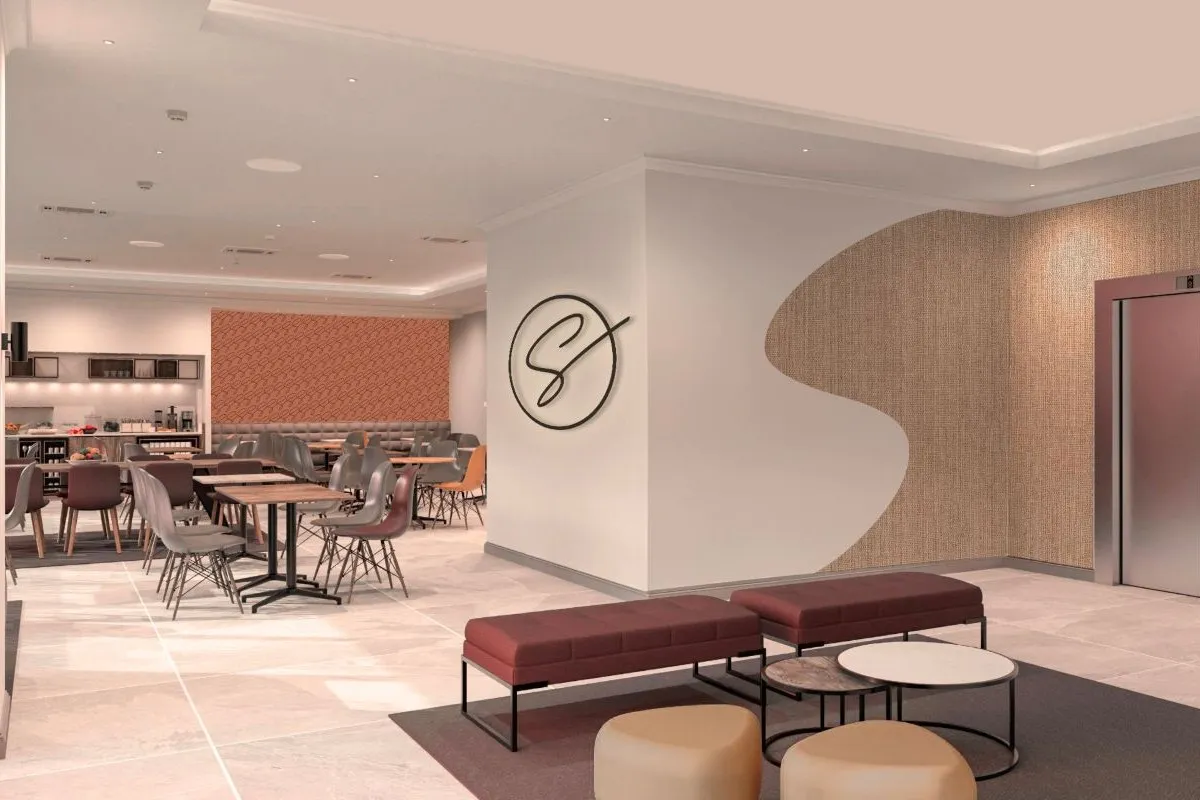
Marriott International has officially announced its strategic entry into the European midscale hospitality segment, marking a significant pivot in its regional growth strategy. The global hotel giant confirmed the signing of 11 initial properties under its new midscale brand, colloquially referred to as "Series by Marriott" during its development phase and branded as Four Points Express by Sheraton. This move signifies a concerted effort to capture a larger share of the value-conscious traveler market, a segment that has historically remained underserved by Marriott’s traditional focus on upscale and luxury accommodations within the European, Middle Eastern, and African (EMEA) regions.
The initial European portfolio includes 11 hotels strategically distributed across two of the continent’s most robust travel markets: Italy and the United Kingdom. This expansion is being executed through high-level partnerships with established regional operators. Marriott has secured six signings with Italy’s Amapa Group and five with the UK-based Splendid Hospitality Group. These agreements underscore a "conversion-first" strategy, allowing Marriott to rapidly scale its presence by rebranding existing independent or underperforming properties rather than relying solely on new construction.
Addressing a Critical Portfolio Gap
For decades, Marriott International has been synonymous with premium and luxury travel. Its portfolio, which includes iconic brands such as The Ritz-Carlton, St. Regis, and the flagship Marriott Hotels & Resorts, has successfully captured the high-end market. However, this focus left a conspicuous "hole" in the company’s brand lineup—specifically in the midscale tier, which caters to travelers seeking reliable, standardized, and affordable lodging.
Jerome Briet, Marriott’s Chief Development Officer for the EMEA region, highlighted this strategic shift during the announcement. "Historically, our distribution has really been going anywhere from upscale to luxury," Briet noted. "All of which are very strong in this region, but we were missing that segment."
The decision to move down-market is not merely a defensive play against competitors but a proactive response to shifting consumer demographics. As travel costs rise and corporate travel budgets face increased scrutiny, the demand for high-quality midscale options has surged. By filling this gap, Marriott aims to provide a comprehensive ecosystem where a traveler can stay at a luxury property for a special occasion and a Four Points Express for a routine business trip or a budget-friendly city break, all while remaining within the Marriott Bonvoy loyalty program.
The Strategic Importance of the UK and Italy
The selection of the United Kingdom and Italy as the launchpads for this midscale push is a calculated move based on market maturity and fragmentation.
In the United Kingdom, the midscale segment is highly competitive but remains dominated by domestic brands. By partnering with Splendid Hospitality Group, a prominent owner and operator of independent and branded hotels, Marriott gains immediate access to prime locations and local operational expertise. The UK market has shown remarkable resilience in the post-pandemic era, with domestic tourism and regional business travel driving consistent occupancy rates in the mid-tier sector.
Italy presents a different but equally lucrative opportunity. The Italian hospitality market is characterized by a high degree of fragmentation, with a vast majority of hotels being independently owned and operated. This landscape is ripe for a conversion brand like Four Points Express. Through its partnership with Amapa Group, Marriott is positioned to offer independent Italian hoteliers the benefits of a global distribution system and a massive loyalty base, which are often out of reach for standalone properties.
Market Context: The Rise of the Value-Conscious Traveler
The broader economic environment in Europe has played a pivotal role in Marriott’s decision to accelerate its midscale rollout. High inflation, fluctuating energy costs, and a general increase in the cost of living have influenced consumer behavior across the continent. While the "revenge travel" trend fueled luxury spending in 2022 and 2023, 2024 and 2025 are expected to see a normalization of travel patterns where value-for-money becomes a primary driver of choice.
Furthermore, the "bleisure" trend—the blending of business and leisure travel—has created a need for functional, tech-savvy, and affordable accommodations. Modern travelers in this segment prioritize high-speed Wi-Fi, comfortable bedding, and central locations over elaborate amenities like full-service spas or fine-dining restaurants. Marriott’s midscale offering is designed to strip away the "fluff" of luxury while maintaining the core reliability and safety standards associated with its global reputation.
The Conversion Model: A Response to Economic Headwinds
A defining feature of the Series by Marriott/Four Points Express rollout is its reliance on hotel conversions. In the current economic climate, characterized by high interest rates and elevated construction costs, building new hotels from the ground up is a slow and capital-intensive process.
Conversions offer several advantages:
- Speed to Market: Rebranding an existing hotel can be completed in a fraction of the time it takes to build a new one.
- Capital Efficiency: Developers can modernize existing structures with a lower capital expenditure (CapEx) compared to new builds.
- Sustainability: Repurposing existing buildings is inherently more environmentally friendly than new construction, aligning with Marriott’s ESG (Environmental, Social, and Governance) goals.
By focusing on conversions, Marriott is providing an exit strategy or a growth path for independent owners who may be struggling with the rising costs of digital marketing and global distribution. Joining the Marriott system allows these owners to leverage the Marriott Bonvoy platform, which boasts over 200 million members globally.
Competitive Landscape and Industry Reactions
Marriott is not alone in its pursuit of the midscale market. The move is widely seen as a direct response to the successes of competitors such as Accor, IHG Hotels & Resorts, and Hilton. Accor has long held a dominant position in the European midscale and economy sectors with its Ibis and Novotel brands. IHG has seen significant growth with Holiday Inn Express, and Hilton recently launched its own conversion-focused brand, "Spark by Hilton," to target a similar demographic.
Industry analysts suggest that Marriott’s entry into this space will likely trigger a "quality war" in the midscale segment. "Marriott’s brand equity is incredibly strong," says a London-based hospitality consultant. "When they enter a segment, they bring a level of operational rigor that forces competitors to up their game. This is ultimately a win for the consumer, who will see better standards in the mid-market tier."
Technical Specifications of the New Brand
The Four Points Express by Sheraton brand is designed with "functional simplicity" at its core. The brand standards are tailored to be flexible enough to fit into various building footprints—a necessity for conversions—while maintaining a consistent guest experience.
Key features of the brand include:
- Streamlined Design: Clean, modern aesthetics that are easy to maintain and cost-effective to implement.
- Digital-First Experience: An emphasis on mobile check-in, digital keys, and seamless connectivity.
- Focused Food & Beverage: A simplified breakfast offering and a "grab-and-go" marketplace rather than full-service restaurants.
- Efficient Staffing Models: Operational structures designed to maximize productivity and lower overhead costs for owners.
Future Projections and Regional Expansion
The initial 11 hotels are just the beginning of what Marriott envisions as a massive expansion. Jerome Briet indicated that the company is actively looking at other markets within the EMEA region, including Germany, Spain, and parts of the Middle East, where midscale demand is rising.
The goal is to establish a dense network of midscale properties that act as feeders for the rest of the Marriott portfolio. By capturing travelers early in their "travel lifecycle"—such as students, young professionals, or budget-conscious families—Marriott can build brand loyalty that lasts decades.
Implications for the Loyalty Ecosystem
The integration of these midscale properties into the Marriott Bonvoy program is perhaps the most significant aspect of the launch. For loyalty members, the addition of these hotels provides more opportunities to earn and redeem points in locations where Marriott previously had no presence. For the company, it provides a wealth of data on a demographic it previously struggled to track.
From a strategic standpoint, this expansion allows Marriott to compete in the "high-frequency" travel market. While a traveler might only stay at a luxury resort once a year, they might stay at a midscale hotel ten times a year for business. Capturing those ten stays is vital for maintaining the health and engagement of the loyalty ecosystem.
Conclusion: A New Chapter for Marriott in Europe
Marriott International’s move into the European midscale market represents a maturing of its global strategy. By acknowledging and addressing the gap in its portfolio, the company is positioning itself to be a "cradle-to-grave" provider of hospitality services. The partnership with Amapa Group and Splendid Hospitality Group provides a solid foundation in two critical markets, while the conversion-led model ensures rapid scalability.
As the 11 initial properties begin their transition and open their doors to guests, the industry will be watching closely. If successful, Marriott’s midscale "Series" could redefine expectations for value-driven travel in Europe, proving that "midscale" does not have to mean "mediocre." In an era where the traveler is more discerning than ever, the combination of global brand trust and local operational excellence may be the key to winning the next frontier of European hospitality.