


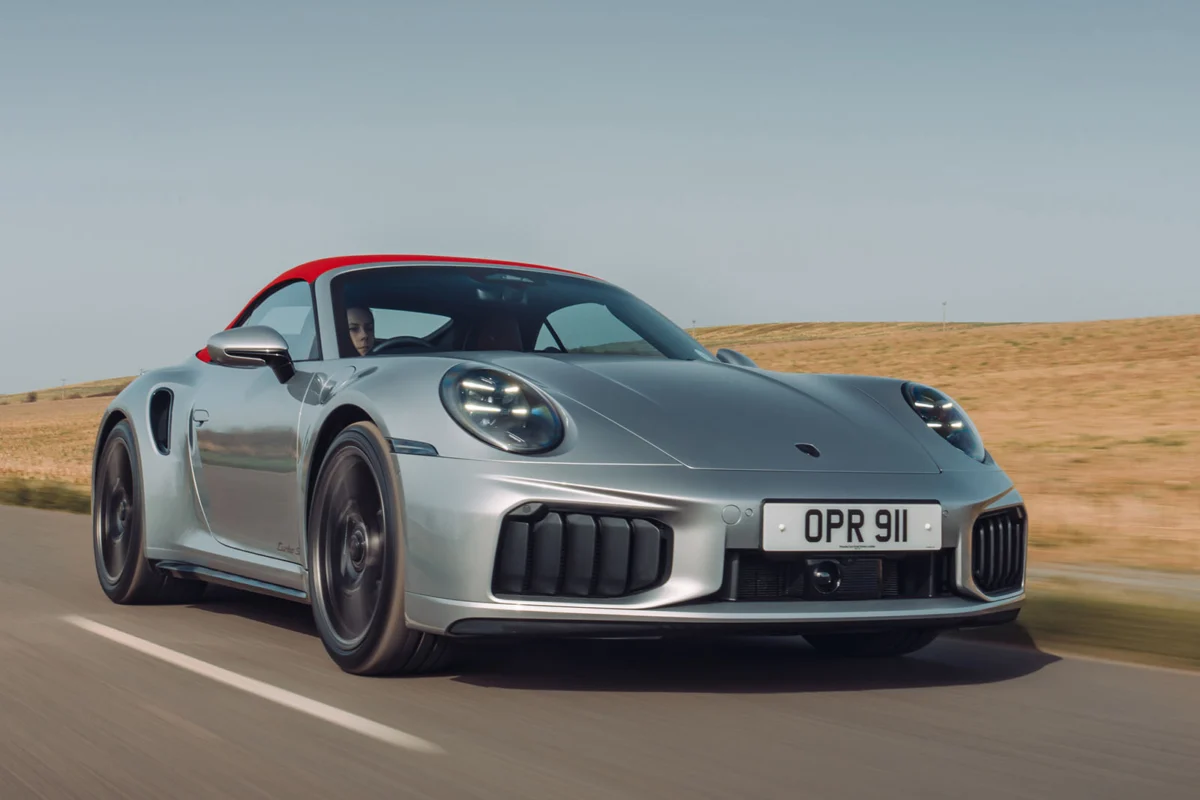
The Porsche 911 Turbo S Cabriolet represents a significant milestone in the evolution of the high-performance sports car, balancing the raw power of a supercar with the refined civility required for daily operation. Historically positioned as the flagship of the 911 range, the current 992-generation Turbo S continues to redefine the boundaries of automotive engineering through its sophisticated chassis management and relentless powertrain. Recent technical evaluations of the vehicle have highlighted its unique ability to transition from a comfortable commuter to a track-focused machine without the mechanical compromises often found in the convertible segment. This duality is not merely a result of engine output but is deeply rooted in the integration of active aerodynamic and chassis systems that allow the vehicle to adapt to diverse driving environments, from the high-speed demands of the German Autobahn to the intricate, undulating surfaces of British B-roads.
The Intersection of Luxury and High-Performance Engineering
The 911 Turbo S Cabriolet is engineered to serve as an all-season, multi-purpose vehicle, a trait that distinguishes it from more temperamental rivals in the exotic car category. Observers have noted that the vehicle’s road manners are exceptionally composed, suggesting that it could serve as a viable daily commuter during the summer months or, when equipped with appropriate winter tires, a capable grand tourer for alpine excursions. This versatility is a hallmark of the "Turbo" badge, which has moved away from its early reputation for being difficult to manage, moving instead toward a philosophy of "usable performance."
Central to this refined driving experience is the Porsche Active Suspension Management (PASM) system. In its latest iteration, the system features faster-acting dampers that provide a broader spread between comfort and performance settings. On standard road surfaces, the vehicle exhibits a level of "chassis integrity" that allows it to absorb minor imperfections while maintaining a taut, secure posture. This sense of security is vital for a cabriolet, as the absence of a fixed roof often introduces structural flex; however, Porsche’s engineering team has mitigated this through reinforced sills and a robust magnesium-frame roof structure that maintains the car’s silhouette and rigidity.
Chassis Dynamics and the Integration of Active Rear Steering
One of the most technically advanced features of the Turbo S is its active rear-axle steering. Unlike earlier iterations of such technology in the automotive industry, which could feel intrusive or artificial, the Porsche system operates with a level of transparency that renders it nearly imperceptible to the driver. At low speeds, the rear wheels turn in the opposite direction to the front wheels, effectively shortening the wheelbase to improve maneuverability and turn-in. At higher speeds, they turn in the same direction, extending the virtual wheelbase to enhance stability during high-speed lane changes or cornering.
The result is a vehicle that feels intuitive and natural. Professional testers have observed that the steering and handling dynamics speak to a balance of approximately 95 percent stability and accuracy, with the remaining five percent offering a "vivid animation" for those willing to push the car toward its limits. This precision is further augmented by the Porsche Dynamic Chassis Control (PDCC) active roll stabilization system, which uses hydraulic actuators to minimize lateral body roll, ensuring the tires maintain an optimal contact patch with the road surface at all times.
Track Performance and Mechanical Durability
While the Turbo S is often categorized as a luxury grand tourer, its performance on a closed circuit remains a benchmark for the industry. Some previous iterations of the Turbo S were criticized for being "too perfect" or "cold," implying a lack of emotional engagement. However, the current model has been praised for a shift in character. In its more aggressive drive modes, the body control is described as impeccable, yet the chassis is tuned to allow for a reassuring degree of roll and pitch. This allows the driver to feel the weight transfer, making the car’s limits more accessible and communicative.
The vehicle’s behavior at the limit involves a slight hint of understeer, a safety-oriented characteristic that can be neutralized through throttle application or "trail braking"—a technique where the driver maintains brake pressure while entering a corner to keep weight on the front tires. Furthermore, the car’s mechanical integrity is a point of significant merit. During rigorous track testing, which often includes sustained high-speed laps that would cause thermal failure in lesser vehicles, the Turbo S demonstrated exceptional resilience. Observers noted that the car could transition from public roads to a racing circuit and be driven "at the limit" without drama, requiring only routine monitoring of tire pressures and thermal loads.
Regional Road Dynamics: Navigating the Challenges of UK Infrastructure
The UK’s road network provides a unique challenge for high-performance vehicles due to its inconsistent surfacing and technical layouts. On these roads, the Turbo S Cabriolet has demonstrated a "terser" body control compared to its predecessors. While it remains secure and flat through corners, some experts suggest it is slightly less yielding and supple than previous generations. This shift is likely a necessary response to the vehicle’s increased potency; with more power and torque than ever before, the chassis must be stiffer to maintain control.
This change marks an evolution for what was once considered Porsche’s "wild child." The modern Turbo S has traded some of its historical unpredictability for a more reigned-in and secure feel. While it may be less communicative in its standard inclinations than older, more analog models, the trade-off is a car that can carry significantly more speed with greater confidence. The steering remains a high point, offering an intuitive connection to the front axle that is rare in an era of electrically assisted systems.
A Chronology of Innovation: From the 930 to the 992
The journey of the 911 Turbo began in 1975 with the Type 930, a car that gained notoriety for its sudden power delivery and challenging handling characteristics, earning the nickname "The Widowmaker." Over the subsequent decades, Porsche has systematically refined the formula:
- 1970s-1980s (930): Introduced turbocharging to the 911, focusing on raw power.
- 1990s (964 & 993): Introduced all-wheel drive (993) and improved aerodynamics, making the power more manageable.
- 2000s (996 & 997): Transitioned to water-cooling and introduced Variable Turbine Geometry (VTG), reducing turbo lag.
- 2010s (991): Integrated active rear steering and significantly increased the use of aluminum in the chassis.
- 2020s (992): The current era, characterized by a wider track, 8-speed PDK transmission, and unprecedented levels of digital integration and active aerodynamics.
This timeline illustrates a clear trajectory from a specialized, difficult-to-master machine to a technologically dominant supercar that is accessible to a wider range of drivers while offering higher performance ceilings than its ancestors.
Technical Specifications and Performance Metrics
The performance of the 911 Turbo S Cabriolet is supported by a 3,745cc twin-turbocharged flat-six engine. The technical data underscores the vehicle’s position at the top of the internal combustion hierarchy:
| Feature | Specification |
|---|---|
| Engine | 3.7L Twin-Turbocharged Flat-6 |
| Horsepower | 640 hp (650 PS) |
| Torque | 590 lb-ft (800 Nm) |
| 0-60 mph | 2.7 Seconds (with Sport Chrono Package) |
| Top Speed | 205 mph (330 km/h) |
| Transmission | 8-speed Porsche Doppelkupplung (PDK) |
| Brakes | Porsche Ceramic Composite Brake (PCCB) |
The vehicle’s cooling system has also been redesigned for the 992 generation. The air intake strategy now utilizes both the rear side intakes and the rear lid grille to ensure that the intercoolers receive maximum airflow, even under high thermal stress. This ensures that the engine maintains its peak output during extended performance driving, preventing the "heat soak" that can plague turbocharged engines.
Market Positioning and Industry Perspectives
Industry analysts view the 911 Turbo S Cabriolet as a benchmark for the "everyday supercar" category. While competitors like the McLaren 720S or the Ferrari F8 Tributo may offer more dramatic styling or a more visceral mid-engine soundtrack, the Porsche is frequently cited for its superior build quality and reliability. According to automotive engineers familiar with the platform, the 992 Turbo S was designed with the goal of "expanding the performance envelope in both directions"—making it easier to drive slowly and more capable when driven fast.
The reaction from the enthusiast community has been largely positive, though some purists lament the loss of the "wild" character found in earlier, less electronic models. However, Porsche’s official stance, often echoed in technical briefings, emphasizes that as power levels rise, the necessity for active safety and stability systems becomes paramount. The consensus among professional drivers is that the 992 generation offers a level of "integrity" that allows it to be used more frequently and in more diverse conditions than almost any other vehicle in its price bracket.
Broader Implications for the Supercar Segment
The evolution of the Turbo S reflects broader trends in the automotive industry, where manufacturers are increasingly relying on sophisticated software and active hardware to manage immense power outputs. The success of the Turbo S Cabriolet’s active rear steering and aerodynamic systems suggests a future where high-performance vehicles are defined as much by their computing power as by their mechanical components.
Furthermore, the vehicle’s ability to maintain high performance in a convertible format challenges the traditional notion that serious track cars must have a fixed roof. As Porsche continues to refine the 911 platform, the Turbo S remains a critical "halo" model that influences the development of the rest of the lineup. The lessons learned in chassis rigidity and thermal management in the Turbo S eventually trickle down to the Carrera and Targa models, ensuring that the entire 911 range benefits from the flagship’s engineering breakthroughs.
In conclusion, the Porsche 911 Turbo S Cabriolet stands as a testament to the efficacy of incremental engineering. By focusing on chassis integrity, the integration of active systems, and mechanical durability, Porsche has created a vehicle that is both a "wild child" in terms of raw capability and a "perfect" companion for the modern driver. Its character may have shifted toward a more secure and taut feel, but its position as a dominant force in the sports car world remains undisputed.