


The United Nations’ human rights chief has issued a strong appeal to the United States to swiftly conclude its investigation and make public its findings regarding a devastating strike on an Iranian primary school, an incident that occurred on the first day of the recent conflict last month. Volker Türk, the UN High Commissioner for Human Rights, conveyed a profound sense of urgency during an emergency debate at the UN Human Rights Council, emphasizing that the bombing had "evoked a visceral horror" and that there "must be justice for the terrible harm done." This tragedy, if confirmed to involve US forces, marks a critical juncture in the discourse surrounding civilian protection in modern warfare and the imperative for accountability from powerful military actors.
The Devastating Attack on Shajareh Tayyebeh School
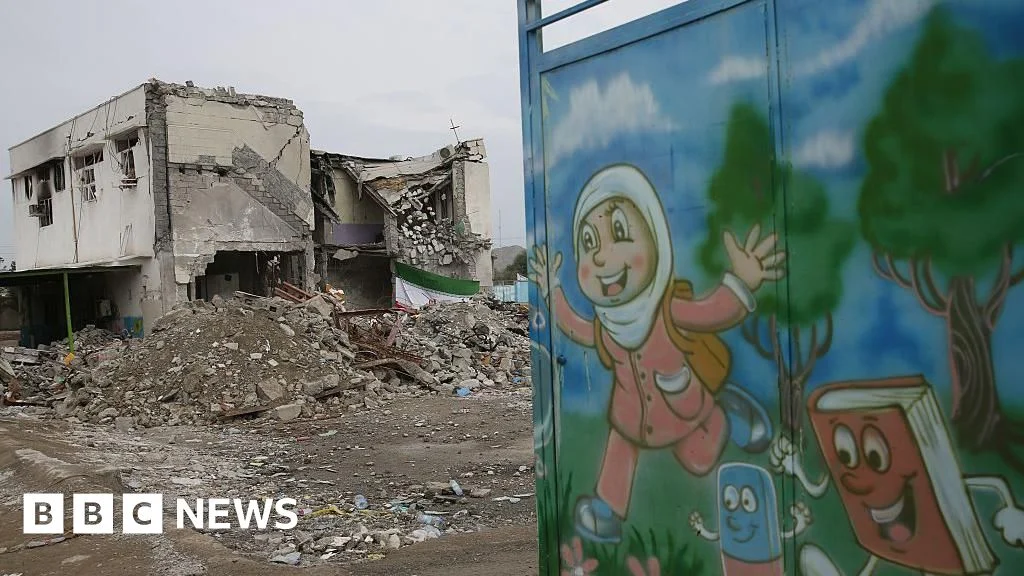
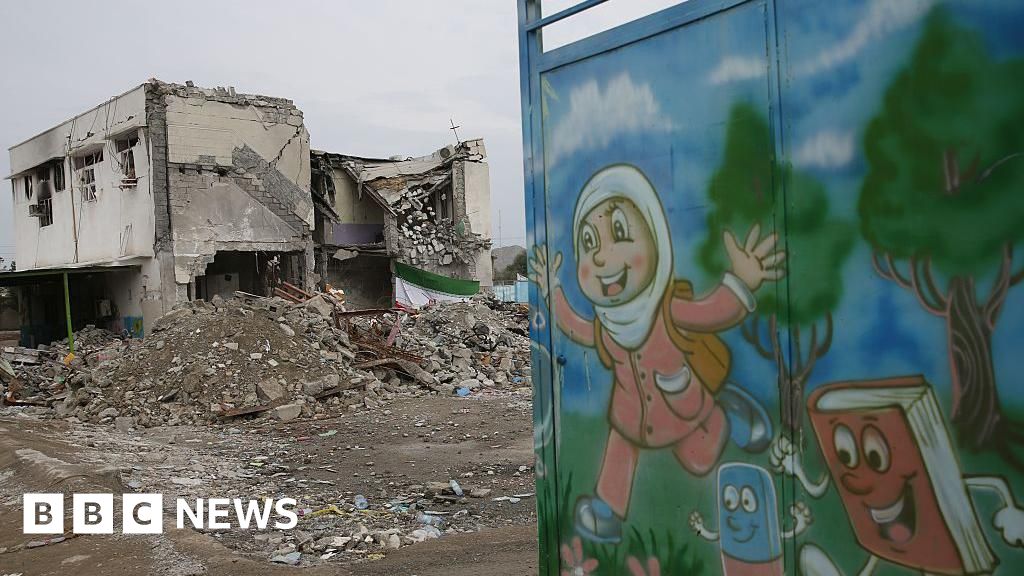
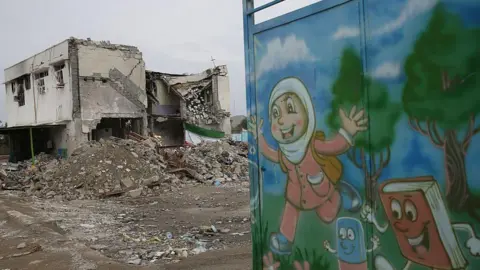
The strike, which targeted the Shajareh Tayyebeh school in Minab, a city located in southern Iran, involved two missile strikes in rapid succession. Iranian officials have reported a staggering casualty count of at least 168 people killed, a figure that tragically includes approximately 110 children. Images from the scene, widely circulated by news agencies, depicted classrooms reduced to rubble, a stark testament to the destructive power unleashed. Amidst the devastation, poignant visuals showed children’s illustrations still painted on an adjacent gate, serving as a heartbreaking reminder of the innocent lives lost and irrevocably altered. The sheer scale of civilian casualties, particularly among children, immediately drew international condemnation and calls for a thorough inquiry into the circumstances surrounding the attack. The incident cast a long shadow over the nascent stages of the conflict, raising immediate questions about targeting protocols and the protection of non-combatants.
UN’s Urgent Call for Impartial Investigation
During the urgent debate at the UN Human Rights Council, Türk underscored the fundamental principle that civilians invariably bear the brunt of armed conflicts. "The images of bombed-out classrooms and grieving parents showed clearly who pays the highest price for war: civilians with no power in the decisions that led to conflict," he stated with gravity. His address placed a direct onus on the party responsible for the attack to conduct a comprehensive, impartial, transparent, and prompt investigation. Acknowledging previous assurances from senior US officials that an investigation was underway, Türk pressed for its swift conclusion and the public disclosure of its findings. The UN’s stance reflects a broader international legal framework, including international humanitarian law, which mandates that parties to an armed conflict must take all feasible precautions to avoid, and in any event to minimize, incidental loss of civilian life, injury to civilians, and damage to civilian objects. The High Commissioner’s intervention serves as a powerful reminder of the global community’s expectation for adherence to these critical principles, even amidst the fog of war.
US Acknowledges Potential Involvement and Ongoing Inquiry
Reports from prominent US media outlets have indicated that American military investigators internally believe their own forces were likely responsible for inadvertently striking the school. This acknowledgment, though not yet a formal confirmation, has added significant weight to the international calls for transparency. US Defence Secretary Pete Hegseth had previously confirmed that the matter was under investigation, reiterating that the United States does not intentionally target civilians. Should a US role be definitively confirmed, this incident would represent one of the most severe single cases of civilian casualties resulting from US military actions in decades of conflicts across the Middle East. Such an outcome would not only have profound humanitarian implications but also significant geopolitical repercussions, potentially straining diplomatic relations and fueling anti-American sentiment in the region. The ongoing internal investigation by the US military is therefore under intense scrutiny from international bodies, human rights organizations, and allied nations alike.
Unpacking the Targeting Error: A Cascade of Misinformation
Further details regarding the potential US involvement have emerged through media reports, notably from The New York Times, which cited individuals briefed on the US investigation. These reports suggest a critical intelligence failure at the heart of the tragedy. According to these accounts, officers at US Central Command (Centcom) generated the target coordinates for the strike using outdated data supplied by the Defense Intelligence Agency. The intended target was reportedly an adjacent base belonging to Iran’s Islamic Revolutionary Guard Corps (IRGC). Crucially, the school building itself was said to have formerly been part of this IRGC facility, implying a repurposing of the site that was not adequately reflected in the intelligence used for targeting. This revelation points to a potentially catastrophic lapse in the intelligence cycle, where the dynamic nature of ground conditions was not accurately conveyed or updated, leading to a tragic misidentification of a civilian structure as a military target. The IRGC, designated a foreign terrorist organization by the US, is a major military, political, and economic force in Iran, and its facilities are legitimate military targets under the laws of armed conflict. However, the transformation of such a facility into a civilian school necessitates a corresponding update in targeting intelligence to prevent unintended civilian harm.
Technical Analysis Confirms US Missile Type
Compelling technical evidence has further pointed towards a US operation. Expert video analysis confirmed that the IRGC base, the intended target, was struck by a Tomahawk missile. The Tomahawk is a sophisticated, long-range, all-weather, subsonic cruise missile primarily employed by the United States Navy and Royal Navy for land attack operations. Notably, neither Israel nor Iran is known to possess this specific type of cruise missile, making its presence at the strike site a strong indicator of US or allied involvement. A video, published by Iran’s semi-official Mehr news agency and subsequently authenticated by BBC Verify, showed a missile in the moments preceding its impact on the base. Experts who reviewed this footage concluded that the distinct characteristics of the missile, coupled with evidence suggesting the area was subjected to multiple strikes, strongly indicated that the operation was carried out by US forces. This technical corroboration adds a layer of undeniable fact to the ongoing investigation, moving the narrative beyond mere speculation and placing a greater burden of proof on the United States to explain the circumstances of the strike.
Iran’s Vehement Condemnation and Call for Justice
In a video address delivered to the UN Human Rights Council meeting in Geneva, Iran’s Foreign Minister Abbas Araghchi delivered a scathing condemnation of the attack, asserting that the bombing was a "deliberate and intentional" act by the United States. Araghchi vehemently rejected any justification for the atrocity, declaring that it "cannot be concealed, and must not be met with silence and indifference." This strong accusation from Tehran directly contradicts the US narrative of an unintentional strike due to intelligence error. Iran’s insistence on the "deliberate" nature of the attack underscores the deep mistrust between the two nations and raises the stakes for any investigation. From Iran’s perspective, the high civilian death toll, particularly of children, coupled with the alleged US responsibility, constitutes a severe violation of international law and an act of aggression. The demand for justice from the Iranian government is not merely a diplomatic formality but reflects a profound national outrage over the loss of life and the perceived impunity of a foreign power.
Congressional Scrutiny and Demands for Clarity
The incident has also triggered significant concern within the US political landscape. A letter, endorsed by nearly every Senate Democrat, was dispatched to the Pentagon, posing a series of detailed and probing questions about the strike in Minab. The letter’s primary inquiry was direct: whether the US indeed carried out the attack. Beyond this fundamental question, the senators sought clarification on whether outdated or faulty target analysis could have led to the school building being hit. The correspondence also specifically highlighted a previous statement by Defence Secretary Hegseth, who had vowed during a news conference that there would be "no stupid rules of engagement" in the war. The senators questioned whether this sentiment aligned with, or potentially undermined, existing rules designed to prevent the commission of war crimes and ensure civilian protection. In response to the congressional inquiry, the Pentagon issued a standard statement affirming that it would respond directly to the authors of the letter, as is customary for all congressional correspondence. This congressional oversight underscores the domestic pressure on the US administration to provide transparent answers and demonstrates the internal demand for accountability concerning military operations and their human cost.
Broader Implications: International Law, Ethics, and US Credibility
The strike on the Shajareh Tayyebeh school carries profound implications for international humanitarian law (IHL), military ethics, and the credibility of the United States on the global stage. Under IHL, the principles of distinction, proportionality, and precaution are paramount. The principle of distinction requires parties to an armed conflict to distinguish between combatants and civilians, and between military objectives and civilian objects. Targeting a civilian school, even if unintentionally, represents a grave failure in upholding this principle. The high number of child casualties further exacerbates the ethical and legal complexities, invoking specific protections afforded to children in armed conflict.
Hegseth’s remark about "no stupid rules of engagement" has also drawn scrutiny. While military forces operate under immense pressure, rules of engagement are critical for ensuring compliance with IHL and preventing indiscriminate attacks. Any suggestion that these rules might be relaxed or disregarded raises serious concerns about accountability and the potential for war crimes. The incident highlights the inherent challenges of modern warfare, particularly when military targets are located in or near civilian infrastructure, or when intelligence on the use of such infrastructure is outdated. The responsibility of an attacking force to verify targets and minimize civilian harm is absolute.
The outcome of the US investigation and the transparency with which its findings are presented will significantly impact US relations with Iran and the broader international community. A thorough, unbiased, and publicly accessible investigation is crucial not only for justice for the victims but also for restoring trust and demonstrating a commitment to international legal norms. Failure to provide convincing answers and hold individuals accountable, if warranted, could further erode US moral authority and complicate future diplomatic and military engagements. The incident serves as a stark reminder of the devastating human cost of conflict and the perpetual need for vigilance, precision, and adherence to humanitarian principles in all military operations.
The Enduring Call for Transparency and Justice
As the international community awaits the conclusion of the US investigation, the voices calling for transparency and justice remain resolute. The UN High Commissioner’s demand for public findings is not merely a bureaucratic request but a fundamental requirement for accountability. For the families of the 168 victims, particularly the parents of the 110 children killed, the outcome of this investigation represents their only hope for understanding what transpired and for seeing that those responsible are held to account. The broader ramifications of this incident extend beyond the immediate tragedy, touching upon the very principles of international law, the conduct of warfare, and the responsibility of powerful nations. The precedent set by how this incident is investigated and addressed will resonate for years to come, shaping perceptions of justice and accountability in an increasingly complex global security landscape. The world watches, waiting for answers that can bring some measure of solace to the grieving and reaffirm the sanctity of civilian lives in times of war.