



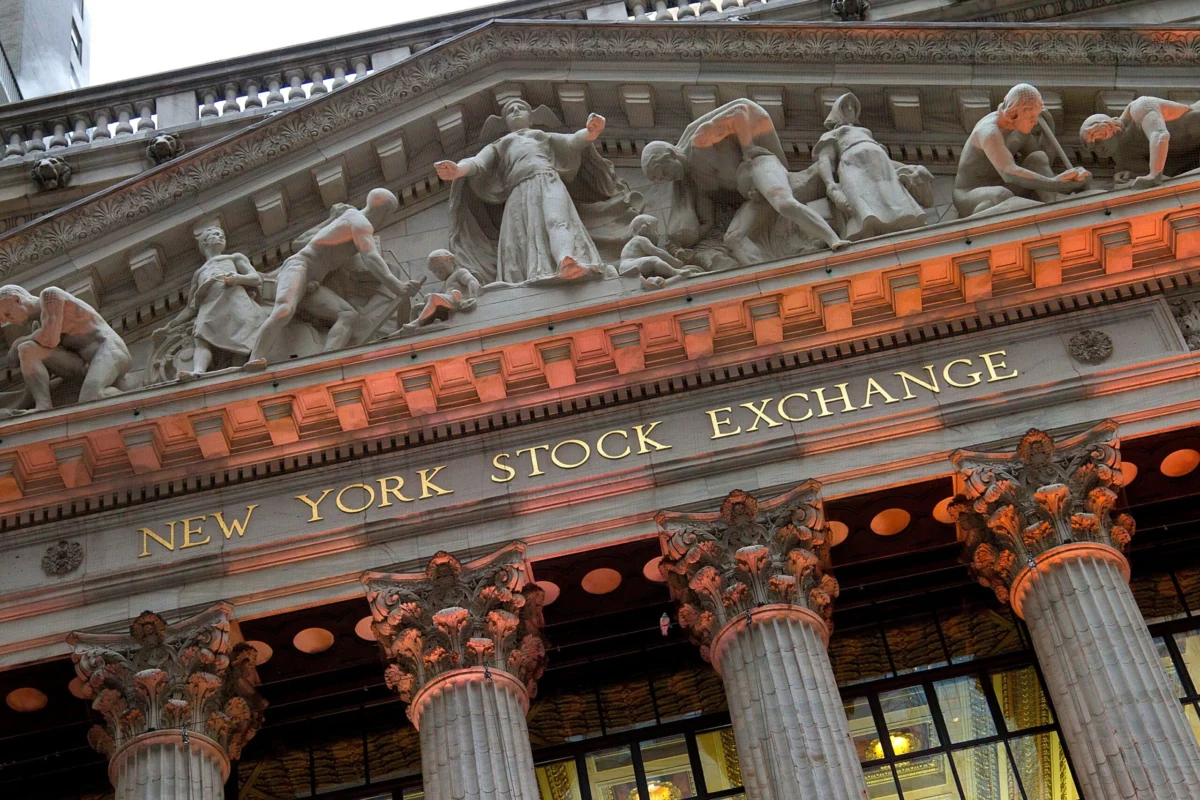
Intercontinental Exchange (ICE), the global exchange giant that operates the New York Stock Exchange (NYSE), announced on Friday that it has infused an additional $600 million into the prediction market platform Polymarket. This capital injection marks the finalization of a multi-stage funding agreement initially established between the two entities in late 2025. When combined with a $1 billion investment made in October and an additional $40 million earmarked for secondary market share purchases from existing holders, ICE’s total financial commitment to the platform nears the $2 billion threshold.
The move signals a definitive shift in the strategy of traditional financial infrastructure providers, who are increasingly looking toward event-based trading as the next frontier of global capital markets. While ICE noted in its official filing that the investment is not expected to materially impact its immediate consolidated financial results, the scale of the commitment underscores a long-term strategic pivot. By backing Polymarket, ICE is positioning itself at the center of a rapidly maturing sector that blends social forecasting, decentralized finance, and traditional risk management.
The Rise of Event-Based Trading and Prediction Markets
Prediction markets, also known as information markets or event-based exchanges, allow participants to trade on the outcome of specific real-world events. These contracts function as binary options: if the event occurs, the contract pays out a fixed amount (typically $1.00); if it does not, the contract expires worthless. Polymarket, which gained significant prominence during the 2024 U.S. election cycle, has evolved from a niche cryptocurrency-based platform into a high-volume venue for forecasting everything from geopolitical shifts and economic indicators to sports results and entertainment awards.
The logic behind these markets is rooted in the "wisdom of the crowd" theory, which suggests that the aggregated opinions of a diverse group of incentivized participants are often more accurate than individual expert forecasts. For instance, a trader concerned about inflationary pressures might purchase "Yes" shares in a market asking if the Consumer Price Index (CPI) will exceed 3% in a given month. As more participants buy or sell based on their own data and expectations, the market price fluctuates in real time, providing a probabilistic forecast that is visible to the public.
For a traditional powerhouse like ICE, the appeal of Polymarket lies in its ability to generate unique, alternative data. In an era where high-frequency trading and algorithmic execution have saturated traditional equity and futures markets, the "information alpha" generated by prediction markets represents a valuable new asset class.
A Chronology of the ICE-Polymarket Partnership
The relationship between the parent of the NYSE and the leading prediction market has progressed with remarkable speed, reflecting the broader acceleration of the sector.
- May 2024 – September 2024: Polymarket experiences a surge in volume, driven by intense interest in the U.S. presidential election. The platform’s ability to provide real-time odds that often preceded shifts in traditional polling catches the attention of institutional investors.
- October 2025: ICE announces an initial $1 billion investment in Polymarket. This move was widely viewed as a "proof of concept" stake, intended to help Polymarket scale its infrastructure to meet institutional standards.
- January 2026: Polymarket completes the acquisition of a U.S.-licensed exchange and clearinghouse. This strategic move was designed to bring the platform into the regulatory fold, addressing long-standing concerns from the Commodity Futures Trading Commission (CFTC).
- March 10, 2026: Polymarket announces a high-profile partnership with Palantir Technologies and TWG AI. The collaboration focuses on developing a state-of-the-art surveillance system to detect wash trading and market manipulation, particularly in the high-stakes sports and political sectors.
- March 27, 2026: ICE confirms the final $600 million installment of its funding agreement, bringing its total commitment, including secondary purchases, to nearly $2 billion.
Competitive Pressures and Market Valuation
The massive scale of ICE’s investment is also a response to the aggressive growth of competitors. Kalshi, a primary rival to Polymarket that has historically focused on a fully regulated U.S. model, recently secured $1 billion in new funding. That round valued Kalshi at $22 billion—nearly double its previous valuation.
Current industry estimates suggest that the demand for event-based trading is no longer speculative. Kalshi is reportedly generating approximately $1.5 billion in annual revenue, a figure that has forced traditional exchange operators to take notice. By committing $2 billion to Polymarket, ICE is ensuring that it maintains a dominant position in a sector that could eventually rival the futures and options markets in terms of daily volume and strategic importance.
The competition between Polymarket and Kalshi represents two different philosophies of market growth. Polymarket, with its roots in decentralized finance, has focused on global liquidity and a broad range of "exotic" markets. In contrast, Kalshi has navigated a strictly regulated path from the outset, focusing on "bread and butter" economic and political events. ICE’s backing provides Polymarket with the institutional gravitas and regulatory expertise needed to bridge the gap between these two worlds.
Regulatory Scrutiny and Market Integrity
Despite the influx of capital, prediction markets remain under the microscope of global regulators and lawmakers. Concerns persist regarding the potential for "insider trading" on events where certain individuals may have non-public information—such as a Supreme Court ruling or a corporate merger. Furthermore, critics argue that betting on political outcomes could incentivize bad actors to interfere with democratic processes.
To mitigate these risks, Polymarket has significantly increased its spending on compliance and market integrity. The partnership with Palantir is a cornerstone of this effort. By utilizing Palantir’s data analytics capabilities, Polymarket aims to identify patterns of suspicious trading that could indicate manipulation.
"The integration of advanced AI-driven surveillance is not just a regulatory requirement; it is a fundamental necessity for the survival of the sector," noted an analyst familiar with the deal. "If these markets are to be used as legitimate hedging tools by institutions, the prices must be beyond reproach. ICE’s involvement brings a century of experience in maintaining fair and orderly markets to a platform that was once seen as the ‘Wild West’ of finance."
Strategic Implications for the Financial Ecosystem
The deepening ties between the NYSE’s parent and Polymarket suggest several broader implications for the global financial ecosystem:
1. The Institutionalization of "Event Risk"
Traditionally, hedging against specific events—such as a specific piece of legislation failing or a particular hurricane hitting a coastline—required complex over-the-counter (OTC) derivatives or insurance products. Prediction markets democratize access to these hedges, allowing smaller firms and individual investors to manage "event risk" with the same ease as buying a stock.
2. Integration with Traditional Portfolios
As prediction markets gain liquidity and regulatory approval, it is likely that "event contracts" will begin to appear alongside traditional assets in brokerage accounts. For ICE, this provides a new stream of transaction fees and data subscription revenue, diversifying its income away from the increasingly compressed margins of equity trading.
3. Real-Time Economic Indicators
Central banks and government agencies are beginning to look at prediction market prices as "leading indicators." Because participants are "voting with their wallets," these markets often capture shifts in sentiment faster than traditional surveys. ICE’s ownership stake gives it a front-row seat to this data, which can be packaged and sold to hedge funds and institutional clients.
Official Responses and Industry Outlook
While Polymarket executives have remained quiet regarding the specific terms of the latest funding round, a spokesperson for ICE emphasized that the investment is part of a broader "commitment to innovation in market structure." The company’s statement noted that the partnership reflects a belief that "transparent, price-discovered markets for event-based outcomes provide essential utility to the global economy."
Industry reactions have been largely positive, though tempered by a wait-and-see approach regarding the CFTC’s next moves. "The fact that the parent of the NYSE is willing to put $2 billion on the line tells you that the legal and regulatory risks are viewed as manageable," said Marcus Thorne, a senior fintech researcher. "You don’t spend that kind of money if you think the platform is going to be shut down in six months. This is a vote of confidence in the legality and the longevity of the entire industry."
As the $600 million infusion closes this chapter of the ICE-Polymarket agreement, the focus now shifts to execution. The challenge for Polymarket will be to maintain its rapid growth and innovative spirit while adopting the rigorous compliance standards of its new benefactor. For ICE, the gamble is that prediction markets will move from the periphery of finance to the core, serving as the primary venue where the world’s expectations are priced, traded, and settled.
In the coming years, the success of this nearly $2 billion bet will likely be measured by how seamlessly event-based contracts integrate into the daily routine of the global investor. If the current trajectory holds, the "future of prediction" may soon be just another standard feature of the world’s most storied stock exchange.